Quick Facts
- Location: Currumbin Valley, Gold Coast Hinterland, Queensland, Australia.
- The Visionaries: Megan Ziems (Founder of Grace Loves Lace), Leigh McKeown (Creative Director of Ellison Studios), and HGA Studio (Architects).
- Design Philosophy: A fusion of Tropical Brutalism and Mid-Century Modernism, grounded in 12+ permaculture principles.
- Key Materials: Rammed earth, natural stone, recycled timber, and glove-soft leathers.
- Timeline: A 5-year creative odyssey born from a 20-year friendship.
A Creative Collaboration Decades in the Making
In the world of high-end residential design, we often talk about the "client-designer relationship" as a professional contract. But Finca Talluca, a breathtaking retreat nestled in the lush folds of the Currumbin Valley, tells a different story. This isn't just a house; it is a physical manifestation of a 20-year friendship between homeowner Megan Ziems—the powerhouse behind the global bridal brand Grace Loves Lace—and Leigh McKeown, the visionary behind Ellison Studios.
The project represents a five-year creative collaboration that bypassed the usual formalities of mood boards and rigid briefs. Instead, it was built on a foundation of "trust over trends." When you’ve known someone for two decades, there is an intuitive shorthand—a shared aesthetic language that allows for bold risks and quiet nuances. Finca Talluca is the result of that deep synergy, blending Megan’s instinct for effortless luxury with Leigh’s mastery of sculptural, mid-century-inspired form.
The name "Finca"—traditionally a Spanish rural or agricultural estate—hints at the home’s dual soul. It is a sanctuary that feels both grounded and ethereal, a place where family life is elevated to an art form without losing its sense of play and warmth.
Architecture: The Rise of Tropical Brutalism in Australia
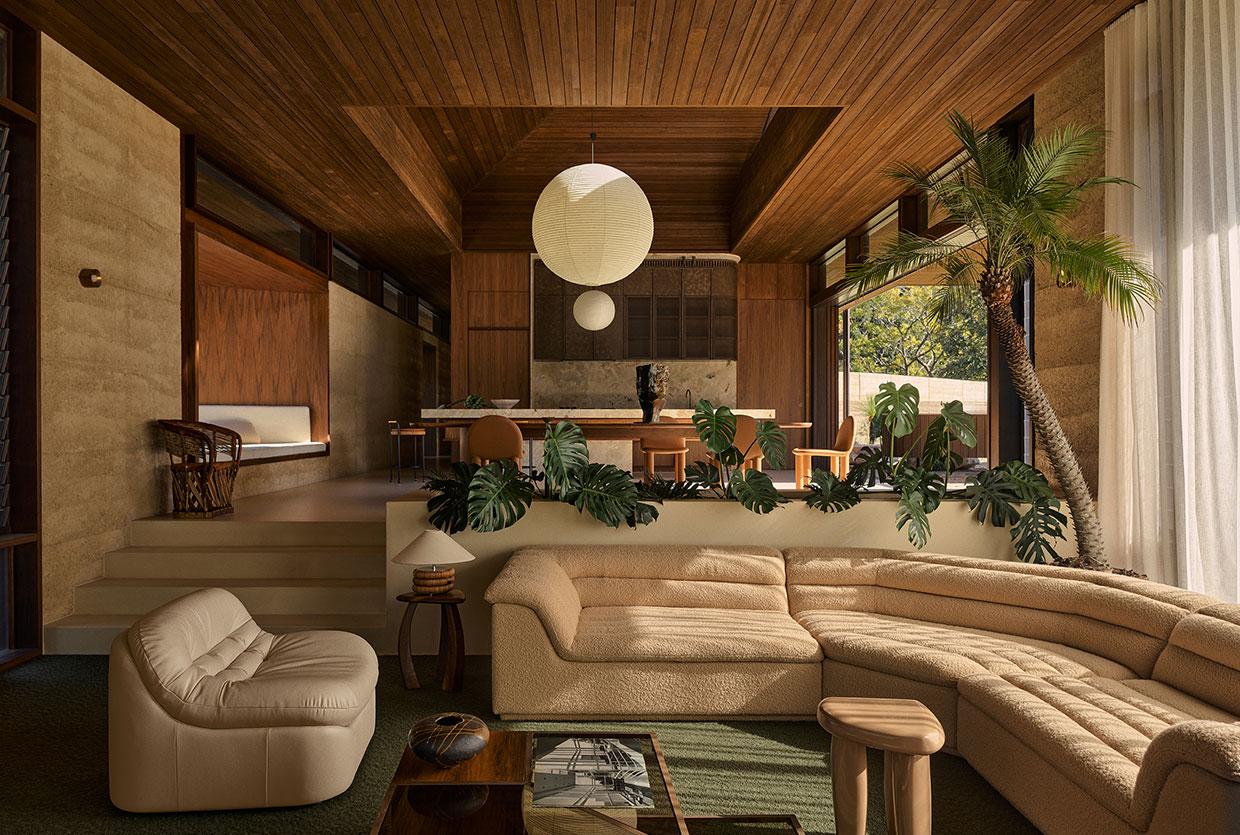
To understand Finca Talluca, one must first understand its bones. Designed by HGA Studio, the architecture is a masterclass in "Tropical Brutalism"—a style that takes the raw, honest weight of brutalist concrete and softens it through the lens of a sub-tropical landscape. This isn't the cold, imposing brutalism of mid-century government buildings; it is a warm, textural interpretation that feels as though it grew directly out of the Gold Coast hinterland soil.
The primary architectural hero here is the rammed earth wall. Unlike standard masonry, rammed earth possesses a unique, variegated texture that mimics the geological layers of the earth. It provides incredible thermal mass, keeping the home cool during the humid Queensland summers and warm during the crisp valley nights.
These monumental walls are punctuated by expansive glass and framed by warm timber accents, creating a seamless dialogue between the interior and the dense greenery outside. The structure doesn't fight the environment; it frames it. The use of natural stone underfoot continues this tactile journey, offering a cool, grounded sensation that invites you to walk barefoot through the halls.
Interior Curation: Collected Luxury and Family Functionality
Inside, the home shifts from the monumental to the intimate. As an editor, I am often asked how to achieve a "boutique hotel" feel without making a home feel like a museum. Finca Talluca provides the perfect answer: curation over decoration.
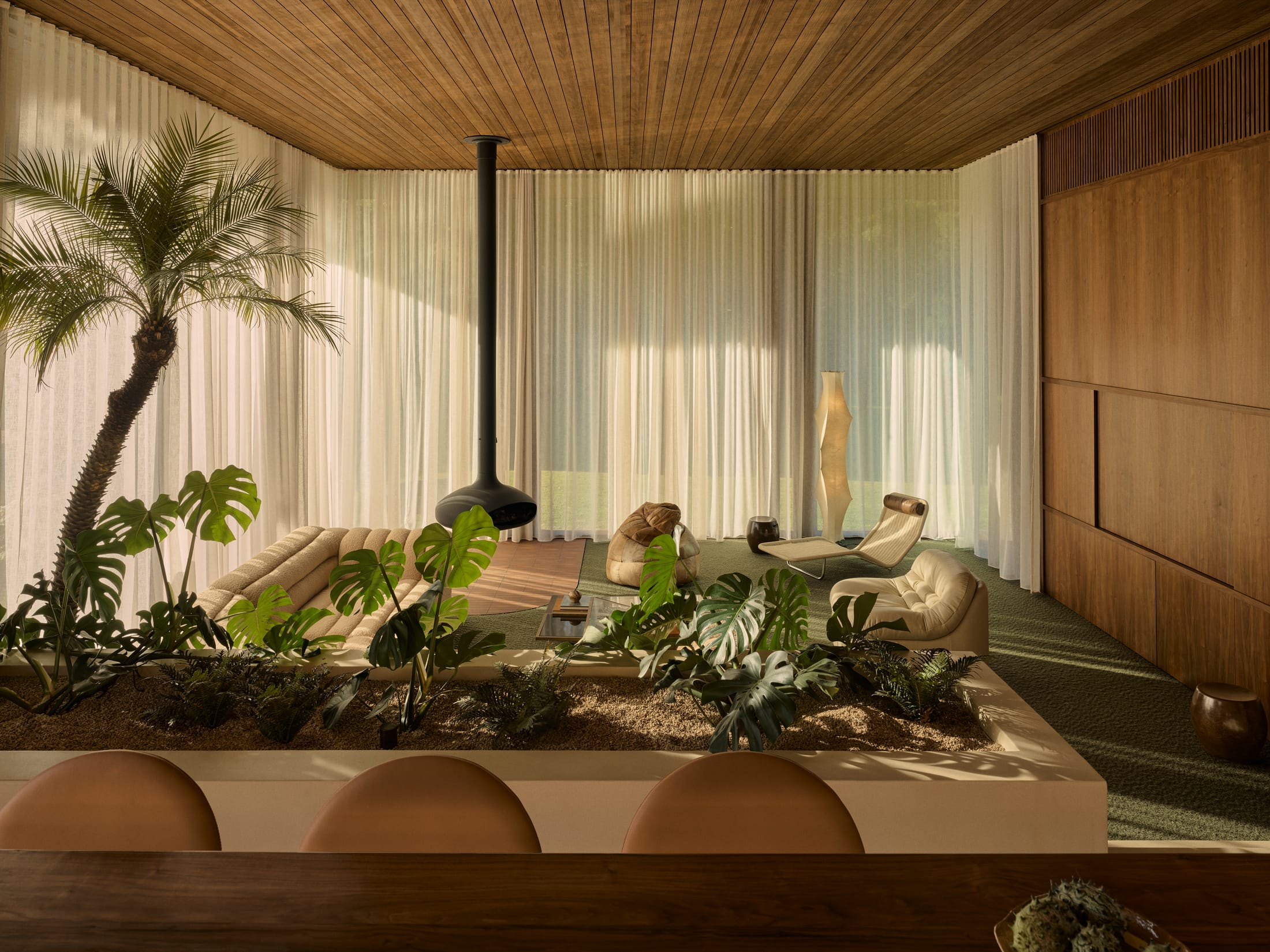
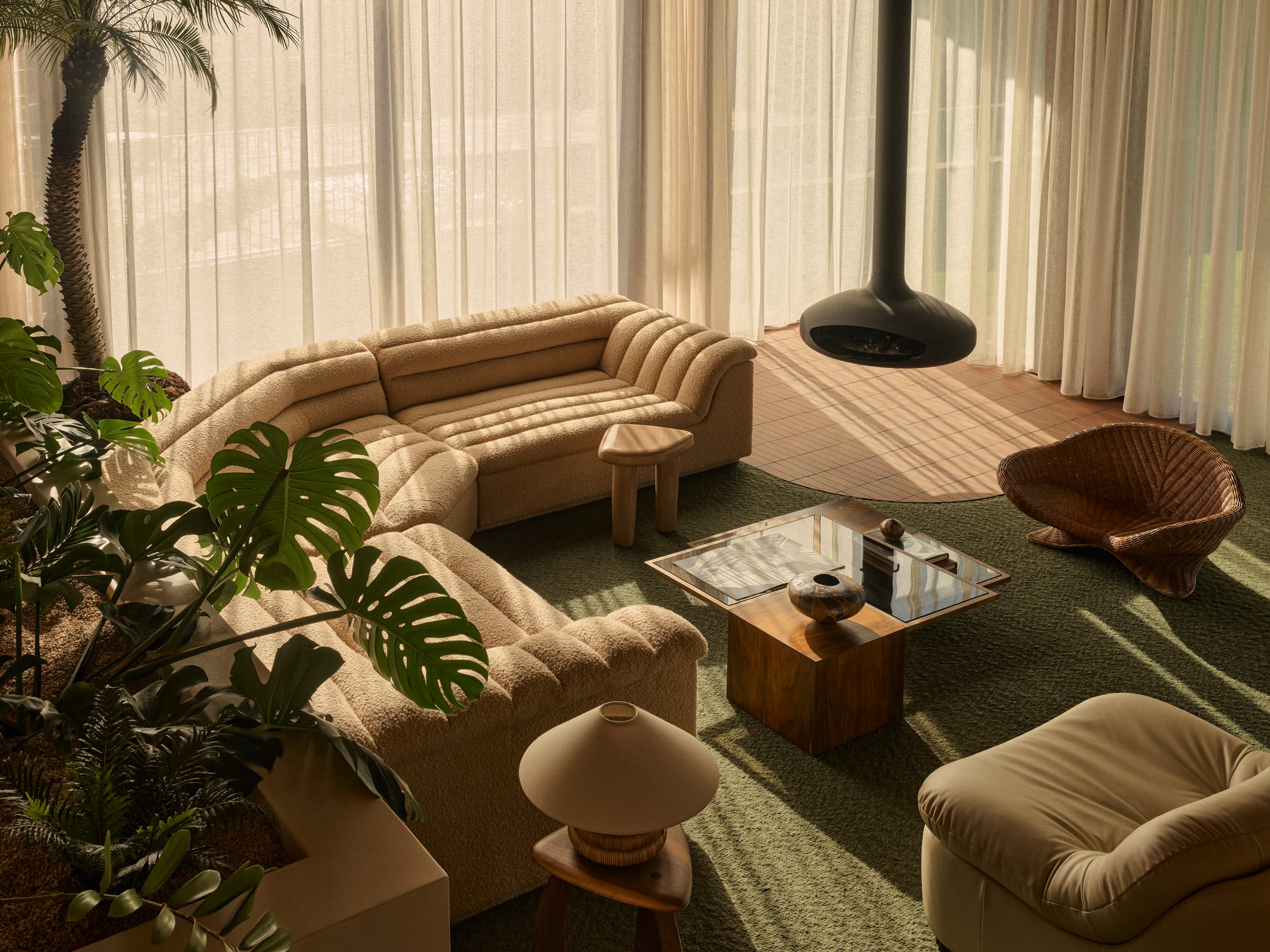
The interiors are a sophisticated dance between contemporary pieces from Ellison Studios and carefully sourced vintage 1970s finds. The living spaces are anchored by the Float Sofa—an Ellison Studios icon—whose low profile and modular design encourage the kind of relaxed, communal living that the Currumbin Valley demands.
| Feature | Design Selection | Aesthetic Intent |
|---|---|---|
| Seating | Ellison Studios Float Sofa & Glove Leather Occasional Chair | To create a "sunken lounge" feel that prioritizes comfort and conversation. |
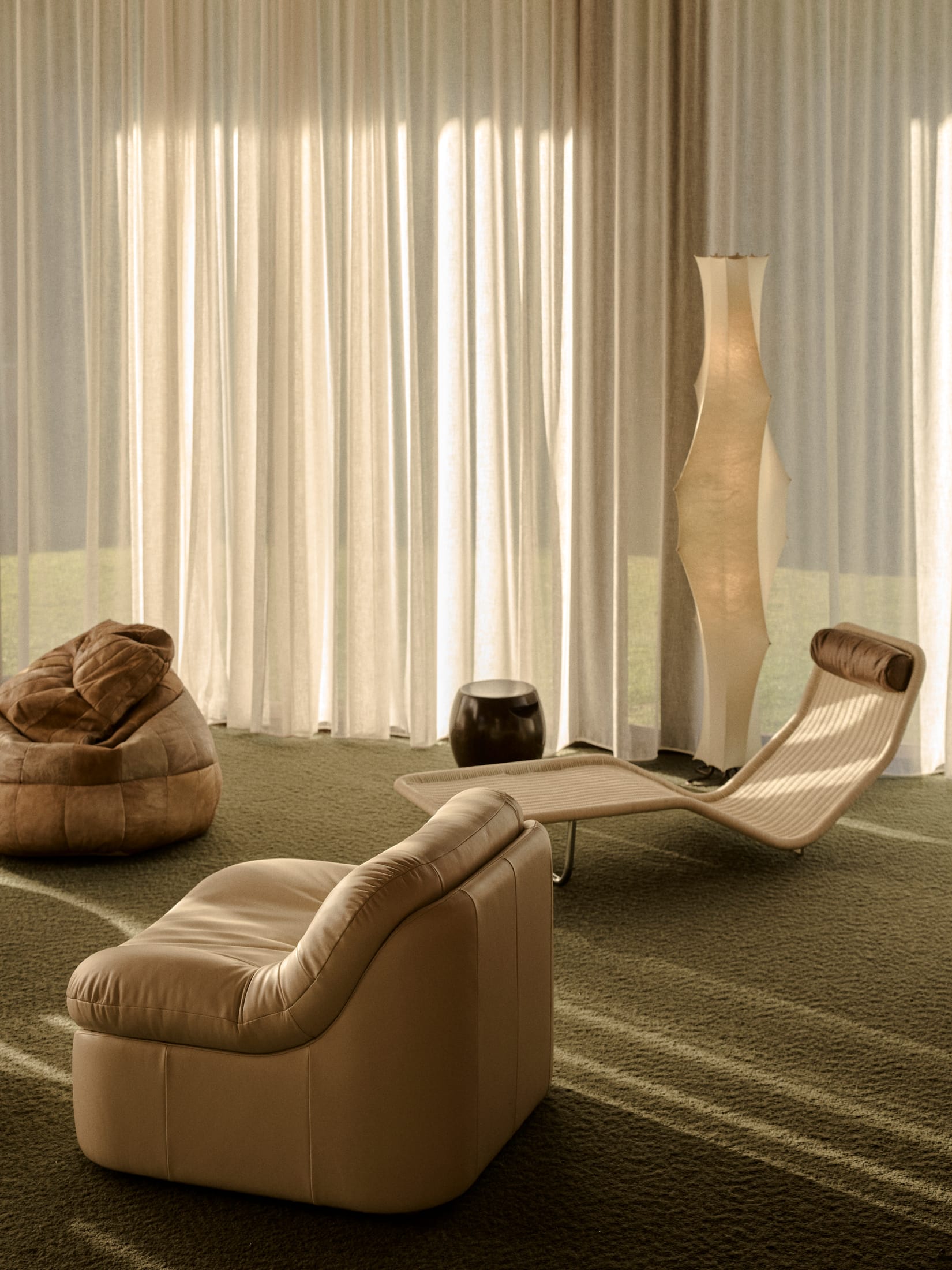
| Accents | Vintage 1970s De Sede patchwork leather beanbag | Adding a layer of history and "lived-in" soul to the new construction. |
| Flooring | Natural Stone and Polished Concrete | Providing a durable, easy-to-clean surface for an active family lifestyle. |
| Lighting | Sculptural Pendants & Indirect Warm LEDs | Enhancing the architectural curves while creating a moody, evening sanctuary. |
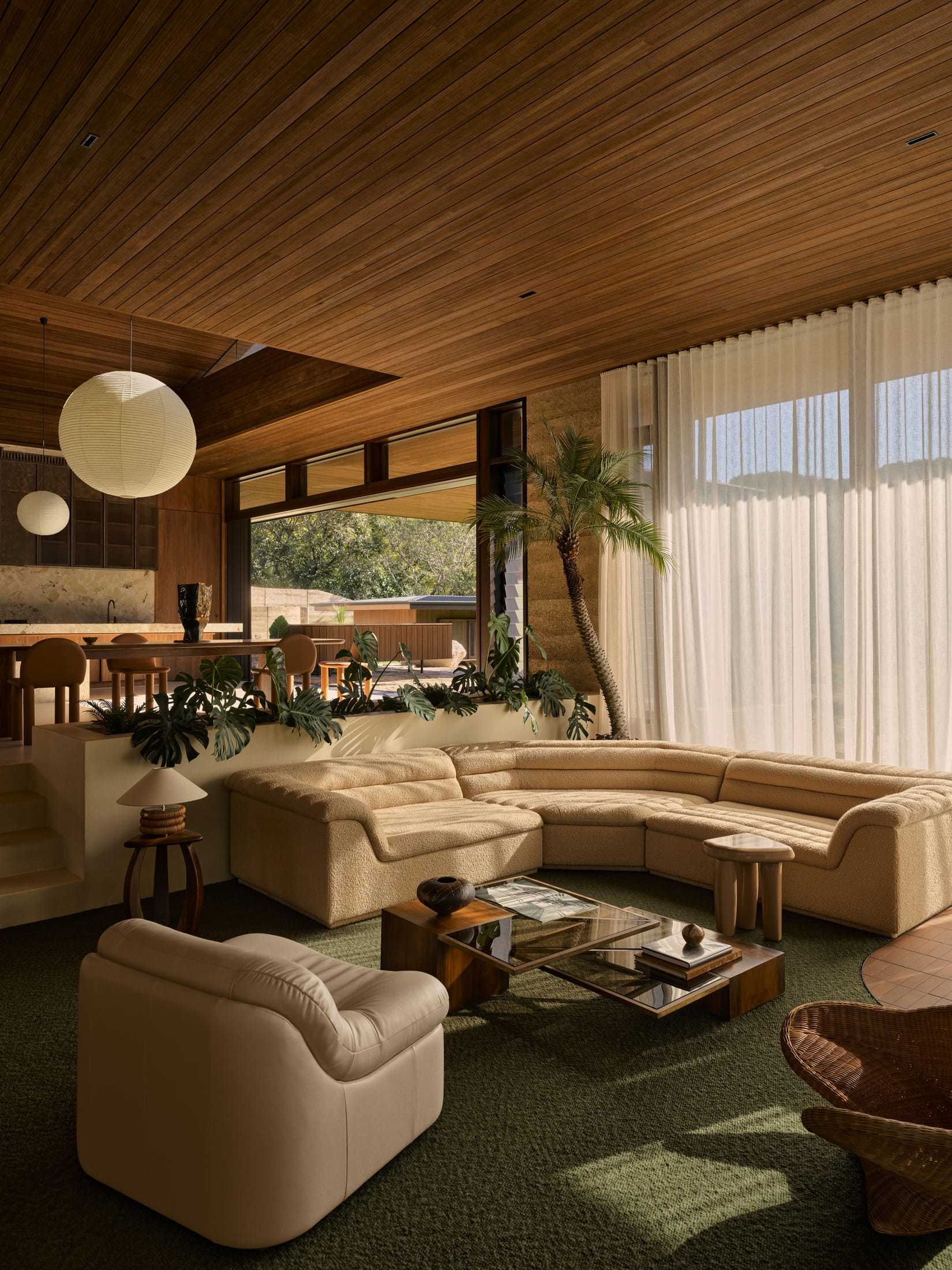
What makes the curation so successful is the contrast in textures. Imagine the smoothness of an Ellison Studios Glove Leather chair against the rugged, porous backdrop of a rammed earth wall. This juxtaposition is what gives the home its "sculptural" quality. It feels curated and intentional, yet it remains fundamentally a family home where children can run, and guests feel immediately at ease.
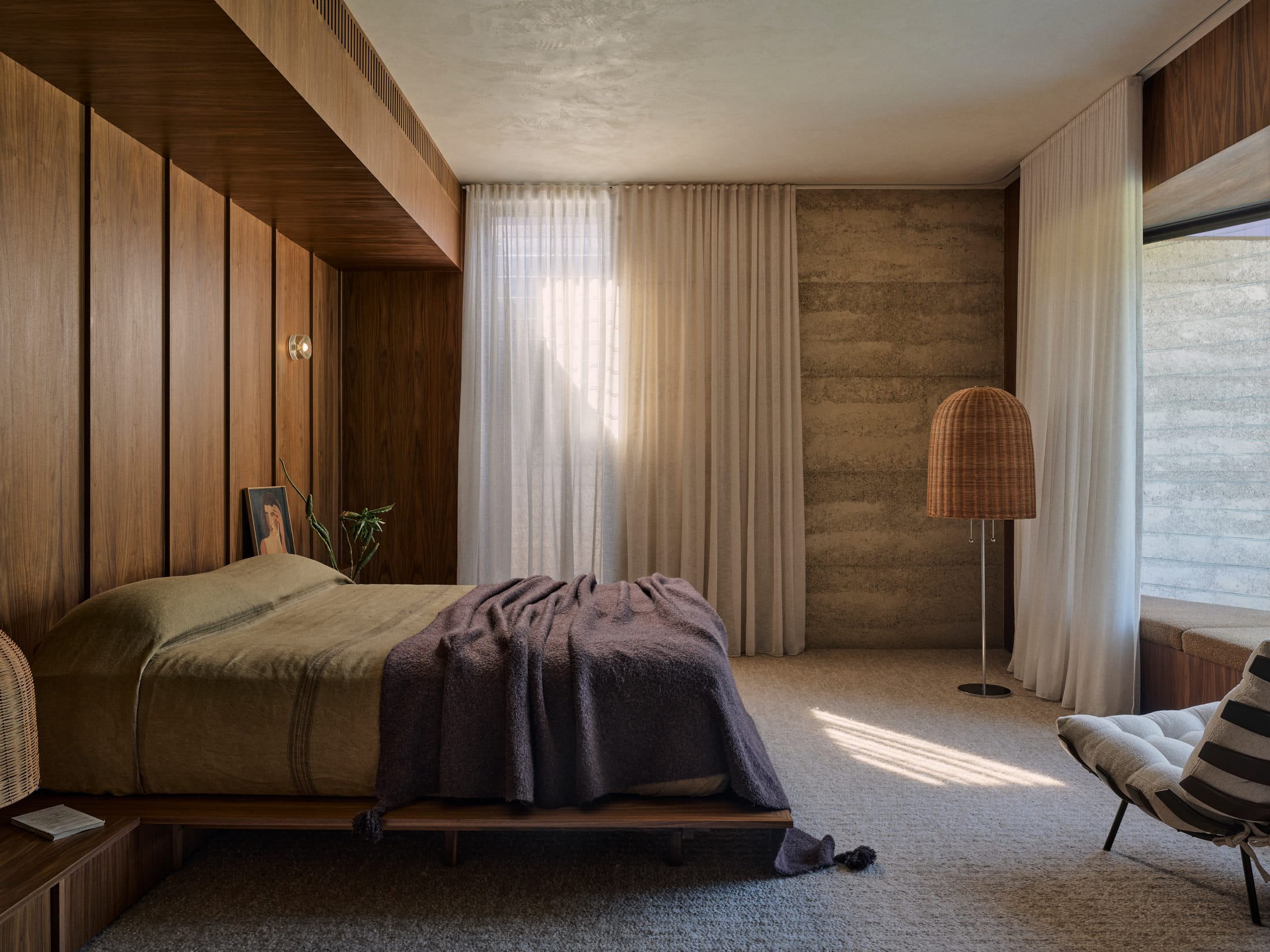
In the bedrooms, the mood shifts toward a serene, minimalist retreat. The Yoko Bed by Ellison Studios serves as the focal point, its clean lines and low-slung frame echoing the mid-century modern influences found throughout the home.
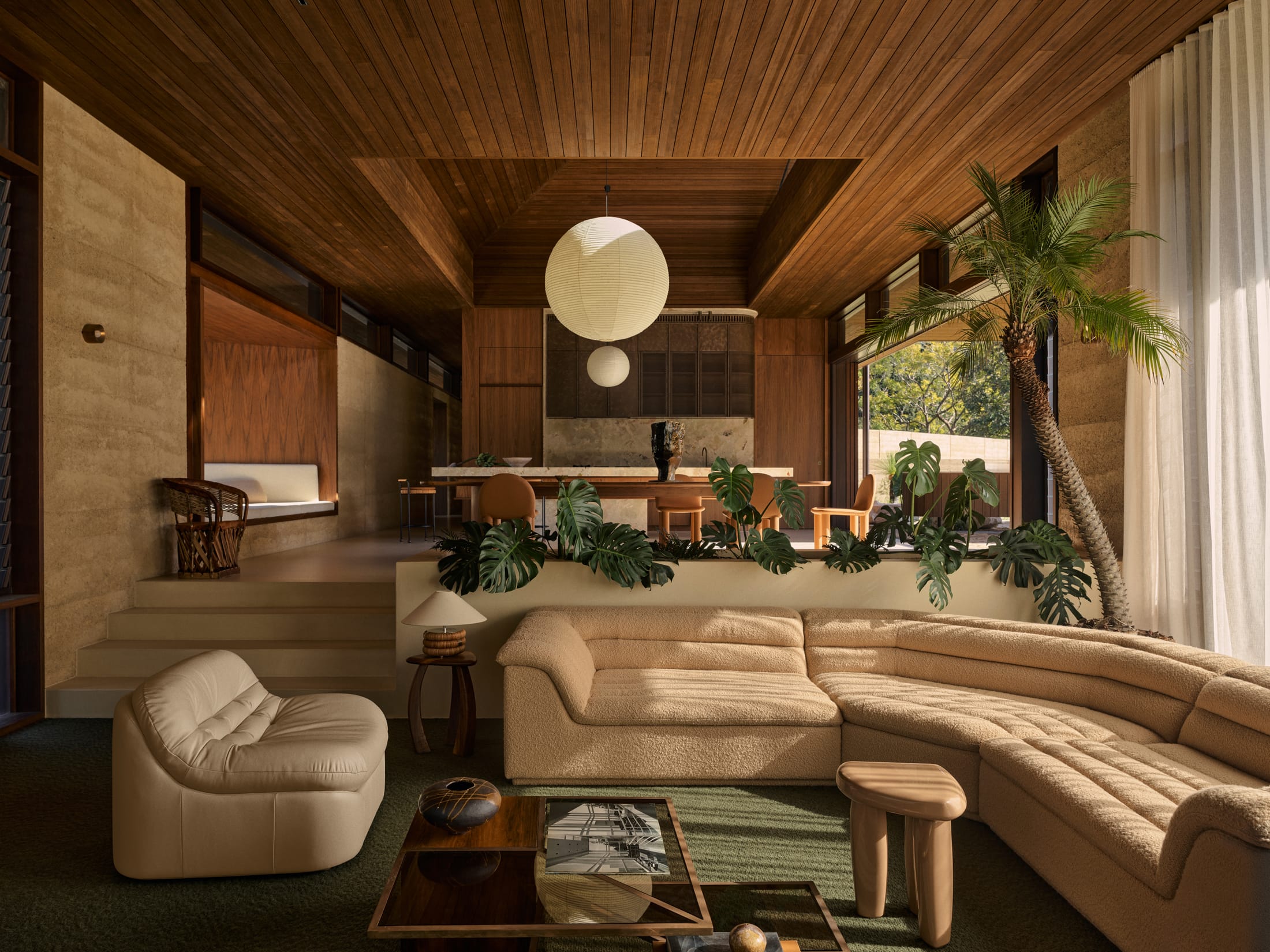
The kitchen and dining areas are perhaps the most functional expressions of the home's design philosophy. Here, natural timber cabinetry softens the brutalist bones, and high-end appliances are integrated so seamlessly that they almost disappear. It’s a space designed for the "slow life"—long Sunday brunches and late-night dinners that spill out toward the valley views.
The Permaculture Blueprint: 12 Principles in Practice
More than just a picturesque backdrop, the landscape of Finca Talluca is a working ecosystem. The project integrated over 12 distinct permaculture-inspired design principles to ensure the home functions in harmony with its environment. This wasn't an afterthought; it was a foundational requirement for Megan Ziems.
The design team looked at the site’s natural energy—sun, wind, and water—to dictate the home’s orientation and features.
- Observe and Interact: The home was positioned to maximize natural light and cross-ventilation, reducing the need for artificial heating and cooling.
- Catch and Store Energy: Passive solar design principles were used throughout, with the rammed earth walls acting as thermal batteries.
- Produce No Waste: Material selection focused on longevity and recyclability.
- Integrate Rather Than Segregate: The "edible landscape" surrounds the home, where fruit trees and vegetable patches are integrated into the ornamental gardens.
- Use Small and Slow Solutions: Instead of massive, earth-altering interventions, the landscaping follows the natural contours of the valley.
- Freshwater Systems: The property features a freshwater creek and a natural swimming hole, providing a chemical-free alternative to the standard pool.
By adhering to these principles, Finca Talluca becomes a "closed-loop" lifestyle experiment. It proves that high-end luxury and ecological responsibility are not mutually exclusive; in fact, they enhance one another.
Future-Proofing Design: Sustainability and Resilience
In an era of disposable trends and "fast furniture," Finca Talluca stands as a testament to durability. "Future-proofing" in this context isn't just about smart home technology; it’s about choosing materials that age gracefully.
Rammed earth and natural stone do not rot, peel, or go out of style. They develop a patina over time, telling the story of the family that lives within the walls. By investing in these "forever materials," the team at HGA Studio and Ellison Studios has created a home that is resilient against both the elements and the shifting tides of fashion.
The decision to use "small and slow" solutions—like the gradual cultivation of the permaculture gardens—ensures the long-term ecological health of the site. It is a design for the next 20 years and beyond, much like the friendship that inspired it.
Ivy's Style Tip: To achieve the Finca Talluca look in your own home, focus on "The Power of Three": One raw architectural material (like stone or wood), one sculptural contemporary piece (like an Ellison Studios chair), and one storied vintage find. It’s this mix that creates a home with a soul.
FAQ
What exactly is "Tropical Brutalism"? It is an architectural style that combines the raw, heavy materials of Brutalism (like concrete and rammed earth) with design features suited for tropical climates—such as wide eaves, large openings for cross-ventilation, and a deep integration with lush, green landscaping.
How can I incorporate permaculture into my home design if I don't have a huge property? Permaculture is about principles, not just scale. You can start by "observing and interacting"—notice where the sun hits your windows and use plants or blinds to manage heat. Creating a small composting system or a "vertical edible garden" on a balcony are also great ways to apply these principles in urban settings.
Is rammed earth expensive to build with? While the initial labor and material costs for rammed earth can be higher than traditional timber framing or brick, it offers significant long-term savings through its superior insulation properties and extreme durability, requiring almost zero maintenance over the decades.