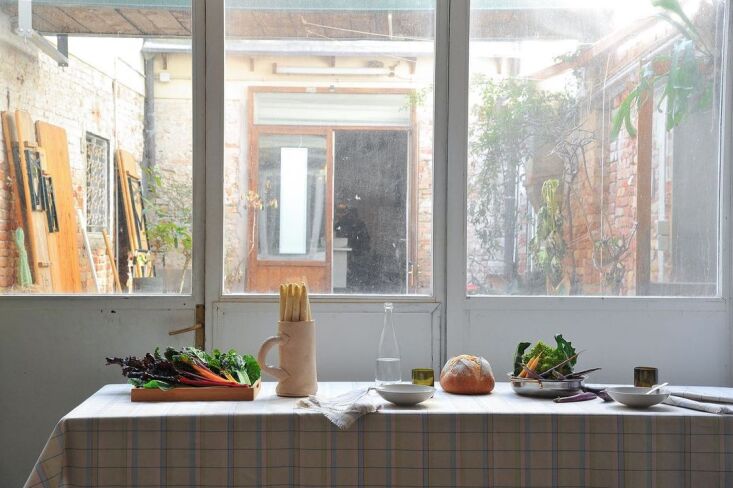
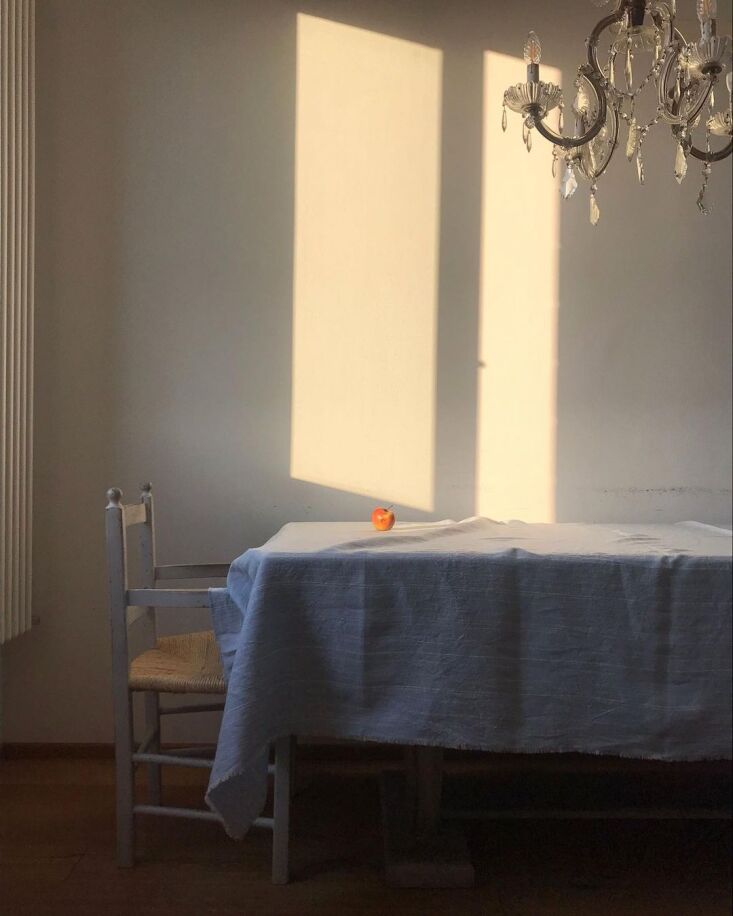
There is a specific kind of magic that happens when the late afternoon sun hits a table dressed in authentic Venetian linen. It isn’t just the way the light catches the weave; it’s the sense of weight, history, and deliberate craftsmanship that anchors the room. In the world of interior styling, we often talk about "investment pieces" in terms of sofas or art, but for those who understand the art of the slow, lived-in home, the true foundation of a dining room is its textile.
As we look toward 2026, the landscape of luxury hosting is shifting. We are moving away from the era of "disposable tablescapes"—characterized by fast-fashion runners and synthetic napkins—and entering a period of infrastructure-as-decor. Here, the linen is not just a backdrop; it is a structural element of the design. Recent market analysis suggests a 22% increase in demand for heritage-based textiles among luxury event planners and homeowners who are prioritizing longevity and soul over fleeting trends.
What makes Venetian artisan linens truly unique is their refusal to be stuck in the past. They represent a sophisticated fusion of centuries-old weaving traditions from the Veneto region and contemporary design sensibilities. These are not the stiff, scratchy linens of your grandmother’s formal parlor. Instead, they are high-quality blends of Italian linen, Egyptian cotton, and occasionally silk, produced by specialized northern Italian mills that have mastered the alchemy of texture and durability.
The Venetian Renaissance: Why Artisan Linens Define the 2026 Table
In 2026, the dining table has become the ultimate sanctuary for analog connection. In response, designers are reaching for materials that feel "grounded." Venetian linens, with their intricate jacquards and hand-finished details, offer a tactile experience that mass-produced alternatives simply cannot replicate.
The shift toward sustainable luxury dining decor has made artisan textiles a performance-driven choice. Buyers are no longer looking for "special occasion" cloths that stay locked in a sideboard; they want textiles that can withstand the rigors of a Tuesday night dinner while maintaining their luminous patina. This evolution is driven by a desire for items that tell a story—where the "imperfections" of a hand-loomed edge are seen as a mark of authenticity rather than a flaw.
The Alchemy of Giudecca: Traditional Craft Meets Modern Innovation
To understand these textiles, one must look toward the island of Giudecca and the historic studios scattered across the Venetian lagoon. Here, factories like the legendary Fortuny and studios like Mureri continue to use artisanal processes that feel like secrets whispered through generations.
The innovation lies in the fiber. While "100% linen" was once the gold standard, the modern Venetian artisan often works with complex blends. By weaving Italian linen with long-staple cotton and silk, weavers create a fabric that possesses the cool, crisp touch of linen but with a softer drape and a more resilient "memory." These blends are less prone to the aggressive creasing that plagues pure linen, making them more practical for the contemporary host.
Designer Spotlight: Chiarastella Cattana Located in a former 17th-century palazzo near San Samuele, Chiarastella Cattana is the bridge between Venice's textile history and modern minimalism. Her work is famous for its "Landscapes" and vintage-inspired weaves that use unconventional color palettes—think dusty ochre, deep teal, and graphite—to bring a Venetian edge to modern dining rooms. Her textiles are yarn-dyed, ensuring the color lives inside the fiber rather than sitting on top of it.
The Science of 'Vintage-Feel': Textures for the Modern Home
A recurring question I receive from readers is: Why choose vintage-inspired linens for modern dining? The answer lies in the "puffy" effect.
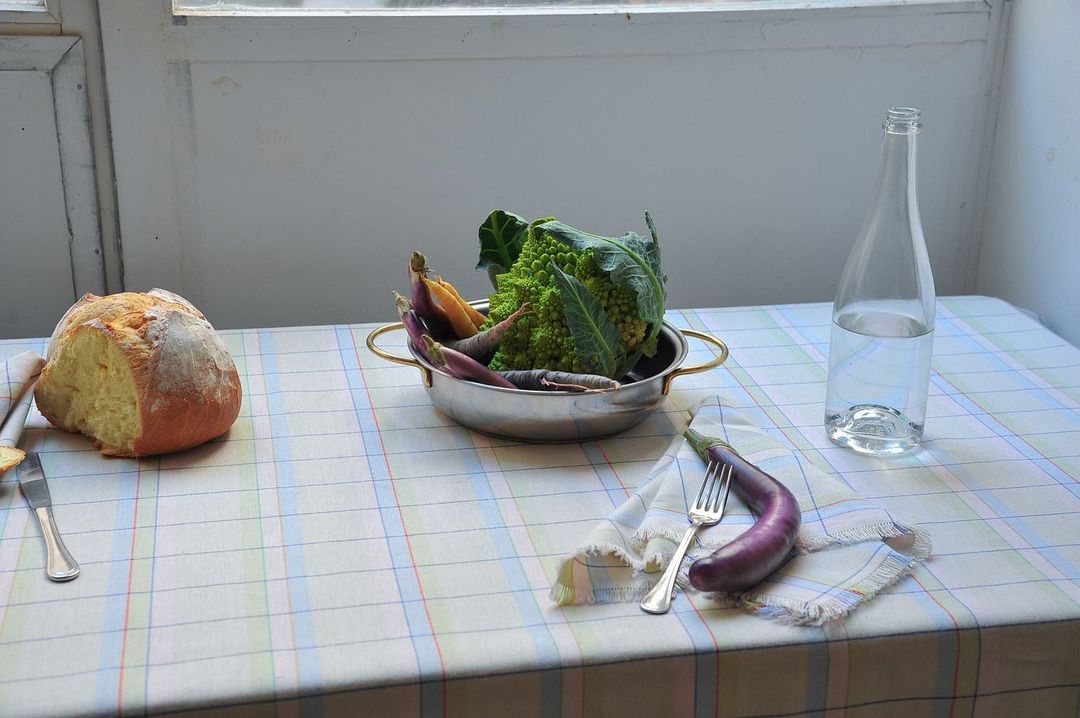
Vintage-inspired linens are designed to mimic the soft, voluminous texture of heirloom textiles that have been laundered for decades. However, thanks to modern technology, you don’t have to wait fifty years for that feel. Artisan mills now use advanced pre-washing treatments and "double-twisted thread" technology. By twisting two fine yarns together before weaving, the resulting fabric is significantly stronger and develops a three-dimensional texture that catches the light beautifully.
This isn't just an aesthetic choice; it’s a functional one. Industry surveys indicate that 85% of high-end boutique hospitality venues now prefer these pre-washed, double-twisted thread linens. Why? Because they retain their texture after hundreds of washes and require significantly less ironing than traditional starch-heavy linens. They offer a heritage aesthetic without the heritage maintenance.
Comparison: Choosing Your Textile Foundation
When selecting your table foundation, it is important to understand how different compositions perform.
| Feature | Pure Italian Linen | Venetian Artisan Blends (Linen/Cotton) |
|---|---|---|
| Hand-Feel | Crisp, cool, structural | Soft, "puffy," voluminous |
| Durability | High, but prone to fiber break at folds | Exceptional; double-twisted strength |
| Maintenance | Requires heavy steam ironing | Low-maintenance; "natural wrinkle" look |
| 2026 Trend | Traditional formal | Sustainable "Infrastructure Decor" |
| Best For | Ultra-formal summer banquets | Everyday luxury and high-frequency hosting |
Master of Detail: Choosing Your Tablescape Foundation
The foundation of your table depends entirely on the atmosphere you wish to create. In 2026, we are seeing a move toward layering—using multiple textile elements to create depth.
- The Full Tablecloth: The ultimate statement of hospitality. For rectangular tables, ensure a "drop" of at least 10–12 inches for a standard dinner, or 15 inches for a formal banquet.
- The Runner: Ideal for showing off a beautiful marble or reclaimed wood table while still providing a tactile landing spot for plates.
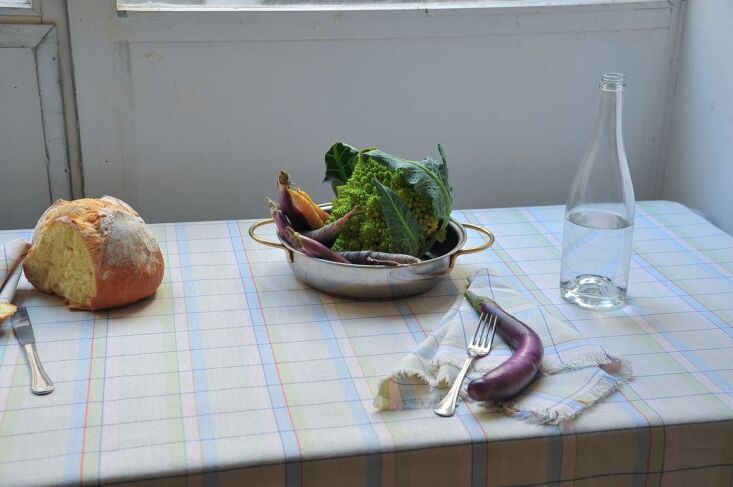
- The Placemat: Venetian placemats, particularly those with punto in aria (lace) details or fringed edges, serve as individual canvases for your dinnerware.
Designer Spotlight: Martina Vidal Venezia Based on the lace-making island of Burano, Martina Vidal represents the pinnacle of hand-finished detail. Their Sansovino and Venice collections are essential for those who want to incorporate traditional Venetian needlework into a modern setting. Their work often features delicate openwork that feels airy and architectural rather than "fussy."
Performance Luxury: 2026 Durability Standards
How are Italian artisan linens evolving for 2026? The keyword is engineering. Luxury linen sourcing has evolved into a performance-driven decision. Modern Venetian textiles are now engineered to be light-reflective—a crucial feature for the "camera-first" design world we live in. These fabrics are woven to bounce light back onto the guests’ faces, acting like a natural reflector during a dinner party.
Furthermore, wrinkle resistance has moved from a chemical coating to a mechanical property. By adjusting the tension on the looms, artisans can create a fabric that embraces a "soft drape" rather than a "hard crease." This allows the linen to look intentional and sophisticated even after several courses of a dinner party.
Maintenance: Protecting Your Venetian Investment
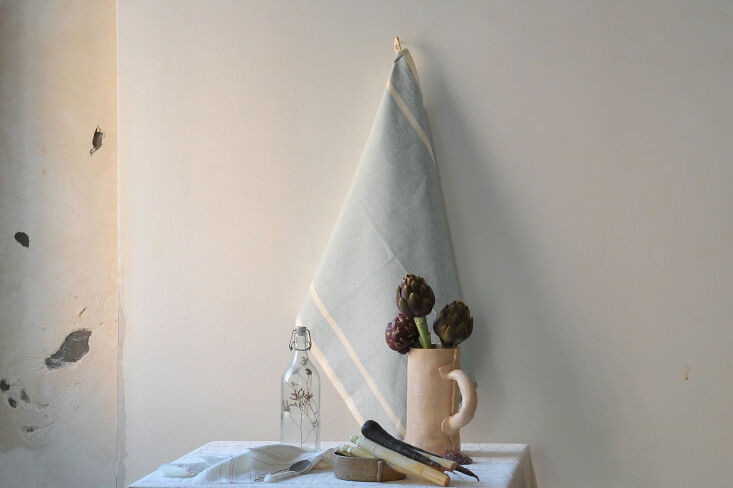
Investing in Venetian artisan linens is an investment in a future heirloom. To ensure they last until 2050 and beyond, follow these expert care tips:
- Immediate Action on Stains: For red wine, blot (don’t rub) and apply sparkling water immediately. For oil stains, a dusting of cornstarch or talcum powder will lift the grease before washing.
- The Temperature Rule: Never wash luxury linens in boiling water. A lukewarm cycle (30-40°C) with a gentle, pH-neutral detergent is sufficient.
- Drying with Care: Avoid high-heat tumble drying, which makes fibers brittle. Line dry until slightly damp, then iron on the reverse side to protect the jacquard patterns or embroidery.
- Storage: Store your linens flat in a cool, dry place. Avoid plastic bins, which can trap moisture and cause yellowing; instead, wrap them in acid-free tissue paper or cotton storage bags.
FAQ
Are Venetian linens worth the price compared to standard European linen? Yes, because of the "yarn-dyed" process and double-twisted thread technology. Standard linens are often piece-dyed (dyed after weaving), which fades faster. Venetian artisan linens are woven from pre-dyed threads, resulting in a depth of color and structural integrity that lasts decades longer.
Can I use these linens for everyday dining, or are they too delicate? The 2026 trend is specifically toward "Performance Luxury." Most modern Venetian blends are designed for frequent use. Thanks to pre-washing treatments, they actually become softer and more beautiful the more they are used and laundered.
How do I tell if a Venetian tablecloth is authentic? Look for the "Made in Italy" certification specifically mentioning the Veneto region. Authentic artisan pieces will have consistent tension in the weave but slight, charming variations in the hand-finished edges or fringe—marks of a human hand rather than a high-speed industrial machine.
Elevate Your Home
The dining table is the heart of the home, the place where stories are told and memories are made. By choosing artisan linens from Venice, you aren't just buying a tablecloth; you are bringing a piece of Italian history into your daily life. Whether it’s a fringed runner for a casual brunch or a heavy jacquard cloth for a holiday feast, these textiles provide the tactile soul that modern living spaces so often crave.