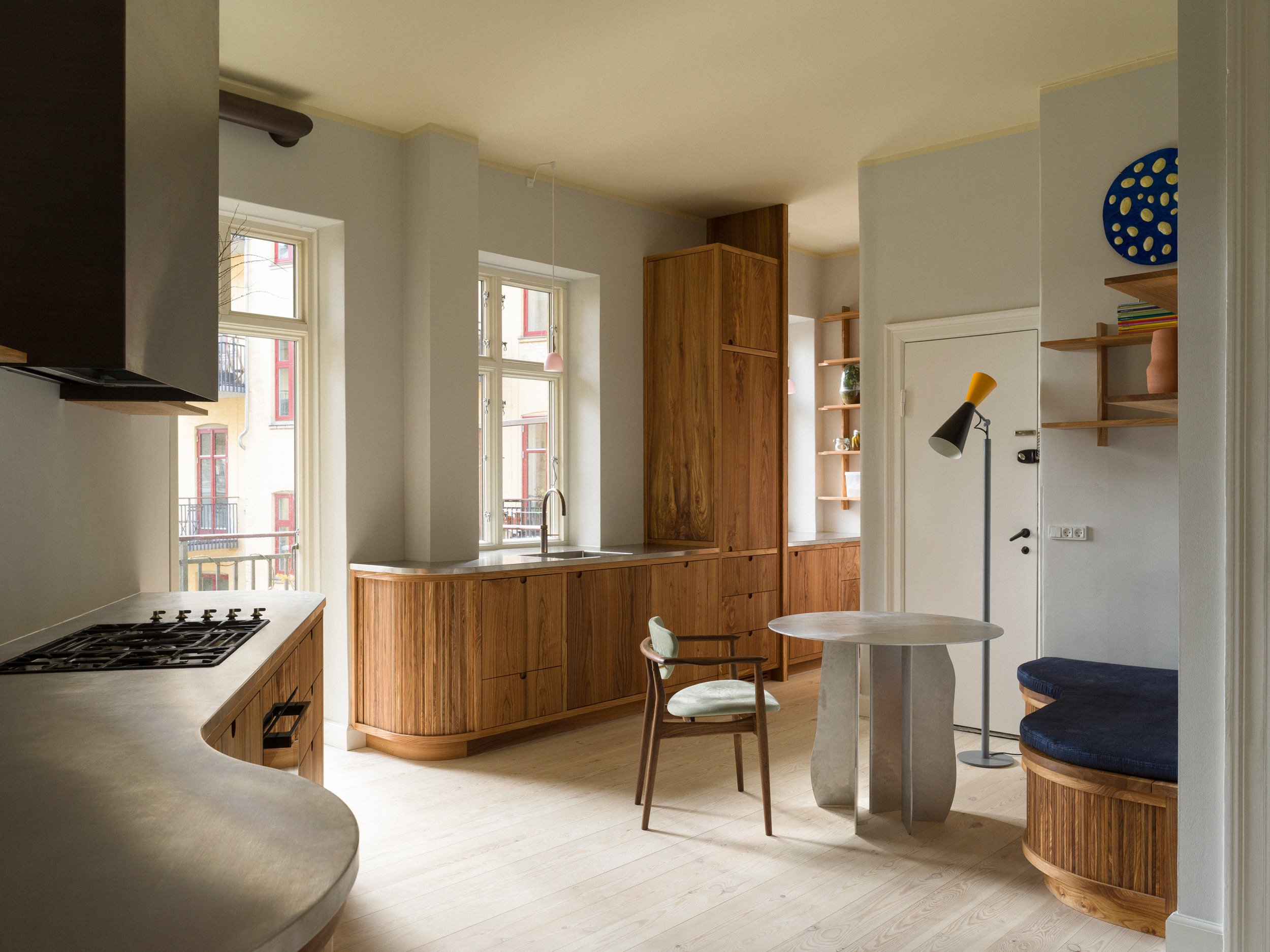
In the quiet, light-filled corners of a Nørrebro apartment, the kitchen does not merely serve as a place for culinary preparation; it exists as a living archive of Copenhagen’s botanical history. There is a specific kind of magic that happens when high-end architecture meets radical sustainability. As an editor, I often see "custom" used as a buzzword, but in the heart of Denmark’s capital, it has taken on a profound new meaning. Here, the cabinetry isn't just sourced from a lumber yard—it is salvaged from the city’s own squares, turning diseased trees into heirloom-quality "fine art."
For those looking to understand the pinnacle of contemporary Nordic design, the answer lies in a blend of historical provenance and professional-grade utility. The most talked-about organic kitchen in Copenhagen today is crafted from oiled Elm, salvaged from the city’s iconic Kongens Nytorv park after the trees were felled in 1998 due to Dutch Elm disease. By waiting over 25 years to mill and install this wood, designers have showcased a commitment to circular design that far outpaces fleeting trends.
The Soul of the Space: Salvaged Elm and the Nørrebro Project
The story of the Nørrebro kitchen begins with a tragedy turned into a triumph. In the late 90s, the majestic elms of Kongens Nytorv were a casualty of environmental shifts. Instead of being discarded, this wood was preserved, seasoned, and eventually placed in the hands of the master carpenters at Rammelisten. This project represents more than just a renovation; it is a 170-square-meter (1,800 sq. ft) masterclass in integrating professional-grade features into a late 19th-century residential footprint.
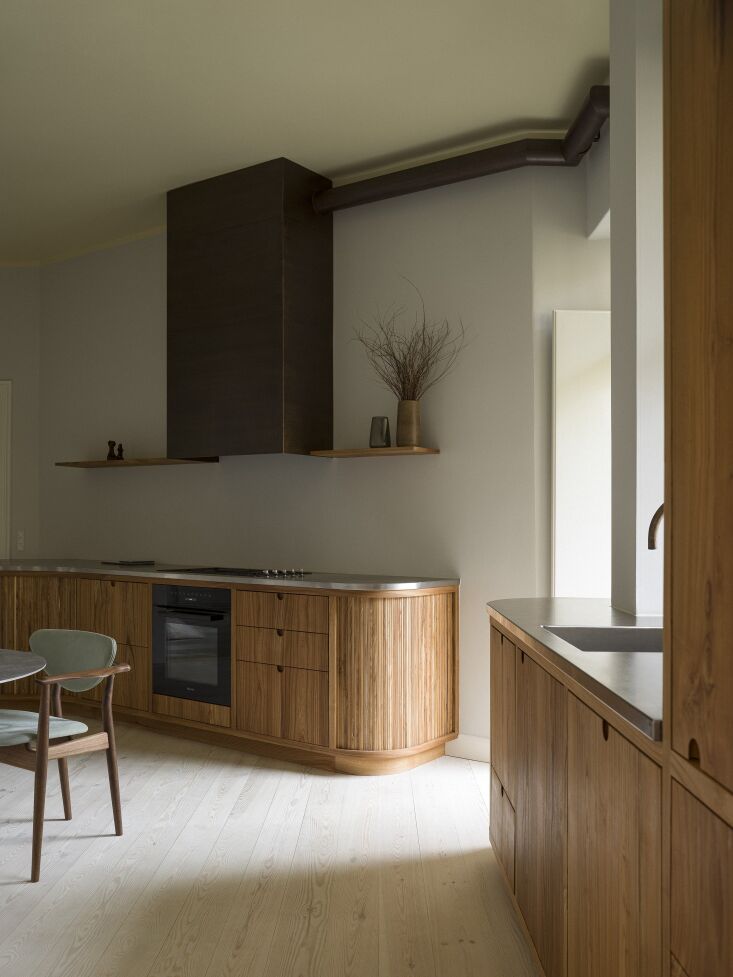
What sets this Elm cabinetry apart is the meticulous attention to the "vertical annual rings." In traditional cabinetry, wood is often cut for speed or volume. Here, the grain is treated like a canvas. The carpenters oriented the wood to ensure the natural narrative of the tree's life—its years of growth and struggle—is visible on every drawer front. The result is a tactile, undulating texture that feels warm to the touch and deeply grounded in its environment.
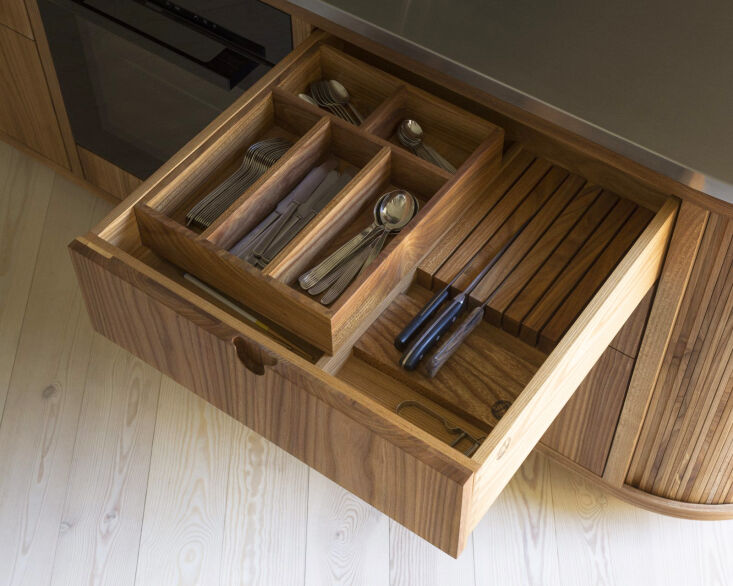
When working with salvaged wood of this caliber, the design philosophy must be one of restraint. The Elm is finished with a simple oiling process, allowing the natural caramel and honey tones of the wood to deepen over time. This approach ensures that the kitchen will not only age gracefully but will develop a patina that reflects the daily life of the family inhabiting the space.
Undulating Forms: Lundgaard & Tranberg’s Organic Vision
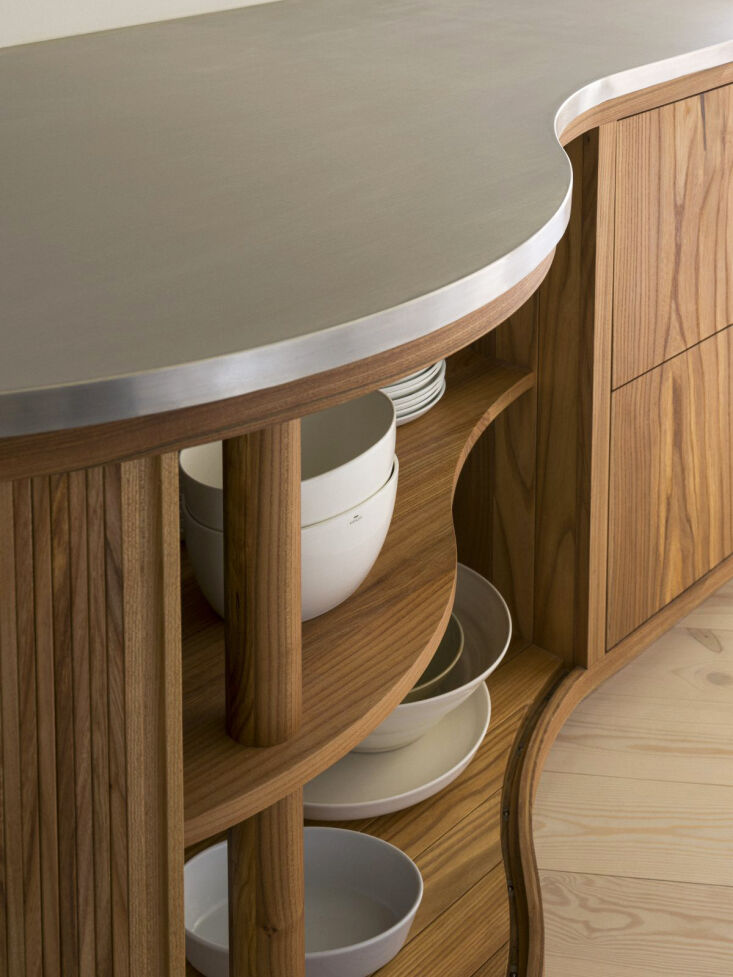
Stepping away from the rigid, linear layouts that have dominated kitchen design for decades, the architectural firm Lundgaard & Tranberg has introduced a more "organic" vision. In their recent Copenhagen apartment redesigns, they’ve moved toward forms that mimic nature rather than the machine.
The inspiration for these spaces often comes from unexpected places. For the Nørrebro project, the architects drew from the soft, moody palettes of Mamma Andersson’s painting, Swan Pond. This influence is felt in the way the kitchen unfolds; it doesn't feel like a series of boxes attached to a wall, but rather a landscape of furniture.
Key architectural elements include:
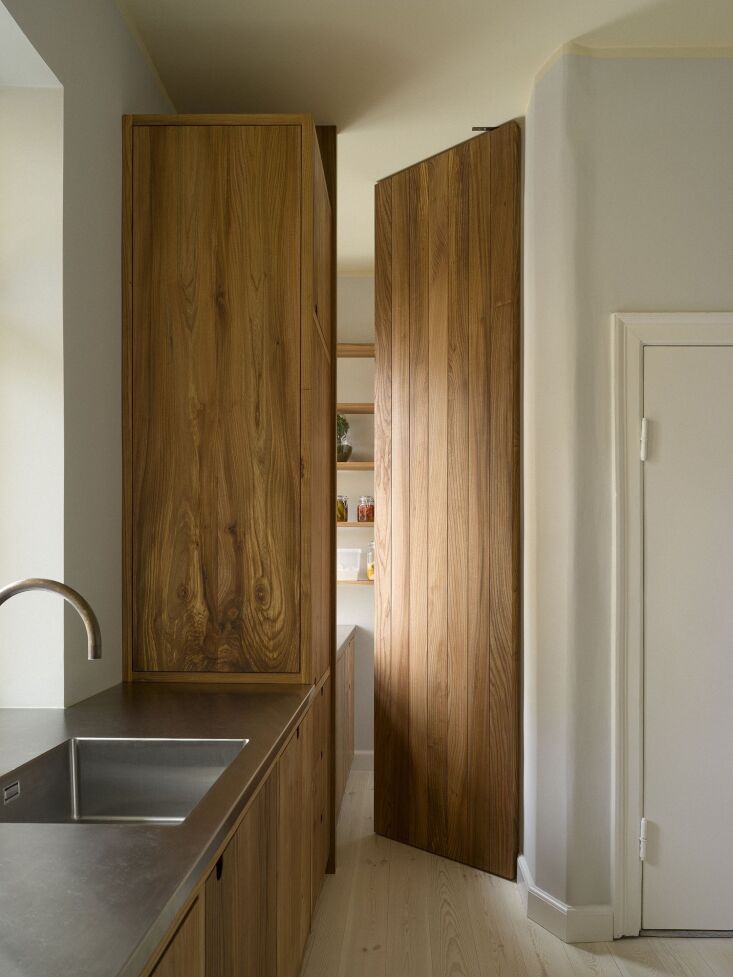
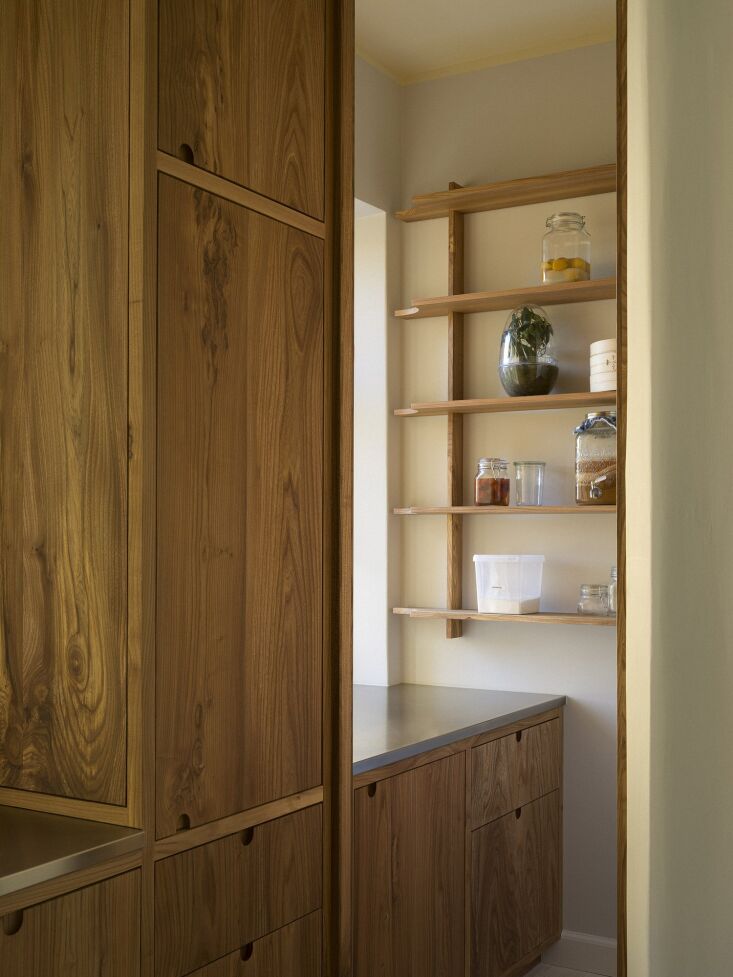
- Floating Pantry Doors: Utilizing floor-to-ceiling pinion hinges, these doors appear to hover, creating a sense of lightness in an otherwise solid wood structure.
- Louvered Fronts: These provide a rhythmic texture that breaks up the mass of the wood, allowing for a play of light and shadow throughout the day.
- Integrated 'Hidden' Appliances: By using the same Elm grain across all surfaces, the technical elements of the kitchen disappear, leaving only the beauty of the material.
Editor’s Tip: When designing with organic forms, balance is key. If your cabinetry features heavy grain or undulating shapes, keep your flooring and ceiling treatments neutral to allow the "furniture" of the kitchen to breathe.
The Professional Standard: Garde Hvalsøe’s Østerbro Kitchen
While Lundgaard & Tranberg focus on the architectural soul, firms like Garde Hvalsøe focus on the "chef-standard" heartbeat of the home. When designing for the likes of Chef Mikkel Egelund, the brief is clear: efficiency must meet comfort. Danish design has always excelled at this intersection—what we call hygge meets håndværk (craftsmanship).
In high-end Østerbro kitchens, you will often see a departure from Elm in favor of Ash wood. Ash provides a lighter, more consistent backdrop that pairs beautifully with the industrial rigor of stainless steel. Garde Hvalsøe is particularly renowned for their "professional-standard domestic kitchens," where every drawer is finger-jointed and every worktop is built to withstand the heat of a busy service.
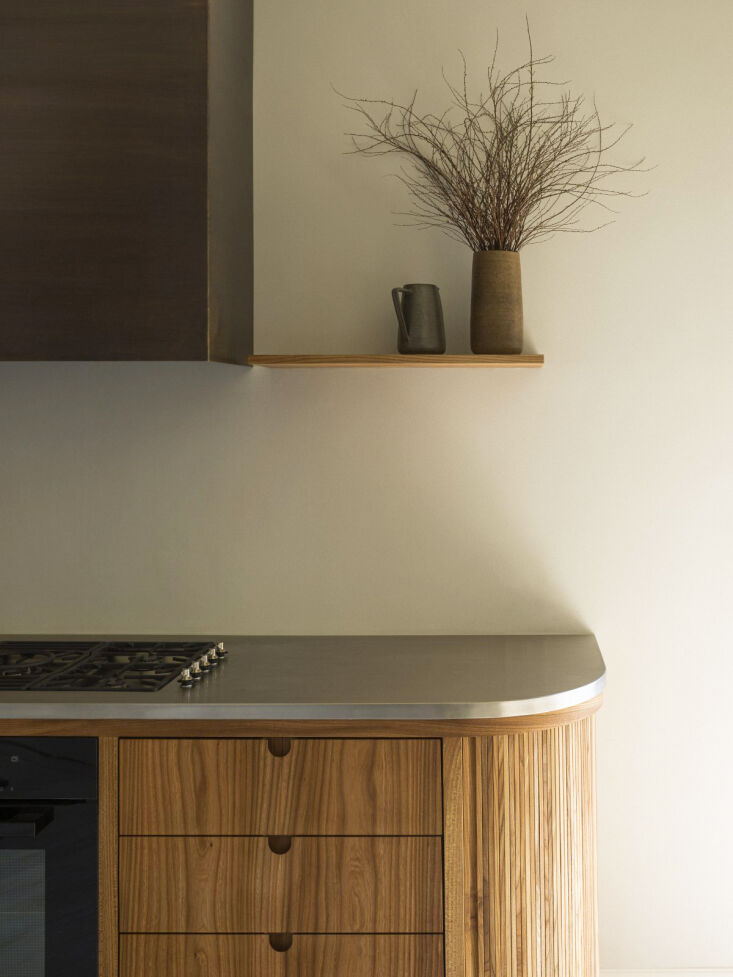
The hallmark of this style is the "Mixed Material" approach. While the wood provides the soul, the metal accents provide the heartbeat. It is common to see a 5mm solid stainless steel worktop paired with deep, soft-close Ash wood drawers—a combination that is as hygienic as it is aesthetically pleasing.
The Signature Copenhagen Palette: Mixed Materials
If you are looking to replicate the Copenhagen look, you must look beyond just the wood. The signature palette of a high-end Danish kitchen is a sophisticated mix of the organic and the industrial.
The essential materials include:
- Natural Danish Woods: Primarily Elm or Ash, chosen for their resilience and local heritage.
- Burnished Brass: Often used for custom-made extractor hoods or faucet details. Unlike polished brass, burnished brass has a matte, lived-in quality that avoids looking "glitzy."
- Stainless Steel: Typically used in professional-grade worktops or integrated sinks for a seamless, sleek look.
- Natural Stone: Often used as a secondary texture, such as a marble backsplash or a quartz island top, to provide a cooling counterpoint to the warmth of the wood.
The collaboration with specialized metalworkers is what truly elevates these kitchens. Brands like Heartsteeling or Gørtler Metalsmeden are frequently tapped by architects to create one-off pieces, such as burnished brass hoods that serve as the kitchen's focal point.
Sustainable Trends: Why European White Oak is the 2026 Standard
While the salvaged Elm of Nørrebro is a rare treasure, the broader market is shifting toward a "New Neutral." As we look toward 2026, European White Oak is emerging as the gold standard for sustainable custom kitchens. This shift is driven by a massive move toward biophilic design—recent data suggests that 72% of homeowners now prioritize natural materials that foster a connection to the outdoors over synthetic finishes.
European White Oak is distinct from its American counterparts. It offers a more neutral, "wheat-like" tone without the pink or yellow undertones found in Red Oak. This neutrality makes it the perfect foundation for a kitchen that needs to feel timeless yet modern.
Comparison: Choosing Your Oak
| Feature | European White Oak | Traditional Red/Yellow Oak |
|---|---|---|
| Tone | Neutral, cool tan to pale brown | Warm, distinct pink or golden hues |
| Grain Pattern | Tight, elegant, and linear | Open, "wilder" grain with more knots |
| Durability | High (tannin-rich, rot-resistant) | Moderate (more porous) |
| 2026 Trend Status | The "Foundation" Neutral | Traditional / Country Aesthetic |
The performance benefits of European White Oak are as significant as its beauty. Its high tannin content makes it naturally resistant to impacts and moisture, essential for the high-traffic zones of a family kitchen.
Matching Cabinetry and Countertops: A 2026 Style Guide
Achieving a high-end look isn't just about choosing the most expensive materials; it’s about the "marriage" of surfaces. For 2026, we are seeing a move away from high-contrast pairings (like stark white marble on dark wood) toward tonal harmony.
The "Soft Organic" Pairing
- Cabinetry: Natural Ash or European White Oak.
- Countertop: Matte White Quartz or Honed Limestone.
- The Result: A bright, airy space that feels expansive and calming.
The "Urban Professional" Pairing
- Cabinetry: Oiled Elm or Smoked Oak.
- Countertop: 5mm Stainless Steel or Black Brushed Granite.
- The Result: A moody, sophisticated kitchen that feels like a private chef’s studio.
For those who want the custom Copenhagen look without the architectural price tag, brands like George Cabinetry or DL Cabinetry offer high-quality RTA (Ready-to-Assemble) options that mimic these organic wood finishes. By choosing "slab" style doors in oak or ash finishes, you can achieve the "floating" aesthetic of a Danish kitchen at a fraction of the cost.
In the end, whether you are using 200-year-old salvaged Elm or sustainably harvested White Oak, the goal of the Copenhagen kitchen is the same: to create a space that feels less like a workspace and more like a sanctuary. It is a reminder that the materials we surround ourselves with have the power to tell a story—and in Denmark, that story is one of history, craftsmanship, and a deep, abiding respect for the natural world.
FAQ
What wood is used in the unique Nørrebro organic kitchen? The cabinetry is primarily crafted from oiled Elm salvaged from Copenhagen’s Kongens Nytorv park. These trees were felled in 1998 due to Dutch Elm disease and were seasoned for over two decades before being used in the project.
Who are the leading designers for bespoke kitchens in Denmark? Notable firms include Lundgaard & Tranberg Arkitekter, known for their organic, furniture-like approach to kitchen architecture, and Garde Hvalsøe, who specialize in handcrafted, professional-standard domestic kitchens.
What are the signature materials of a high-end Copenhagen kitchen? Contemporary Danish designs often blend natural local woods (like Elm, Ash, or Oak) with industrial accents. Signature elements include burnished brass extractor hoods, solid stainless steel worktops, and custom-milled wooden handles.