There’s a quiet revolution happening under our sinks. For years, the design world favored the sleek, hard lines of custom cabinetry or the industrial exposure of open plumbing. But as we move through 2024, a softer, more tactile aesthetic is taking over. Driven by the "Grandmillennial" trend and a collective desire for homes that feel lived-in and soulful, the humble sink skirt has made a triumphant return.
Market data confirms this shift: there has been a 45% year-over-year increase in "sink skirt" searches in 2024. This isn't just about nostalgia; it’s about a practical, high-impact solution for modern problems. Whether you are a renter trying to mask an ugly pedestal sink or a homeowner looking to add character to a utility room, a sink skirt is your best friend. Essentially, a sink skirt is a fabric panel used to hide exposed plumbing, cleaning supplies, and toiletries under a basin, providing both a nostalgic aesthetic and functional storage camouflage.
Why Designers are Choosing Skirts Over Cabinetry
As an editor who focuses on budget-friendly upgrades, the financial argument for a sink skirt is the first thing I mention to readers. Utilizing a DIY fabric sink skirt instead of installing custom cabinetry can save homeowners an average of $300 to $500 in bathroom renovation costs.
Beyond the savings, sink skirts offer a unique design advantage: they "soften" a room. Bathrooms and kitchens are naturally full of hard surfaces—tile, stone, porcelain, and metal. Adding a fabric element breaks up that visual hardness, introducing movement and pattern in a way a wooden box simply cannot. Furthermore, for those living in industrial lofts or older apartments where drilling into walls or floors is prohibited, the no-drill sink skirt is a "renter-friendly" hack that completely transforms a space without risking a security deposit.
7 Stylish Ways to Skirt Your Space
Choosing the right fabric and style can turn a simple cover-up into the focal point of your room. Here are seven ways we are seeing designers and DIYers embrace the revival this year.
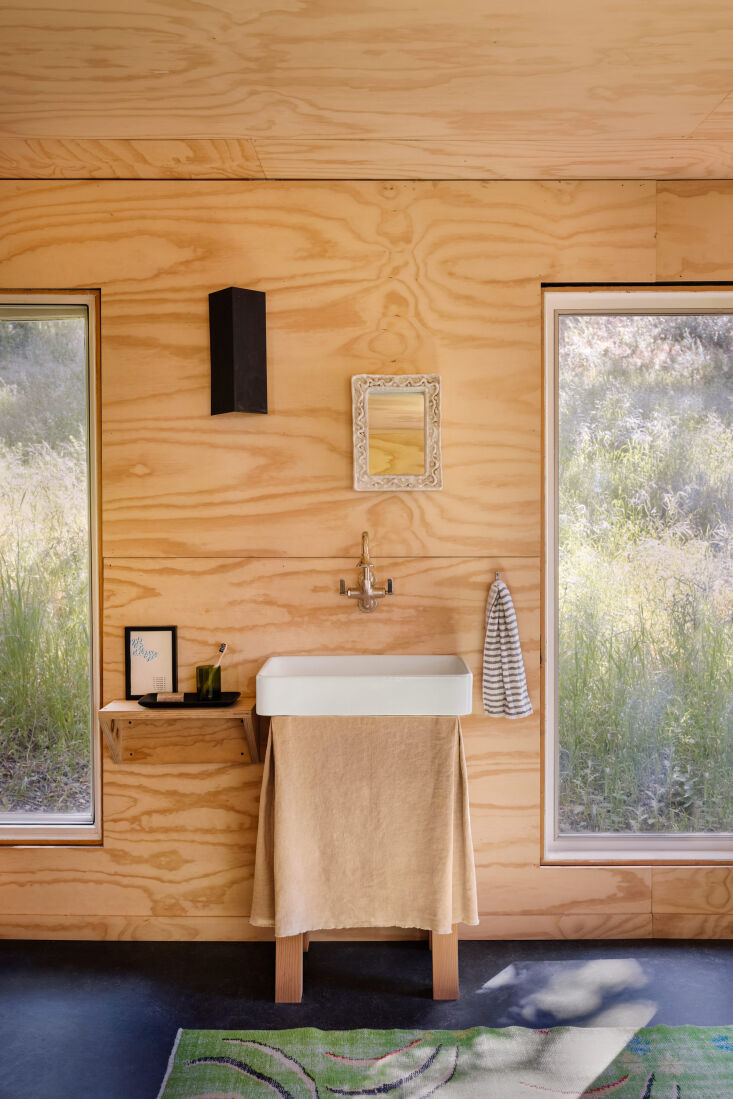
1. The Ochre Linen Wrap
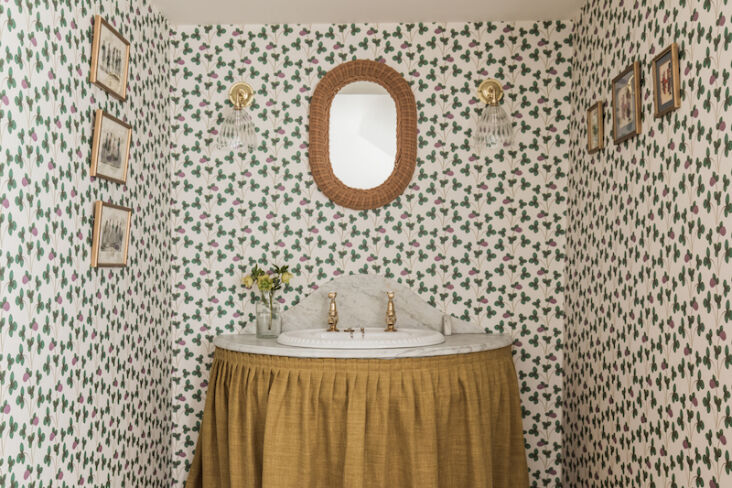
There is something undeniably timeless about high-quality linen. An ochre or mustard tone brings an earthy warmth that pairs beautifully with the cold, white surfaces of vintage marble basins. The natural "slub" of the fabric adds a layer of sophistication that feels more like a boutique hotel than a DIY project.
2. Bold Chartreuse Pleats
If you want to move away from the "country cottage" stereotype, go bold with color. A vibrant chartreuse or acid green in a crisp, heavy-weight cotton creates a modern, architectural look. When paired with colorful tiling, it creates a high-contrast, high-energy space that feels entirely contemporary.
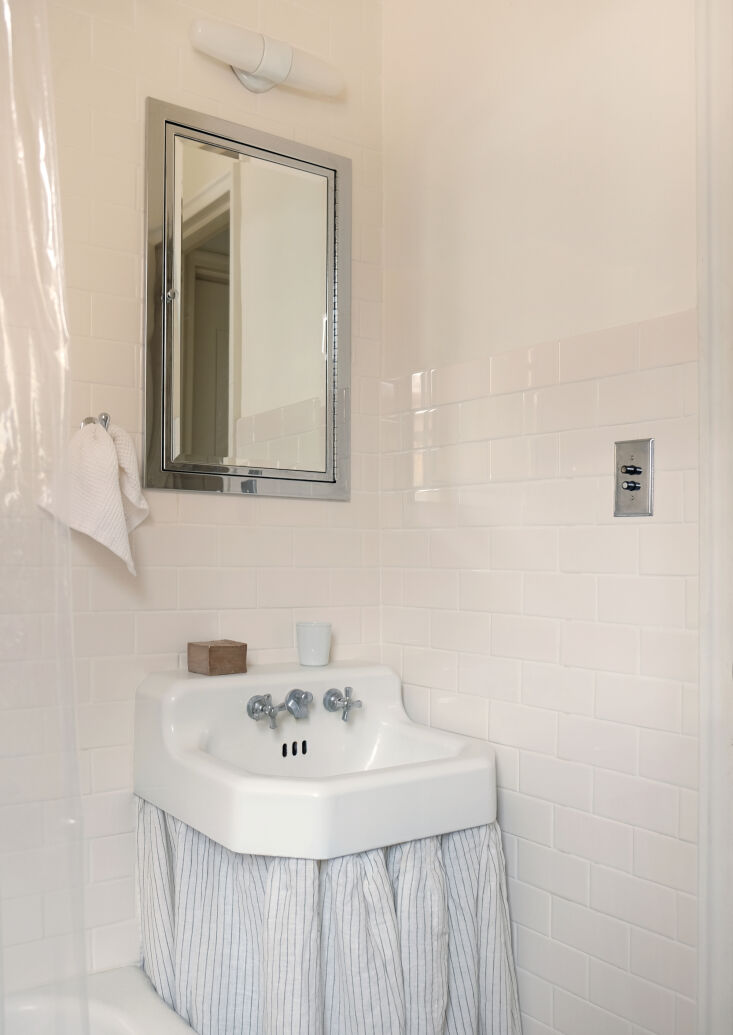
3. Striped Duster Skirts
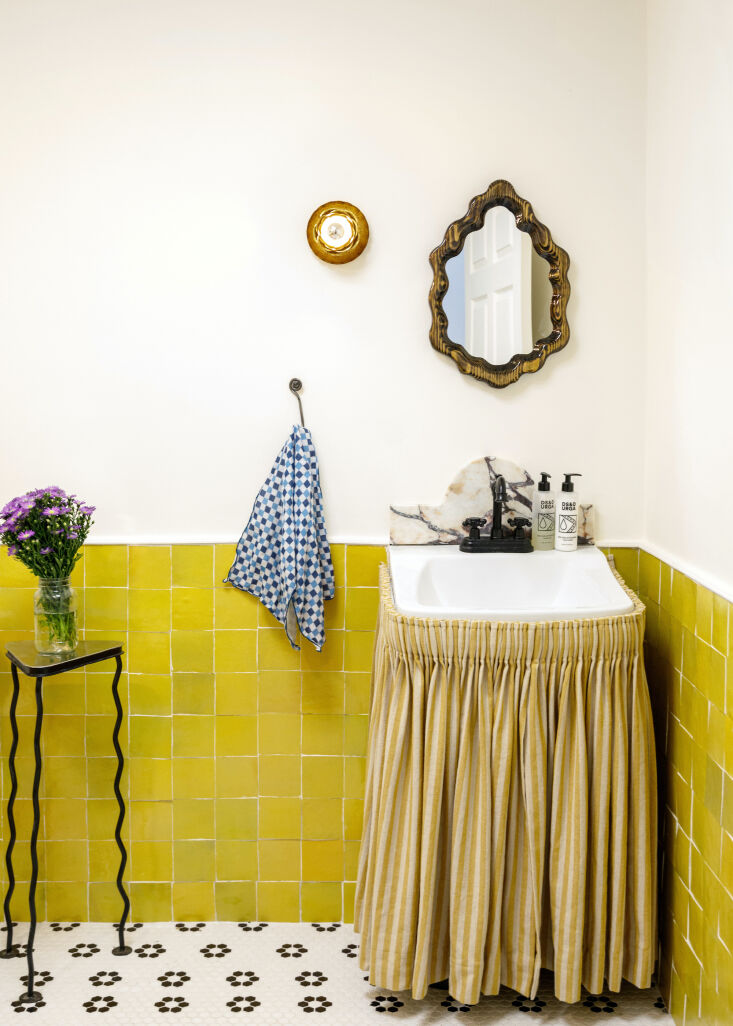
For those dealing with petite, Brooklyn-style bathrooms where every inch counts, a striped duster skirt is a game-changer. Vertical stripes can actually make a small space feel taller, and the "duster" length—grazing the floor—hides bulky cleaning buckets or extra toilet paper rolls with ease.
4. Upcycled Vintage Textiles
Sustainability is at the heart of the DIY movement. We love the look of upcycled grain sacks, antique French tea towels, or even vintage linen tablecloths repurposed as sink covers. This approach ensures your home has a story and a one-of-a-kind texture that can't be bought at a big-box store.
5. The Scalloped Edge
Whimsy is a huge part of the 2024 design landscape. Adding a scalloped hem to a sunny yellow or pastel gingham skirt creates a playful, storybook feel. This is particularly effective in kitchenettes or laundry rooms where you want to lean into a cheerful, "sunny" aesthetic.
6. Performance Fabric Wraps
In high-traffic laundry rooms or bathrooms used by kids, traditional fabrics might struggle with moisture. We recommend performance fabrics—designed for outdoor use—which are moisture-resistant and easy to wipe down. They provide the look of a heavy weave with the durability of modern technology.
7. Layered Textures
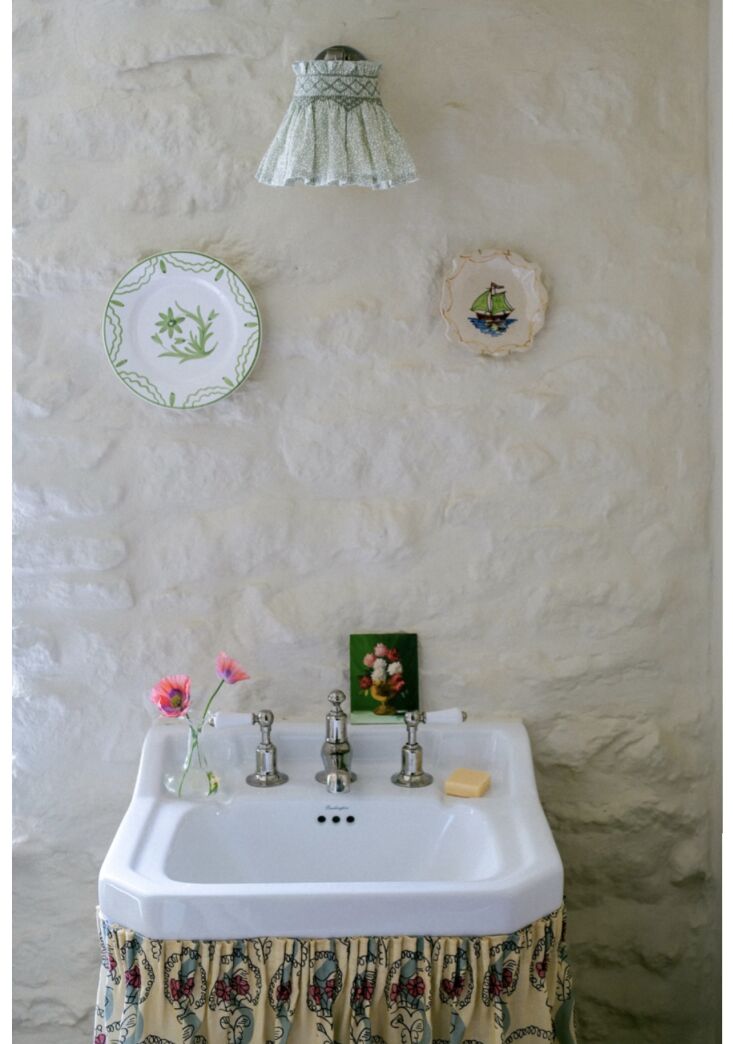
For the ultimate design-forward look, match your sink skirt to your wallpaper. A floral wallpaper paired with a pleated skirt in a matching or complementary fabric creates a "jewel box" effect, turning a tiny mudroom or powder room into a fully realized design statement.
Fabric & Pleat Guide: Finding Your Flounce
Success in this DIY project lies in the details. The choice of fabric dictates the "drape," while the pleat style determines the "vibe."
Choosing Materials:
- Linen: Offers the best drape and a relaxed, organic feel. It is breathable but may require regular steaming.
- Polyester Blends: Best for wet areas. They resist wrinkles and are usually machine-washable.
- Heavy Cotton/Canvas: Provides a structured, "buttoned-up" look. Excellent for hiding the silhouettes of items stored behind the skirt.
Clara’s Pro-Tip: To achieve a professional, 'pleated' look for a DIY sink skirt, choose curtain panels that are 1.5 to 2 times the width of the sink opening. This allows for overlapping and fullness, preventing the fabric from looking like a flat, cheap sheet.
Pleat Style Comparison Table
| Pleat Style | Visual Vibe | Best For |
|---|---|---|
| Box Pleats | Tailored, architectural, formal | Modern or Transitional spaces |
| Gathered | Whimsical, relaxed, 'cottage' | Kitchenettes and cozy bathrooms |
| Pinch Pleats | Elegant, high-end, traditional | Master baths with vintage sinks |
Step-by-Step DIY: The No-Drill Velcro Hack
The most effective and common way to install a sink skirt without drilling is by using adhesive hook-and-loop (Velcro) tape. This method is safe for porcelain, metal, and stone.
Materials Checklist
- Measuring tape
- Fabric shears
- Short curtain panels or fabric of choice
- Adhesive Velcro tape (heavy-duty industrial grade)
- Handheld steamer (to finish the look)
- Fabric glue or a sewing machine (for hemming)
Step 1: Measuring for 'Puddling' vs. Skimming
Measure the height from the underside of the sink rim to the floor. If you want a clean look, subtract half an inch so the fabric "skims" the floor. If you prefer a romantic, vintage look, add two inches to allow the fabric to "puddle" slightly.
Step 2: Preparing the Fabric
Hem your fabric to the measured height. Ensure the top edge is flat and clean. This is where you will attach the "hook" (the scratchy side) of the Velcro tape. For a professional finish, sew the Velcro to the fabric; for a truly "no-sew" version, use fabric glue.
Step 3: Securing to the Sink
Clean the underside of the sink rim with rubbing alcohol to remove any soap scum or oils. Once dry, apply the "loop" (the soft side) of the adhesive Velcro tape to the sink. Press firmly and let it cure for at least 30 minutes before attaching the fabric.
Step 4: Snapping on the Panels
Start from the center and move outward, pressing the fabric's Velcro to the sink's Velcro. Ensure you create those 1.5x width gathers as you go to maintain fullness. Overlap the panels slightly in the middle so there is no "peek-a-boo" gap where pipes can be seen.
Beyond the Sink: Creative Skirting Applications
Once you master the no-drill Velcro technique, you’ll realize that "skirting" can solve many household eyesores.
- Hiding Appliances: Use a floor-to-counter skirt to conceal a washer or dryer in a multi-purpose mudroom.
- Open Shelving Covers: If your pantry or a child's toy box looks cluttered, a simple fabric cover keeps the visual noise to a minimum while maintaining easy access.
- Console Tables: A skirted console table in an entry hall provides hidden storage for shoes and umbrellas.
Maintenance & Care Tips
Because sink skirts are in "splash zones," they require a little more care than standard curtains.
- Washing: If using linen or cotton, wash on a delicate cycle and air dry to prevent shrinking. Since they are attached with Velcro, they are incredibly easy to "rip off" and throw in the wash once a month.
- Steaming: After washing and rehanging, use a handheld steamer. Wrinkles are the enemy of a high-end look; a quick steam will give your skirt that "boutique hotel" finish.
- Safety First: Before installing your skirt, inspect your pipes for any leaks or moisture buildup. Fabric can trap moisture against walls, so ensure everything is bone-dry before you cover it up.
FAQ
Q: Will a sink skirt make my bathroom feel smaller?
A: Actually, it often does the opposite. By hiding the visual clutter of pipes and bottles, it creates a cleaner "line" for the eye to follow, which can make a space feel more organized and intentional.
Q: Can I use this in a kitchen?
A: Absolutely! Sink skirts are a staple of "English Country" and "Farmhouse" kitchens. Just be sure to choose a fabric that is machine-washable, as kitchen skirts are prone to food splashes.
Q: How do I stop the skirt from getting moldy?
A: Ensure your bathroom is well-ventilated. Choosing a "performance" fabric or a polyester blend will also help, as these materials don't absorb moisture as readily as 100% natural fibers.
Ready to Upgrade?
Transforming your space doesn't always require a sledgehammer and a contractor. Sometimes, all you need is a beautiful piece of fabric and the confidence to try something new. By hiding those "ugly" pipes, you aren't just covering a flaw—you’re adding a layer of texture and personality that makes your house feel like a home.
Are you ready to give your sink a "flounce"? Share your before-and-after projects with us in the comments below!