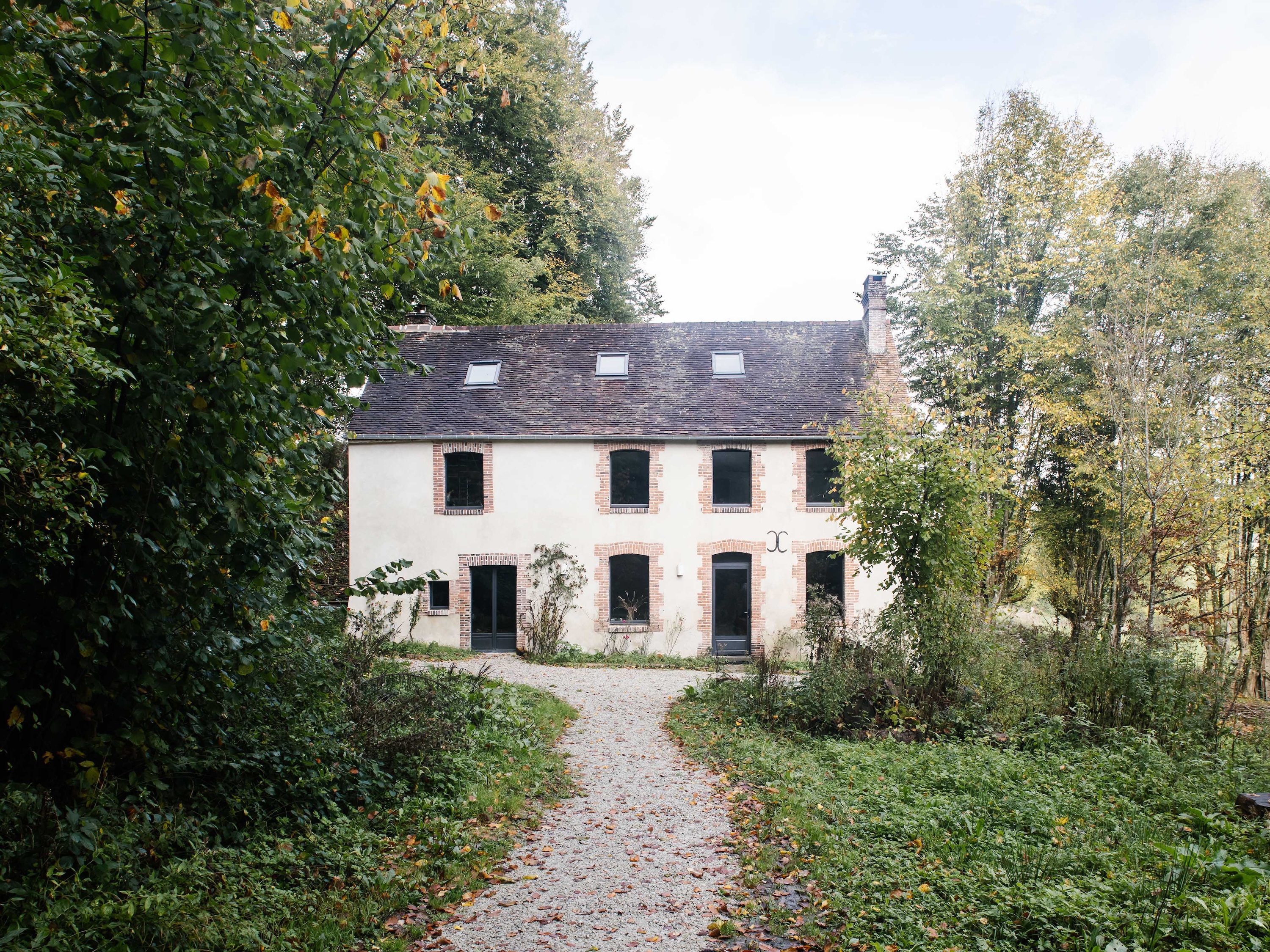
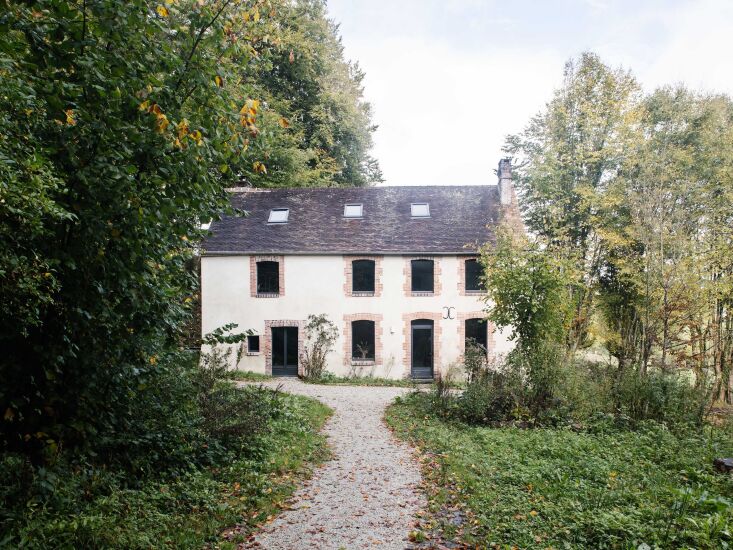
In the rolling countryside of Tellières-le-Plessis, nature doesn't just surround architecture; it attempts to consume it. When the architects at Les Ateliers Permanents first arrived at this 1,300-square-foot stone farmhouse, it hadn’t been a "home" for over fifteen years. In that decade and a half of abandonment, the forest had begun a slow, methodical reclamation. Ivy had breached the masonry, roots were exploring the foundations, and the roof had surrendered to the elements.
This project wasn’t just a renovation; it was a rescue mission. The restoration of the Tellières-le-Plessis farmhouse involved clearing 15 years of forest overgrowth, applying 12 inches of wood-wool roof insulation, and using lime-wash finishes to preserve the original 19th-century stone. As we look at the intersection of heritage and high-performance building, this project serves as a masterclass in how modern, sustainable interventions can save a ruin without erasing its soul.
The Great Reset: Reclaiming a House from the Forest
The first step in any historic restoration of this magnitude isn't found in a sketchbook—it’s found in a chainsaw and a pair of heavy-duty shears. Before a single stone could be repointed, the site required a total landscape "reset." In the context of French countryside restoration, this is a structural necessity rather than an aesthetic choice.
When a property sits for 15 years, the proximity of trees and dense shrubbery creates a microclimate of persistent dampness against the limestone walls. Roots exert silent, hydraulic pressure on foundations, while climbing vines trap moisture, leading to the "freeze-thaw" cycles that eventually cause facades to crumble. By clearing the perimeter, the architects allowed the house to breathe again, lowering the humidity levels within the stone and revealing the true extent of the damage.
Structural Integrity: Why Protection Trumps Aesthetics
As an editor focused on sustainability, I often see homeowners rush to choose paint colors while their roof is failing. The Tellières-le-Plessis project illustrates the "uncomfortable reality" of historic renovation: the most important investments are often invisible.
Before the "pretty" work could begin, the architects addressed the critical failures:
- Water Ingress: Repairing the roof to prevent the internal rotting of the structural timber frame.
- Decaying Columns: Stabilizing the vertical supports that had been compromised by moisture.
- Facade Cracks: Mapping and injecting lime-based mortars into structural fissures to restore the monolithic strength of the stone.
Lucas’s Tip: In French farmhouse rehabs, the hierarchy of needs is absolute. Roof, gutters, and drainage must be perfected before you touch the interior. If you don't control the water, you'll be re-plastering your beautiful lime walls within three years.
The Invisible Armor: High-Performance Insulation in a 19th-Century Shell
The challenge with 19th-century stone houses is thermal mass. While stone stays cool in the summer, it is notoriously difficult to keep warm in a Normandy winter without massive energy expenditure. To solve this, Les Ateliers Permanents utilized "invisible armor"—high-performance, bio-sourced insulation that respects the building’s need to manage vapor.
The statistics for this 1,300-square-foot home are exacting. To meet modern comfort standards while maintaining a sustainable footprint, the team installed:
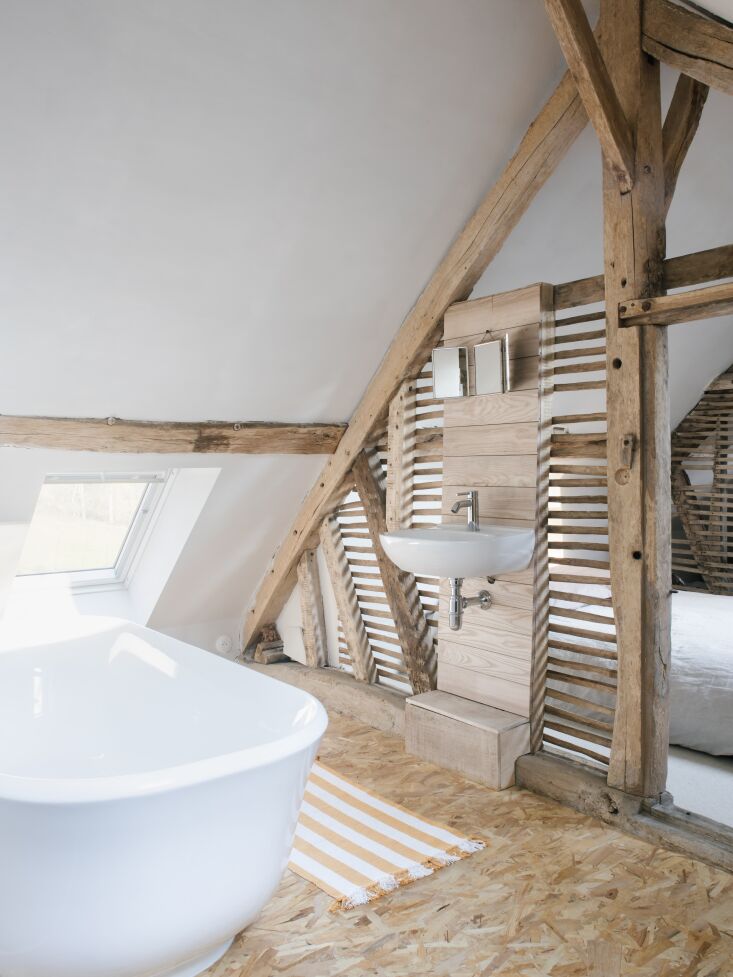
- The Roof: 12 inches (30cm) of wood-wool insulation, providing a massive thermal buffer against heat loss.
- The Walls: 6 inches of wood-wool specifically on the critical north and west-facing walls, which bear the brunt of the cold winds and rain.
Beyond the insulation, the home underwent a "mechanical heart transplant." The old, inefficient oil-fueled heating system was ripped out and replaced with a sustainable wood-fired boiler system. This system feeds traditional cast-iron radiators, providing carbon-neutral warmth that feels consistent with the home’s history.

Materials that Breathe: Lime Wash and Aerated Concrete
One of the most common mistakes in old home restoration is using modern Portland cement or gypsum board. These materials trap moisture inside the stone, leading to mold and structural decay. At Tellières-le-Plessis, the palette was strictly limited to materials that "breathe."
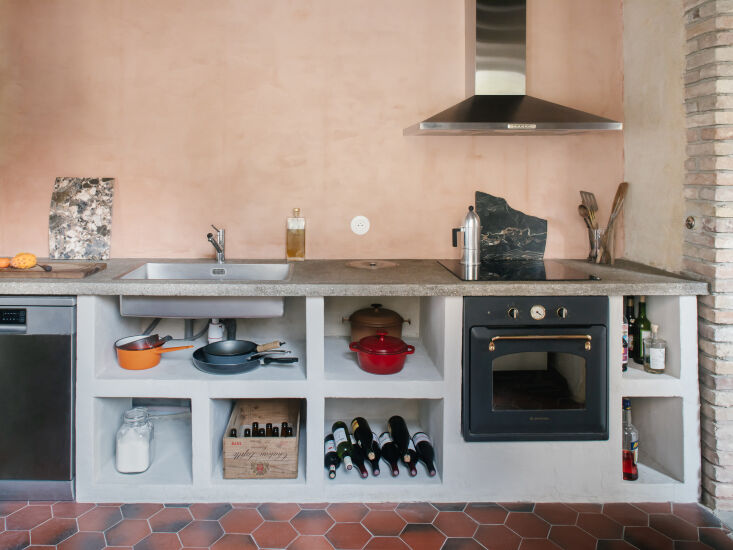
The architects stripped back the old, failing wattle-and-daub to reveal the original "bones." For the new internal partitions and kitchen structures, they used aerated concrete finished with a traditional lime wash (chaux).
| Material | Application | Benefit |
|---|---|---|
| Wood-Wool | Roof & North Walls | High thermal mass; vapor permeable |
| Lime Wash | All Stone Surfaces | Naturally antibacterial; regulates humidity |
| Aerated Concrete | Kitchen & Partitions | Lightweight; excellent fire resistance; breathable |
| Ash Wood | Custom Cabinetry | Local, renewable, and durable |
The chemistry of lime wash is fascinating. It doesn't just sit on top of the stone; it bonds with it, allowing moisture to migrate out of the wall and evaporate. By mixing natural pigments into the lime, the team achieved a soft, chalky finish that feels ancient but performs with modern efficiency.
Curating the Interior: Poured Concrete and Vintage Souls
Interior design in a historic farmhouse should feel like a conversation between generations. In the former workshop area, the transition to modern living is signaled by the flooring. The architects chose sanded and sealed poured concrete—a material that offers a sleek, industrial counterpoint to the rugged stone walls.
The curation of the space relies on the balance of "new" and "found." Rather than buying a mass-produced modern kitchen, the team repurposed artifacts found on the property. A 1950s sink, discovered in a collapsing outbuilding, was cleaned and reinstalled, serving as a functional piece of the home's history.
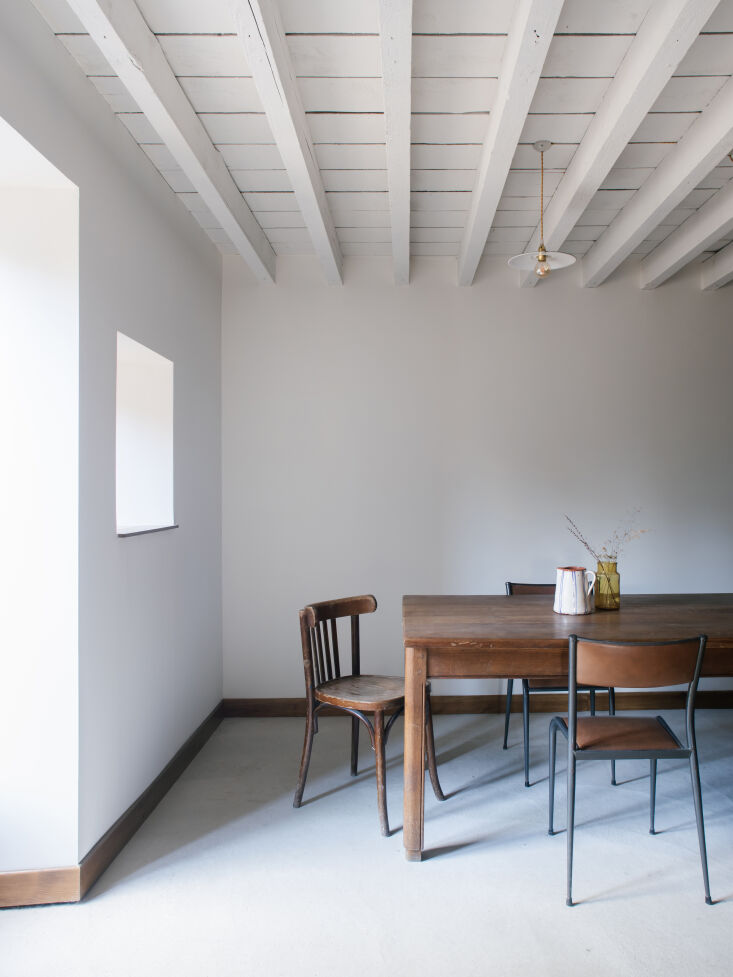
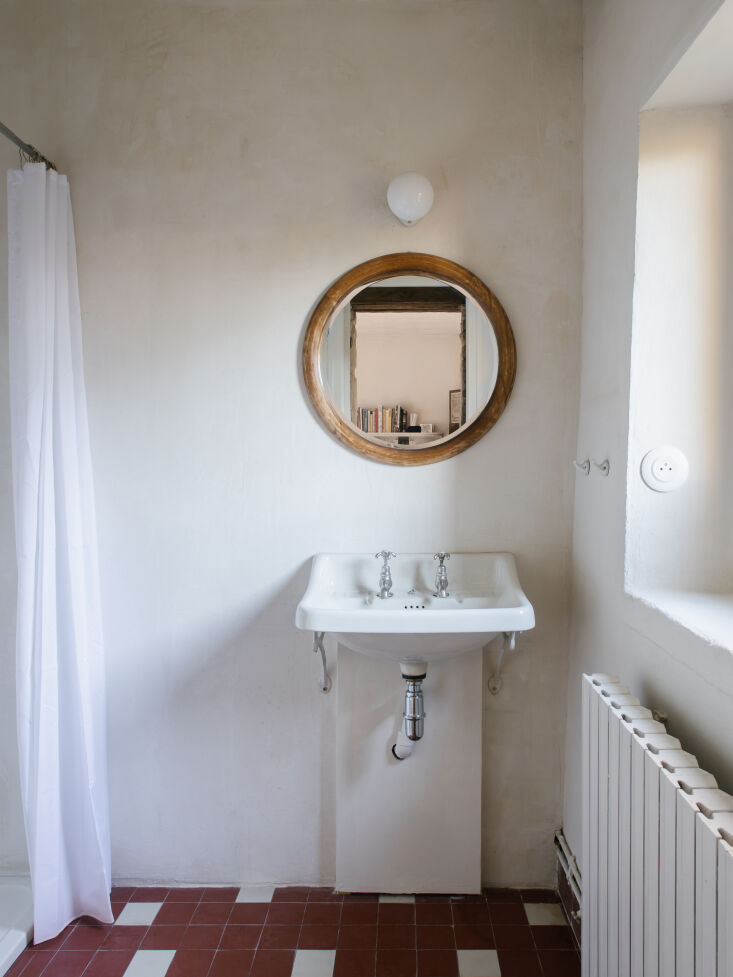
To maximize the 1,300-square-foot footprint, storage was handled with architectural precision. Custom ash wood built-ins were designed to fit into wall alcoves, ensuring that the living spaces remained uncluttered and airy. This "minimalist wood craftsmanship" provides modern utility without compromising the historic shell.
Future-Proofing the French Countryside Home
The restoration of the Tellières-le-Plessis farmhouse is an ongoing journey. While the core living spaces are now protected from nature’s grasp, the owners and Les Ateliers Permanents have a roadmap leading into 2026. This future-proofing includes the meticulous removal of legacy asbestos found in auxiliary roofing and the installation of zinc downpipes to better manage the increasing rainfall intensity in the region.
The lesson here for any homeowner or renter looking at sustainable living is that architecture is not a "one and done" event. It is an intervention—a way of stepping in to guide a building's evolution. By prioritizing structural integrity and breathable, bio-sourced materials, we don't just "fix" a house; we ensure it survives for another century.
FAQ: Restoring Historic French Properties
1. Why is wood-wool preferred over fiberglass for stone houses? Stone walls need to manage moisture. Fiberglass can trap condensation against the stone, leading to rot. Wood-wool is "hygroscopic," meaning it can absorb and release moisture without losing its insulating properties, which protects the stone's integrity.
2. How much does a "landscape reset" actually impact the house? Significantly. Removing trees within 5-10 meters of a stone house can reduce the relative humidity inside the walls by up to 20% over a single season. This prevents mold and stops the expansion of cracks caused by root growth.
3. Is aerated concrete really sustainable? While it has an industrial manufacturing process, its longevity and extreme thermal efficiency make it a sustainable choice for interior work. It is also fully recyclable and provides excellent fire protection, which is vital in older timber-framed stone homes.
Action Checklist for Historic Renovation
- [ ] Site Assessment: Identify all trees and ivy within 3 meters of the foundation.
- [ ] Moisture Map: Check for "telltale" facade cracks that indicate water ingress.
- [ ] Insulation Audit: Target 10-12 inches of insulation for the roof to prevent the "chimney effect" (heat rising and escaping).
- [ ] Material Check: Ensure all plasters and paints are lime-based or vapor-permeable.