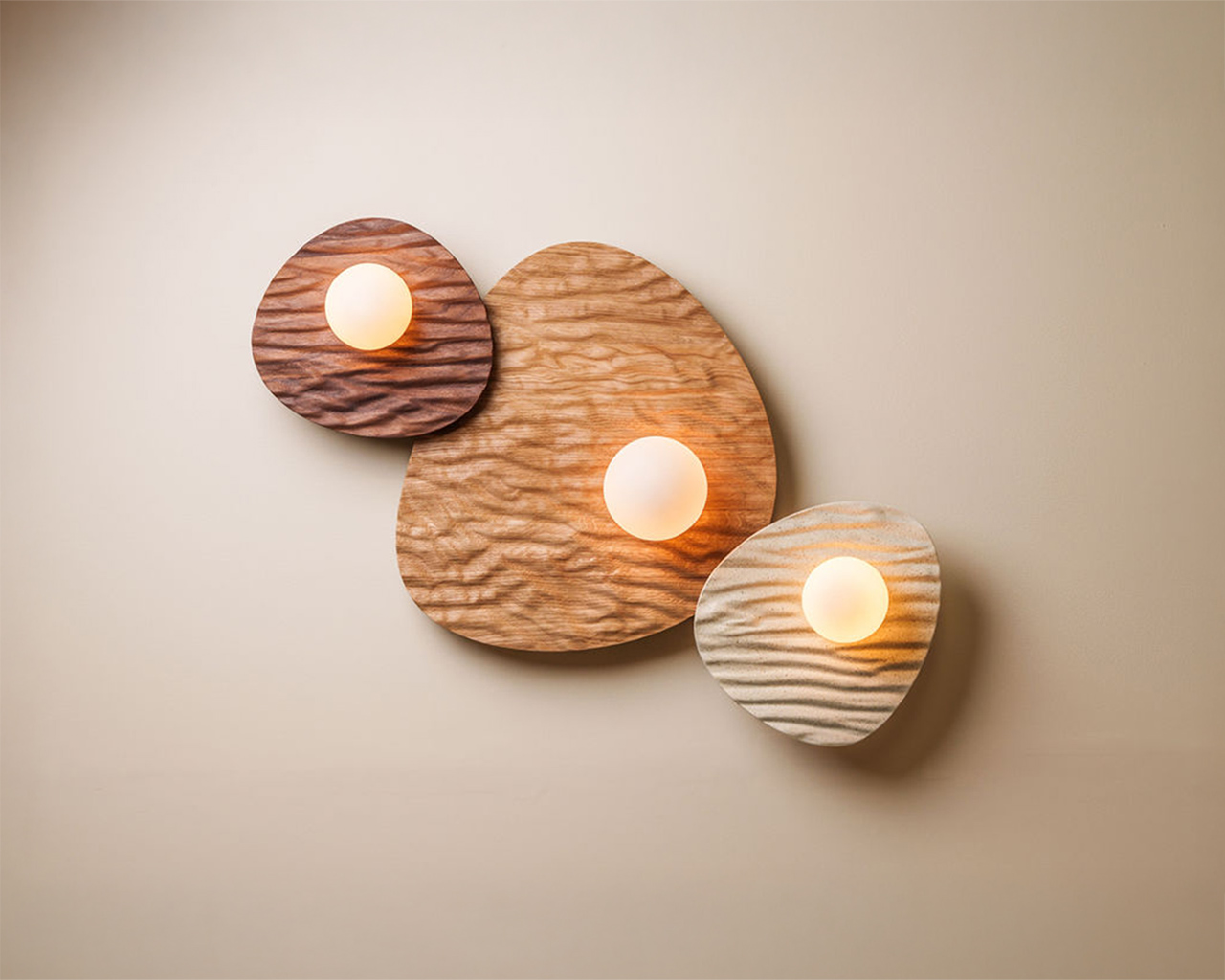
There is a specific, quiet magic found on the shoreline of Cornwall when the tide recedes. It leaves behind a topographical masterpiece: delicate, undulating ripples in the sand that appear both perfectly ordered and entirely chaotic. For most of us, these patterns are fleeting, destined to be erased by the next wave. But for Studio Haran, these ephemeral moments are the blueprints for something much more permanent.
By merging the raw beauty of the Cornish coast with cutting-edge 3D technology, Studio Haran has managed to "freeze" the motion of water within the solid grain of timber. Their Sandscape Collection represents a new frontier in interior styling—one where the warmth of traditional woodcraft meets the high-fidelity precision of digital manufacturing.
To achieve this, the studio utilizes 3D scans of actual tidal formations, which are then translated into premium hardwoods using high-precision CNC carving technology. This process captures over 10,000 data points per square inch, ensuring that the final carved wood pieces maintain a natural movement and singular depth that manual carving simply cannot replicate.
Breathed Water into Wood
The challenge with organic design has always been the translation. How do you take the "impossibly complex" ripples of a windswept beach and recreate them in a medium as stubborn as oak or walnut? Traditional hand-carving, while beautiful, often struggles to capture the sheer density of detail found in nature’s own geometry.

Studio Haran’s mission is rooted in "movement within the static." They aren't just creating furniture or lighting; they are rendering the motion of tides into functional sculpture. By using 3D scanning, they bypass the limitations of human interpretation, allowing the computer to map every dip, crest, and shadow of the sand’s surface.
The Inspiration: The Cornish Coastline
Based in the rugged southwest of England, Studio Haran draws its primary inspiration from its doorstep. The Cornish coastline is a place of constant transformation. For Joel Haran, the studio’s founder, the fascination lies in the "organic chaos" of the environment.
"There is a rhythm to the coast that feels both ancient and digital," says Haran. "The way the water organizes the sand is complex beyond what the eye can immediately process. We wanted to bring that tactile, grounding energy into the modern home."
Replicating these patterns through traditional methods would be a Herculean task. The Sandscape Collection was born from the realization that to honor nature’s complexity, one must use tools capable of seeing what the human eye might miss. The result is a collection that feels "alive"—a piece of the outdoors brought in, refined, and polished for a sophisticated interior.
The Technology: 3D Scanning and 10,000 Data Points
The bridge from the beach to the workshop begins with 3D scanning. This isn't just a surface-level photograph; it is a deep mapping process.
- Precision Mapping: The 3D scanning process captures over 10,000 data points per square inch. This level of detail is necessary to replicate the subtle, non-repeating variations of sand ripples.
- Fidelity and Depth: Unlike 2D patterns, 3D scanning allows for "singular depth." It maps the Z-axis (depth) with microscopic accuracy, ensuring that the shadows cast by the wood are as deep and varied as those on the ocean floor.
- Digital Preservation: By digitizing these natural formations, the studio creates a library of textures that can be scaled and adapted to different furniture forms, from wall sconces to expansive coffee tables.
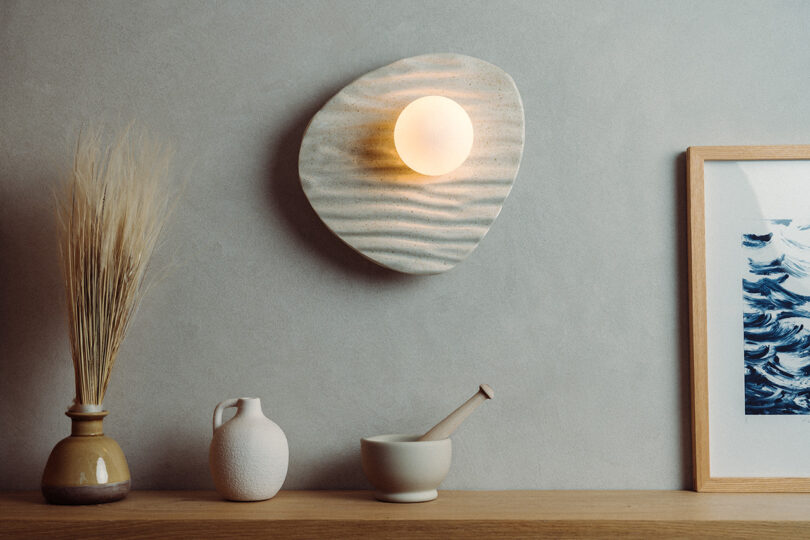
This technological approach ensures that every piece in the Sandscape Collection remains tethered to reality. You aren't looking at a designer's idea of a wave; you are looking at the actual topography of a Cornish beach, translated into timber.
The Precision: CNC Carving the Fluidity of Water
Once the digital map is finalized, the "translation" begins. This is where the CNC (Computer Numerical Control) router takes center stage. In the world of artisan woodcraft, there is often a debate between the "handmade" and the "machine-made." Studio Haran proves that this is a false dichotomy.
The CNC machine acts as a high-tech chisel, guided by the 10,000 data points captured during the scanning phase. This integration of technology into the artisanal workflow offers two major benefits:
- High-Fidelity Detail: The CNC router can perform deep, textured relief work with a level of consistency that would take a master carver weeks to achieve.
- Unprecedented Efficiency: Integrating CNC technology reduces manual carving time by approximately 70%. This efficiency allows the studio to offer high-end, sculptural pieces at a price point that remains accessible for premium interior projects without sacrificing quality.
The key to their success lies in Z-axis rigidity. To carve deep "dimples" and ridges into hardwood without splintering the grain, the machinery must be incredibly stable. The result is a surface that is incredibly smooth to the touch but visually dramatic.
Material Selection: Oak, Walnut, and Ebonised Timber
While technology provides the form, the material provides the soul. Studio Haran predominantly works with premium hardwoods, each chosen for how it interacts with the CNC process and how it reflects light in a living space.
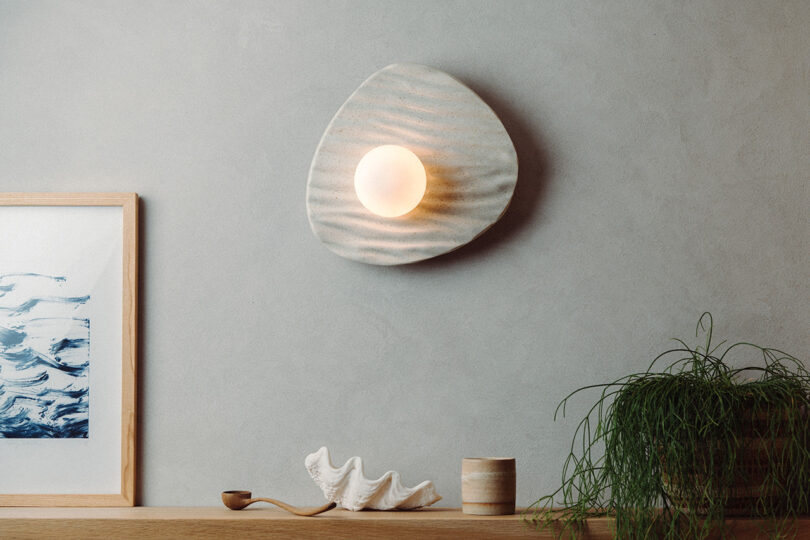
The collection primarily features Oak and Walnut, often complemented by textured ceramic elements and custom pigmented glazes. These mixed-media additions provide a contrast to the wood, mimicking the way wet stones or shells might break the surface of the sand.
| Wood Type | Visual Character | Machining Notes |
|---|---|---|
| English Oak | Golden, prominent grain, very "coastal" and warm. | Requires reduced spindle speeds to prevent friction burn marks on deep reliefs. |
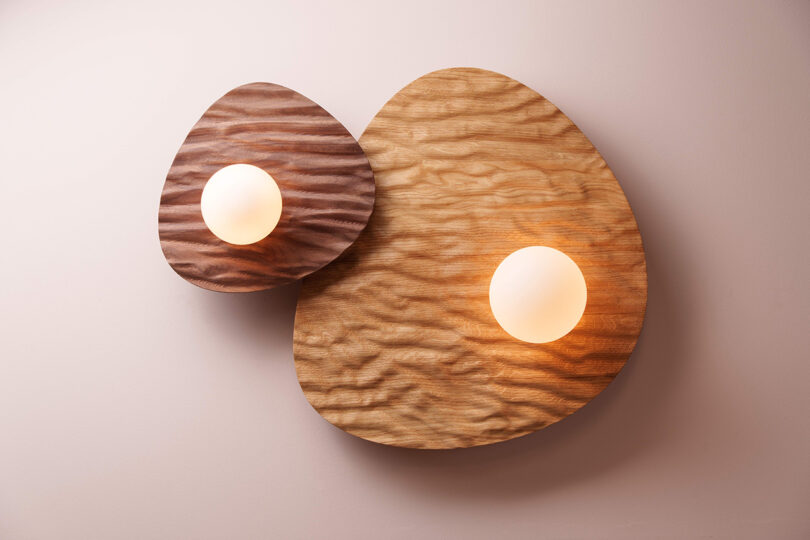
| Walnut | Rich, chocolate tones with sophisticated swirling. | Extremely stable for high-detail carving; offers the best shadow depth. |
| Ebonised Oak | Deep black finish that looks like charred wood or midnight water. | The matte black finish highlights the peaks of the carving through dramatic light play. |
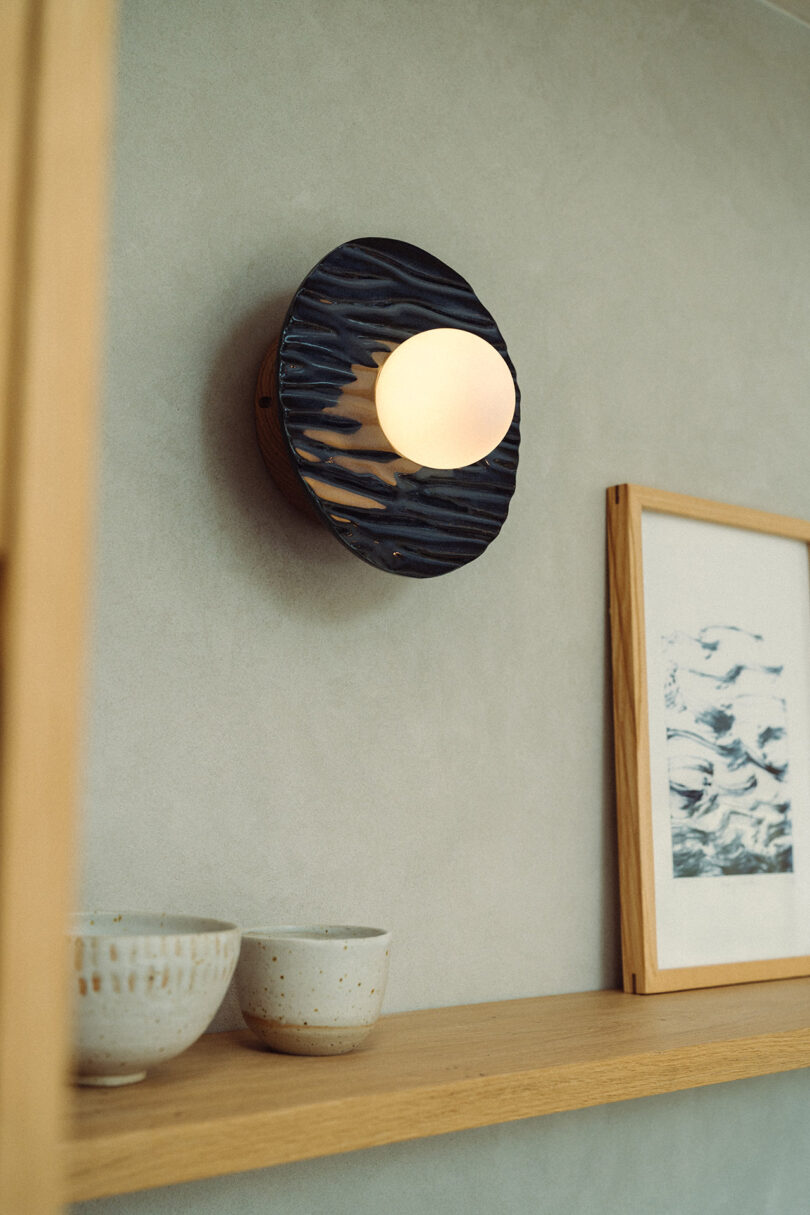
Working with these materials requires a deep understanding of wood science. For instance, when carving Oak, the studio must balance the speed of the CNC bit with the density of the wood. If the machine moves too fast, the friction can cause "burn" marks; too slow, and the finish isn't crisp. It is a delicate dance of engineering and intuition.
Lighting the Sculpture: The Sandscape Collection in the Home
As a design editor, what fascinates me most about the Sandscape Collection is its relationship with light. These aren't just objects; they are instruments of atmosphere.
When a Sandscape wall light is switched on, the light rakes across the surface, catching the "soft dimples" and sharp ridges of the carving. In an ebonised finish, the shadows become architectural. In walnut, the warm bulb enhances the natural oils of the wood, making the ripples look almost liquid.
Design Tips for Integrating Sandscape Pieces:
- The Power of Texture: Use these pieces in rooms that are otherwise "flat" (e.g., modern minimalist spaces with lots of glass and steel) to provide much-needed organic warmth.
- Directional Lighting: Ensure the light source is positioned to cast across the grain rather than directly at it. This emphasizes the 3D relief.
- Mixed Materials: Pair the wooden elements with the studio’s ceramic accents to create a layered, "curated" look that feels collected over time.
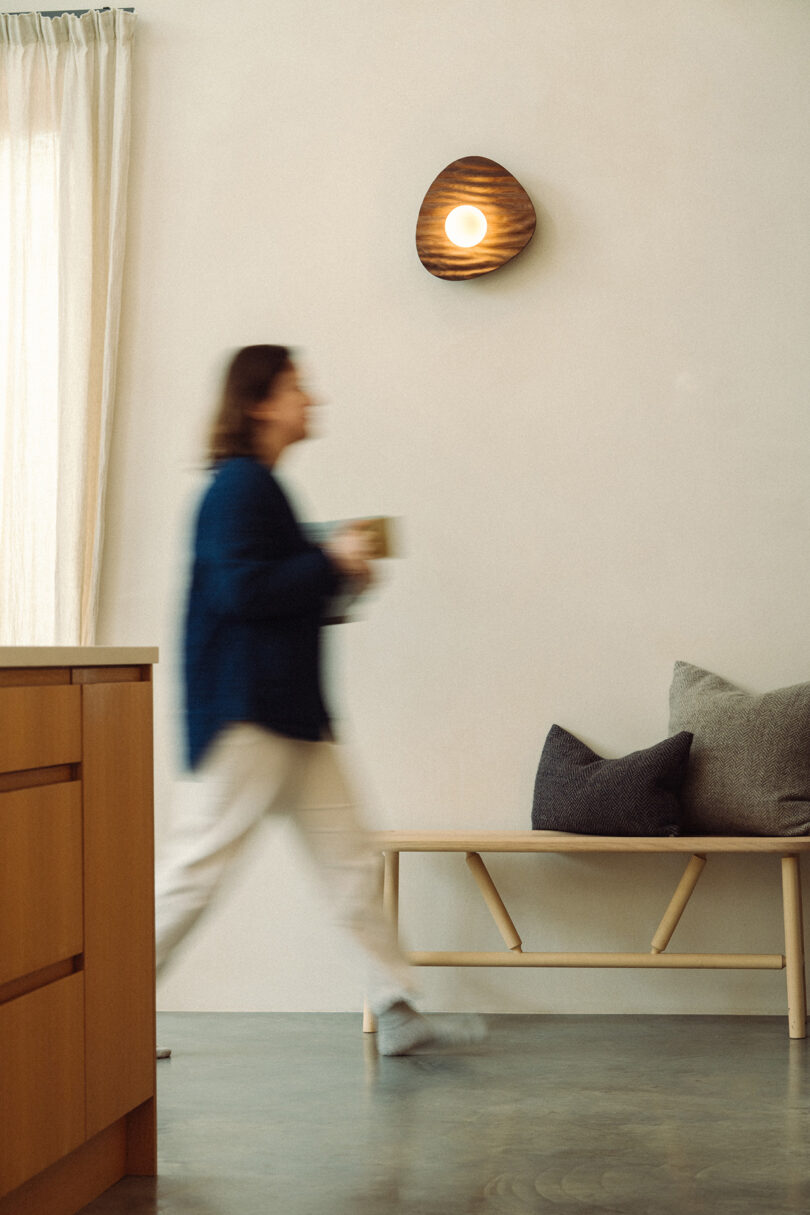
By bringing these "outside" patterns in, Studio Haran helps create a composed interior that feels connected to the natural world—a vital component of wellness-focused design.
FAQ: Understanding 3D Wood Sculpture Tech
What is the difference between 3D scanning and traditional 2D CNC? Traditional 2D CNC usually involves cutting a shape out of wood or engraving a flat pattern. 3D scanning and carving, however, treat the wood like a block of marble. It maps the Z-axis (depth) to create varying heights and organic curves that feel three-dimensional and fluid rather than flat.
Is the wood sustainably sourced? Yes. Studio Haran prioritizes sustainability, typically sourcing hardwoods like oak and walnut from FSC-certified suppliers. The use of CNC technology also reduces material waste by allowing for precise nesting of parts during the cutting process.
Can custom colors be applied to the ceramic elements? The Sandscape Collection often incorporates ceramic components that feature custom pigmented glazes. These can be tailored to specific interior palettes, allowing the organic wood grain to be paired with subtle pops of coastal blues, sea-foam greens, or earthy ochres.
Explore the Collection
Whether you are looking for a statement pendant light or a subtle wall sculpture, the Sandscape Collection offers a rare intersection of coastal poetry and modern engineering. It is a reminder that even in our digital age, the most profound inspirations still come from the ground beneath our feet and the tides that shape our shores.