Is a designer in the midst of a movement truly aware that they are etching their name into the granite of history? When Josef Hoffmann co-founded the Vienna Secession in 1897, he wasn't just reacting against the heavy, cluttered "historicist mummery" of the 19th century; he was drafting a manifesto for the modern soul. At the heart of his vision was a radical concept that still dictates the way we curate our homes today: Gesamtkunstwerk, or the "total work of art."
To understand Hoffmann is to understand that a room is not merely a container for furniture, but a unified living organism. His philosophy posits that every element—from the structural skeleton of a building to the curve of a silver teaspoon—must be designed by a singular mind to create a harmonious, spiritually uplifting environment. For Hoffmann, the home was meant to be an "island of tranquility," a curated sanctuary against the chaos of the industrializing world. This wasn't just interior design; it was a lifestyle brand before the concept even existed, elevating the mundane tasks of daily life into a series of aesthetic rituals.
The Birth of the Vienna Secession (1897)
The late 19th century was a time of suffocating tradition in the art world. The established academies favored the Beaux-Arts style—grand, ornate, and deeply rooted in the past. In 1897, a group of rebels led by Gustav Klimt and Josef Hoffmann broke away to form the Vienna Secession. Their motto, inscribed on the Secession Building, was clear: Der Zeit ihre Kunst. Der Kunst ihre Freiheit (To every age its art. To art its freedom).
Hoffmann’s ascent within this movement was meteoric. His brilliance was recognized so early that he was appointed as a professor at the Kunstgewerbeschule (School for Arts and Crafts) at the age of only 29. This position allowed him to shape the minds of an entire generation of designers, instilling the belief that the "lesser" decorative arts were every bit as significant as painting or sculpture. Through the Secession’s magazine, Ver Sacrum, the group disseminated a new aesthetic that favored clean lines, geometric precision, and a rejection of superficial ornamentation.
The Wiener Werkstätte: Elevating Craft to Fine Art
If the Secession was the philosophical spark, the Wiener Werkstätte (Vienna Workshops) was the practical engine that powered Hoffmann’s legacy. Founded in 1903 by Hoffmann, Koloman Moser, and the financier Fritz Waerndorfer, this production community aimed to bridge the gap between the artist and the craftsman.
The impact of the Wiener Werkstätte cannot be overstated. It was a 29-year movement—one of the longest-lived and most influential in the 20th century—that successfully redefined modernism. Its goal was to create high-quality, handcrafted objects that rejected the soullessness of mass industrial production.
"It is better to work for ten days on a single object than to produce ten objects in a single day." — The Wiener Werkstätte Creed
Key achievements of the movement included:
- Elevating the Decorative Arts: By stamping every piece with the monogram of both the designer and the craftsman, the Werkstätte elevated silverware, textiles, and furniture to the status of fine art.
- Material Integrity: They championed the use of honest materials—bentwood, hammered silver, and hand-printed silks—often allowing the construction of the object to be part of its beauty.
- Accessible Modernism: While initially catering to the wealthy elite, the Werkstätte eventually moved toward creating high-quality designs that could be produced more efficiently, influencing the later Bauhaus movement and the trajectory of 20th-century functionalism.
The Aesthetic Language of "Square Hoffmann"
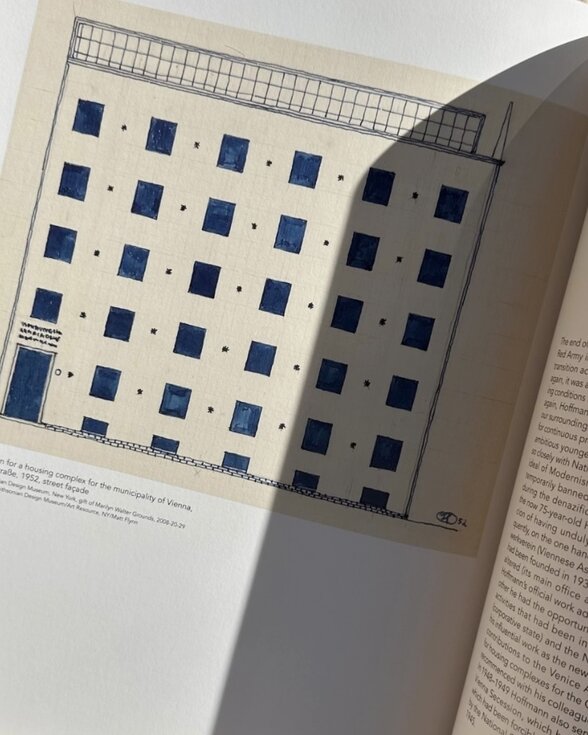
To look at a Hoffmann interior is to look at a masterclass in geometry. Often nicknamed "Quadratz-Hoffmann" (Square Hoffmann), he had an obsession with the grid. For him, the square was a symbol of order, clarity, and the "soothing of space." By utilizing repeating geometric motifs, he could create a sense of rhythm and visual cohesion that tied a room together.
Hoffmann’s aesthetic was defined by several hallmark techniques:
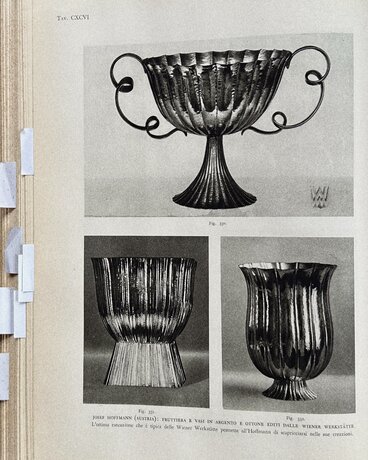
- Lattice and Perforation: He frequently used perforated metal (especially in his iconic fruit baskets and stationery holders) and lattice-work paneling to create light, airy structures that felt modern and architectural.
- White Surfaces: Long before the minimalist movement of the 1990s, Hoffmann championed white walls and pale wood finishes to maximize light and create a sense of expansive calm.
- Organic Integration: While he loved geometry, he often softened his spaces with organic elements—vines trailing over a trellis or floral motifs in textiles—to ensure the environment felt lived-in rather than sterile.
A Shared Language: Hoffmann and Mackintosh
The exchange of ideas across borders is what truly fuels design evolution. In 1900, the Eighth Exhibition of the Vienna Secession famously invited the "Glasgow Four," led by Charles Rennie Mackintosh. The impact on Hoffmann was profound. Both men shared a fascination with all-white interiors, high-backed anthropomorphic furniture, and the concept of the "total room."
The influence was mutual. While Mackintosh brought a certain mystical, elongated elegance to the table, Hoffmann provided the rigorous, geometric framework. You can see this dialogue in the commissions for the Waerndorfer home, where the two designers' styles merged into a vision of modern luxury that was both structural and poetic.
Masterpiece in Focus: Palais Stoclet
If you want to see the "total work of art" in its purest form, you must look at the Palais Stoclet in Brussels. Completed in 1911 for the financier Adolphe Stoclet, this mansion represents the pinnacle of Hoffmann’s career. Here, he had an unlimited budget and total creative control.
The result was a breathtaking synthesis of art and architecture. The exterior, clad in Norwegian marble with bronze detailing, looks like a precursor to Art Deco. Inside, every room was a curated experience. The dining room featured the famous mosaic murals by Gustav Klimt, executed in gold leaf, glass, and mother-of-pearl. The furniture, the carpets, and even the gardens were designed by Hoffmann to ensure that the "Gesamtkunstwerk" was never broken. It remains a testament to the idea that luxury is not about excess, but about the perfect harmony of every detail.
Contemporary Resonance: Hoffmann’s Influence Today
Why does Josef Hoffmann still matter in an age of fast furniture and digital design? Because his philosophy of "Islands of Tranquility" is more relevant than ever. In our hyper-connected, often chaotic lives, the desire for a home that feels like a unified, peaceful sanctuary is universal.
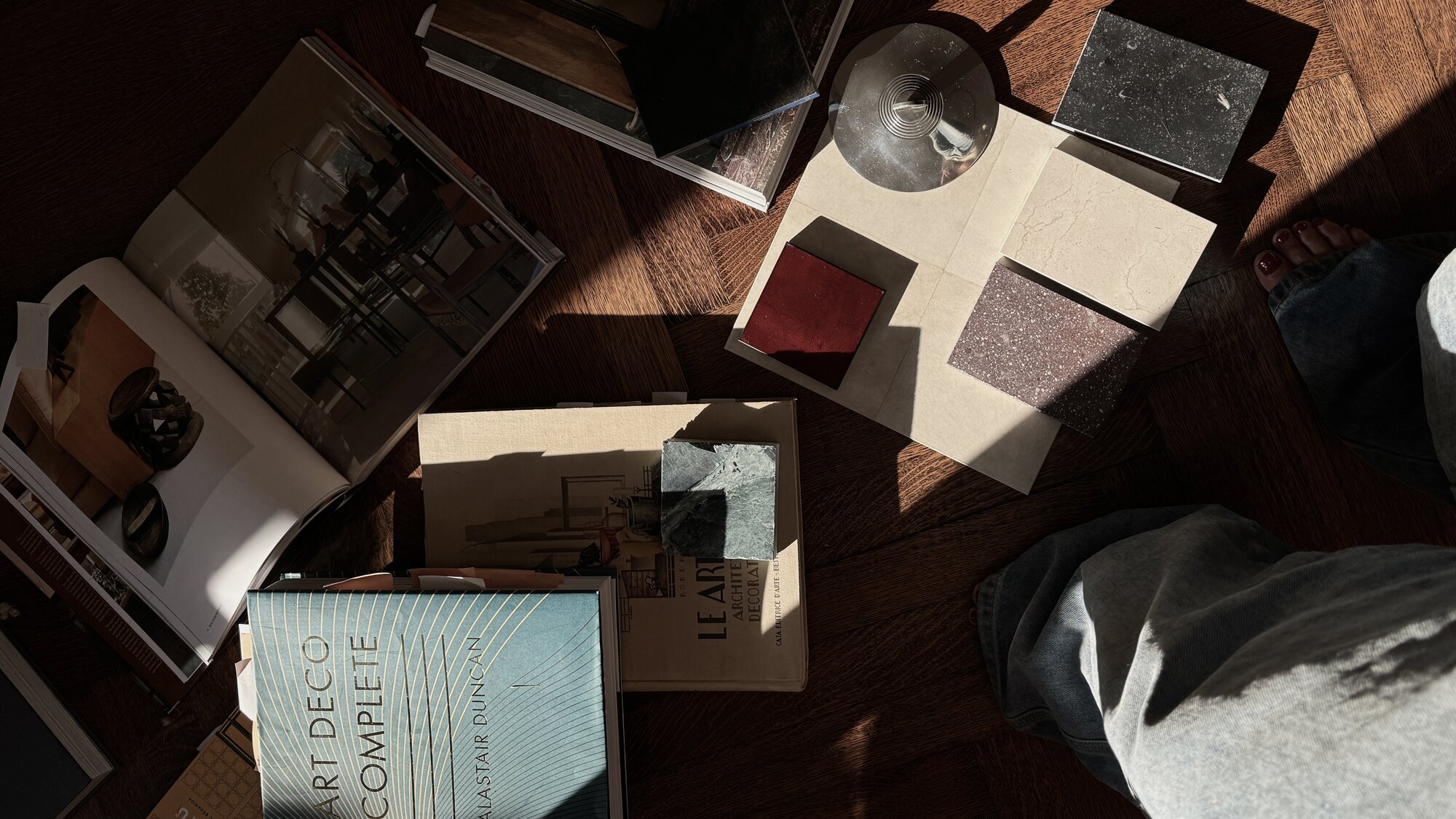
Modern tastemakers and designers frequently look back to the Vienna Secession for inspiration. Athena Calderone, the founder of EyeSwoon, recently collaborated with Beni Rugs on a collection that draws directly from Hoffmann’s 1930s architectural drawings. By bridging historical Viennese aesthetics with modern luxury, these contemporary pieces prove that geometric rigor and high-quality craftsmanship never go out of style.
Today’s interior styling often mirrors Hoffmann’s approach by:
- Focusing on "The Grid": Using rug patterns, shelving units, and tile layouts to provide a sense of architectural grounding.
- Curating 'Hero' Objects: Choosing one or two Wiener Werkstätte-inspired pieces—perhaps a perforated metal vase or a geometric chair—to act as an anchor for a room.
- Material Honesty: Prioritizing natural woods, stones, and hand-loomed textiles that speak to the quality of the maker.
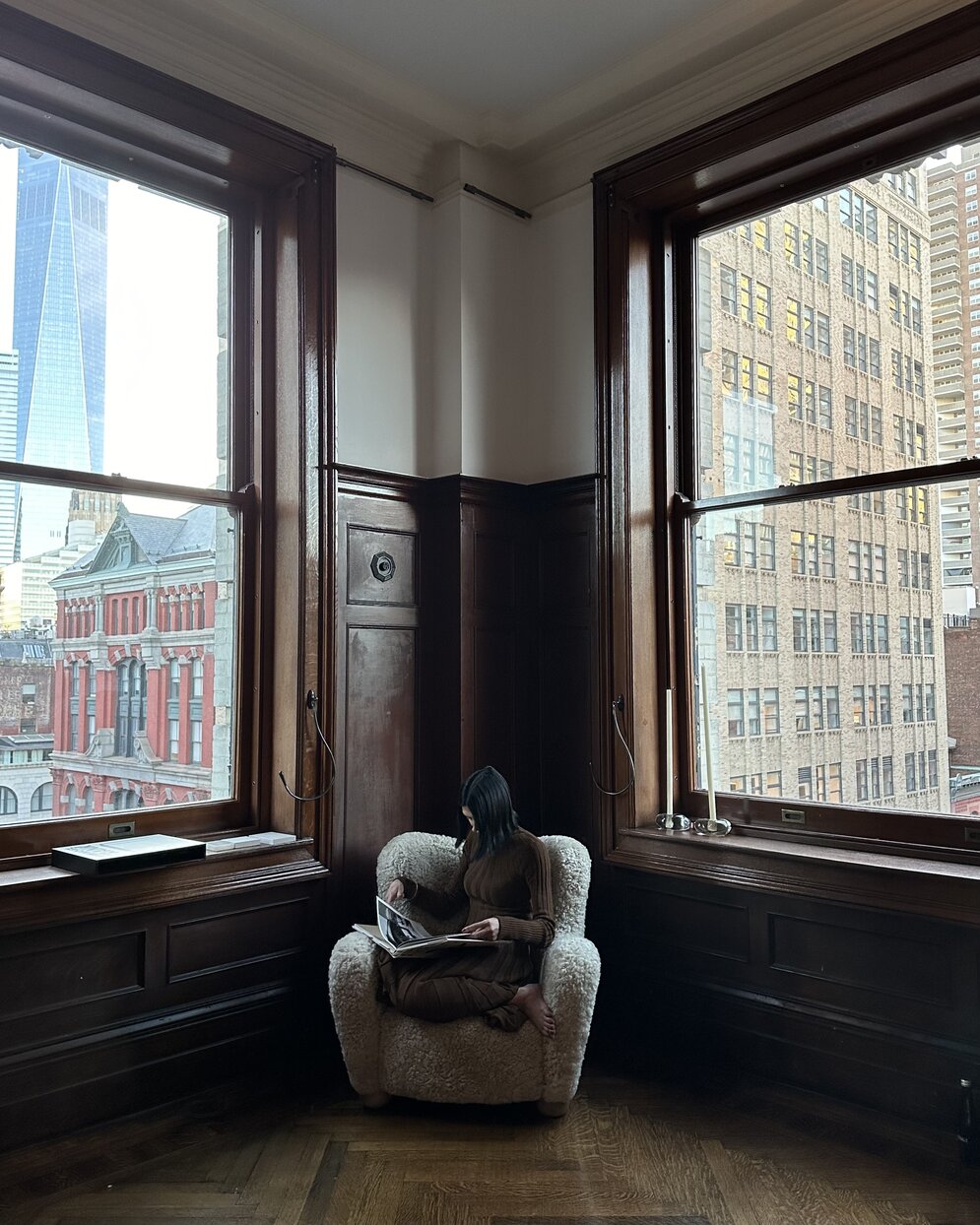
By embracing the Gesamtkunstwerk philosophy, we move away from decorating by "buying things" and toward designing by "creating harmony." It’s an invitation to be the "single mind" behind our own environments, ensuring that every corner of our homes reflects a cohesive vision of beauty and order.
FAQ
What does the term 'Gesamtkunstwerk' actually mean in a home setting? Literally translated as "total work of art," it means treating your entire home as a single, unified project. Instead of picking furniture room-by-room, you apply a consistent language of color, material, and shape throughout the space so that the architecture and the objects within it feel like they belong together.
How can I apply Hoffmann’s style on a budget? You don’t need a Palais Stoclet budget to embrace his ethos. Focus on repeating a simple geometric motif (like a square or a stripe) in your textiles and decor. Look for "functionalist" pieces that have clean lines and no unnecessary fluff. Above all, prioritize quality over quantity—one beautifully made wooden chair is worth more to a space than five mass-produced ones.
Why was the Wiener Werkstätte so important for modern design? It was the first major movement to prove that modern, functional items could also be incredibly beautiful and artistic. It laid the groundwork for the Bauhaus and later mid-century modern movements by showing that the things we use every day—our plates, our lamps, our rugs—shape our quality of life.