There is a specific, unmistakable glow that emanates from a professional kitchen, and more often than not, it reflects off the hammered surface of a copper sauté pan. To the uninitiated, copper cookware might seem like a mere vanity purchase—a gleaming accessory for the "Instagrammable" kitchen. But to the chef, the home cook focused on precision, and the collector of heirloom-quality tools, copper is the ultimate instrument of thermal agility.
Copper cookware isn't just about aesthetics; it is about control. In the culinary world, heat is a wild element that must be tamed. Copper, with its unparalleled ability to conduct and distribute energy, is the finest leash available. Whether you are tempering delicate chocolate, reducing a silk-smooth demi-glace, or searing a dry-aged ribeye, copper responds to your stovetop’s dial with a speed that stainless steel or cast iron simply cannot replicate.
As we look toward the kitchen trends of 2026, the movement is shifting away from disposable "non-stick" culture toward durable, high-performance investments. This guide explores why copper remains the gold standard, how to justify the "math of luxury," and which pieces deserve a permanent place on your range and your dining table.
Why Copper? The Science of Thermal Agility
To understand the obsession with copper, we must look at the physics of the stovetop. Professional chefs value copper because it conducts heat approximately five times more efficiently than stainless steel and is second only to silver in terms of thermal conductivity. In technical terms, copper has a thermal conductivity of roughly 401 W/m·K. In practical terms, this means that when you turn down the flame, the temperature of the pan drops almost instantly.
This "thermal agility" prevents overcooking and allows for the precise management of delicate proteins and sugars. While a heavy cast iron skillet is prized for its heat retention (staying hot for a long time), copper is prized for its heat response.
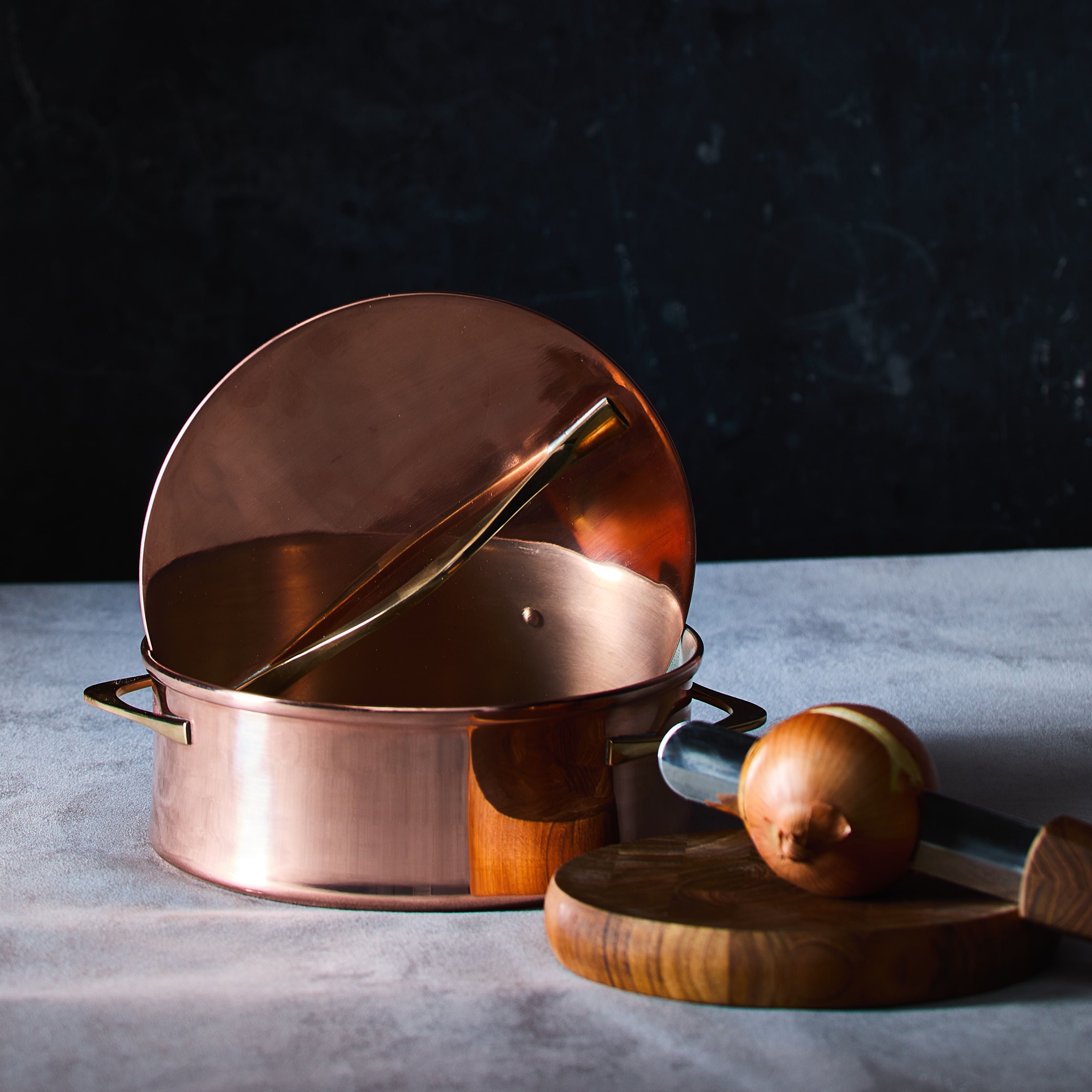
Editor’s Note: If you’ve ever curdled a béarnaise sauce because the pan held onto heat for too long after being pulled from the flame, you’ve experienced the "thermal lag" of inferior metals. Copper eliminates this lag, acting as an extension of the cook’s intent.
Top Recommendations: The Best Copper Cookware for 2026
Choosing the right copper requires balancing traditional craftsmanship with modern kitchen compatibility. Here is how the market leaders stack up for the coming year:
| Brand | Series | Interior Lining | Induction Ready? | Best For |
|---|---|---|---|---|
| Mauviel | M’200ci | Stainless Steel | No | Professional Performance |
| Hestan | CopperBond | Stainless Steel | Yes | Modern Induction Kitchens |
| All-Clad | Copper Core | Stainless Steel | Yes | Low-Maintenance Utility |
| Viking | Copper Series | Stainless Steel | No | Value-Conscious Collectors |
| Falk | Culinair | Stainless Steel | No (Standard) | The Purist’s Workhorse |
Mauviel M’200ci: The Heritage Standard
For nearly 200 years, Mauviel has been the heartbeat of Villedieu-les-Poêles, France. Their 2.0mm to 2.5mm thickness is considered the "sweet spot" for performance. The M’200ci series features a brushed copper exterior and a stainless steel interior, offering the perfect balance between traditional thermal response and modern durability.
Hestan CopperBond: The Induction Hybrid
Historically, copper’s greatest weakness was its inability to work on induction cooktops. Hestan has solved this with the CopperBond series. By wrapping a thick copper core in stainless steel and adding an induction-capable base, they’ve created a pan that offers the "soul" of copper with the convenience of 21st-century technology.
All-Clad Copper Core: The Pragmatist’s Choice
If you want the benefits of copper without the high-maintenance polishing, All-Clad’s Copper Core is the industry standard. It features a 5-ply construction where a thick copper center is sandwiched between layers of aluminum and stainless steel. It’s the "hybrid" solution for those who prioritize dishwasher safety and induction compatibility over the raw aesthetic of exposed copper.
Design Spotlight: The Jens Quistgaard Aesthetic
In 2026, the kitchen is no longer a hidden workspace; it is a stage for "stove-to-table" dining. No name resonates more in this space than Jens Quistgaard. The mid-century modern influence of his Dansk Kobenstyle and copper collections transformed cookware from a utility into functional art.
Quistgaard’s philosophy focused on the "elegant centerpiece." By designing copper vessels with sculptural handles and clean lines, he eliminated the need for separate serving bowls. A copper casserole dish is not just a cooking vessel; it is a statement piece that retains heat beautifully while sitting at the center of a dinner party. Modern iterations of this aesthetic emphasize high-walled pans and ergonomic, stay-cool handles that feel as good in the hand as they look on the table.
Choosing Your Interior: Tin vs. Stainless Steel Lining
The interior of your copper pan is just as important as the exterior. Because copper can react with acidic foods, it must be lined with a non-reactive metal.
- Traditional Tin Lining: Tin is the "original" non-stick. It is chemically inert and molecularly bonds to the copper. However, tin has a low melting point (approx. 450°F) and is soft. Professional chefs love it for its natural food-release properties, but it requires "re-tinning" every 10 to 20 years.
- Modern Stainless Steel Lining: Most modern copper (like Mauviel or Hestan) uses a thin layer of stainless steel. It is virtually indestructible, will never need relining, and can handle high-heat searing. This is the "set-it-and-forget-it" choice for the home cook looking for a 50-year lifespan.
The Math of Luxury: A Lifetime Cost Analysis
A full set of premium copper cookware can easily exceed $2,000. To the casual observer, this seems exorbitant. However, as an editor focused on long-term value, I look at the cost-per-use.
Consider the typical "budget" non-stick pan. It costs $60, lasts roughly two years before the coating fails, and is then relegated to a landfill. Over 50 years, you will buy 25 of these pans, spending $1,500 on a product that provides mediocre performance.
In contrast, a stainless steel-lined copper pan is a 50-year investment.
- Copper Investment: $450 for a high-end sauté pan.
- Usage: 3 times a week for 50 years (7,800 uses).
- Cost-per-use: $0.05 per use.
When you factor in the entire set, premium copper cookware offers a projected lifetime cost of $0.29 per use, compared to roughly $0.34 per use for the cycle of budget replacements. You aren't just buying a pan; you are buying a permanent solution to a recurring expense.
Essential Care: Preserving the Investment
The most common deterrent for new copper owners is the fear of maintenance. While copper will naturally develop a "patina" (a darkened, antique look) over time, keeping it brilliant is simpler than most realize.
- The Lemon and Salt Method: To restore the shine without harsh chemicals, rub a halved lemon dipped in coarse salt over the copper surface. The acidity and mild abrasion will strip oxidation in seconds.
- Temperature Management: Never heat an empty copper pan. Because it conducts heat so quickly, an empty pan can reach temperatures that might damage the lining or the bond between metals within minutes.
- Hand Wash Only: Never put exposed copper in the dishwasher. The harsh detergents and high-pressure cycles will dull the finish and can lead to pitting. A soft sponge and mild soap are all you need.
Expert Tip: If you prefer the aged look of a French bistro, let the patina develop. It doesn't affect the cooking performance; in fact, many professionals prefer the "work-worn" look of seasoned copper over a high-mirror polish.
FAQ
Q: Can I use copper cookware on an induction stove? A: Traditional copper is non-ferrous and will not work on induction. However, modern "hybrid" copper like the Hestan CopperBond or All-Clad Copper Core is specifically engineered with a magnetic stainless steel base to be induction-compatible.
Q: Is copper cookware safe? A: Yes, provided the lining (tin or stainless steel) is intact. The lining prevents the copper from reacting with acidic foods like tomatoes or wine. If you have a tin-lined pan and start to see the copper peeking through the bottom, it is time for professional re-tinning.
Q: Why is copper so much heavier than my other pans? A: Copper is a dense metal. A high-quality pan usually has a thickness of 2.0mm to 2.5mm. This weight is actually an advantage; it ensures the pan sits flat on the burner for maximum surface contact and won't warp under high heat.
The Final Word
Mastering copper cookware is a journey that begins with a shift in mindset. It requires moving away from the "disposable" mentality of modern consumerism and toward a stewardship of quality. In 2026, as we spend more time in our kitchens and value the provenance of our tools, copper stands alone. It is the only material that offers a 5x performance advantage over its rivals while simultaneously serving as a piece of heirloom art.
Whether you are starting with a single 1.5-quart saucier or investing in a full 10-piece set, you are buying into a legacy of culinary excellence.