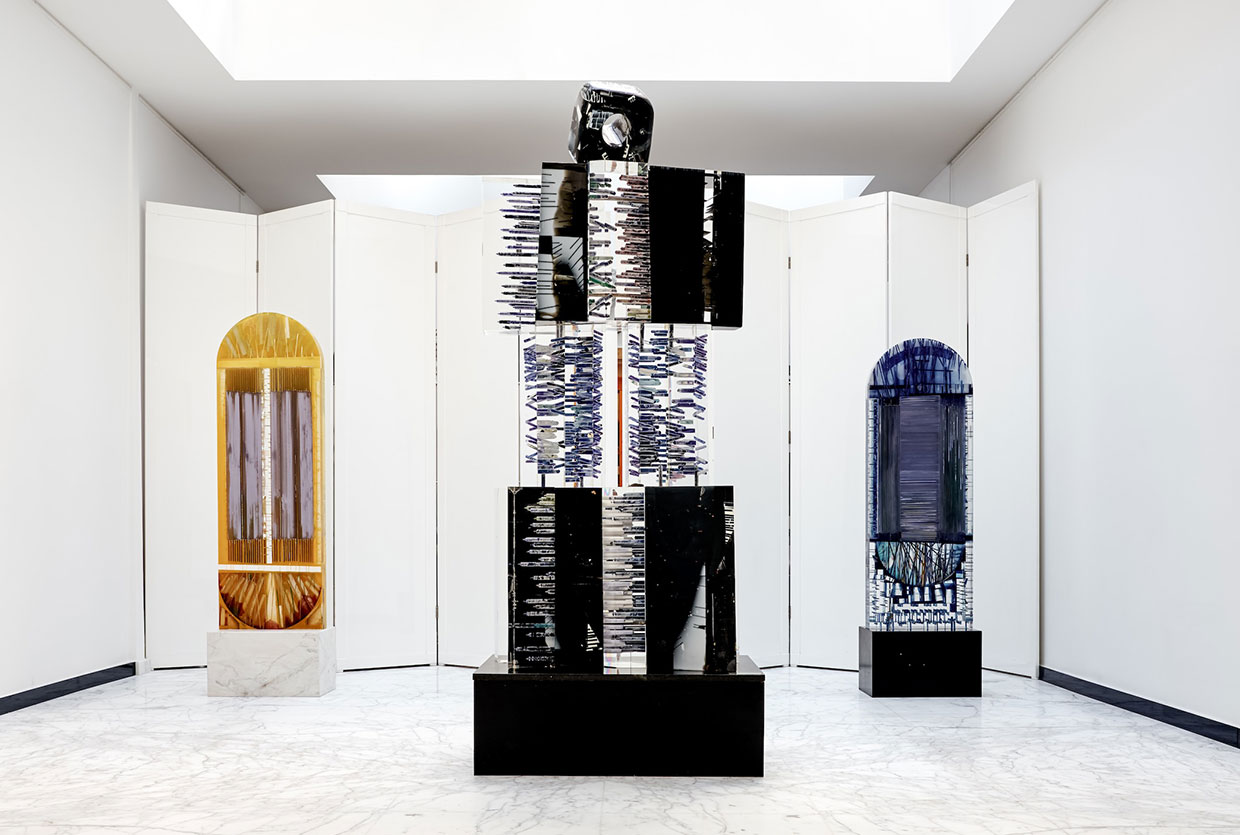
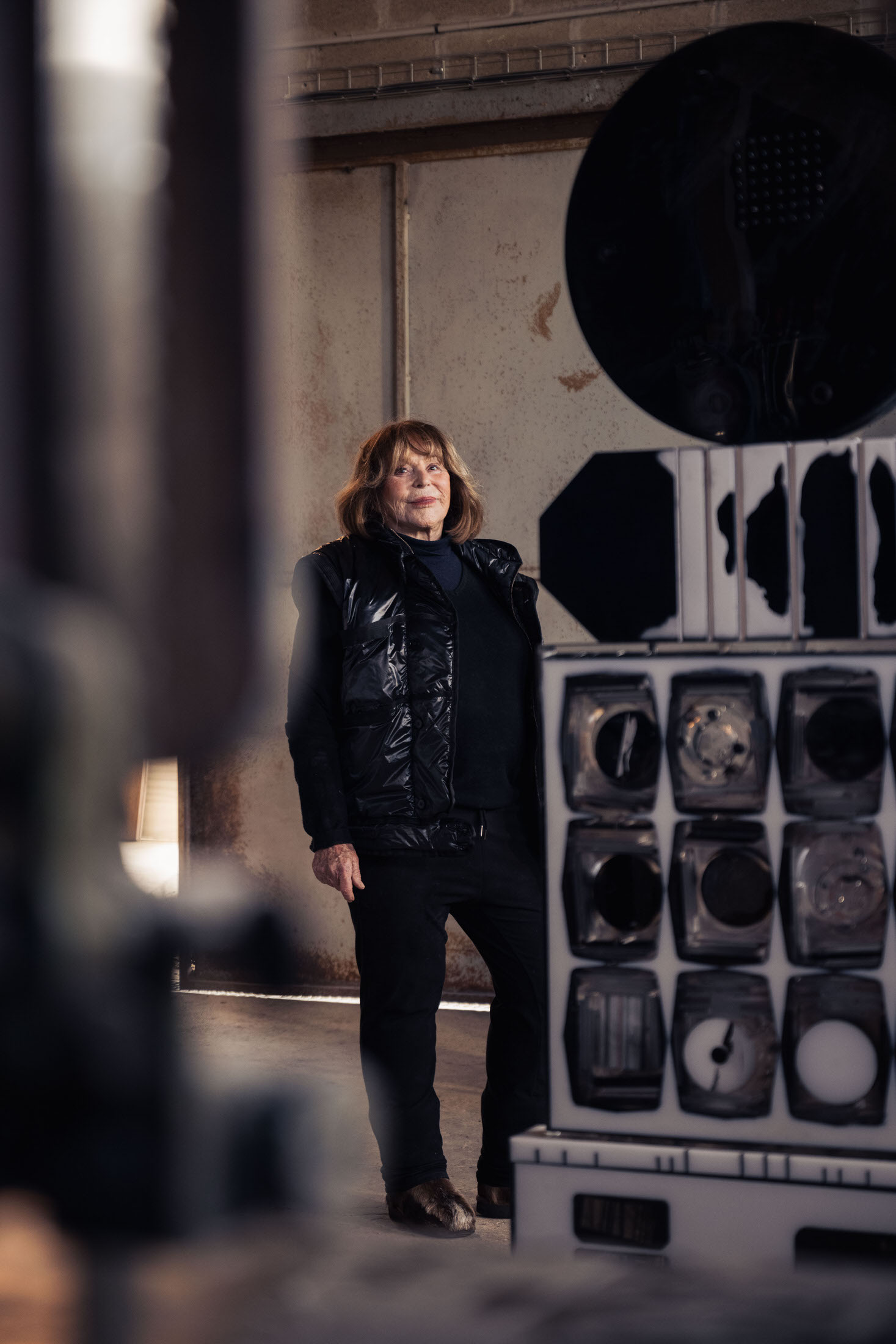
Walking through the doors of Galerie Gastou on the Rue Bonaparte, one is immediately struck by a sense of profound clarity. It is as if the air itself has been distilled into solid, luminous forms. This is the world of Monique Rozanès, a woman who has spent over six decades coaxing industrial matter into poetic existence. Born in Bordeaux in 1936, Rozanès is not merely a sculptor; she is an alchemist of the modern age. While her contemporaries in the mid-20th century were often preoccupied with the weight of bronze or the texture of clay, Rozanès looked toward the future—toward the radical transparency of synthetic resins and the ethereal potential of Methyl Methacrylate.
The current exhibition, "Vision," curated with exquisite precision at Galerie Gastou, serves as a long-overdue retrospective of a pioneer who has been quietly revolutionizing the intersection of art and industry since her formal journey began at the École Nationale Supérieure des Arts Décoratifs (ENSAD) in 1955. For those of us in the design world, her work represents the ultimate masterclass in how light can be harnessed to define, rather than just illuminate, a space.
The Alchemy of Methyl Methacrylate: A Signature Process
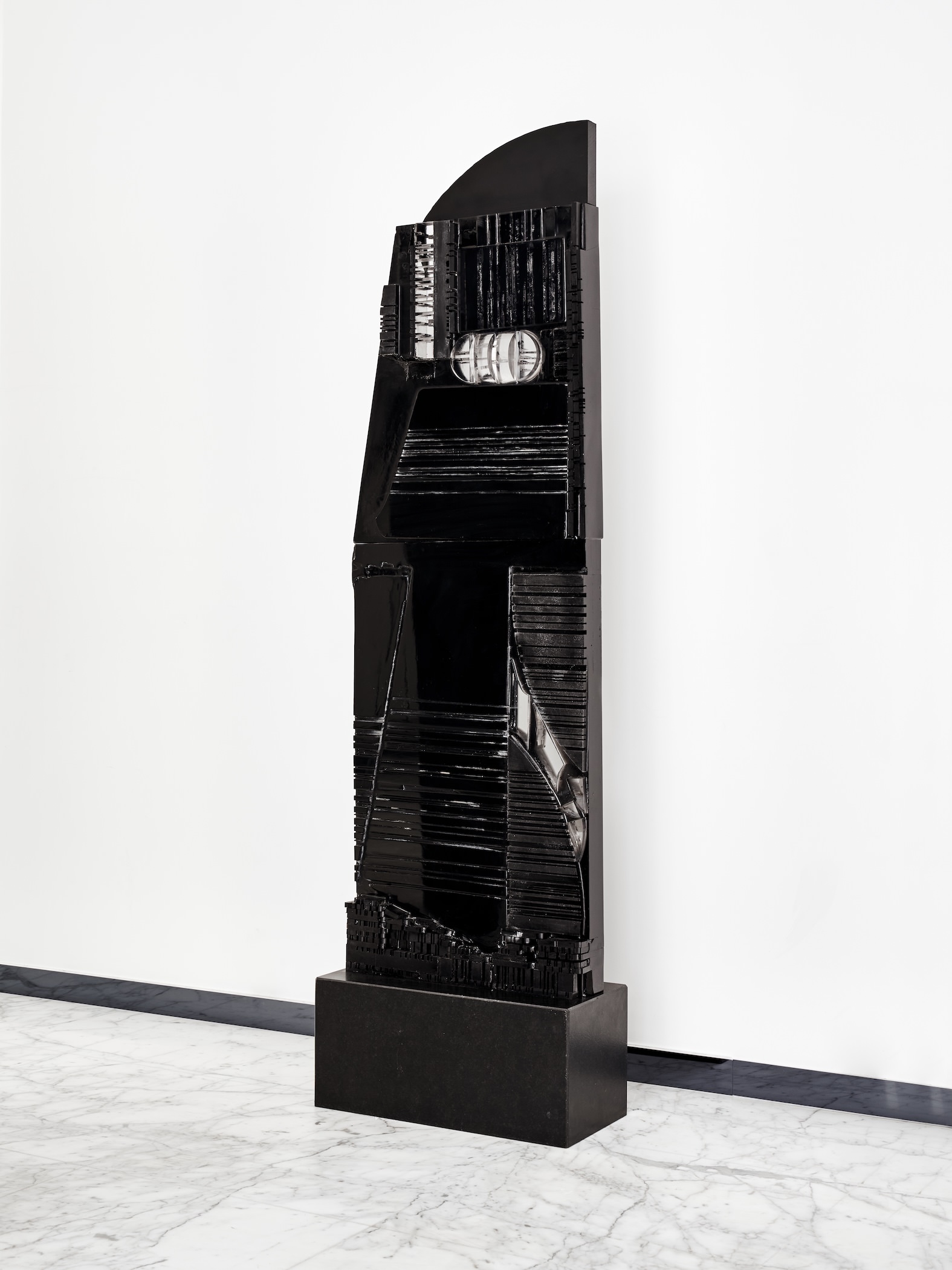
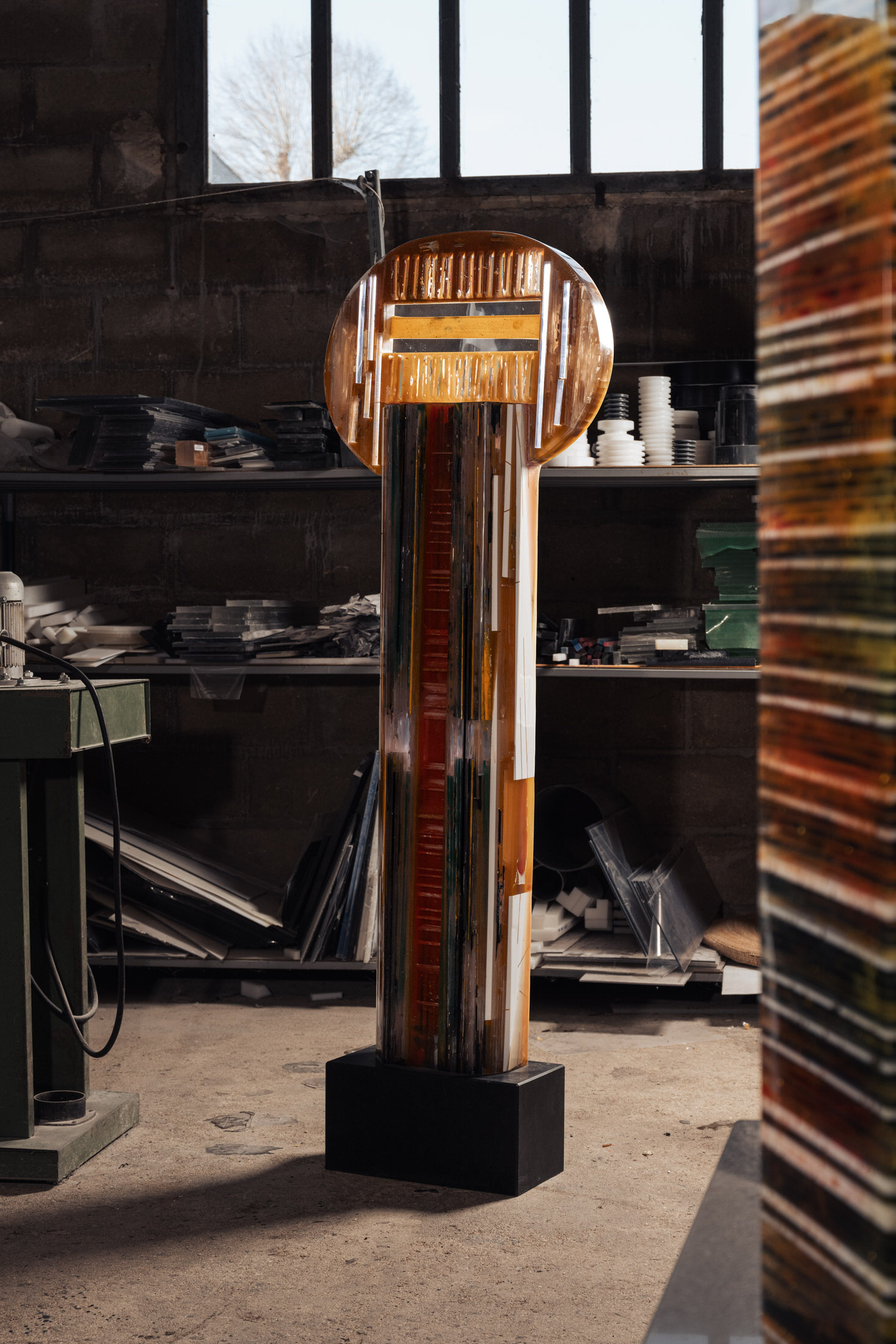
To understand the magic of a Rozanès sculpture, one must first understand the rigor of her science. Unlike the mass-produced acrylics we see today, Rozanès’s work utilizes industrial-grade synthetic polymers, specifically Methyl Methacrylate, processed through what she calls "Light Alchemy." This isn't a simple casting process. It is a grueling, meticulous method of sculpting liquid into blocks, which are then cut, polished, and re-assembled.
The hallmark of her technique is the "zero-void fusion method." In a world where resin often traps imperfections or air bubbles, Rozanès achieves a state of absolute purity. She layers these transparent blocks, fusing them in a way that allows her to create "internal geometric landscapes." When you look into one of her monolithic columns, you aren't just looking at a surface; you are peering into a suspended reality where planes of color and light intersect in mid-air.
The Material Blueprint of Rozanès’s Work:
- Base Medium: Methyl Methacrylate (MMA), an industrial monomer that polymerizes into a crystal-clear solid.
- The Fusion: A specialized process that eliminates all oxygen and gaps, ensuring the internal "seams" are invisible to the naked eye.
- Internal Landscapes: The insertion of pigments or secondary geometric forms during the fusion process to create the illusion of floating architecture.
- Surface Finish: Hand-polishing to a high-gloss finish that allows the sculpture to both reflect its environment and swallow light into its core.
Seven Decades of Innovation: From ENSAD to Global Recognition
Monique Rozanès’s career is a testament to the power of persistence. Starting in 1955, she entered an art world that was largely a "boys' club," especially within the realm of plastic and industrial arts. While the "California Light and Space" movement would later gain fame for similar explorations, Rozanès was already pioneering these concepts in Europe, often working in isolation in her atelier to perfect the chemical stability of her mediums.
Her journey has been one of constant material evolution. Over 65 years, she transitioned from early experiments with polyester resins to the sophisticated, heavy-gauge polymers seen in her later work. She didn't just use these materials; she mastered their molecular behavior.
| Period | Creative Focus | Material Innovation |
|---|---|---|
| 1950s - 1960s | Formative years at ENSAD; early explorations of transparency. | Experimentation with early industrial plastics and pigments. |
| 1970s - 1980s | The "Geometric Period"; focus on monolithic slabs and light refraction. | Perfection of the zero-void fusion technique. |
| 1990s - 2010s | Atmospheric depth; focus on "the void" and negative space. | Use of ultra-clear Methyl Methacrylate for larger architectural scales. |
| Present | "Vision" Retrospective; recognition as a pioneer of light alchemy. | Integration of her legacy into contemporary design discourse. |
The Philosophy of the Void: Transparency as Substance
In the hands of a lesser artist, resin can feel cold or commercial. But Rozanès treats transparency as a tangible substance. She is obsessed with the concept of the "void"—not as an absence of matter, but as a space for potential. Her sculptures often feature hollowed centers or internal geometric cutouts that play tricks on the viewer’s depth perception.
This philosophy draws natural comparisons to the American Light and Space movement, particularly the work of James Turrell or Robert Irwin. However, where Turrell uses vast architectural installations to manipulate light, Rozanès contains that same cosmic energy within a singular, hand-held or floor-standing object.
"I do not sculpt the resin; I sculpt the light that travels through it. The solid matter is merely the vessel for the emptiness inside." — An ethos that defines the Rozanès aesthetic.
By manipulating the refractive index of her pieces, she creates works that change appearance based on the time of day and the viewer's position. In the morning light, a piece might appear as a solid block of azure; by sunset, it reveals a hidden, glowing orange core that seems to burn from within.
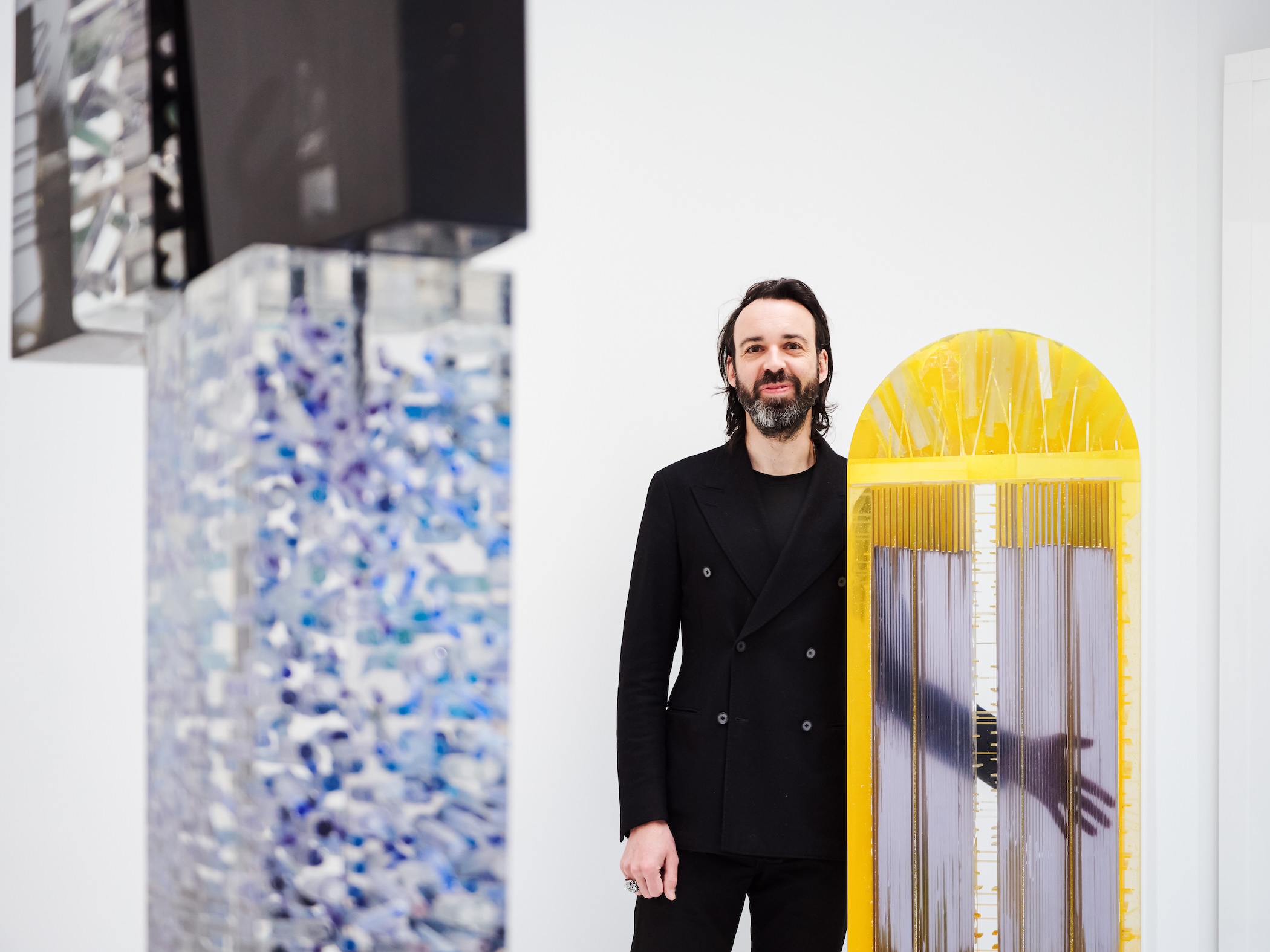
Visiting 'Vision' at Galerie Gastou, Paris
The setting for this retrospective is as significant as the art itself. Located in the heart of Saint-Germain-des-Prés, Galerie Gastou is famous for its Ettore Sottsass-designed façade—a bold, architectural statement that perfectly complements Rozanès’s geometric rigor.
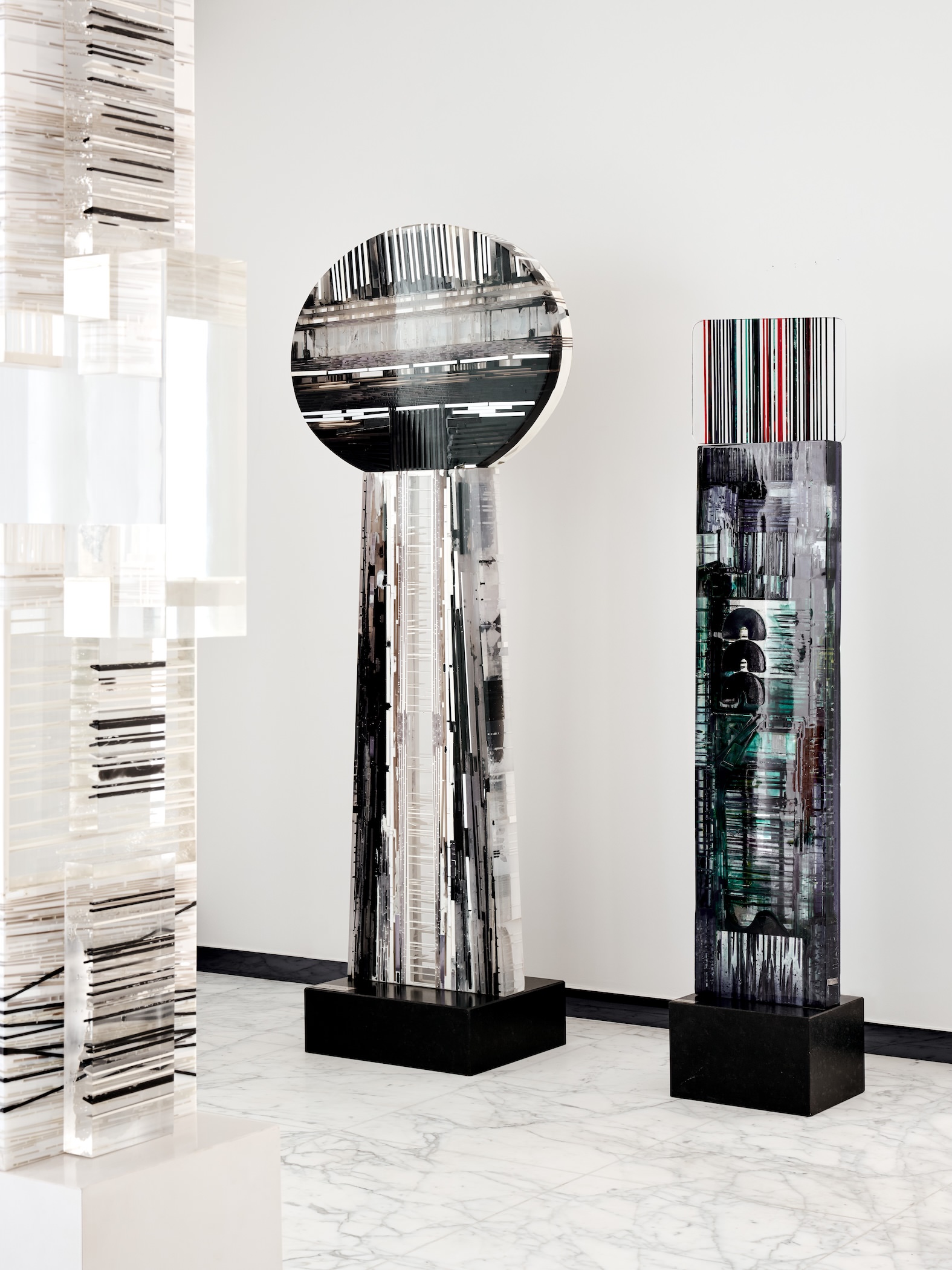
The exhibition, titled "Vision," is a curated journey through the artist's life. The layout emphasizes the relationship between the solid geometric forms and the architectural space they inhabit. It is an immersive experience that encourages you to move slowly, watching as the light bends and dances through sculptures that seem too perfect to have been made by human hands.
- Location: Galerie Gastou, 12 rue Bonaparte, 75006 Paris.
- Exhibition Dates: Now through April 19, 2025.
- What to look for: The 'Totems'—towering, multi-layered pillars that showcase the pinnacle of her fusion method.
Contemporary Legacy: Influencing the New Wave of Resin Artists
As an editor, I see the "Rozanès effect" everywhere in modern interiors. The current obsession with resin furniture—from the ethereal tables of Sabine Marcelis to the chromatic experiments of Draga & Aurel—owes a direct debt to Monique Rozanès. She proved that industrial materials could possess the same "soul" and "high art" status as marble or gold.
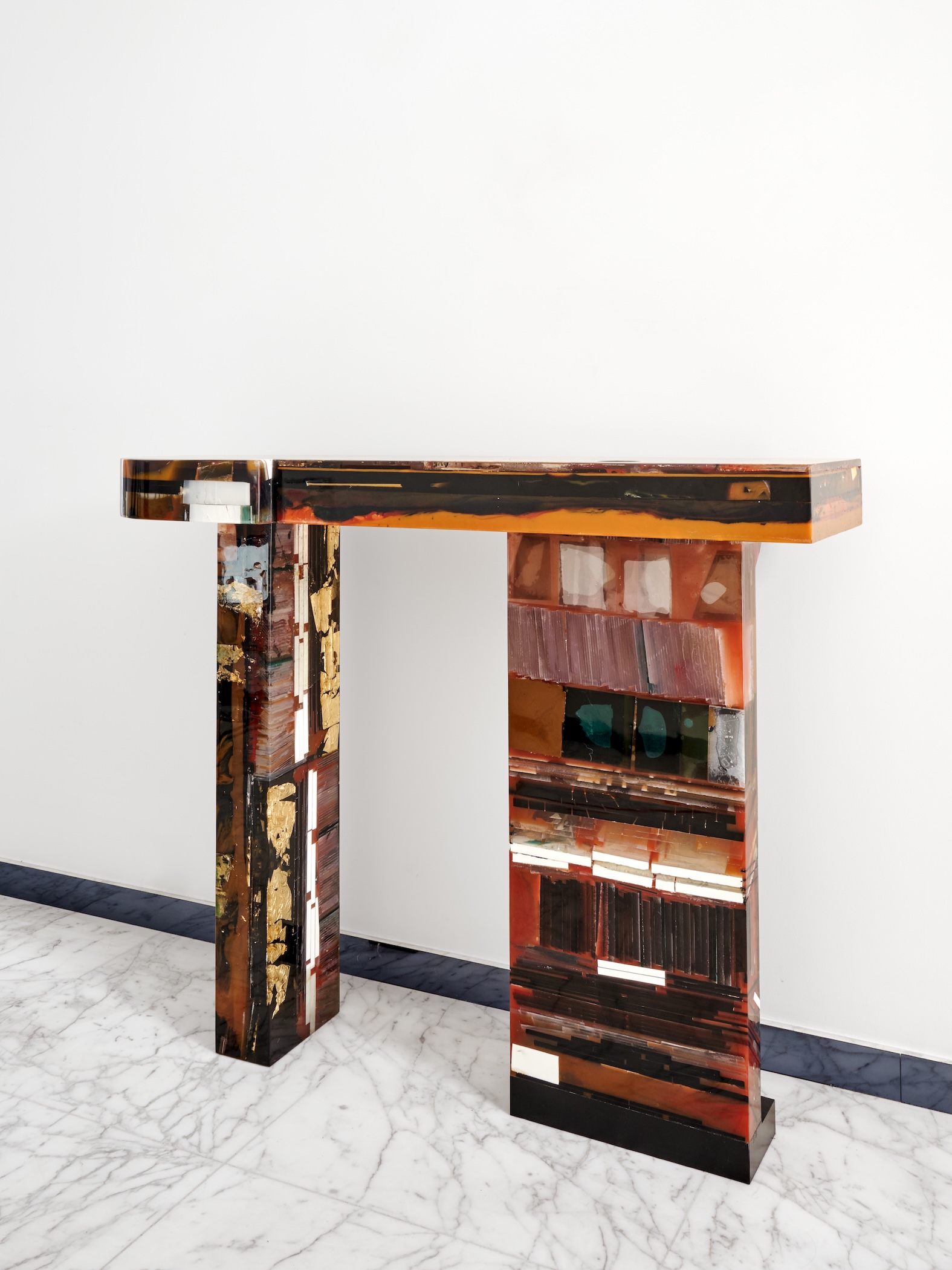
Her work, such as the 'Homage A Kandinsky' console, exemplifies how her artistic language transitioned into functional design. By using high-end polymers to create furniture, she paved the way for a new frontier where the boundaries between sculpture and decor are completely blurred. For the modern collector, a Rozanès piece is the ultimate "power object"—it commands a room not through sheer size, but through its sophisticated relationship with the environment.
FAQ
Why is Methyl Methacrylate used instead of standard epoxy resin? Methyl Methacrylate (MMA) offers a higher level of UV stability and optical clarity than standard epoxy. It does not yellow over time and has a refractive index closer to glass, allowing for the "light alchemy" effects that Rozanès is famous for.
How should a Rozanès resin sculpture be maintained in a home setting? While industrial-grade, these pieces should be treated like fine crystal. Use only soft, non-abrasive microfiber cloths and specialized acrylic cleaners. Avoid direct, high-heat sources, though they are remarkably stable under normal interior lighting.
Is the "Vision" exhibition suitable for interior designers looking for inspiration? Absolutely. The exhibition provides a masterclass in how transparency can be used to solve spatial "heaviness" in a room, offering endless inspiration for custom furniture and architectural glass installations.
Monique Rozanès’s work reminds us that the most profound beauty often lies in what we cannot see—the air, the light, and the "void" that connects us all. If you find yourself in Paris before April 2025, do not miss the opportunity to see these innovations in person. It is a rare chance to witness the evolution of a woman who didn't just follow the trends of the 20th century—she invented a new medium for the 21st.