There is a specific kind of silence that accompanies the work of Olga de Amaral—a resonant, textural hush that speaks of centuries-old traditions and the rhythmic passage of time. For those of us who live and breathe interior styling, Amaral’s work has long been a lodestar, demonstrating how fiber can possess the weight of architecture and the shimmer of alchemy. From May 1 to October 12, 2025, the Institute of Contemporary Art (ICA) Miami presents a landmark retrospective that is, quite simply, the season’s most essential pilgrimage for anyone moved by the intersection of material, light, and space.
This exhibition, a sweeping survey of a career spanning six decades, features over 50 pivotal works. It marks a profound collaboration with the Fondation Cartier pour l’art contemporain, bringing to Miami a collection that bridges the gap between indigenous Colombian weaving and modern abstraction. For the first time, North American audiences will witness several historical pieces that have never before left Colombia, offering a rare glimpse into the evolution of an artist who fundamentally redefined the "fiber art" movement.
The Artist’s Journey: From Bogotá to Global Icon
To understand Olga de Amaral is to understand the structural logic of architecture. Born in Bogotá, her early training in architectural drafting provided a foundational rigor that would eventually allow her to liberate textiles from the two-dimensional wall. It was her time at the Cranbrook Academy of Art in Michigan—a cradle of mid-century modernism—where she fused the structural principles of the Bauhaus with the ancestral weaving traditions of the Andes.
Amaral did not merely "make" tapestries; she engineered them. By the early 1970s, she had already gained international acclaim, receiving a Guggenheim Fellowship in 1973. Today, her legacy is cemented in the permanent collections of over 40 international museums, from the Met to the Musée d'Art Moderne de Paris. Her career is a testament to the "slow road"—a philosophy of meticulous, hand-crafted production that stands in defiant contrast to our era of digital immediacy.
"I have always looked for a way to transform the surface into something that is not just a textile, but a space, a volume, a presence." — Olga de Amaral
Entering the 'Vertical Forest': Exhibition Design by Lina Ghotmeh
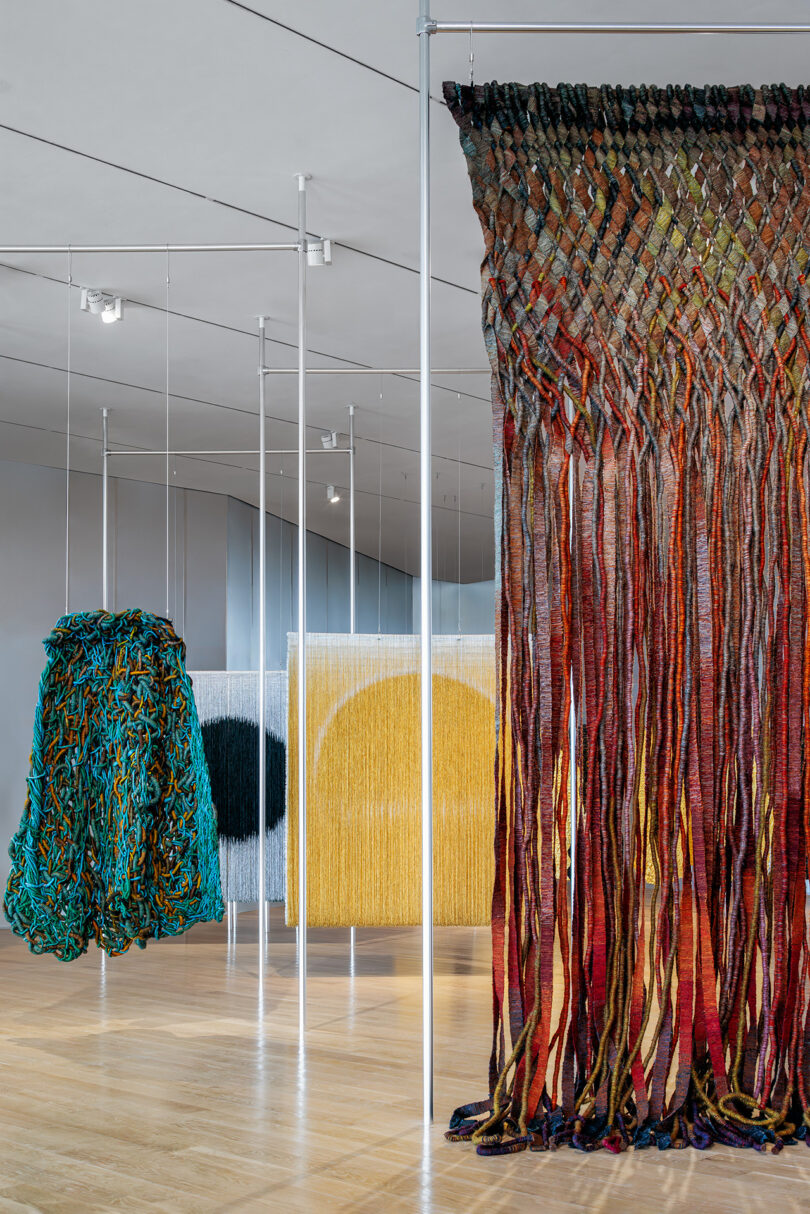
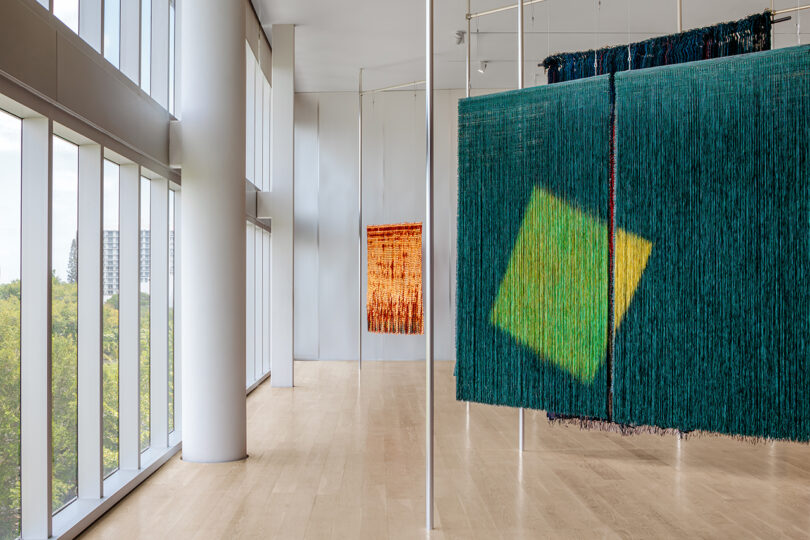
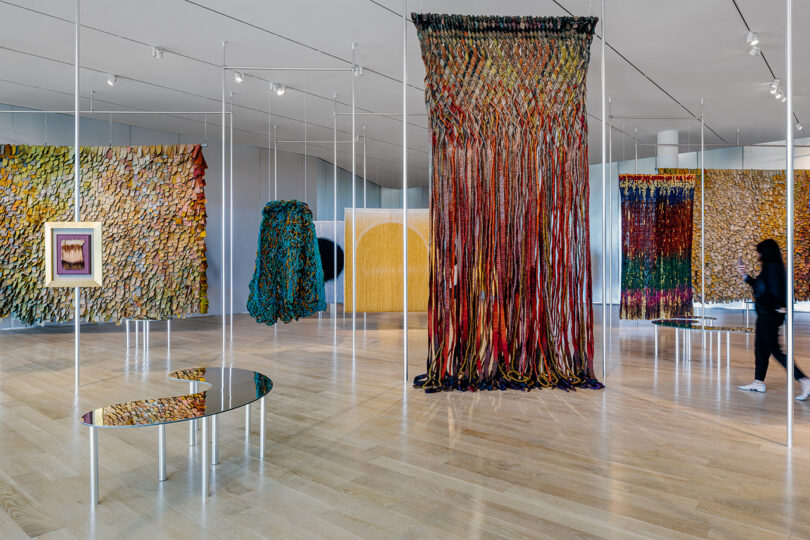
As an editor, I am often as captivated by the vessel for art as I am by the art itself. For this retrospective, ICA Miami commissioned the award-winning architect Lina Ghotmeh to design the exhibition layout. Ghotmeh’s intervention is nothing short of inspired: she has transformed the gallery into a "vertical forest."
Instead of pinning works to sterile white walls, many of Amaral’s monumental pieces hang organically from the ceiling. This allows visitors to navigate through the art, observing the interplay of light and shadow on both the front and back of the textiles. The design masterfully utilizes the ICA Miami’s third-floor gallery, where the treetop views from the museum windows harmonize with the dangling threads of the installations. It is a meditative, immersive environment that encourages a slower pace of observation—a rare gift in a bustling city like Miami.
Exploring the Masterpieces: From Alchemy to Mists
The retrospective is organized to showcase the thematic "souls" of Amaral’s work. Each series represents a different mastery of material and a different emotional frequency.
The 'Brumas' (Mists) Series
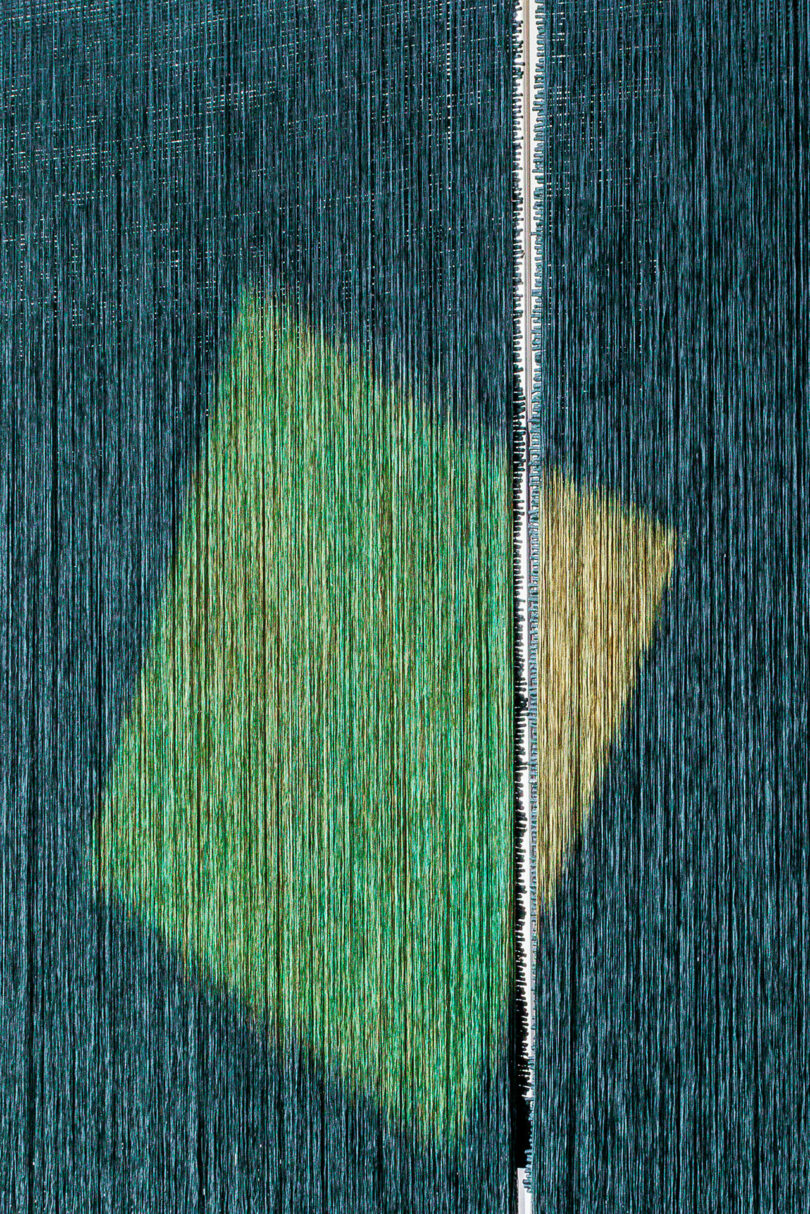
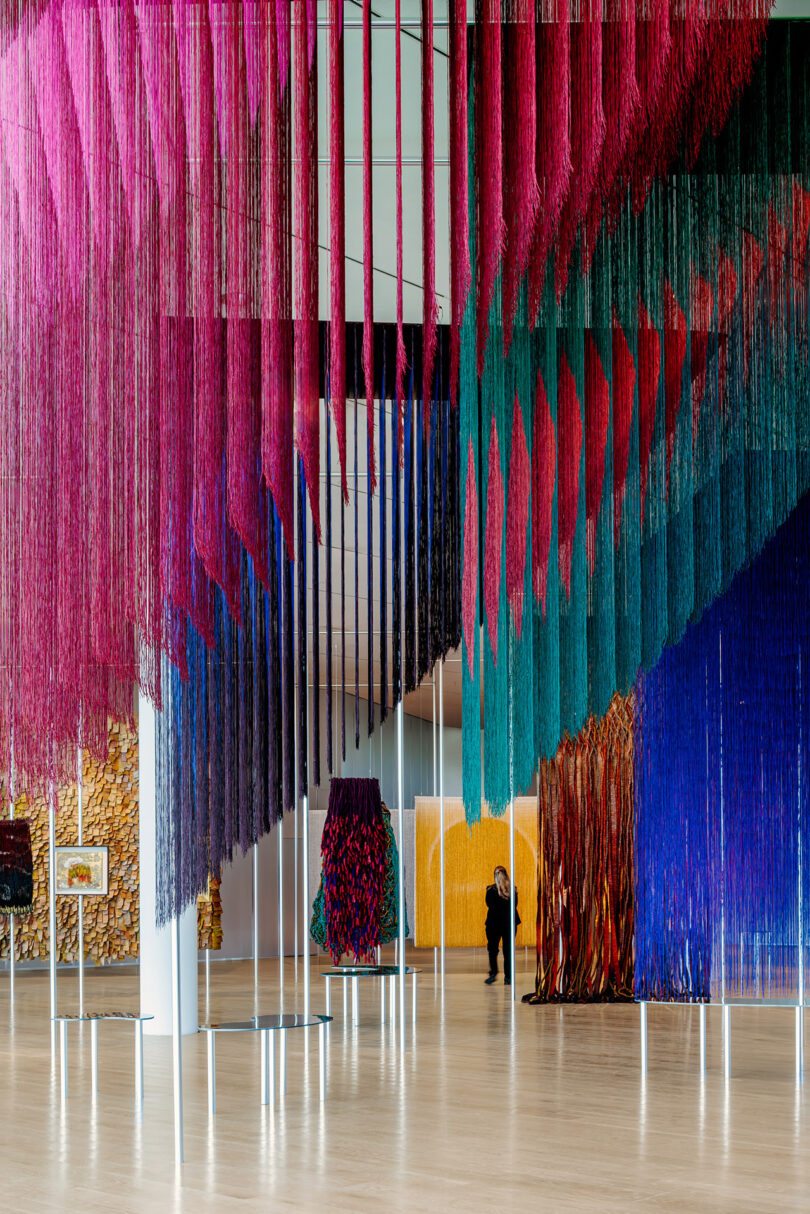
Perhaps the most ethereal of her works, the Brumas series consists of geometric cascades of thousands of individual threads. These pieces are not woven in the traditional sense; rather, they are painted and then hung to create cloud-like volumes of color. In the ICA galleries, these fuchsia, azure, and forest green threads seem to vibrate with the slightest movement of air, creating a moiré effect that challenges the viewer’s depth perception.
The 'Estelas' and 'Luz Blanca'
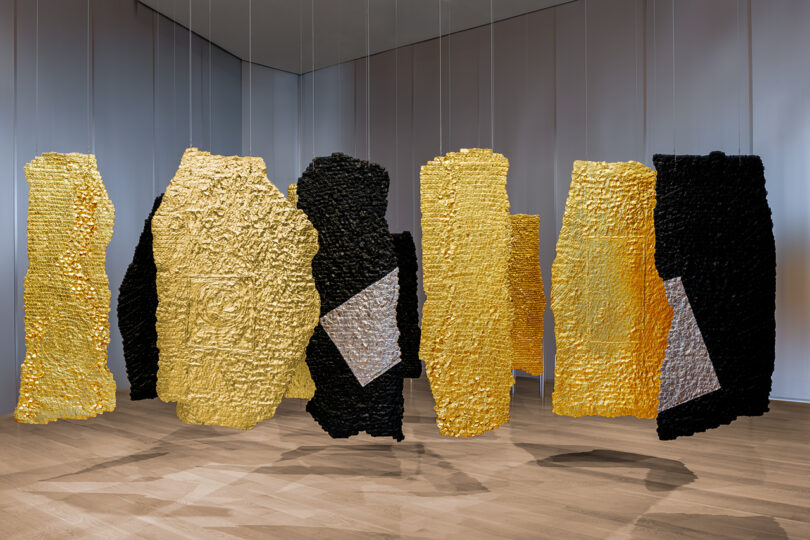
If the Brumas are air, the Estelas (Stelae) are earth and spirit. In this series, Amaral applies gold leaf and gesso to heavy textile surfaces, referencing the sacred light of pre-Columbian funerary sculptures. The gold does not merely sit on the surface; it is integrated into the fibers, causing the pieces to shimmer with an inner light that feels ancient and divine.
Contrasting this is Luz Blanca, where Amaral transforms industrial plastic and palladium into shimmering, wall-sized installations. It is a masterclass in how a "modern" material can be elevated to the status of the sacred through the sheer labor of the hand.
The 'Nudos' (Knots)
The Nudos series represents Amaral’s most sculptural phase. These are monumental three-dimensional forms that celebrate what the artist calls the "kernel of a textile." They are thick, tectonic, and resolutely physical, forcing the viewer to acknowledge the textile as a structural force rather than a decorative after-thought.
Mastery of Material: The 'Slow Road' Technique
What makes Olga de Amaral’s work so compelling for modern living spaces is the staggering variety of materials she employs. She rejects the rigid boundaries of "fine art" materials, opting instead for a tactile vocabulary that includes everything from horsehair to precious metals.
Material Spotlight: The Amaral Palette
| Material | Significance & Use | Visual Effect |
|---|---|---|
| Gold Leaf | References Pre-Columbian identity and sacred light. | Shimmering, reflective, "eternal." |
| Horsehair | Provides structural rigidity and an organic, earthy texture. | Matte, architectural, tactile. |
| Gesso | Used to stiffen fibers, allowing them to hold three-dimensional shapes. | Sculptural, stone-like. |
| Palladium | A modern alternative to silver that doesn't tarnish. | Cool-toned, industrial-chic. |
| Clay & Linen | Rooting the work in the raw elements of the Colombian landscape. | Tectonic, grounded, weighted. |
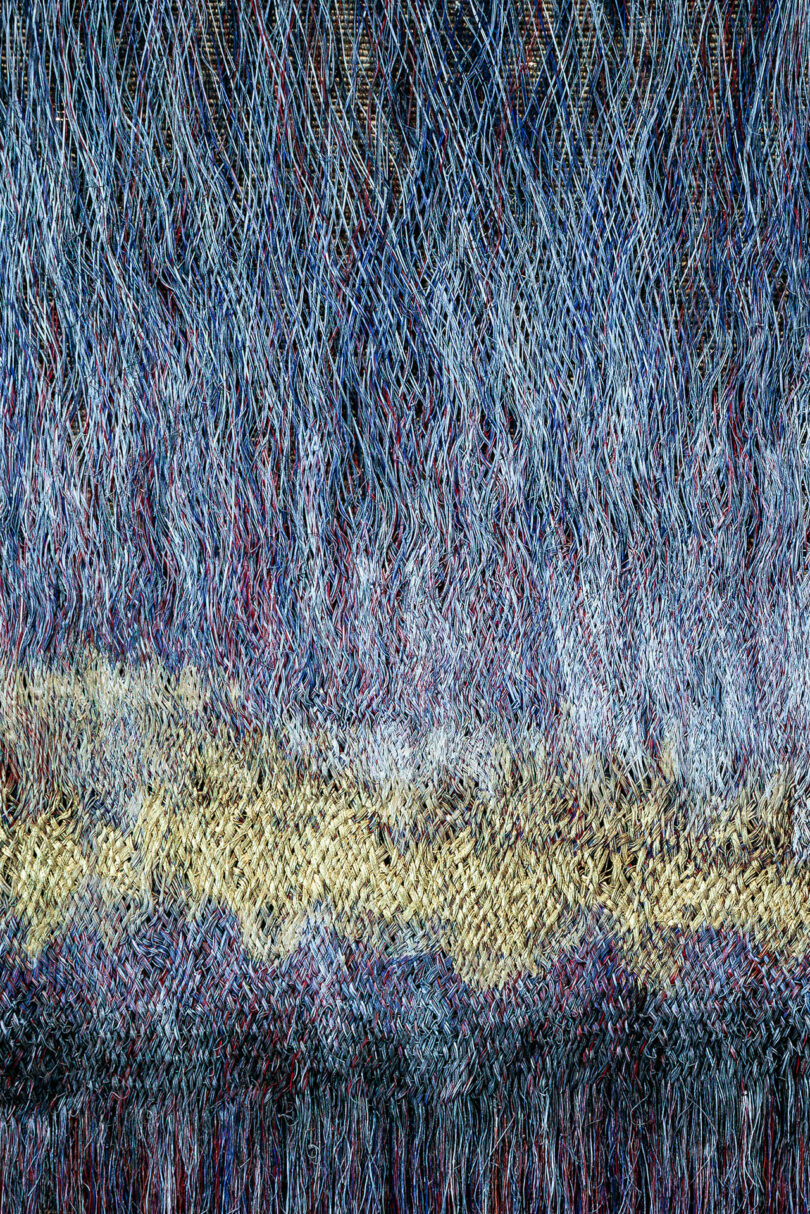
The core of her innovation lies in what she calls "weaving with weavings." Amaral will often weave a base structure, then cut it apart, paint it, and re-weave it into a new, denser form. This "slow road" technique ensures that every square inch of the work has been touched, considered, and manipulated, resulting in a depth of texture that a single-pass loom could never achieve.
Why This Exhibition Matters in 2025
In an age where our primary interaction with the world is through the flat, cold glass of a screen, Olga de Amaral’s work acts as a vital sensory corrective. This retrospective at ICA Miami arrives at a moment when the contemporary fiber art movement is experiencing a massive resurgence. Designers and collectors are increasingly seeking out works that offer "tactile warmth"—art that softens the hard angles of modern architecture while providing a deep connection to human history.
For those of us in the design world, this exhibition is a reminder that the most powerful interiors are those that engage all the senses. Amaral’s work doesn't just decorate a room; it changes the way light moves within it and how sound is absorbed by it. It is art that lives with you.
FAQ
What are the exhibition dates and ticket info?
The Olga de Amaral retrospective runs from May 1 to October 12, 2025, at ICA Miami. The museum offers free admission to the public, though timed tickets are highly recommended and can be reserved through their official website.
Who designed the exhibition layout?
The exhibition features a custom-designed environment by the award-winning architect Lina Ghotmeh. Her "vertical forest" concept allows the textile pieces to hang freely, creating an immersive and meditative experience.
What makes Olga de Amaral's style unique?
Amaral is unique for her ability to blend traditional Colombian weaving with architectural structuralism. Her use of unconventional materials—specifically gold leaf, horsehair, and gesso—allows her to create "textile sculptures" that possess a three-dimensional presence unlike traditional flat tapestries.
About the Author: Ivy Chen is an Interior Design & Decor Editor with a passion for how art transforms the home. When she isn't reviewing the latest museum retrospectives, she's sourcing artisanal textiles that bring soul and texture to modern living spaces.