London is a city defined by its thresholds. To walk from the refined, village-like charm of Marylebone into the neon-lit, rebellious spirit of Soho is to witness a tectonic shift in cultural energy. For designers, this intersection presents a formidable challenge: how do you build a structure that feels native to both worlds without losing its own soul?
The answer lies in site-responsive design. Unlike traditional architecture, which often imposes a pre-conceived aesthetic onto a plot of land, site-responsive design is an architectural approach where the building's aesthetic, materiality, and layout are directly informed by the physical and cultural context of its specific location. It is the art of listening to a neighborhood before picking up a pencil.
Concrete Amsterdam’s latest masterpiece, The BoTree Hotel, serves as a masterclass in this philosophy. By distilling the essence of its surroundings into every thread and timber, they have created a "neighborhood-oriented" sanctuary that feels less like a hotel and more like a curated extension of London’s West End.
Lesson 1: Contextual Materiality and the Color of the Streets
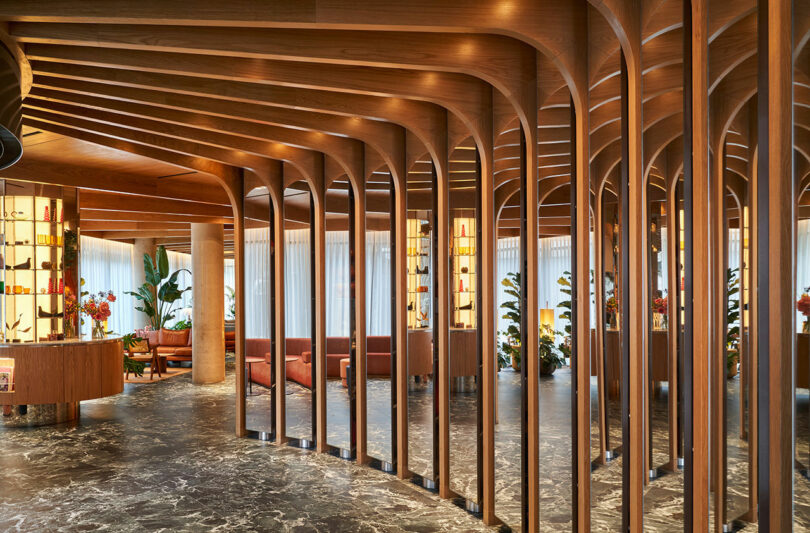
A site-responsive project begins with a palette—not one chosen from a trend book, but one "sampled" from the immediate environment. Concrete Amsterdam spent months observing the tonal shifts of Marylebone Lane. They didn't just look at the buildings; they looked at the patina of the brickwork, the moss in the crevices of the stone, and the warm glow of the local pubs.
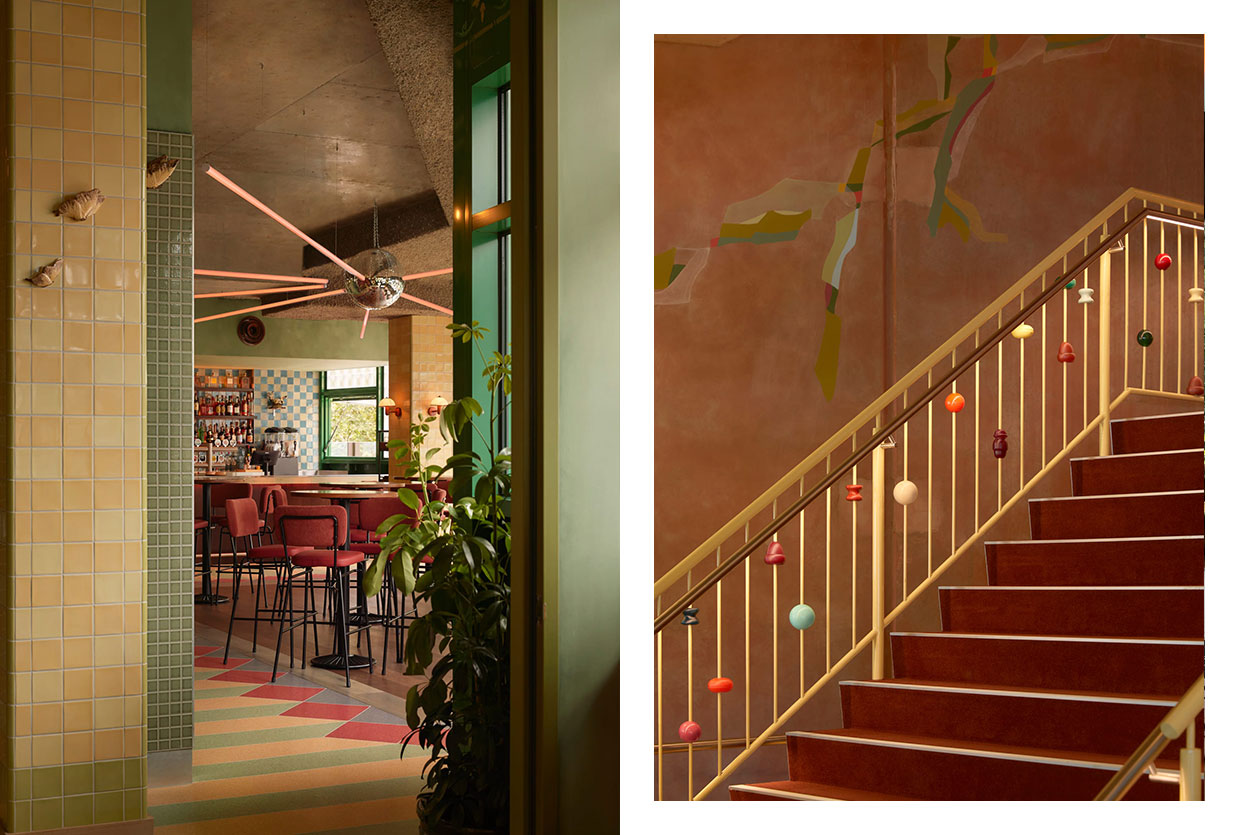
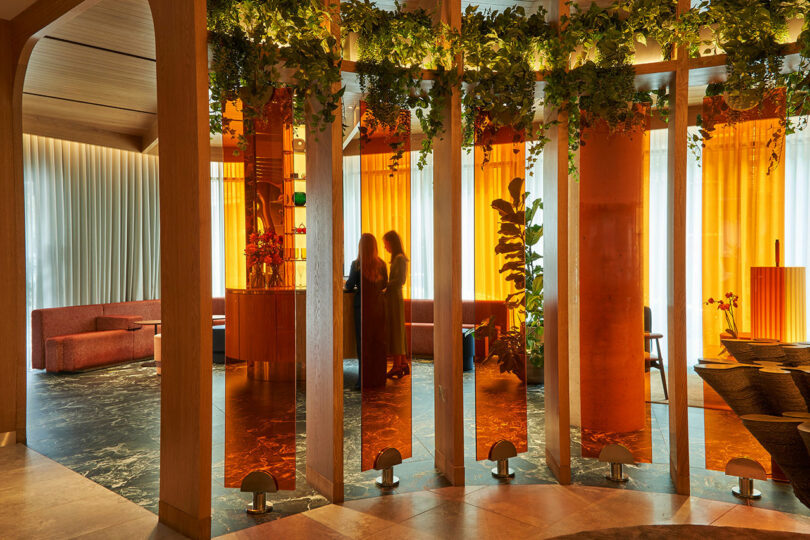
The result is a design language Concrete calls the "Arboreal Oasis." This isn't merely about adding plants; it’s about using materiality as a transition. The design team utilized a rich spectrum of warm greens, cognacs, and deep reds—colors derived directly from the historic streets nearby.
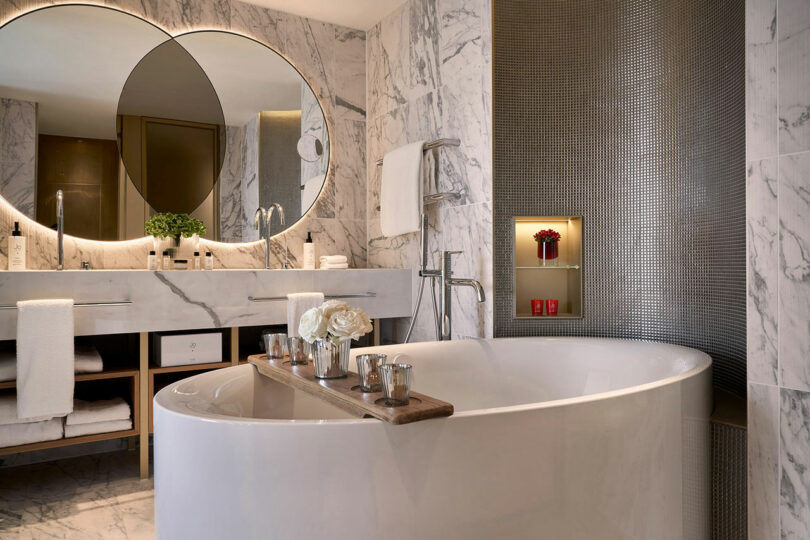
- Material Contrasts: By pairing the warmth of natural timber with the coolness of veined marble, the design echoes the duality of Marylebone—historic yet polished, grounded yet luxurious.
- Textural Narrative: Rough-hewn stones meet velvet upholstery, mirroring the tactile experience of walking from a cobblestone alley into a high-end boutique.
Lesson 2: Narrative-Driven Identity via Local Landmarks
One of the most striking aspects of The BoTree is its commitment to local storytelling. In many luxury hotels, rooms are numbered and sterile, offering a "nowhere-in-particular" luxury. Concrete Amsterdam rejected this, instead opting for a strategy that scales the design down to a residential, human level.
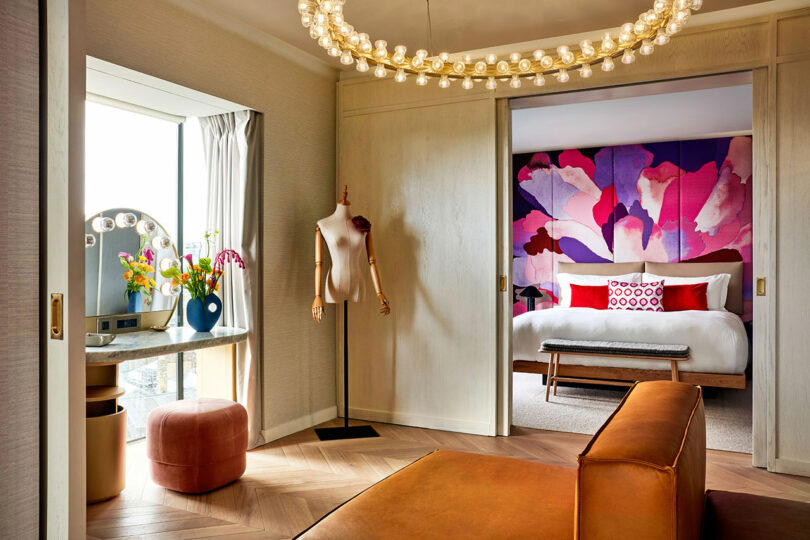
The BoTree Hotel features 30 uniquely themed suites, each 100% dedicated to representing a specific street or historical attribute of the local Marylebone and Soho districts. By naming each suite after a local landmark—such as the Welbeck or the Marylebone Suite—the hotel anchors the guest’s experience in the geography of the city.
"To design for a site is to tell its history through the medium of space. If a guest wakes up and knows exactly which neighborhood they are in without looking out the window, the designer has succeeded." — Ivy Chen
Each suite functions as a curated residence. You’ll find fashion mannequins that nod to the nearby tailoring history of Savile Row and Soho, alongside bespoke furniture that feels gathered over time rather than mass-produced. This narrative-driven identity ensures that the hotel isn't just in London; it is London.
Lesson 3: The 'Swinging Sixties'—Infusing Cultural Resonance
Site-responsiveness isn't just about geography; it's about vibe. To the south of The BoTree lies Soho, the heart of London’s counterculture and the birthplace of the "Swinging Sixties." To ignore this would be to ignore the "locus point" of the hotel's energy.
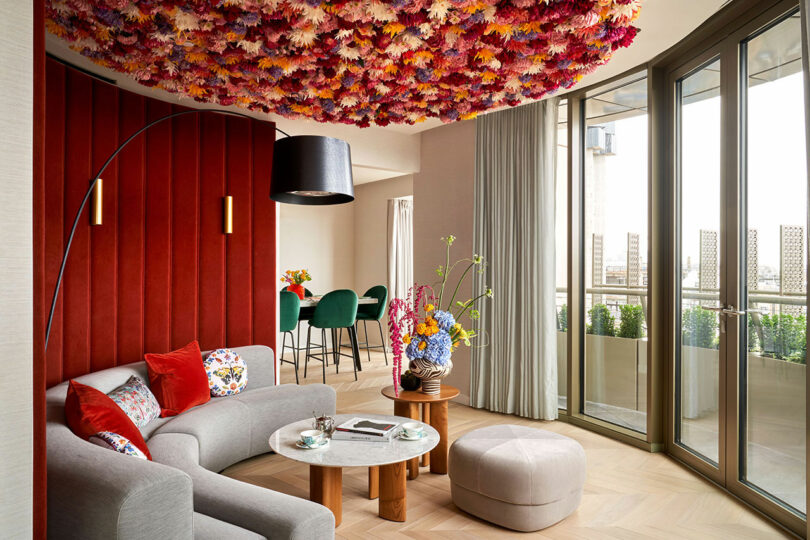
Concrete Amsterdam infused the interior with "Peacock-esque" elements—a nod to the flamboyant fashion and "boasting" culture of the 1960s. This is most evident in the bold floral motifs that serve as a thematic through-line throughout the property.
| Design Element | Cultural Reference | Implementation |
|---|---|---|
| Floral Ceilings | Carnaby Street Fashion | Vibrant, oversized floral patterns in public lounges and suite headboards. |
| Vine Armatures | The "Hidden Garden" | Metal structures at the entrance that allow greenery to climb, mimicking a secret village garden. |
| Peacock Palette | The New Edwardians | Iridescent blues and "lemon yellows" that reflect the rebellious spirit of Soho’s dandy culture. |
This cultural resonance creates an emotional bridge for the guest, linking the private luxury of their room to the vibrant, historic street life just outside the doors.
Lesson 4: Adaptive Layouts and the 15% Efficiency Rule
Perhaps the most technical lesson from The BoTree is the importance of adaptive hospitality layouts. In a city like London, where square footage is at a premium, site-responsive design must also be incredibly efficient.
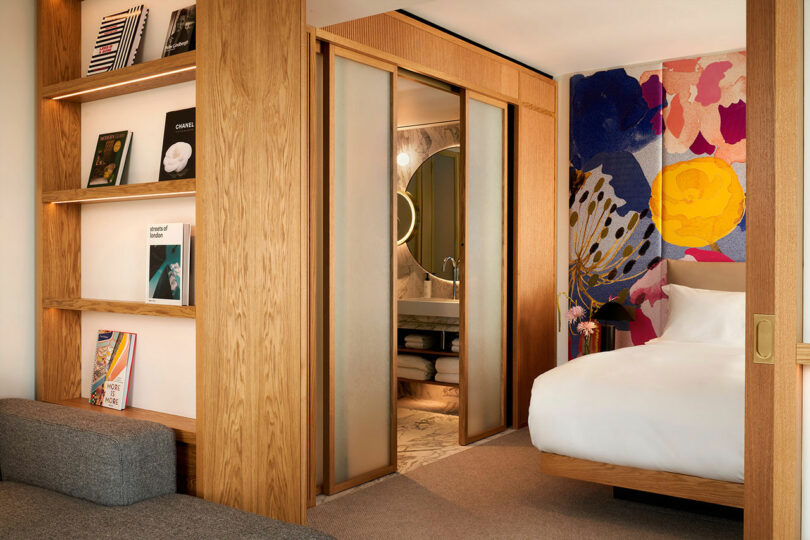
Concrete Amsterdam implemented a "Pocket Door Revolution." By using semi-translucent sliding doors, they allowed guest rooms to serve multiple functions. The foyer can be completely closed off, turning the dressing area into a private sanctuary, or opened up to create a large, flowing social space.
Why this matters:
- Psychological Comfort: Guests can control the "porosity" of their space, choosing between an open-concept feel or a traditional, compartmentalized layout.
- Statistical Impact: By implementing these adaptive pocket-door layouts, Concrete Amsterdam increased the usable social space in guest rooms by approximately 15% without expanding the physical footprint.
This 15% efficiency rule proves that site-responsive design isn't just about aesthetics—it’s about maximizing utility in high-density urban environments.
Lesson 5: Seamless Transitions from Public to Private
The hallmark of a well-designed hotel is the "sequence of arrival." At The BoTree, this sequence is handled through the "Arboreal Core"—a lantern-like lobby that serves as a vertical connection between the social hub and the guest floors.
Concrete Amsterdam strategically positioned the interior tone to balance "Highbrow Mayfair" with "Hip Soho." The public spaces are theatrical and vibrant, designed for "seeing and being seen." However, as you move toward the guest rooms, the design shifts toward what Concrete calls "Conservatories."
Using indoor greenery and soft, diffused lighting, these spaces evoke the atmosphere of a classic English home. This transition is crucial for guest well-being; it allows the brain to downshift from the sensory overload of the city to the serenity of a private sanctuary.
Conclusion: The Future of Context-Aware Hospitality
The BoTree Hotel stands as a testament to the power of site-responsive design. By moving away from "copy-paste" luxury and embracing the specific DNA of Marylebone and Soho, Concrete Amsterdam has created a property that offers more than just a bed—it offers a sense of place.
In an era where travelers are increasingly seeking "authentic" experiences, site-responsiveness is no longer a luxury; it is a competitive advantage. It turns a building into a neighbor and a guest into a local. As we look toward the future of hospitality, the lessons from The BoTree remind us that the most successful designs are those that grow from the ground up, rooted in the history, colors, and textures of the streets they inhabit.
FAQ
What is the difference between sustainable design and site-responsive design? While they often overlap, sustainable design focuses on environmental impact (energy, carbon, waste), whereas site-responsive design focuses on how a building integrates with its specific physical and cultural context (aesthetics, local history, and neighborhood layout).
How can I apply site-responsive principles to my own home? Look at the natural light in your area, the local materials (like the type of stone or wood common in your region), and even the "vibe" of your neighborhood. Choosing a color palette that reflects the landscape outside your window is a simple way to start.
Why did Concrete Amsterdam use so many floral motifs at The BoTree? The florals represent the "village" spirit of Marylebone Lane and the flamboyant "Peacock" culture of nearby Soho. It serves as a visual bridge between the two distinct neighborhood identities.
Are you ready to redefine your space? Whether you’re designing a boutique hotel or a studio apartment, remember: the best inspiration is often right outside your front door. Stay tuned for more deep dives into the world of high-end interior design.