For a decade, the mudroom was the crown jewel of the suburban floor plan—a high-traffic transition zone designed to hide the chaos of muddy boots and wet umbrellas. But as we look toward 2026, the architectural center of gravity has shifted. The new status symbol of the modern home isn’t the place where you enter; it’s the place where you stay. Specifically, the walk-in pantry.
This isn't just about storage; it’s a lifestyle. A crunchy, clean, hyper-organized one. The "status larder" has evolved from a dark closet for canned goods into a curated gallery of domesticity. It is the architectural equivalent of a "shelfie"—a highly photogenic, intentionally designed space that signals a homeowner's values: slow living, artisanal sourcing, and an unapologetic flex of personal style. Why the sudden obsession? Modern homeowners are shifting focus from utility-first spaces like secondary laundry rooms to these highly curated larders that showcase personality through "granny-chic" aesthetics and bespoke craftsmanship.
The Matilda Goad Effect: Defining the 'Granny-Chic' Larder
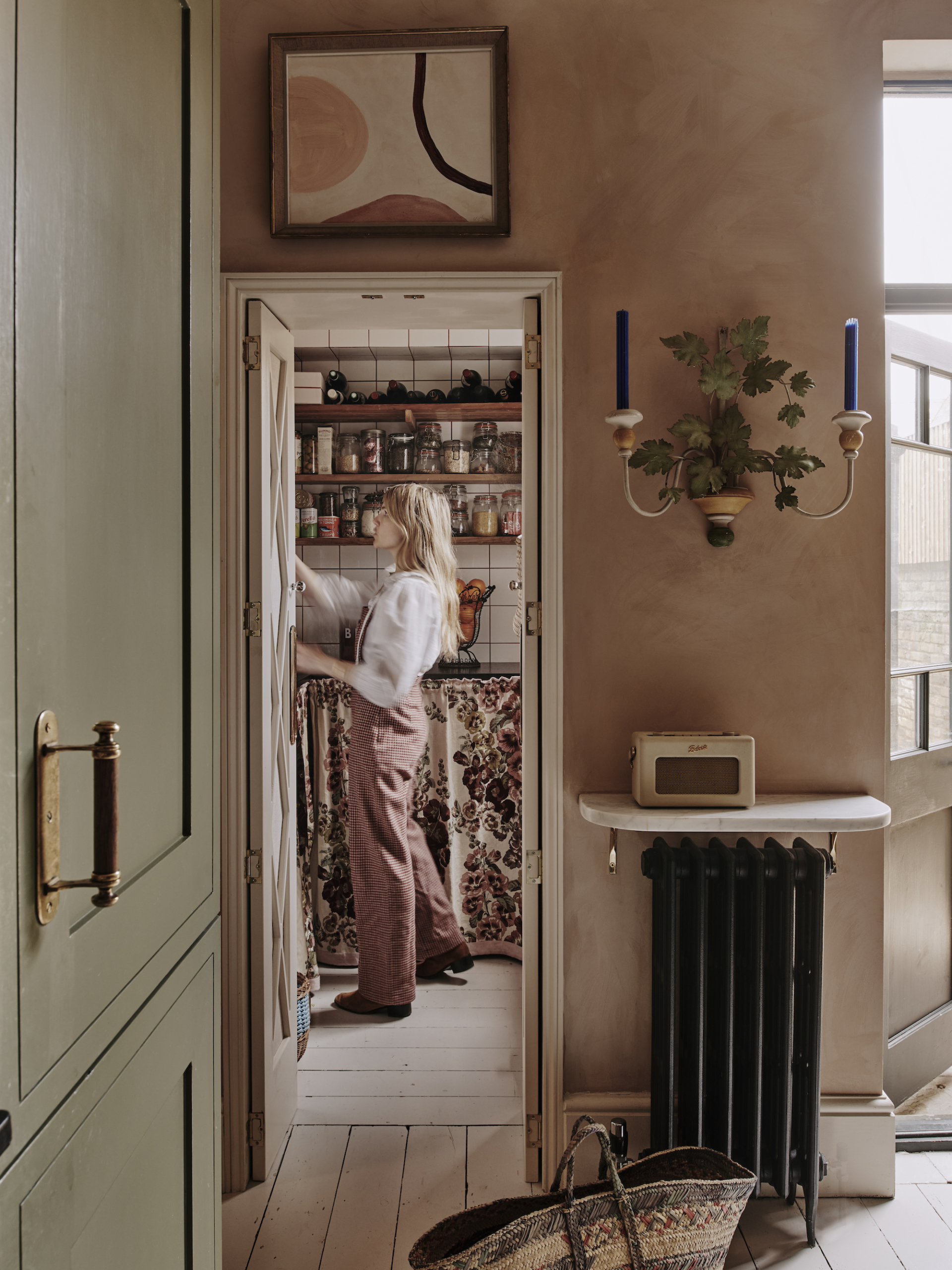
No one has influenced this shift more profoundly than London-based designer Matilda Goad. Her aesthetic—a whimsical blend of 1950s nostalgia and high-end modernity—has become the blueprint for the 2026 pantry. Goad’s own larder is a masterclass in what I like to call "Elevated Kitsch." It moves away from the clinical, all-white "Pinterest pantry" of the 2010s and toward something far more soulful.
The signature elements of a Matilda Goad-inspired larder are unmistakable. Think oxblood and cream checkerboard backsplashes, scalloped edges on shelving, and the now-infamous "Amazon Red Grout" hack. By using a bold, unexpected grout color with simple tiles, Goad proves that luxury isn't always about the price tag of the material, but the wit of the application.
Another pivot in Goad’s design is the rejection of the "black hole" cabinet. In 2026, we are seeing a move toward shallow shelving—specifically designed to fit a single row of Kilner jars. This prevents the "pantry graveyard" effect where ingredients are forgotten in the dark recesses of 24-inch deep shelves. Visibility is the new currency.
The Data Behind the Desire: Why 2026 is the Year of the Larder
The rise of the status larder isn't just an anecdotal observation from interior editors; it’s backed by a significant shift in consumer behavior. Market analysis indicates that 68% of luxury home buyers now rank a dedicated "status larder" higher in priority than a traditional mudroom or even a secondary laundry room. We are witnessing the "retail-ready" transformation of the home, where the pantry functions like a high-end boutique.
This cultural shift is further evidenced by a 45% year-over-year increase in consumer searches for "colored grout" and "scalloped home decor." Homeowners are no longer satisfied with "safe" resale-friendly choices. Instead, they are leaning into the modernized granny-chic aesthetic—a trend that feels both grounded in heritage and refreshingly bold. The pantry has become the safest room in the house to take a major design risk.
Ivy’s Insider Tip: If you’re hesitant about bold colors in your main kitchen, the larder is your testing ground. It’s a self-contained environment where you can experiment with deep burgundies or eccentric patterns without committing the entire floor plan to the look.
2026 Kitchen Cabinet & Color Forecast: Soulful and Saturated
As we move toward 2030, the clinical white kitchen is officially in the rearview mirror. The consensus among 96% of design professionals points toward "Soulful Saturated" tones. The 2026 palette is dominated by colors that feel like a glass of vintage wine or a walk through an old-growth forest.
- Soulful Burgundy & Merlot: These deep reds provide a sophisticated backdrop for brass hardware and artisanal ceramics.
- Forest Green & Moss: Bringing the outdoors in remains a priority, but the shades are becoming moodier and more complex.
- Warm Greige & Mushroom: For those who prefer neutrals, the shift is toward "warmth"—think putty colors that feel soft under LED halo lighting.
The hardware accompanying these colors is also evolving. We are seeing a massive surge in "Living Finishes." Materials like unlacquered brass and aged bronze are the preferred choices for 2026. Unlike polished chrome, these finishes develop a natural patina over time, telling the story of the home through every touch. It’s about embracing imperfection and the beauty of age.
Decoding the Extra Kitchen: Walk-In vs. Butler’s vs. Back Kitchen
As the larder gains status, the terminology can get confusing. To design the right space, you need to understand which "tier" of extra kitchen space fits your lifestyle.
| Feature | Walk-In Pantry | Butler’s Pantry | Back Kitchen (Messy Kitchen) |
|---|---|---|---|
| Primary Purpose | Curated dry goods storage | Staging ground for entertaining | Heavy prep and cleanup |
| Visibility | Often features glass doors/open shelves | Semi-private; transitional space | Completely hidden from guests |
| Key Appliances | Coffee station, wine fridge | Ice maker, wine cooler, warming drawer | Dishwasher, secondary oven, large sink |
| Design Vibe | Retail-ready, photogenic | Sophisticated, glassware-focused | Industrial, utilitarian, durable |
The Walk-In Pantry is the most popular choice for 2026 because it balances high-end aesthetics with daily functionality. It’s the "jewelry box" of the kitchen—small but impactful.
5 Organization Secrets for a Photogenic Larder
Creating a "status larder" requires more than just a trip to the container store. It’s about the intersection of interior design and professional organization. Here are the five secrets to achieving that high-end, "editor-approved" look:
- LED Halo Lighting: Treat your shelves like museum displays. Integrated LED strips tucked under the front edge of shelves create a "halo" effect that makes even a jar of flour look like a piece of art.
- The 'Farmer's Market' Vibe: Ditch the plastic bins. Use wire baskets and hand-woven seagrass containers for breathable storage. This adds texture and a sense of "heritage" to the space.
- Zoning for Real Life: Design your pantry around "stations." Create a dedicated Baking Zone with marble pastry slabs and a Breakfast Nook with integrated outlets for the toaster and coffee grinder.
- Artisanal vs. Acrylic: While clear acrylic has its place, 2026 is moving toward artisanal ceramic canisters and amber glass. It feels more "collected" and less "mass-produced."
- Unexpected Flooring: Since the pantry is a small footprint, it’s the perfect place for high-impact flooring. A checkerboard tile or a bold Moroccan encaustic tile can define the space as separate from the main kitchen.
FAQ: The New Larder Trend
Is a walk-in pantry a good investment for resale value? Absolutely. Data shows that 68% of luxury buyers prioritize a curated pantry. It is currently one of the highest-ROI "small space" renovations you can undertake, as it directly appeals to the modern desire for organization and "back-of-house" functionality.
How do I achieve the 'Matilda Goad look' on a budget? Focus on the "small wins." You don't need a full renovation to add scalloped trim to your existing shelves or to swap out standard white grout for a bold red or forest green. Adding a single row of checkerboard tiles as a backsplash can transform the entire vibe for a few hundred dollars.
What is the ideal shelf depth for a 2026 pantry? The trend is moving away from deep shelves. Aim for 10-12 inches for dry goods. This ensures everything remains visible and accessible, preventing the clutter that typically accumulates on 24-inch deep cabinetry.
The walk-in pantry is no longer just a closet; it is a declaration of intent. It says that you value the ritual of cooking, the beauty of organization, and the soulfulness of a well-designed home. Whether you're leaning into Matilda Goad’s "granny-chic" patterns or a more minimalist Scandinavian sleekness, the larder is your chance to turn the mundane into the magnificent.