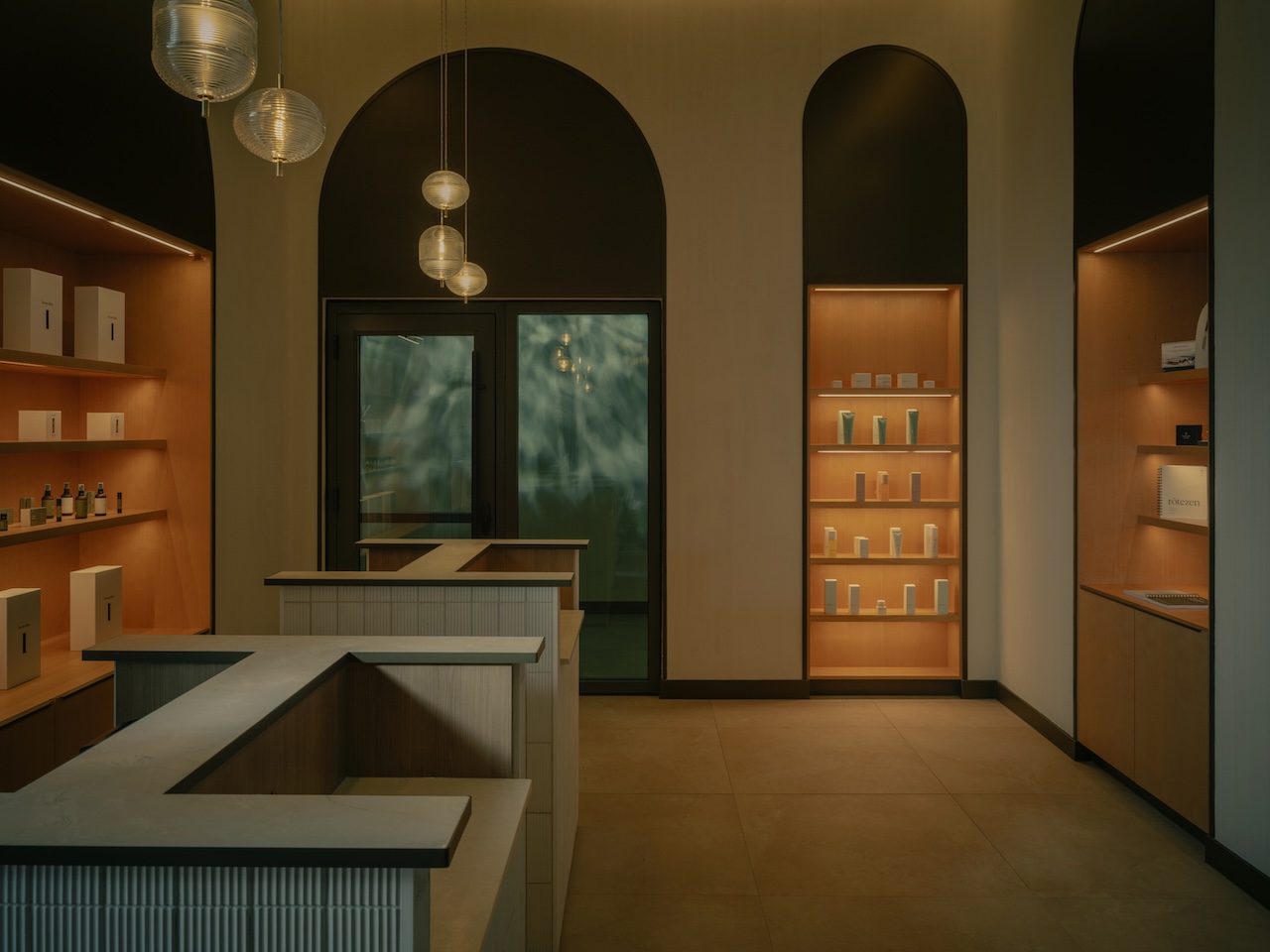
As an editor who has spent years dissecting the intersection of lifestyle and spatial design, I’ve seen my fair share of "theme hotels." Usually, they are thin veneers of concept stretched over standard hospitality bones. But every once in a decade, a project emerges that doesn't just decorate a space—it breathes a soul into it.
Philippe Starck’s Maison Heler, part of the Hilton Curio Collection in Metz, France, is that rare exception. It is not merely a hotel; it is a physical manifestation of a fever dream, a piece of "narrative architecture" that challenges every convention of the modern skyline.
Quick Facts: Maison Heler at a Glance
- Location: Metz, France (Quartier de l'Amphithéâtre)
- Designer: Philippe Starck
- Narrative Origin: The Meticulous Life of Manfred Heler (A novel by Starck)
- Architectural Concept: "Uprooted Roots" – A 19th-century mansion atop a minimalist monolith.
- Keys: 104 guest rooms and suites.
- Dining: Two restaurants (La Cuisine de Rose & La Maison de Manfred) and two bars.
- Unique Feature: 19 custom stained-glass windows by Ara Starck.
- Sustainability: High-quality HQE (High Environmental Quality) certification.
The Brutalist Paradox of Metz
Approaching the Quartier de l'Amphithéâtre in Metz, your eyes are immediately drawn to a visual cognitive dissonance. Against the backdrop of the city’s historic yellow Jaumont stone and the fluid, organic curves of Shigeru Ban’s Centre Pompidou-Metz, stands a stark, eight-story concrete monolith. But it is what sits atop this industrial pedestal that defies gravity and logic: a perfect, 19th-century Lorraine-style mansion, complete with a gabled roof and chimneys, appearing to have been plucked from the earth and placed on a pedestal.
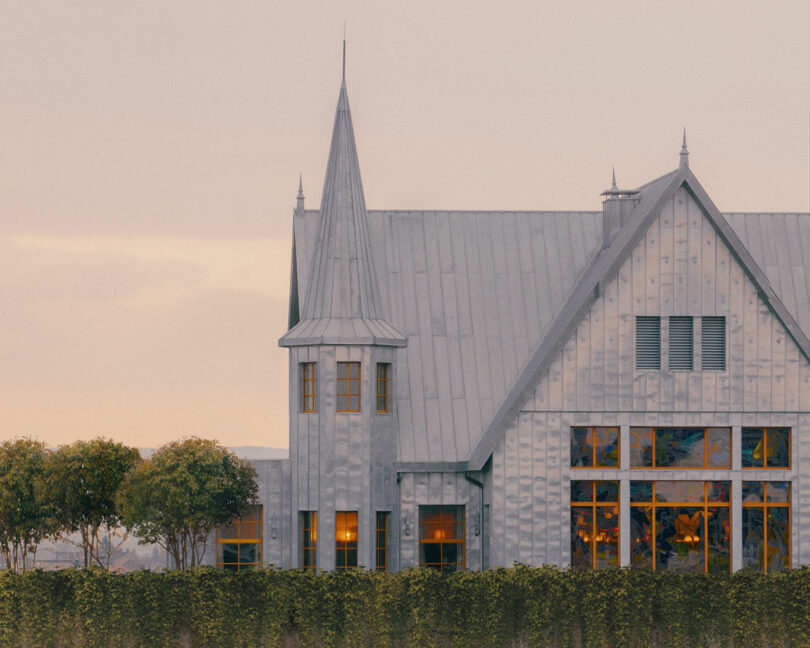
This is Philippe Starck’s latest provocation. By juxtaposing the "brutal" minimalism of the hotel’s base with the sentimental, historicist "folly" on the roof, Starck creates a dialogue between the future and the past. It is a bold statement on the identity of a city—Metz—that has spent centuries transitioning between German and French influences, industrialism, and high art.
Understanding Narrative Architecture
To appreciate Maison Heler, one must first understand the concept of Narrative Architecture. For Starck, this project wasn't born from a floor plan or a mood board; it was born from a story.
What is Narrative Architecture at Maison Heler?
Maison Heler is the flagship example of narrative architecture, where the entire building is a physical translation of a fictional novel titled The Meticulous Life of Manfred Heler, written by Starck himself.
- The Core Concept: Known as "uprooted roots," the design visualizes a 19th-century Lorraine mansion perched atop a minimalist 8-story concrete block. This symbolizes a surrealist extrusion from the earth, representing a connection to local history that has been elevated—literally—to a new perspective.
- The Structure: The hotel features a 104-key hospitality program integrated into the concrete base, while the rooftop mansion serves as a functional social hub containing the hotel’s flagship dining and bar experiences.
In my view, this marks a profound shift in interior design. We are moving away from "decoration"—the act of filling space with trendy objects—toward "storytelling," where every material choice, from the raw concrete of the lobby to the velvet of the lounge, serves a plot point.
The Legend of Manfred Heler: Design Born from Fiction
Before a single brick was laid, Starck wrote a biography for a man who never existed: Manfred Heler. Manfred was imagined as a meticulous inventor, a man of science and soul who lived in the Lorraine region during the Industrial Revolution. He was a collector of thoughts, a lover of mechanics, and a devoted husband to his wife, Rose.
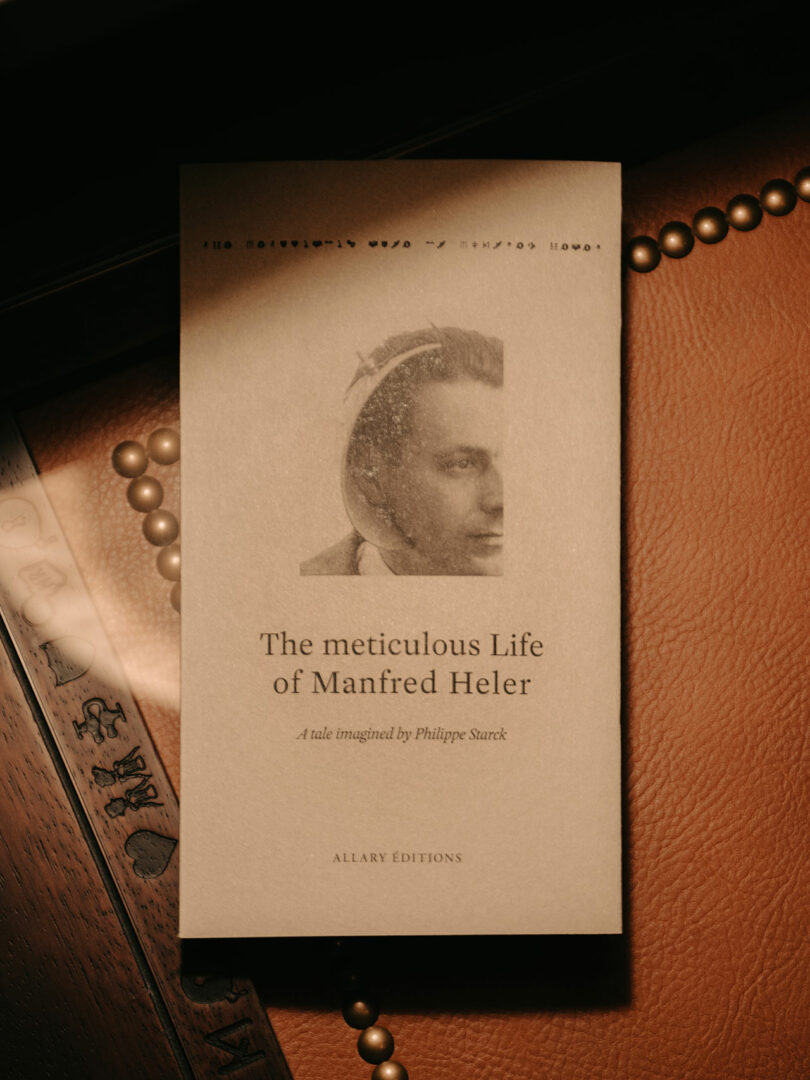
This fictional biography dictates the hotel’s DNA. The lower eight floors represent Manfred’s industrious, rational side—the "work" of his life. The rooftop mansion represents his "soul"—the sanctuary where he retreated with Rose. When you walk through the doors of Maison Heler, you aren't just checking into a Hilton; you are stepping into the chapters of Manfred’s life.
Exterior and Arrival: A Game of Uprooted Roots
The exterior is a masterclass in contrast. The base is clad in a monochromatic, textured concrete that feels permanent and unyielding. It echoes the industrial heritage of the Moselle region. Yet, as you look up, the mansion—finished in traditional tin and zinc—feels airy and dreamlike.
The entry experience is designed to be a transition. You leave the "industrious" city of Metz and enter a space that feels like a "meticulous" dreamscape. The transition isn't just visual; it’s atmospheric. The lobby doesn't greet you with the standard cold marble of a luxury hotel. Instead, it offers a warm, almost poetic welcome, inviting guests to participate in the "mental game" Starck has set up.
Interior Design: Living Inside the Novel
As an editor, I often look for the "heart" of a home. In Maison Heler, that heart is split between two distinct personalities: Rose and Manfred.
La Cuisine de Rose & At Rose Bar
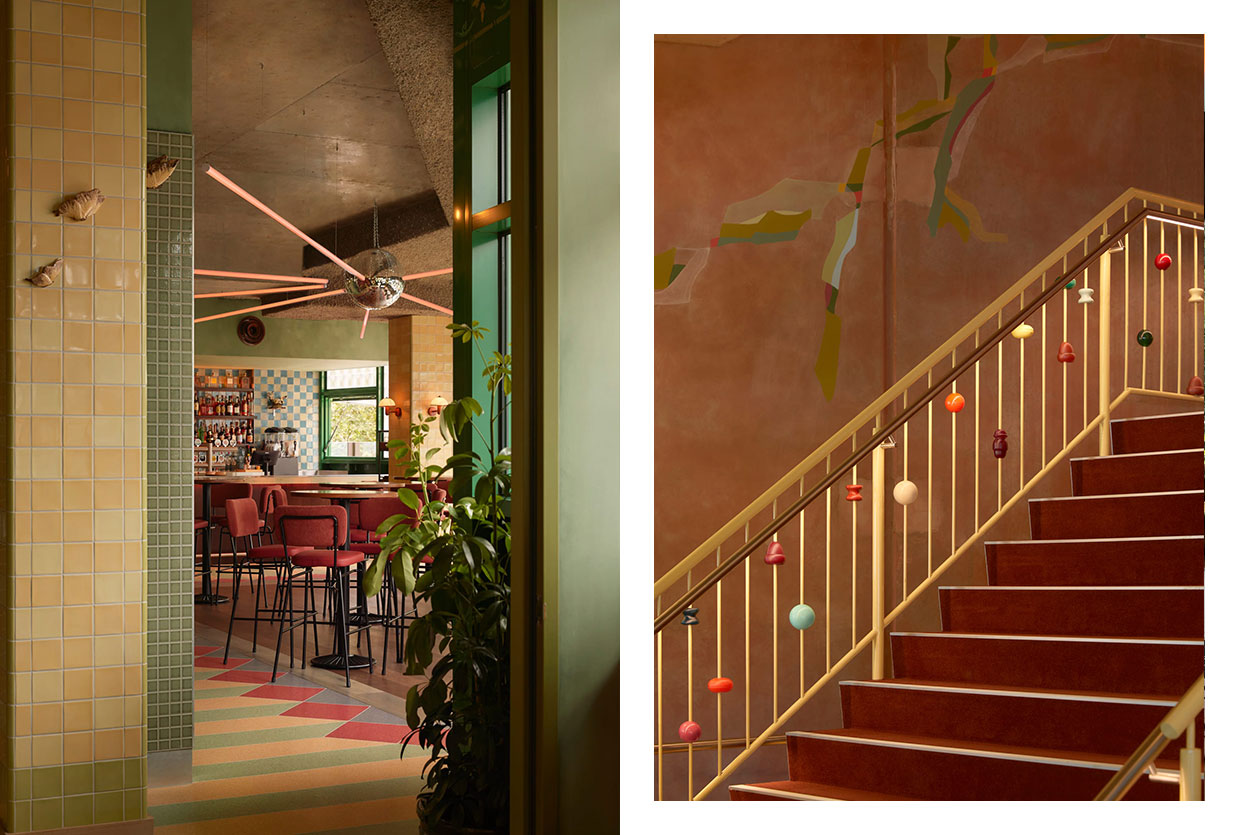
The ground-level dining spaces are an homage to Manfred’s wife. The aesthetic here is softer, reflecting a "feminine" touch through the use of soft pinks, floral motifs, and warm woods. However, in true Starck fashion, this is balanced with carbon black accents and industrial metalwork, suggesting the overlap of their two lives.
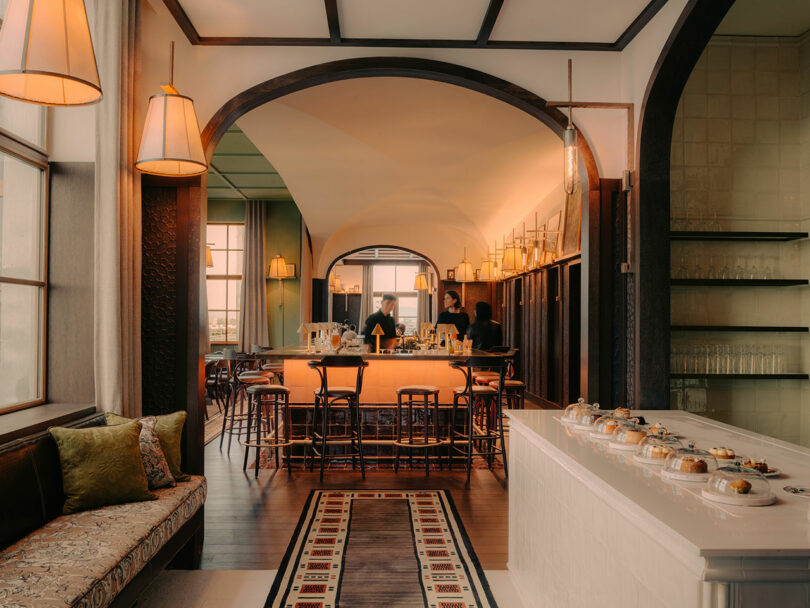
The Rose Bar serves as a social bridge. It’s a space designed for "communal intimacy," where the furniture is eclectic—a mix of custom Starck pieces and what look like "found" antiques Manfred might have collected on his travels.
La Maison de Manfred
The real magic happens on the 9th floor, inside the mansion itself. This is La Maison de Manfred, the hotel’s signature restaurant. Here, the design is kaleidoscopic and immersive. The standout feature is undoubtedly the 19 custom stained-glass windows designed by Starck’s daughter, the artist Ara Starck.
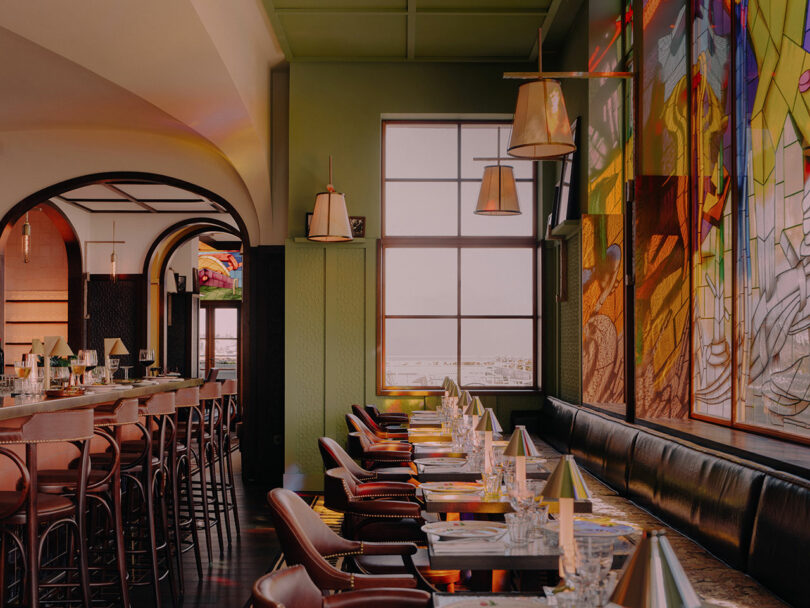
These windows act as a narrative filter for the city of Metz outside. Depending on the time of day, the light shifts from deep ambers to ethereal violets, casting a cinematic glow over the diners. The menu reflects this duality, offering "bourgeois" local Lorraine classics reimagined through a modern, inventive lens—just as Manfred would have wanted.
Guest Accommodations: The 'Spartan Spirit'
The 104 guest rooms are located within the concrete monolith, and they are a study in "Spartan Luxury." This is where Starck’s philosophy of less but better shines.
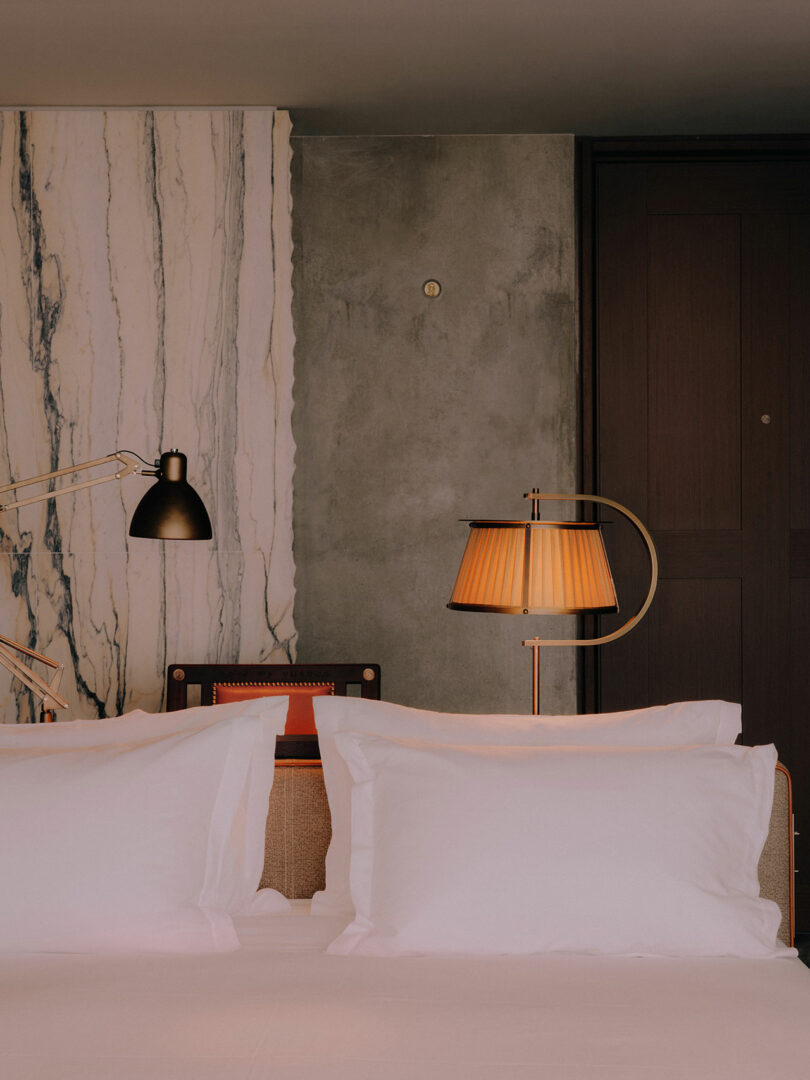
The ceilings are left as raw, exposed concrete—a reminder of the "industrious" base. Yet, this is contrasted with the highest quality white cotton linens, plush carpets, and warm wood paneling. The rooms are designed to stimulate "critical thinking" and "mental games." You’ll find "surrealist" objects scattered throughout—a strangely shaped lamp, a mirror with an unexpected angle—meant to nudge the guest out of their comfort zone.

Look closely at the hardware. The custom mechanical motifs on the door handles and light switches are a direct nod to Manfred’s life as an inventor. It’s this level of detail that elevates the design from a theme to a world-building exercise.
The Business of Storytelling: Why Narrative Works
While the design is whimsical, the business logic behind Maison Heler is grounded in hard data. In the modern hospitality market, the "Experience Economy" is king.
| Metric | Traditional Luxury Hotel | Narrative Hotel (Maison Heler Model) |
|---|---|---|
| Guest Retention | Based on loyalty points/service | Based on "Destination-Exclusive" identity |
| Social Reach | Organic; limited to room shots | High; the building itself is a viral landmark |
| Occupancy Rate | Market-dependent | Frequently outperforms local competitors by 15-20% |
| Brand Identity | Standardized | Hyper-personalized and localized |
Research on narrative architectural design indicates that properties with a unique, conceptual story significantly outperform conventional hotels. By creating a "destination-exclusive" identity, Maison Heler isn't just a place to sleep—it’s a reason to visit Metz. For the Hilton Curio Collection, this project proves that even a global brand can achieve "boutique" soul through visionary collaboration.
Practical Information for the Design Traveler
If you are planning a pilgrimage to this surrealist masterpiece, here is what you need to know:
- Location: 31 Rue Jacques Chirac, 57000 Metz, France. It is perfectly positioned between the TGV station and the Centre Pompidou-Metz.
- Pricing: Rooms typically start at approximately $190/night, making this an accessible entry point for those wanting to experience high-concept design without a five-star-palace price tag.
- Nearby Sights: Don't miss the Roman Amphitheatre (just steps away) or the Cathedral of Saint Stephen, which boasts the largest expanse of stained glass in the world—a perfect companion to Ara Starck’s work at the hotel.
FAQ
Q: Is Maison Heler suitable for families, or is it strictly for design enthusiasts? A: While it is a magnet for "design pilgrims," the narrative of Manfred and Rose is inherently whimsical and engaging for all ages. The "La Cuisine de Rose" restaurant offers a very welcoming, communal atmosphere that families will appreciate.
Q: Does the "mansion" on top actually have rooms? A: No, the 19th-century-style mansion at the pinnacle houses the hotel's public social spaces, including the main restaurant and bars. The guest rooms (keys) are all located within the modern 8-story base, offering incredible views up toward the mansion or out across the city.
Q: Why did Philippe Starck choose Metz for this project? A: Starck has often cited Metz as a city of "intellectual and poetic crossroads." The project was realized in collaboration with the late Yvon Gérard and the Hilton group to serve as a catalyst for the city’s new creative district.
Maison Heler is a reminder that architecture doesn't have to be boring to be functional. It can be a novel, a poem, and a home all at once. For those of us who believe that the spaces we inhabit shape the thoughts we have, Starck’s "uprooted roots" offer a beautiful new way to look at the world—from the top of a mansion, floating in the sky.