Imagine walking into a room where the air smells faintly of cedar and hinoki, and the furniture seems to possess a soul of its own. There are no jagged metal heads interrupting the grain, no plastic caps hiding unsightly screws, and no wobbling legs. In the world of high-end interior design, we often talk about "seamlessness" as an aesthetic goal, but in traditional Japanese woodworking, it is a structural reality. This is the world of Japanese joinery—an ancient, sophisticated system of interlocking geometry that allows timber to connect with the strength of steel and the grace of a silk weave.
At the heart of this craft are two concepts: Tsugite (scarf joints used to lengthen timber) and Shiguchi (connecting joints used to join pieces at angles). This traditional construction method rejects modern fasteners like nails or screws in favor of complex, hand-carved intersections. The philosophy is rooted in the "Shokunin" spirit—a social and spiritual obligation to do one's best for the welfare of the community and the preservation of the material. By forgoing metal, which rusts and expands at a different rate than organic matter, the artisan ensures that the wood remains the protagonist of the story.
The Anatomy of Connection: Key Joinery Techniques
To understand Japanese joinery is to understand a language of three-dimensional puzzles. Unlike Western joinery, which historically relied heavily on glue and later on mechanical fasteners, Japanese techniques were developed to withstand the humid climate and seismic activity of the archipelago.
Kanawa Tsugi: The 1,000-Year Bond
Perhaps the most iconic scarf joint is the Kanawa Tsugi (half-lap step-mitered joint). Often referred to as the "metal ring" joint because of its incredible tensile strength, it is used in the restoration of 1,000-year-old temples. When the two halves slide together and a central key is driven home, the timber becomes a single, continuous beam. It is a testament to the fact that these structures are engineered to maintain their integrity for a millennium without a single metal fastener.
Sashimono: The Art of the Invisible
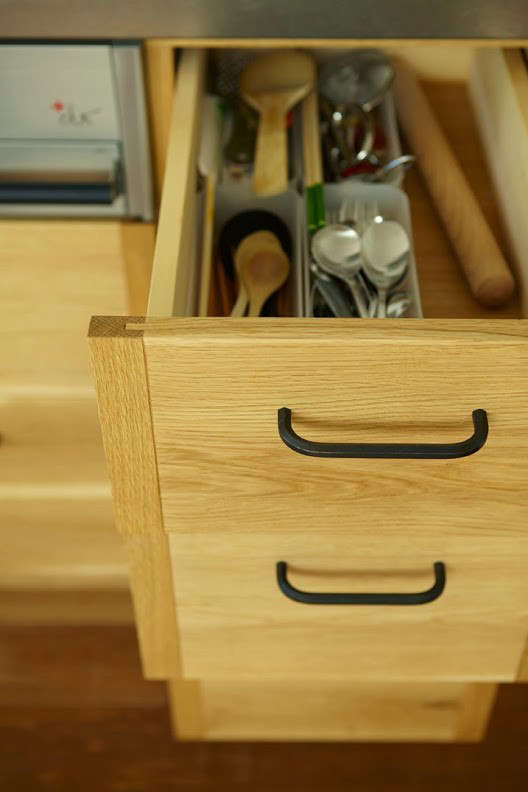
While Tsugite handles the macro-structures of architecture, Sashimono is the refined craft of furniture making. Sashimono cabinetry utilizes hidden joinery to create functional pieces where the structural connections are completely invisible from the outside.
- The Blind Dovetail: A variation where the interlocking "teeth" are hidden behind a thin veneer of the same wood.
- Hidden Mortise and Tenon: Ensuring that a table leg and apron are locked forever, yet look as if they grew together.
Ari Otoshi & Kama Tsugi
In the framework of a home, joints like Ari Otoshi (dovetail joinery) and Kama Tsugi (gooseneck joints) are essential. They balance compression and shear resistance, allowing the house to "sway" during an earthquake rather than snap.
Kumiko: Geometric Poetry
No discussion of Japanese woodcraft is complete without Kumiko. This is the geometric art of assembling small wooden slats into intricate patterns without glue. While often decorative—used in shoji screens and lamps—the precise tension between the pieces provides a surprisingly rigid structural role in interior partitions.
Why Joinery Wins: The Science of Longevity
From a design editor's perspective, the allure of nail-free millwork isn't just about the "magic" of the fit—it’s about the science of durability. Wood is a hygroscopic material; it breathes, expanding and contracting with the seasons.
When you drive a metal screw into wood, you are forcing two materials with different thermal expansion coefficients to live together. Over time, the wood fibers around the screw crush and lose their grip, leading to the "wobble" we see in mass-produced furniture. In contrast, an interlocking joint like a mortise and tenon allows the wood to expand and contract in unison.
Expert Insight: Traditional Japanese temple joints are engineered to last over 1,000 years. By allowing for natural movement through precise geometry, the joint actually tightens under certain loads, whereas a metal fastener would eventually fail or cause the wood to crack.
A Comparison of Longevity
| Feature | Traditional Japanese Joinery | Modern Fastened Millwork |
|---|---|---|
| Primary Connection | Interlocking Wood Geometry | Screws, Nails, Brackets |
| Material Synergy | 100% Organic (Moves together) | Hybrid (Metal vs. Wood friction) |
| Lifespan | 100 to 1,000+ Years | 15 to 40 Years |
| Repairability | High (Can be disassembled) | Low (Screws strip the grain) |
| Sustainability | Biodegradable & Circular | Difficult to recycle (Metal/Glue) |
Modern Application: Millwork as Functional Art
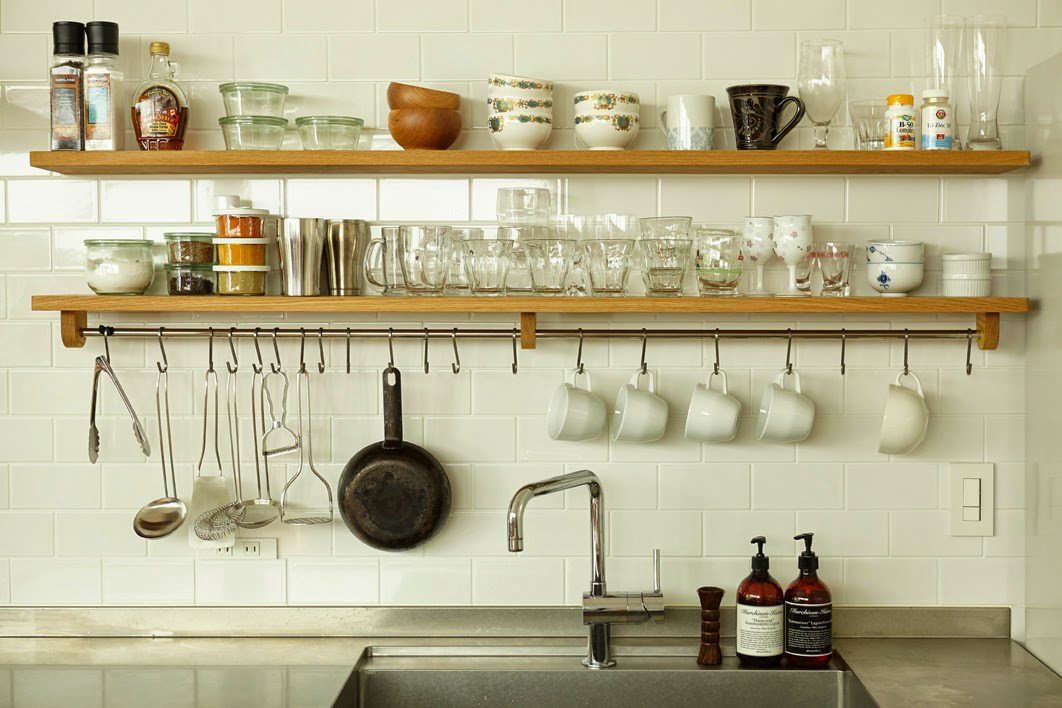
While these techniques originated in temples and aristocratic tea houses, they are finding a profound new life in modern luxury interiors. Today’s homeowners are moving away from the "disposable" culture of the last few decades, seeking instead pieces that tell a story of craftsmanship.
Case Study: KitoBito’s 'Joinery Kitchens'
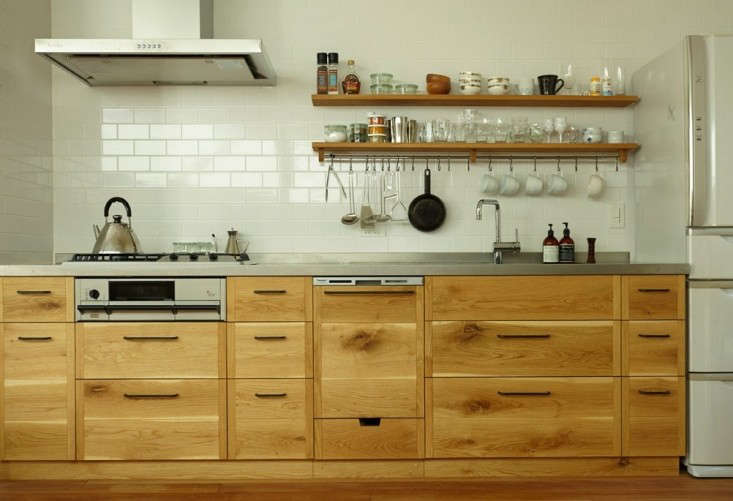
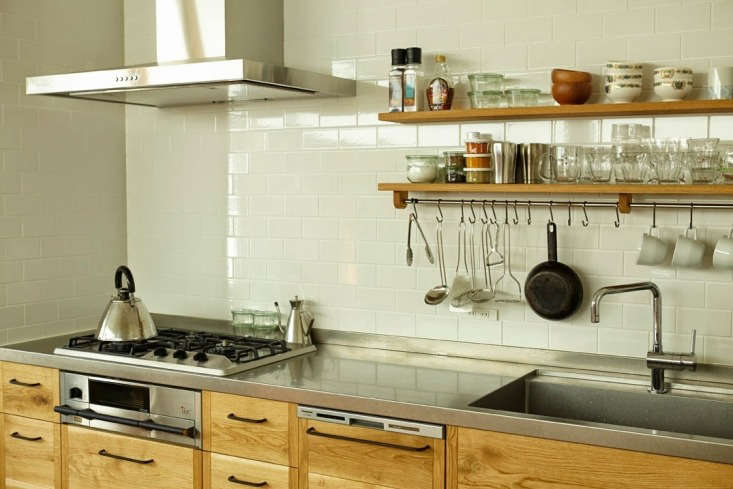
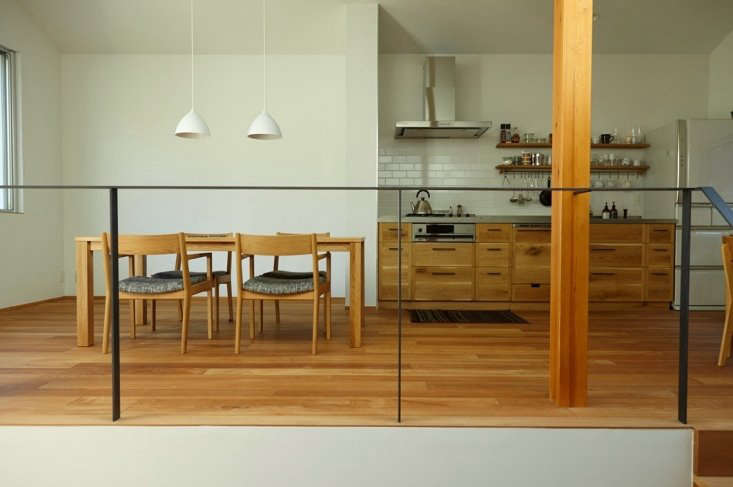
In Kobe, the artisans at KitoBito are redefining the heart of the home. A standard modern kitchen island can contain upwards of 150 metal screws and numerous brackets. KitoBito utilizes over 30 distinct types of interlocking joints to replace these fasteners. The result is a kitchen that feels less like a series of boxes and more like a singular piece of sculpture.
In these designs, knots in the wood and the "white parts" (sapwood) aren't discarded as defects. Instead, they are celebrated. This "tectonic honesty" ensures that the user is always aware that the material was once a living tree in a forest.
Seamless Integration
One of the greatest challenges in modernizing this craft is the integration of technology. How do you fit a high-tech induction cooktop or a stainless steel sink into a hand-carved wooden frame? The answer lies in the precision of the Sashimono technique. By using hand-planed surfaces that are accurate to a fraction of a millimeter, modern appliances can be "nested" into the wood, creating a stunning juxtaposition between the warmth of the timber and the cool precision of steel.
Implementing Japanese Joinery in Your Home
You don't need to rebuild your entire house to appreciate the beauty of Japanese joinery. Integrating this aesthetic is about choosing quality over quantity and understanding the "joints" of your own living space.
How to Identify Quality Joinery
When sourcing furniture or commissioning millwork, look for the following:
- Grain Continuity: Does the wood grain flow naturally across the connection point?
- The Absence of "Plugs": In cheap furniture, holes are drilled and covered with wooden plugs. In true Sashimono, there is no hole to begin with.
- Sound: A well-joined drawer should slide with a soft, "whooshing" sound of air being displaced, indicating a near-perfect fit.
Maintenance and Care
Joinery-based furniture is remarkably low-maintenance, but it does require respect for the material.
- Humidity Control: Since the joints rely on the wood's natural tension, keeping your home’s humidity stable (between 40-60%) will prevent the joints from becoming too tight or too loose.
- Natural Finishes: Avoid thick, plastic-like polyurethane. Instead, opt for natural oils or waxes (like beeswax or perilla oil) that allow the wood to continue "breathing."
The ultimate goal of bringing these techniques into the home is to create a space that feels grounded and calm—a neutral palette where the complexity is hidden in the details rather than shouted from the walls.
Conclusion: The Future of Traditional Craft
As we look toward a more sustainable future in architecture and design, Japanese joinery offers a blueprint for longevity. In a world of flat-pack furniture and planned obsolescence, the choice to use nail-free millwork is a radical act of preservation. It is an investment not just in a piece of furniture, but in a philosophy that values the life of the tree, the skill of the artisan, and the heritage of the home.
By embracing these invisible strengths, we create interiors that don't just look beautiful for a season—they endure for a lifetime.
FAQ
1. Is Japanese joinery more expensive than standard furniture? Yes, typically. The cost reflects the intense labor and high level of skill required to carve joints by hand. However, when you consider that a joinery-based piece can last several lifetimes (compared to 10-15 years for standard furniture), the "cost per year" is significantly lower.
2. Can joinery-based furniture be disassembled if I move? Many traditional joints, like the Kanawa Tsugi or certain Tsugite scarf joints, are designed to be "unlocked." This makes them surprisingly portable. Unlike screwed furniture, which loses structural integrity every time you take it apart, a well-made Japanese joint remains crisp and strong through multiple re-assemblies.
3. Does this style only work in "minimalist" homes? While the aesthetic is often associated with Zen minimalism, the structural principles are universal. Nail-free millwork can be integrated into any design style, from rustic farmhouse to ultra-modern industrial, adding a layer of tactile luxury and "quiet" quality that transcends specific decor trends.