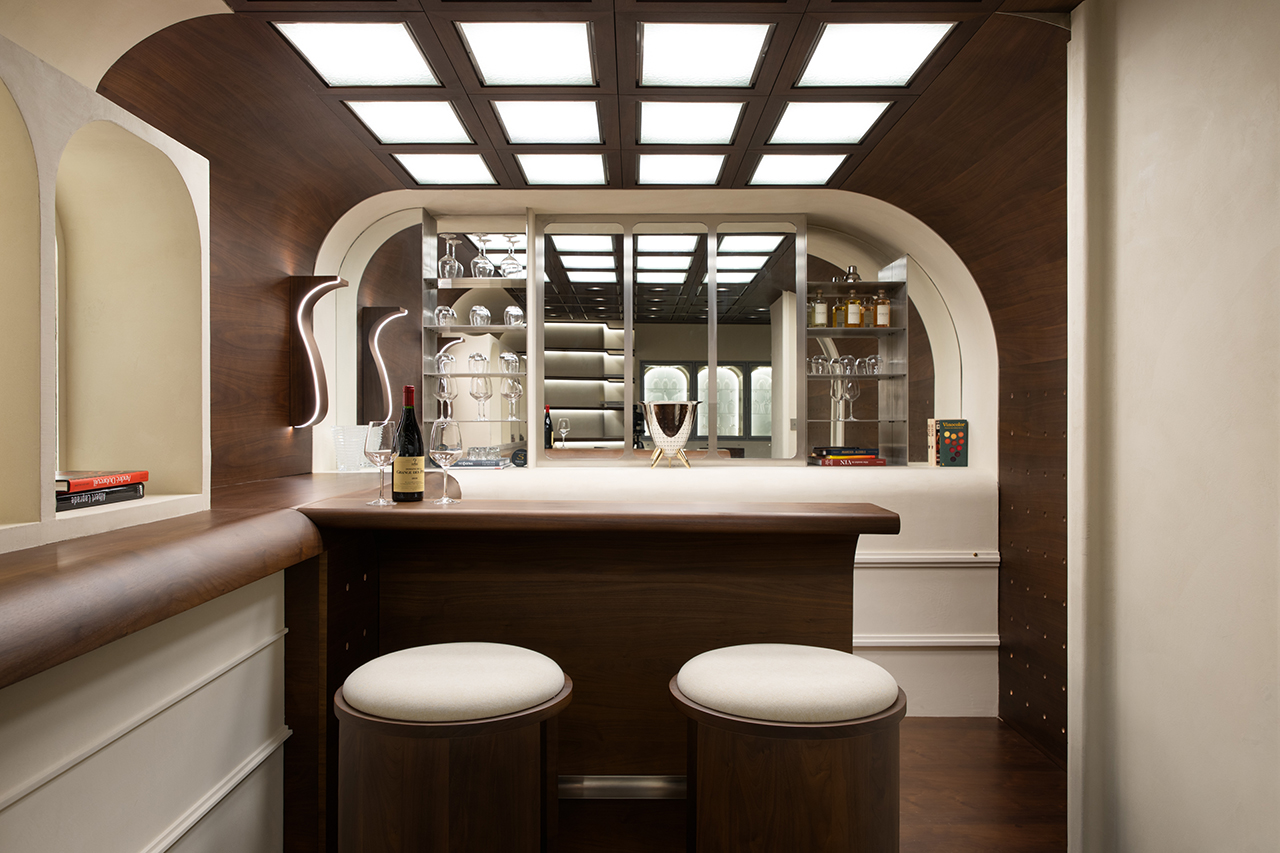
Karl Lagerfeld’s private office in Saint-Germain-des-Prés, once a hidden sanctuary for the fashion icon, has been transformed by the luxury rental platform HIGHSTAY into the Saint-Germain I. This space-age apartment serves as a time capsule of Karl Lagerfeld interior design, blending curvilinear steel with a massive personal library. For those looking to see inside Karl Lagerfeld's private Saint-Germain workspace, this two-bedroom retreat at 7 Rue de Lille offers a rare opportunity to inhabit the mind of a polymath.
The Living Artifact: Staying in the Saint-Germain I Luxury Rental
When we think of the "Kaiser" of fashion, we often imagine the grand runways of the Grand Palais. However, his most personal creative output happened behind closed doors in the heart of the Left Bank. The Saint-Germain I luxury rental is not merely an apartment; it is a meticulously preserved piece of design history. Originally serving as Lagerfeld’s private office and library, the space has been reimagined by HIGHSTAY to accommodate guests while honoring the late designer’s late-90s aesthetic.
Staying in a fashion designer's former apartment in Paris is usually a dream reserved for the industry elite. Yet, this 1,500-square-foot space at 7 Rue de Lille is now accessible to those who appreciate high-concept living. The renovation team focused on a "preservation-first" approach, ensuring that the architectural fit-outs—from the glass-bead-blasted steel to the mirrored ceilings—remained intact. The result is a home that feels both futuristic and deeply personal.
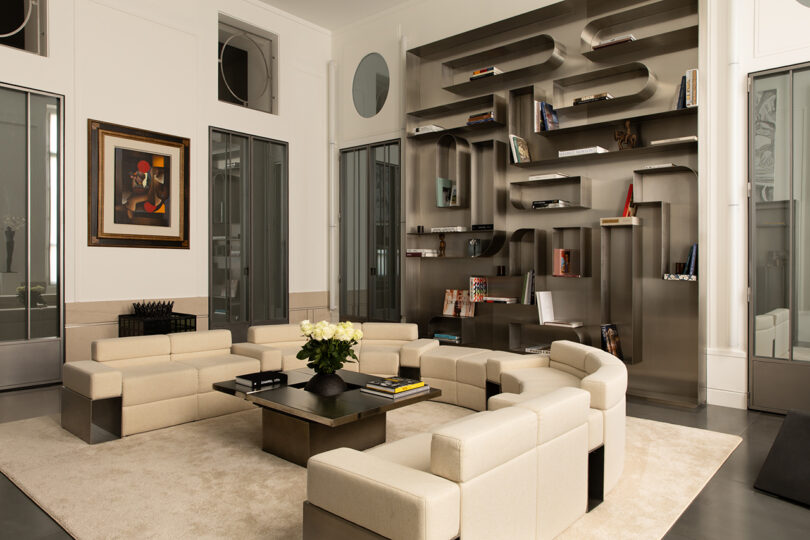
Ivy’s Style Note: The beauty of this space lies in its "Material Storytelling." By maintaining the industrial steel alongside plush modern furnishings, HIGHSTAY has balanced Lagerfeld’s cold, intellectual precision with the warmth required for a high-end stay.
| Key Specs | Saint-Germain I (The Lagerfeld Office) |
|---|---|
| Location | 7 Rue de Lille, Saint-Germain-des-Prés, Paris |
| Size | Approx. 140 m² (1,500 sq ft) |
| Features | Two bedrooms, mirrored ceilings, custom steel shelving |
| Design Era | Late 1990s / Early 2000s Space-Age |
| Booking | Available via HIGHSTAY |
Space-Age Sophistication: The Design Language of the Private Office
The aesthetic of the Karl Lagerfeld private office was a radical departure from the 18th-century "Grand Siècle" style he was once known for. By the late 1990s, Lagerfeld pivoted toward a minimalist, industrial look that defined his later years. Central to this transformation was his collaboration with the legendary Australian designer Marc Newson.
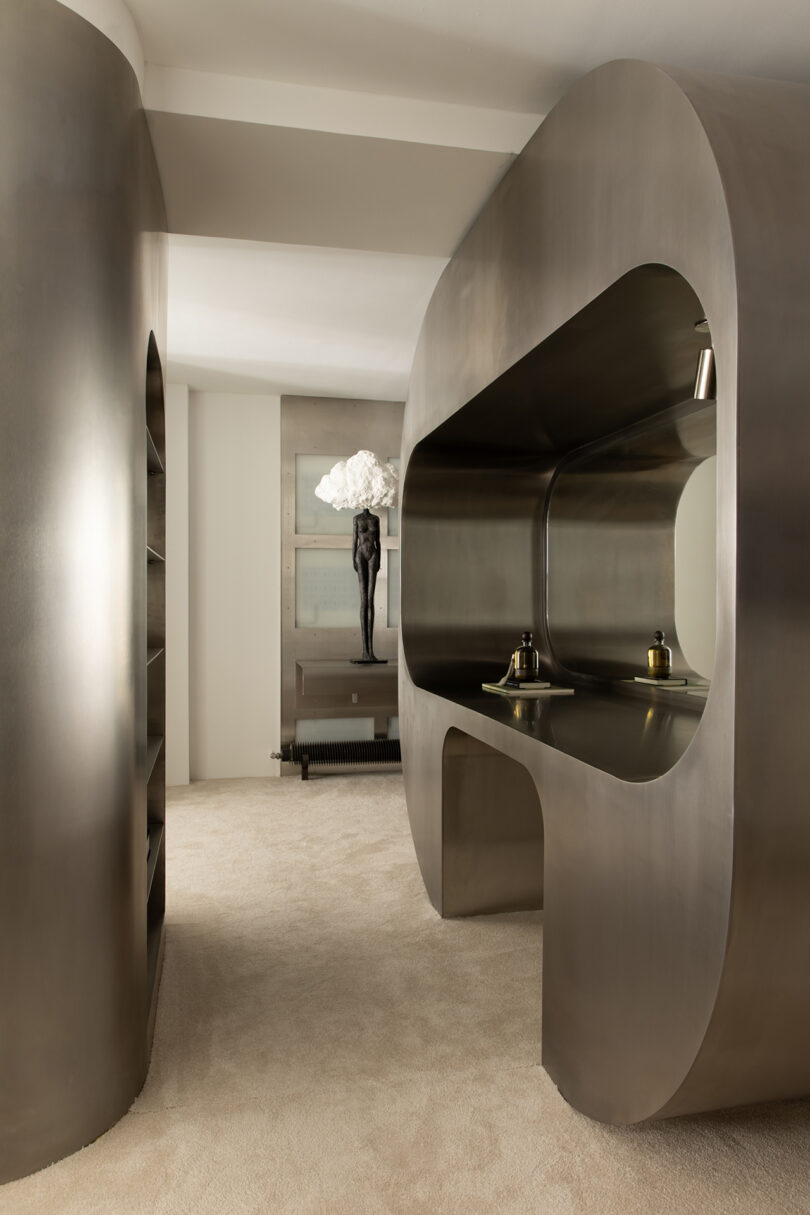
The interior architecture is dominated by curvilinear steel and mirrored surfaces that create a sense of "mirrored infinity." Newson’s influence is most palpable in the sculptural elements: a dramatic staircase and custom-built shelving units that feel more like aeronautical engineering than traditional furniture. These modern space age interior design ideas for home offices were revolutionary at the time, prioritizing clean lines and reflective materials to amplify the natural light of the Parisian apartment.
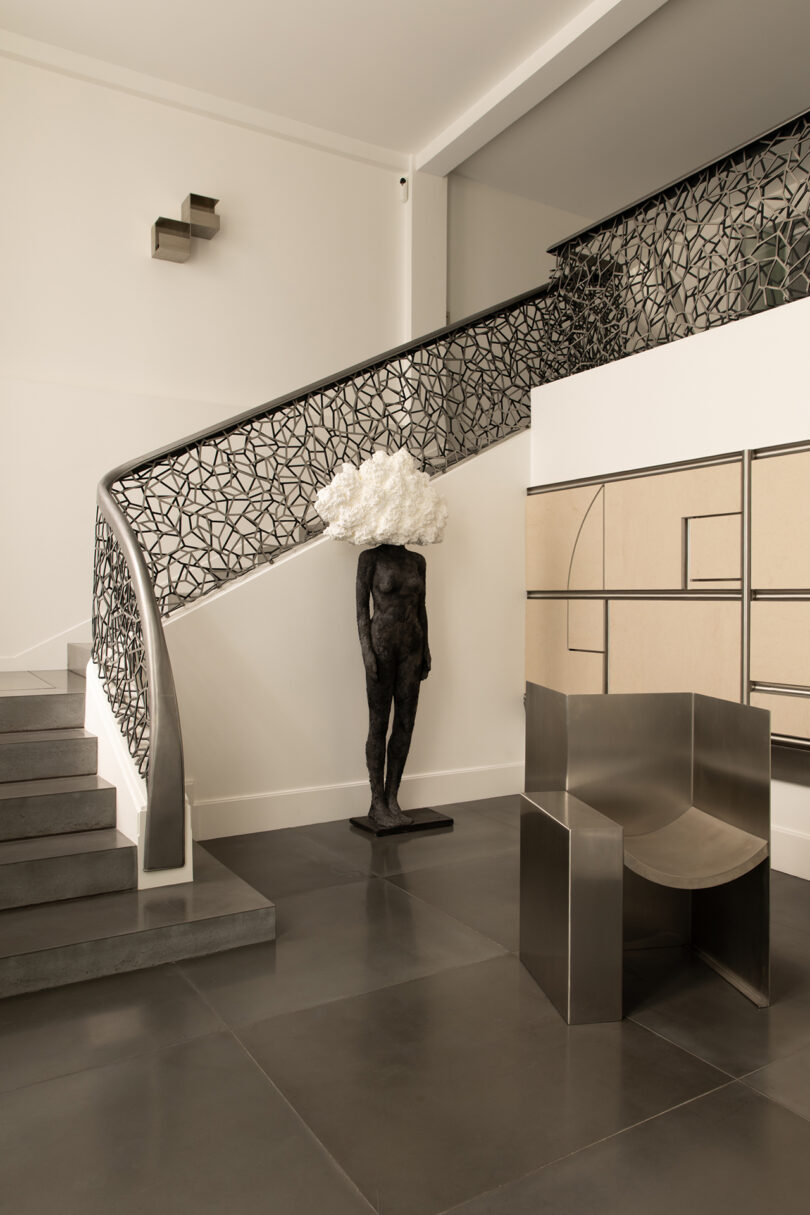
In this Karl Lagerfeld interior design, the use of polished vs. patinated steel creates a sensory hierarchy. The workstations are sleek and cool to the touch, while the surrounding wood paneling—integrated into the steel frames—provides a necessary grounding element. This juxtaposition is a masterclass in how to use industrial materials without making a space feel sterile.
The 300,000-Book Method: Lessons from Karl Lagerfeld’s Library
Perhaps the most famous feature of any Lagerfeld residence is the library. Karl Lagerfeld’s personal library was estimated to contain 300,000 books, and he famously called himself a "paper freak." In his Saint-Germain workspace, the library was not just a collection; it was the room’s primary architecture.
For those interested in modern home library organization, Lagerfeld’s method was as unconventional as his fashion. He famously stacked his books horizontally rather than vertically. This wasn't just an aesthetic choice; it was practical. Horizontal stacking allowed him to read the titles on the spines without tilting his head, and it prevented the massive collection from looking cluttered. To access the upper reaches of these wall-to-wall stacks, he utilized a 12-foot-high iron catwalk and custom-designed ladders that featured leather chairs at the top—allowing him to sit and research right where the books were shelved.
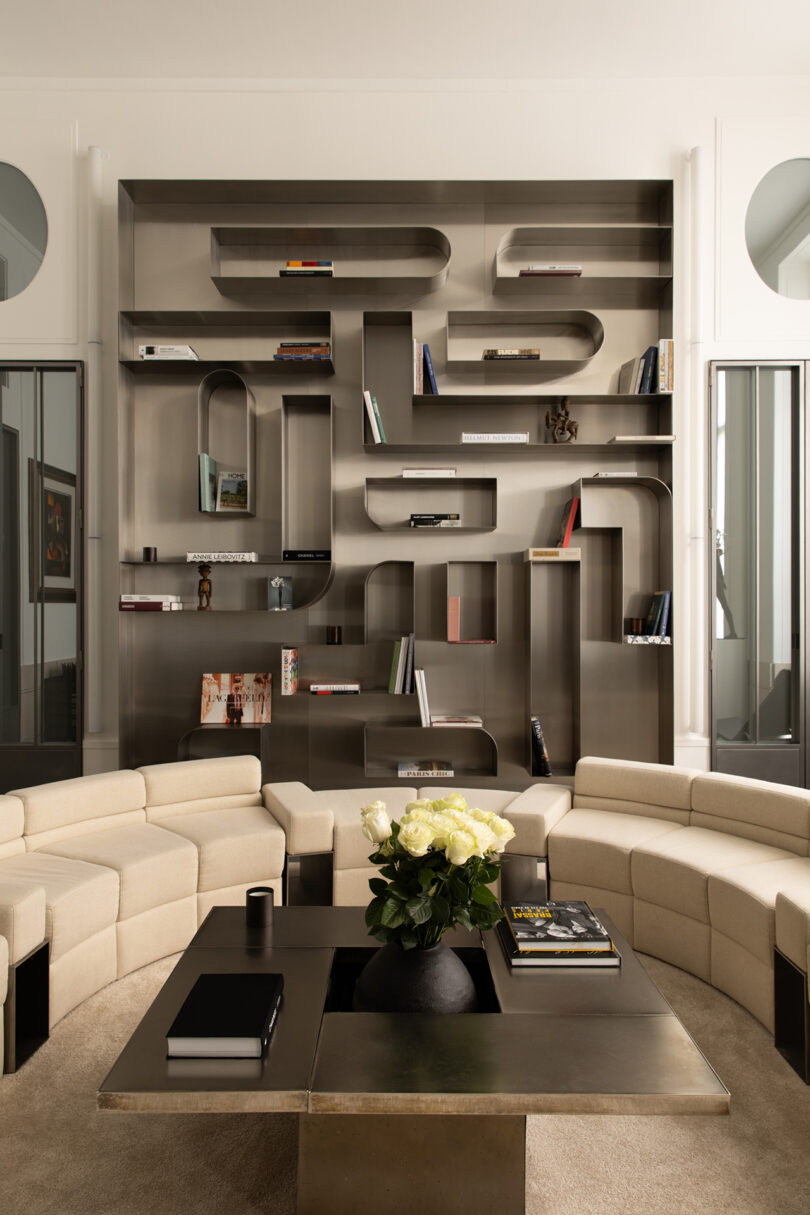
Lessons from Karl Lagerfeld's book collection and library teach us that a library should be a living resource. He didn't just store books; he curated an "intellectual sanctuary." The steel shelving in the Saint-Germain I apartment reflects this, acting as a structural frame for his endless pursuit of knowledge.
Mastering Your Own Muse: How to Design a Home Office Like Karl Lagerfeld
You don't need a Parisian pied-à-terre to capture the essence of this iconic workspace. How to design a home office like Karl Lagerfeld begins with a mindset of "Purpose-First" design. Whether you are managing a small desk or a dedicated room, these principles can elevate your productivity:
- Prioritize Material Contrast: Mix industrial "cool" with organic "warmth." If you have a steel desk, pair it with a high-quality wood floor or a textured wool rug.
- Verticality is Your Friend: Use floor-to-ceiling shelving to maximize storage and create a sense of scale. Even in small rooms, tall shelves make the ceiling feel higher.
- The Horizontal Stack: Use these tips for organizing a large personal library with style by grouping your most-used monographs horizontally. It creates a cleaner "line" for the eye and serves as a built-in display for beautiful book covers.
- Mirrored Elements: Use mirrors not just for vanity, but to bounce light. A mirrored backsplash behind a shelf or a polished metal ceiling detail can transform a dim corner into a bright studio.
Lagerfeld Library Checklist
- [ ] Curate Before Shelving: Weed out any volumes that don't serve your current "muse."
- [ ] Genre-Based Grouping: Organize by subject (e.g., Photography, Architecture, Poetry) rather than color.
- [ ] Accessibility: Ensure your most inspirational books are at eye level.
- [ ] Lighting: Use focused task lighting (like the Serge Mouille lamps Karl loved) to illuminate spines without glare.
Beyond the Office: Librairie 7L and the Ongoing Legacy
The spirit of the Karl Lagerfeld private office extends just down the street to Librairie 7L. Founded by the designer in 1999, this design destination spans more than 700 square meters and continues to function as a bookstore, publishing house, and studio. It houses roughly 33,000 volumes and serves as the public-facing heart of Lagerfeld’s intellectual world.
Even after his passing, the Karl Lagerfeld interior design legacy lives on through spaces like 7L and the Saint-Germain I apartment. They remind us that our workspaces should be more than just a place for a laptop; they should be a reflection of our curiosities, our passions, and our personal architecture.
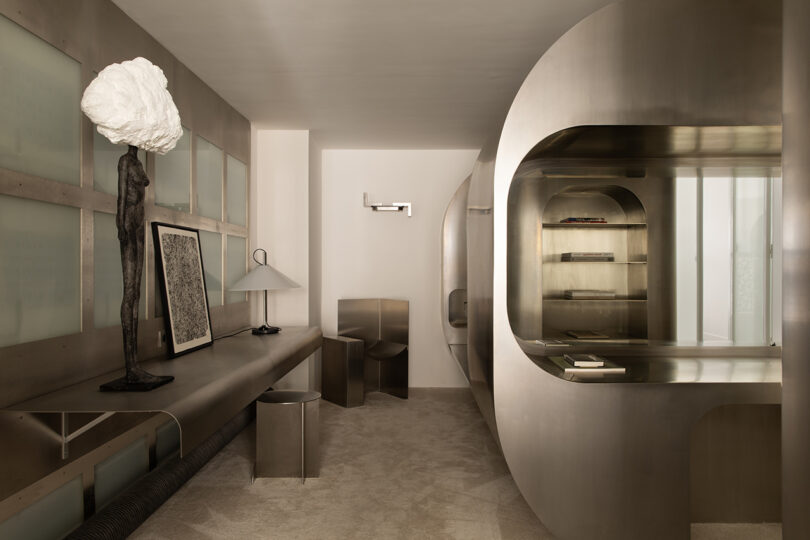
By embracing a mix of space-age materials and meticulous curation, we can all create a "private office" that functions as a true sanctuary for the mind.
FAQ
How many books did Karl Lagerfeld actually have?
Karl Lagerfeld’s personal library was immense, estimated at roughly 300,000 volumes across his various properties. He was famously quoted as saying, "My library is a forest," and he frequently donated or rotated his collection to keep it fresh.
Why did Karl Lagerfeld stack his books horizontally?
This was a signature element of modern home library organization for Lagerfeld. Stacking books horizontally allowed him to read the titles easily without having to tilt his head or pull books out to see the spines. It also allowed him to stack books from floor to ceiling more securely.
Can anyone stay at the Saint-Germain I luxury rental?
Yes, the apartment is managed by HIGHSTAY and is available for short-term luxury rentals. It is located at 7 Rue de Lille in Saint-Germain-des-Prés, Paris, and has been fully renovated to provide hotel-level amenities while preserving Lagerfeld's original architectural design.
What is the 'Lagerfeld Lens' for home offices?
The "Lagerfeld Lens" refers to a design philosophy that prioritizes intellectual utility. It involves surrounding yourself only with books and objects that provide immediate inspiration, using industrial materials like steel for longevity, and maintaining a minimalist layout to allow for focused creative work.