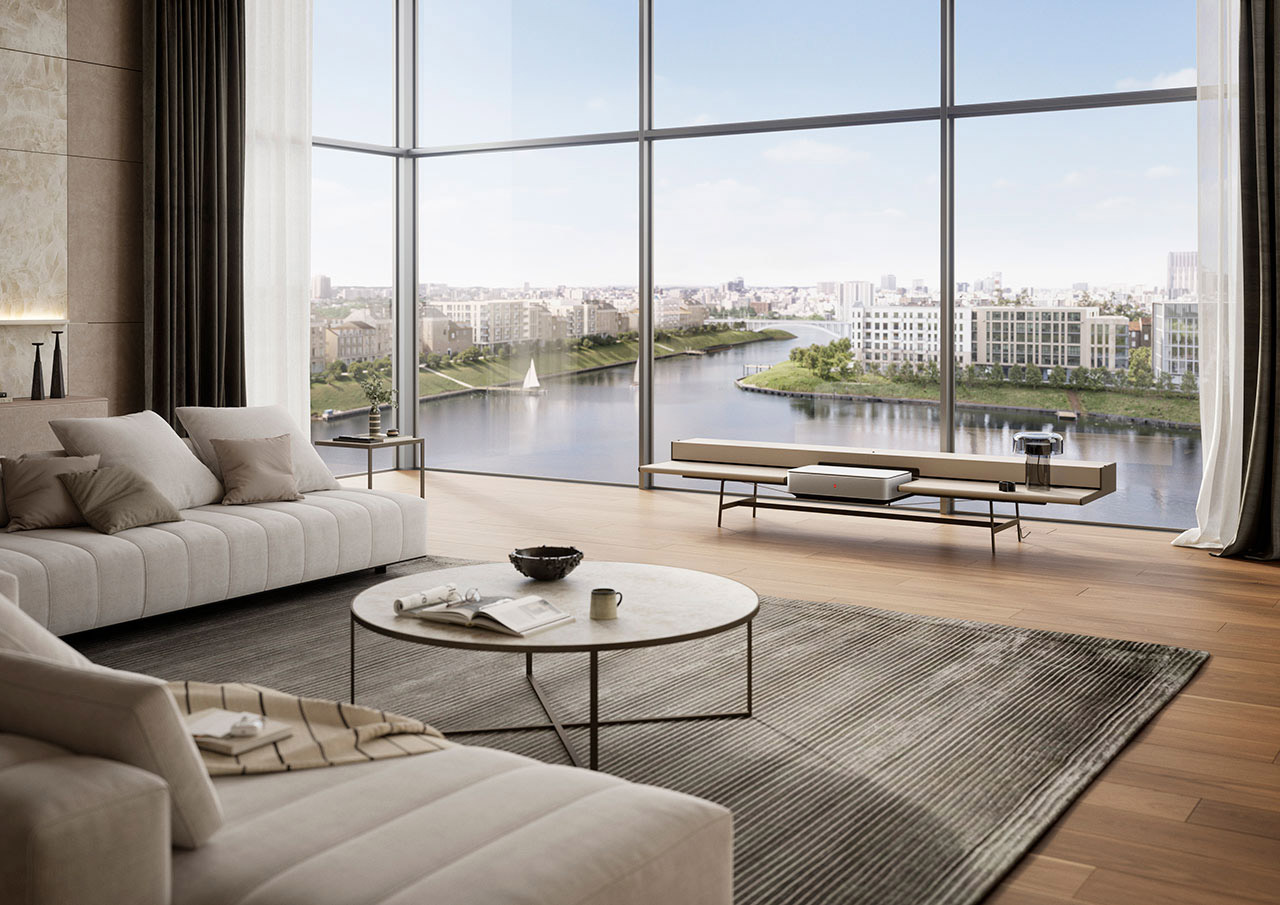
In the high-stakes world of urban real estate, we often speak of "sacrifices." We sacrifice square footage for a shorter commute; we trade a backyard for a balcony. But for too long, city dwellers have been forced to make a far more precarious trade-off: the quality of the air they breathe versus the limited space they inhabit. Traditional air purifiers are notorious floor-space hogs—bulky, plastic towers that roar like jet engines while occupying the precious corner where a bookshelf or a designer chair ought to be.
The 2026 release of the Dyson HushJet Compact Purifier marks a pivotal shift in this narrative. It is, by all accounts, the "Architectural Purifier"—a device that treats air quality not as a peripheral gadget, but as an essential urban utility integrated into the aesthetic of the home. For those navigating the constraints of a studio or a small one-bedroom apartment, the HushJet isn't just a premium option; it is the gold standard. By combining a high Clean Air Delivery Rate (CADR) of 250 m³/h with a footprint designed for rooms up to 228 square feet, it offers professional-grade filtration without the "appliance fatigue" of its predecessors.
Design: Why 'Architectural' Matters in Small Spaces
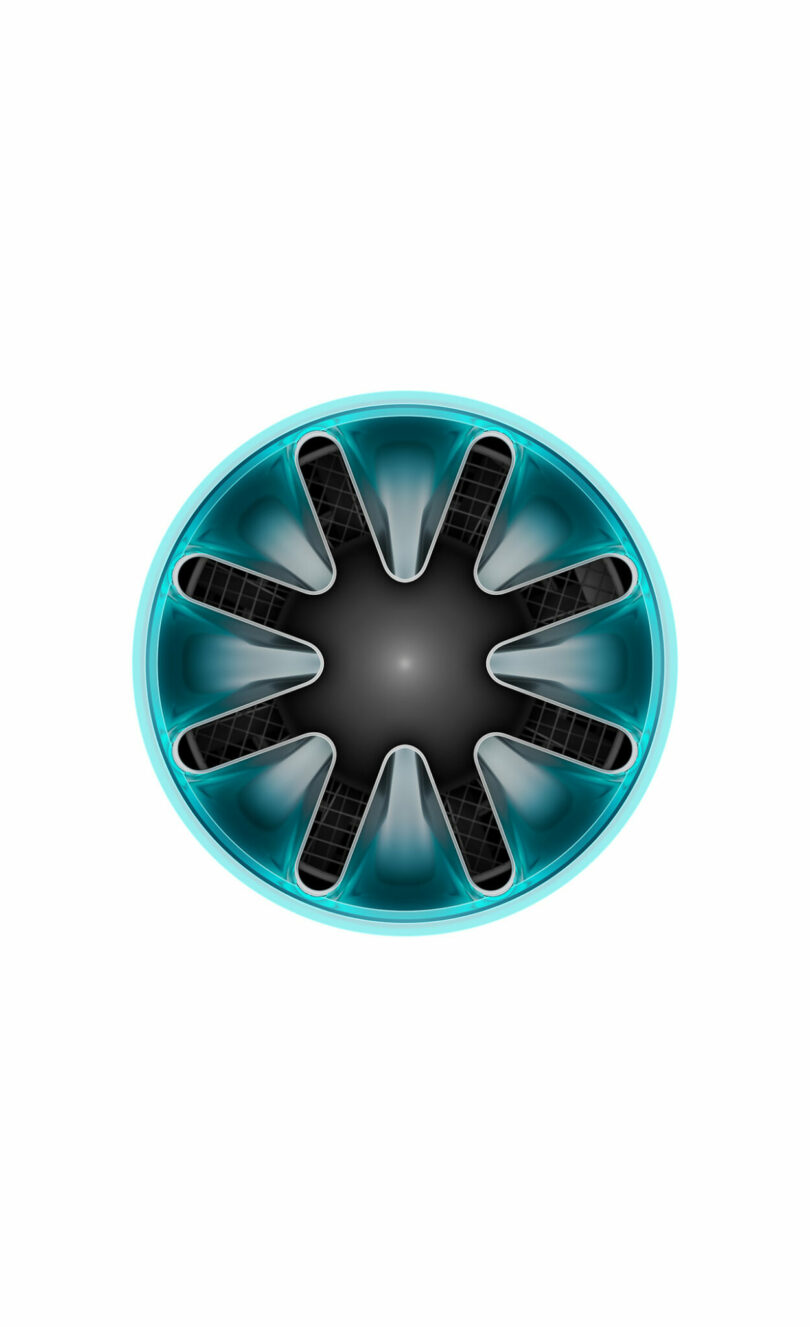
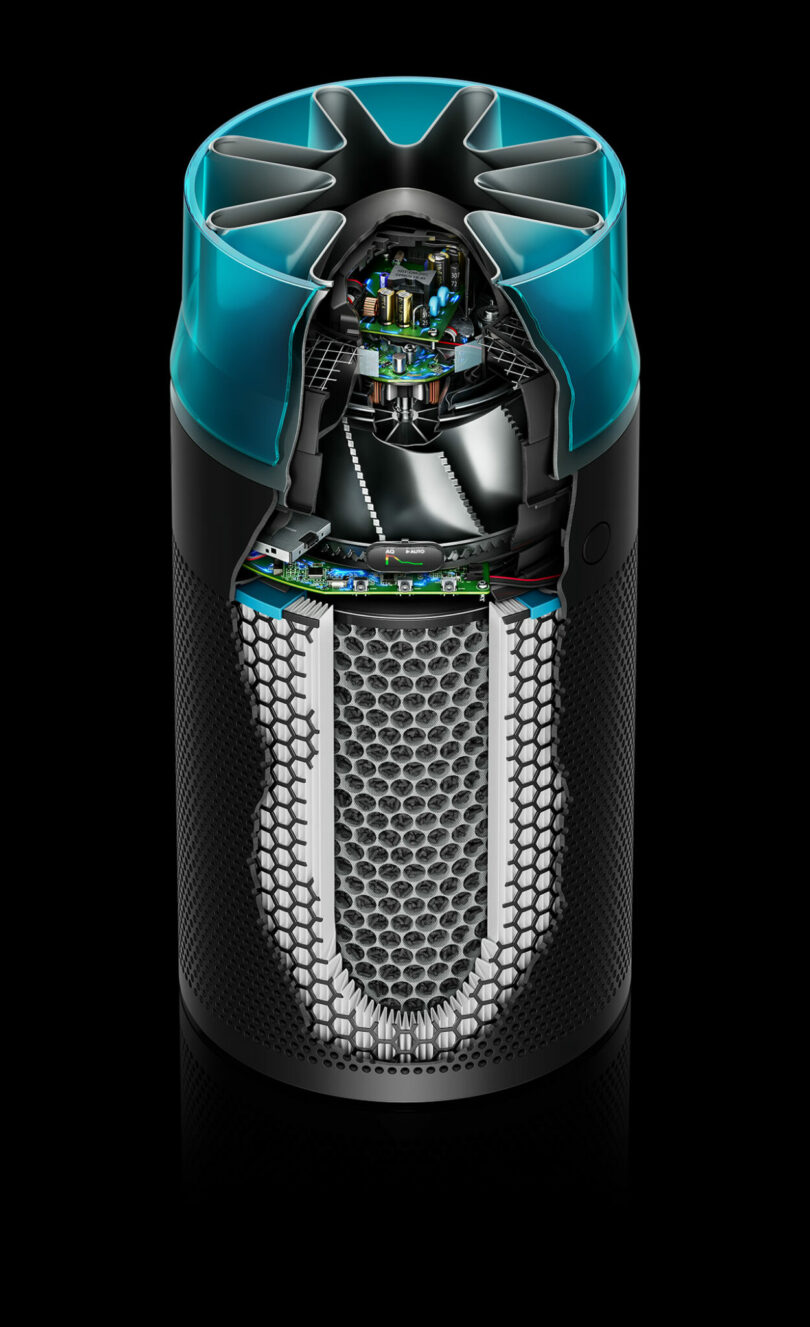
When we talk about "architectural" design in home appliances, we are referring to the marriage of form and aerodynamic necessity. The Dyson HushJet departs from the traditional rectangular or cylindrical mesh of most purifiers. Instead, it utilizes a sophisticated conical apparatus and a star-shaped fan nozzle. This isn't merely a stylistic flourish; it is a masterclass in neotenic design—soft, approachable edges that house a powerful, industrial-grade motor.
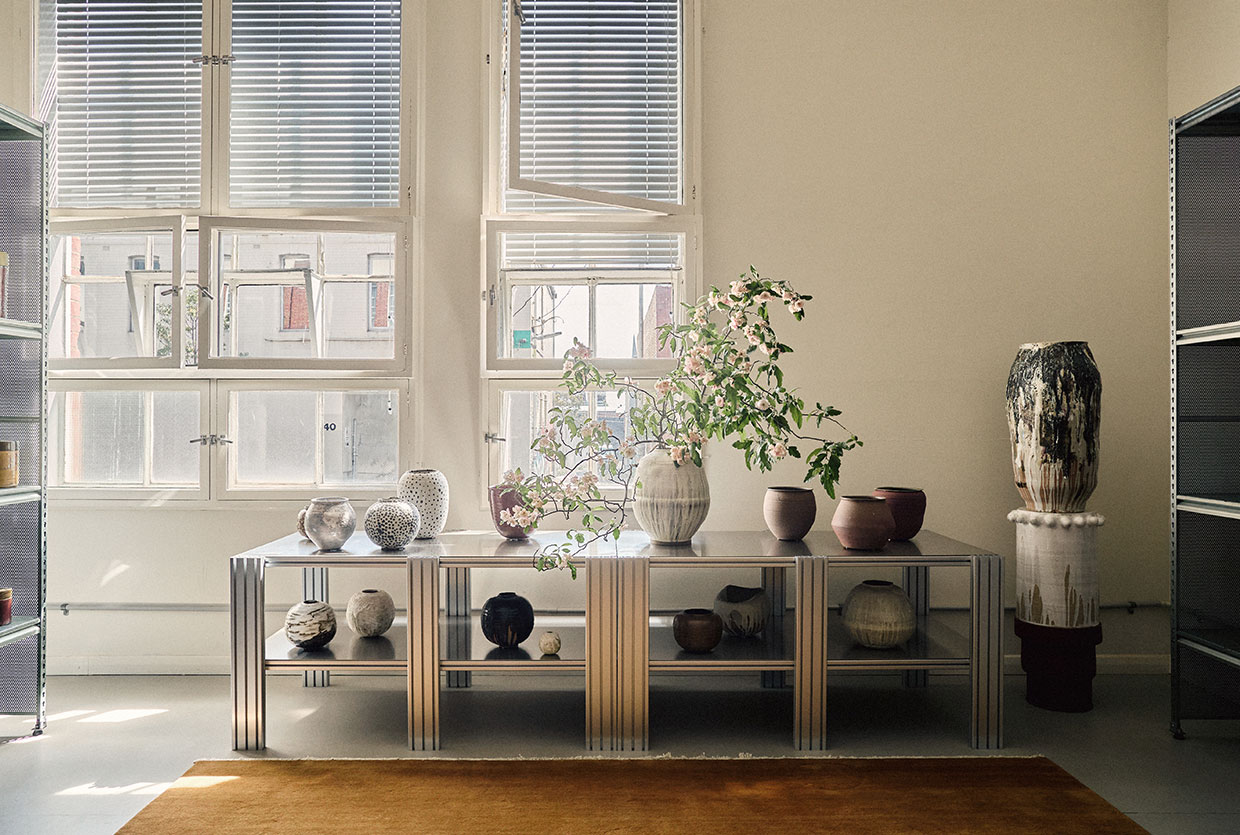
In a small apartment, every object is a statement piece. The HushJet’s compact profile allows it to sit comfortably on a minimalist shelf or a designer nightstand, blending into the room’s décor rather than disrupting it. The star-shaped nozzle is the heart of this "quiet revolution." By optimizing the path of the air as it exits the machine, Dyson engineers have successfully reduced the turbulence that typically creates that low-frequency hum found in cheaper units.
Editor’s Note: In small spaces, the "visual noise" of an ugly appliance is just as taxing as the auditory noise. The HushJet’s matte finish and sculptural silhouette allow it to function as a piece of modern art that just happens to scrub your air.
Performance Breakdown: Small but Mighty Metrics
Do not let the "compact" label fool you. The HushJet is a performance-heavyweight in a featherweight frame. The metric that truly matters in air purification is the CADR (Clean Air Delivery Rate), and at 250 m³/h, the HushJet can fully cycle the air in a 228-square-foot room multiple times per hour.
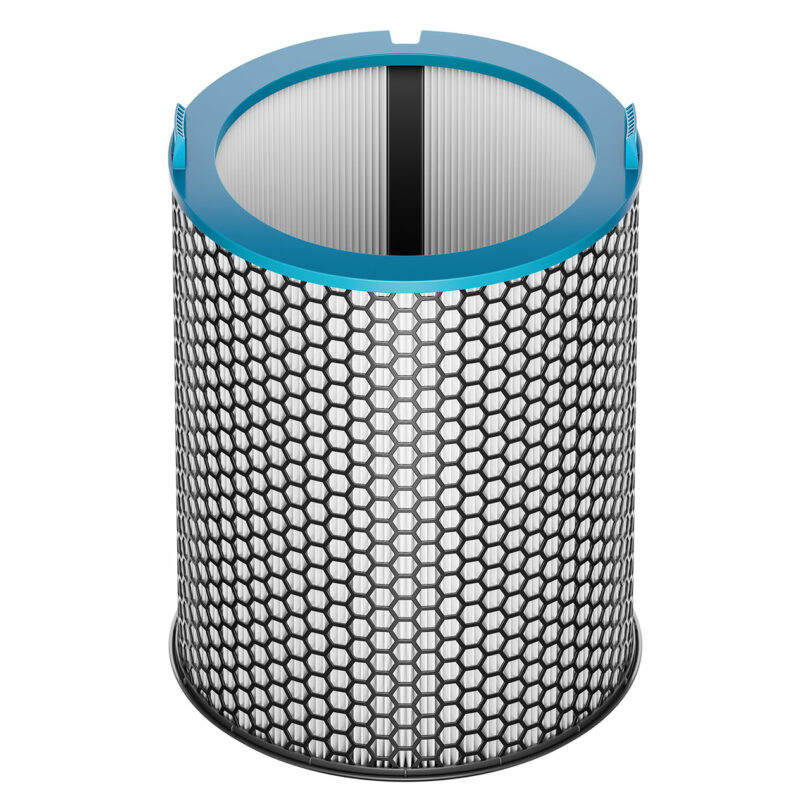
However, the headline-grabbing statistic for the 2026 model is the filter longevity. Dyson has introduced an advanced electrostatic design that offers a staggering 500% increase in lifespan compared to traditional HEPA filters. While most owners of compact purifiers are accustomed to the "maintenance tax" of replacing filters every six to twelve months, the Dyson HushJet filter is rated to last up to 60 months—a full five years of operation.
- Particle Capture: 99.97% of pollutants as small as 0.3 microns, including allergens, pet dander, and fine dust.
- VOC Neutralization: Advanced carbon layers targeted at urban pollutants like nitrogen dioxide and formaldehyde.
- Flow Dynamics: 360-degree intake ensures that no matter where the unit is placed, it is drawing in stagnant air from every corner of the room.
The Quietest Night: Living and Sleeping in One Room
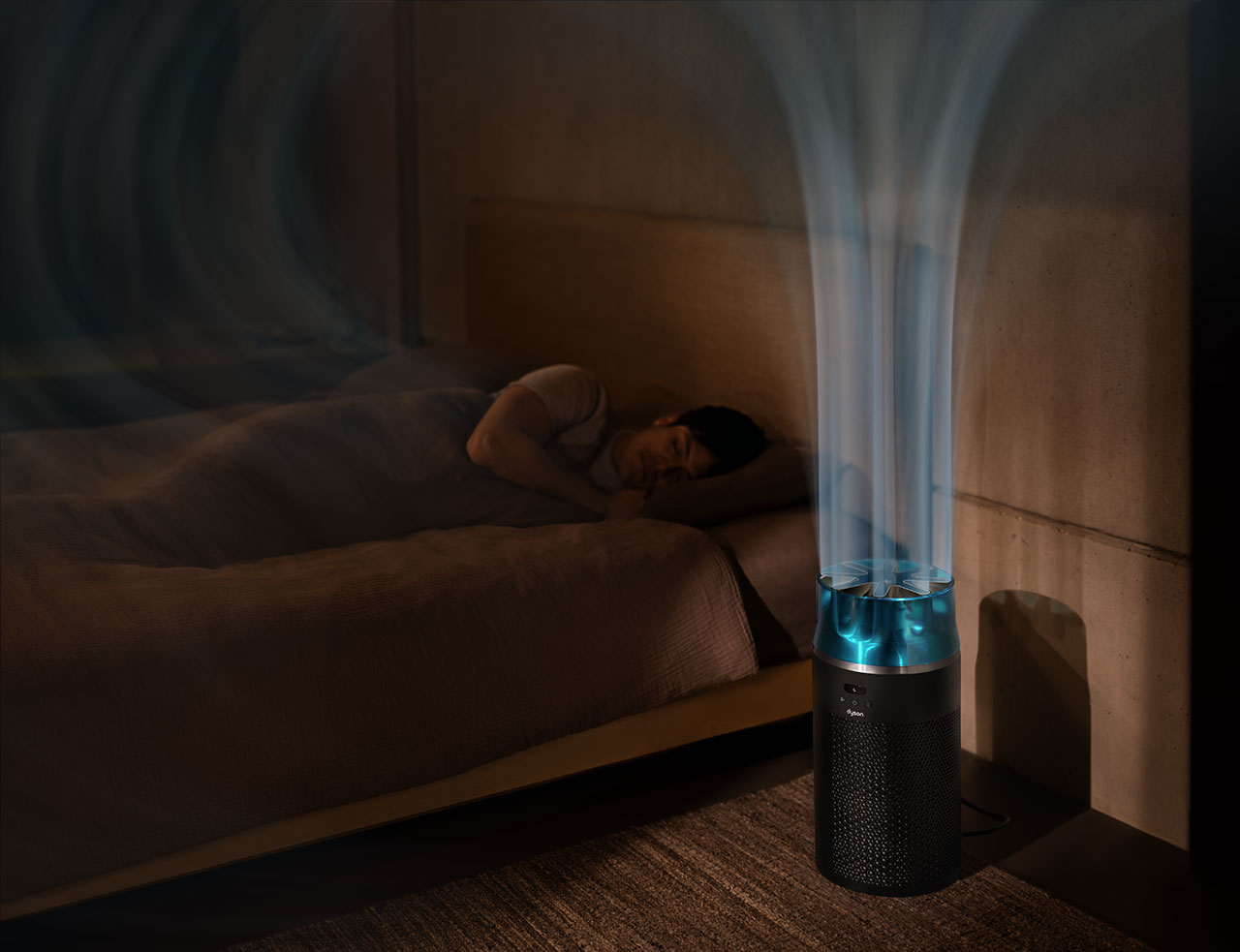
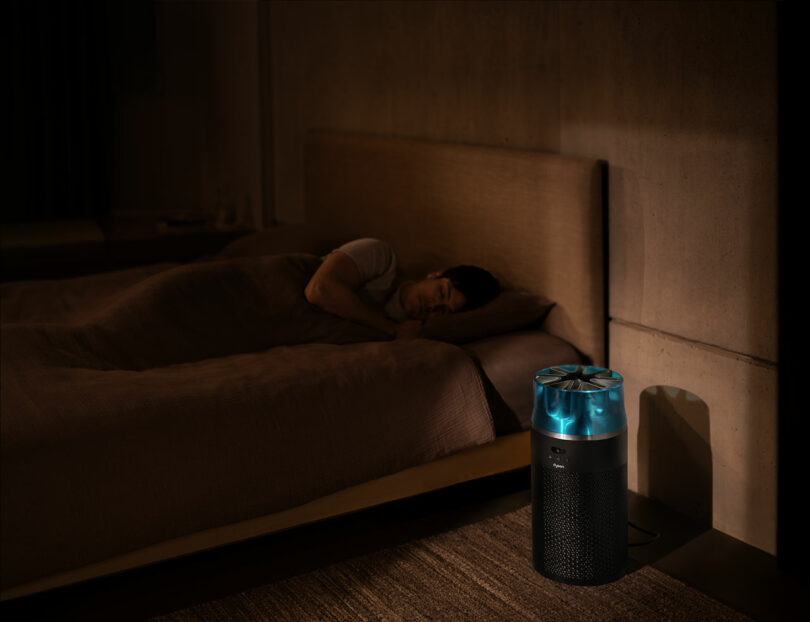
For studio apartment dwellers, the living room is the bedroom. This "overlap" creates a unique challenge: the need for high-performance air purification that doesn't sound like a white-noise machine on steroids. This is where the HushJet earns its name.
Operating at a mere 24 dB in sleep mode, the Dyson HushJet is 33% quieter than leading competitors like the Turonic PH950, which typically floors at 36 dB. To put that in perspective, 24 dB is roughly equivalent to a human whisper or the rustle of leaves. For a light sleeper, that 12 dB difference is the chasm between deep REM sleep and an agitated night. The HushJet achieves this through its "HushJet Technology"—a combination of sound-dampening materials and the aforementioned star-shaped nozzle that smooths out airflow before it reaches the ear.
Maximizing Your Square Footage: Placement Strategies
The efficiency of an air purifier is often dictated by its placement. In tight urban quarters, you don't always have the luxury of placing a unit in the dead center of the room. The HushJet’s 360-degree intake is specifically engineered for "corner-case" scenarios.
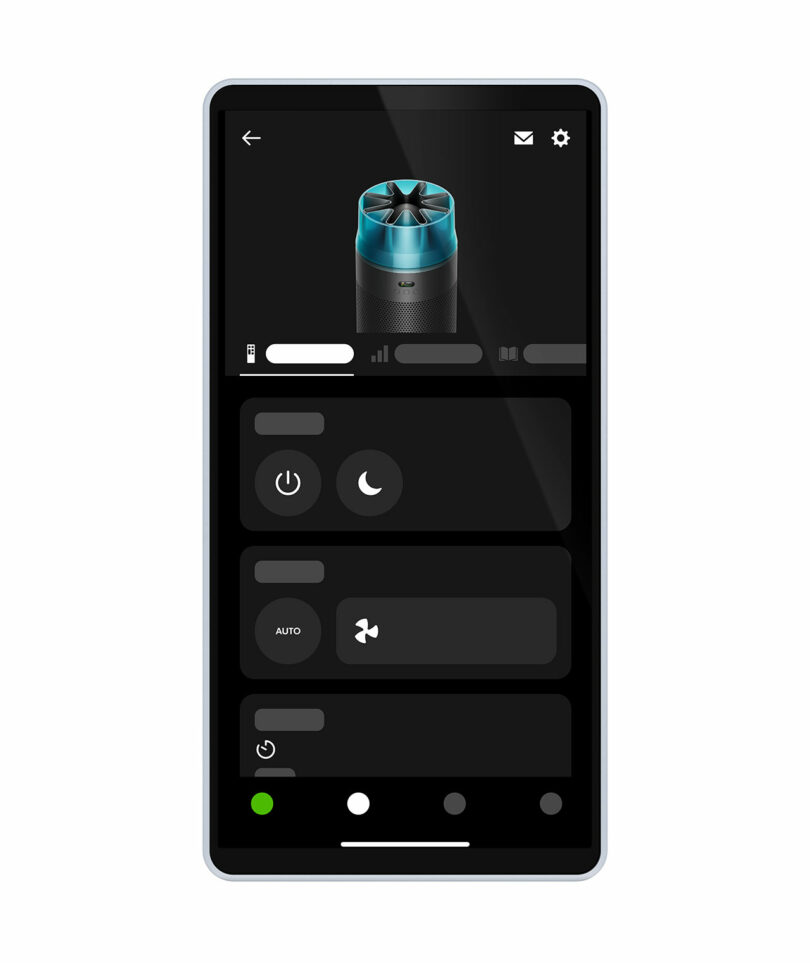
To maximize your air quality, I recommend placing the unit in a location with at least six inches of clearance from walls, yet close enough to high-traffic areas (like your desk or bed). By using the MyDyson App, you can monitor air quality trends in real-time. If you’re cooking in a studio, the app will show the spike in VOCs and allow you to boost the HushJet to its highest setting remotely, clearing the air before you even sit down to eat.
- Strategic Tip: Use the "Auto Mode." The sensors are sensitive enough to detect even the slight increase in particles from a scented candle, adjusting the fan speed instantly to maintain your baseline air quality.
- Remote Management: The MyDyson app serves as a digital command center, providing historical data that helps you understand when your local outdoor air quality is at its worst, so you can keep your windows sealed.
Comparative Analysis: Dyson HushJet vs. The Competition
When investing in a premium purifier, it is essential to look at the total cost of ownership over several years. While the initial price point of the HushJet reflects Dyson's premium positioning, the long-term value becomes apparent when compared to standard compact units.
| Feature | Dyson HushJet | Levoit Core 300S | Turonic PH950 |
|---|---|---|---|
| Max Room Size | 228 sq. ft. | 219 sq. ft. | 300+ sq. ft. (Bulky) |
| Sleep Mode Noise | 24 dB | 24 dB | 36 dB |
| Filter Lifespan | 60 Months (5 Years) | 6-12 Months | 6-12 Months |
| CADR | 250 m³/h | 187 m³/h | 250 m³/h |
| Key Tech | Electrostatic Star-Nozzle | Basic HEPA | UV Light/HEPA |
The data reveals a clear winner for the busy professional. While the Levoit is quiet, it lacks the raw power (CADR) of the HushJet. The Turonic offers power but is significantly louder and occupies a much larger footprint. The HushJet sits in the "Goldilocks" zone—powerful, silent, and incredibly long-lived.
Maintenance: The True Cost of Ownership
The most profound "stress-free" feature of the HushJet is the "set it and forget it" nature of its maintenance. The 5-year filter life is a paradigm shift. In the time it takes you to replace the filter in a standard purifier five to ten times—costing upwards of $300-$500 in cumulative filter fees—the HushJet is still running on its original electrostatic core.
This longevity is achieved through Dyson’s new electrostatic media, which traps particles without the rapid "clogging" associated with traditional glass-fiber HEPA filters. For the urban dweller, this means no more tracking filter replacement schedules or dealing with the landfill waste of multiple discarded filters. It is an environmentally conscious choice that rewards the owner with sustained performance and lower energy consumption over the unit's lifecycle.
Final Thoughts from Ethan Moore
As someone who prioritizes performance and long-term value, I find the Dyson HushJet to be the most rational investment for small-space living in 2026. It solves the three primary pain points of urban purification: noise, space, and maintenance. It is a rare example of an appliance that respects the sanctuary of the home. If you are living in a high-density area where ventilation is poor and space is a premium, the HushJet isn't just a luxury—it's a necessity for a healthier, quieter life.
FAQ
Q: Does the Dyson HushJet remove cooking odors in a studio apartment? A: Yes. While its primary focus is particle filtration, the HushJet includes a specialized carbon layer designed to neutralize odors and VOCs (Volatile Organic Compounds) commonly released during cooking or from cleaning products.
Q: Can I wash the 5-year filter? A: No, the electrostatic filter is not washable. Its 5-year lifespan is based on its high-capacity design. The MyDyson app will track the exact percentage of filter life remaining and notify you when it is finally time for a replacement.
Q: Is the HushJet powerful enough for a bedroom with high ceilings? A: The HushJet is rated for rooms up to 228 sq. ft. with standard ceiling heights. If you have exceptionally high ceilings (over 10 feet), the total air volume is higher, so you may notice the unit takes slightly longer to achieve full air turnover on lower settings.