In the heart of Seoul’s bustling Seocho-dong district, a tiny 31-square-meter space is rewriting the rules of what a workspace can be. For those of us who track global design trends, Seoul has long been the epicenter of "Third Space" innovation—those vital patches of the urban fabric that are neither home nor office, yet serve as both. QDC Cafe (Quick Daily Coffee), a recent masterpiece by the design firm Indiesalon, is a case study in how to translate the rigid logic of the corporate world into a warm, reflective sanctuary.
By reinterpreting traditional office vocabulary—think grid ceilings and industrial hardware—into a "second office" concept, QDC merges productivity with a calm retail environment. It is a space that proves design isn’t about how much room you have, but how you command the atmosphere within it.
The 'Second Office' Concept: Why Identity Matters
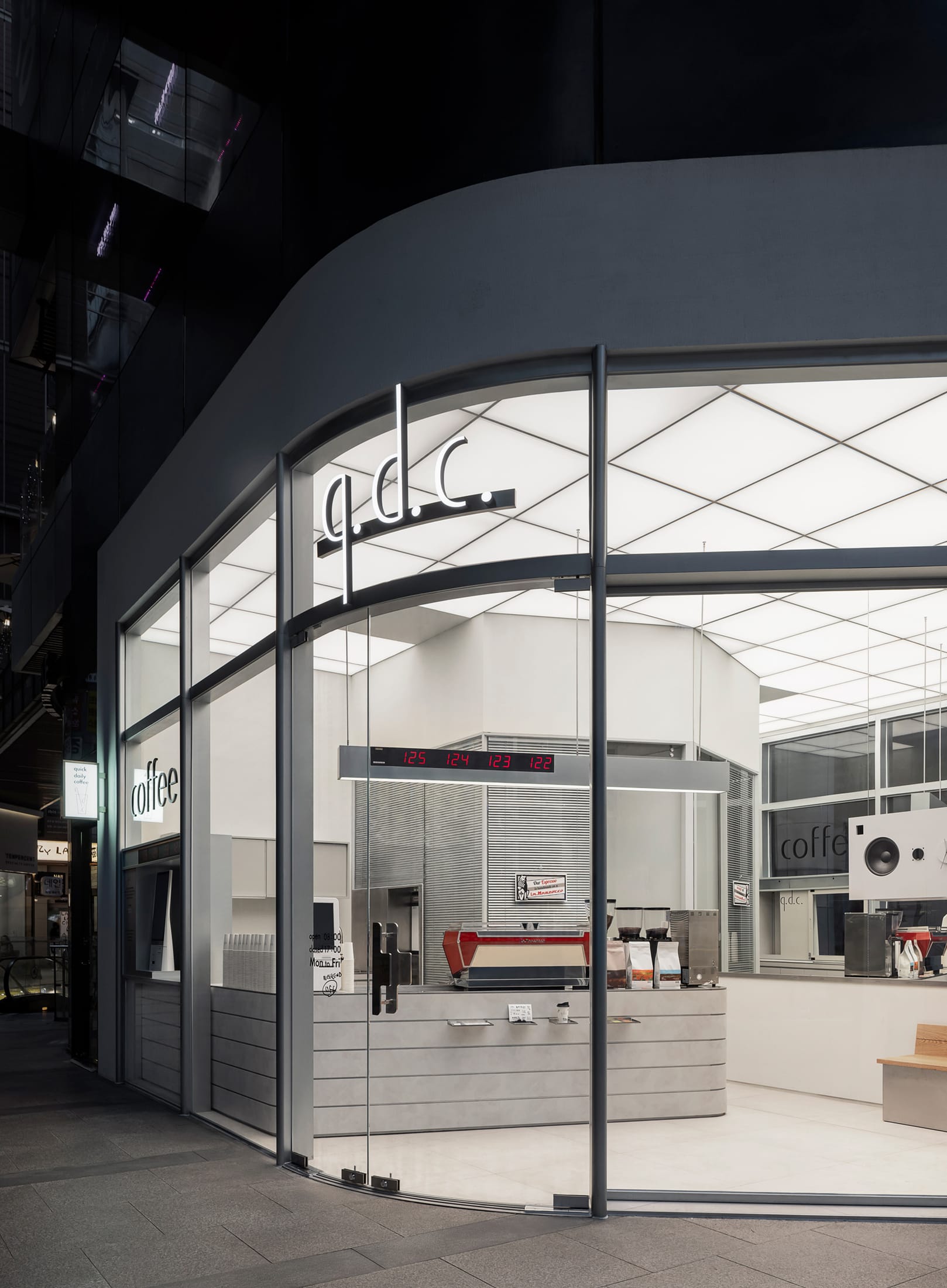
The name QDC draws from the medical abbreviation qd (quaque die), meaning "once a day." This isn't just a clever nomenclature; it’s a design philosophy. In a city where cafes are essential communal hubs for students and professionals alike, Indiesalon envisioned QDC as a daily ritual—a quiet extension of one's professional life that feels more like a retreat than a cubicle.
We often talk about "Third Spaces," but the "Second Office" concept is a more targeted evolution. It recognizes that the modern professional doesn’t just need a place to sit; they need a place that supports their "work-life rhythm." The design achieves this by stripping away the frantic energy of a traditional office while keeping the structural cues that help the brain focus.
Ivy’s Takeaway: When designing for productivity at home or in a small studio, look for "spatial anchors"—elements that signal a change in mindset. For QDC, that anchor is the seamless blend of professional utility and hospitality warmth.
Maximizing the Miniature: Lessons in 31 Square Meters
Achieving a fully functional environment within a compact 31-square-meter layout is no small feat, especially in the high-density Seocho-dong area of Gangnam. To avoid the "shoebox effect," the designers leaned into structural honesty. Rather than dropping the ceiling to hide unsightly pipes, they maintained 100% of the building’s original structural ceiling heights and frames.
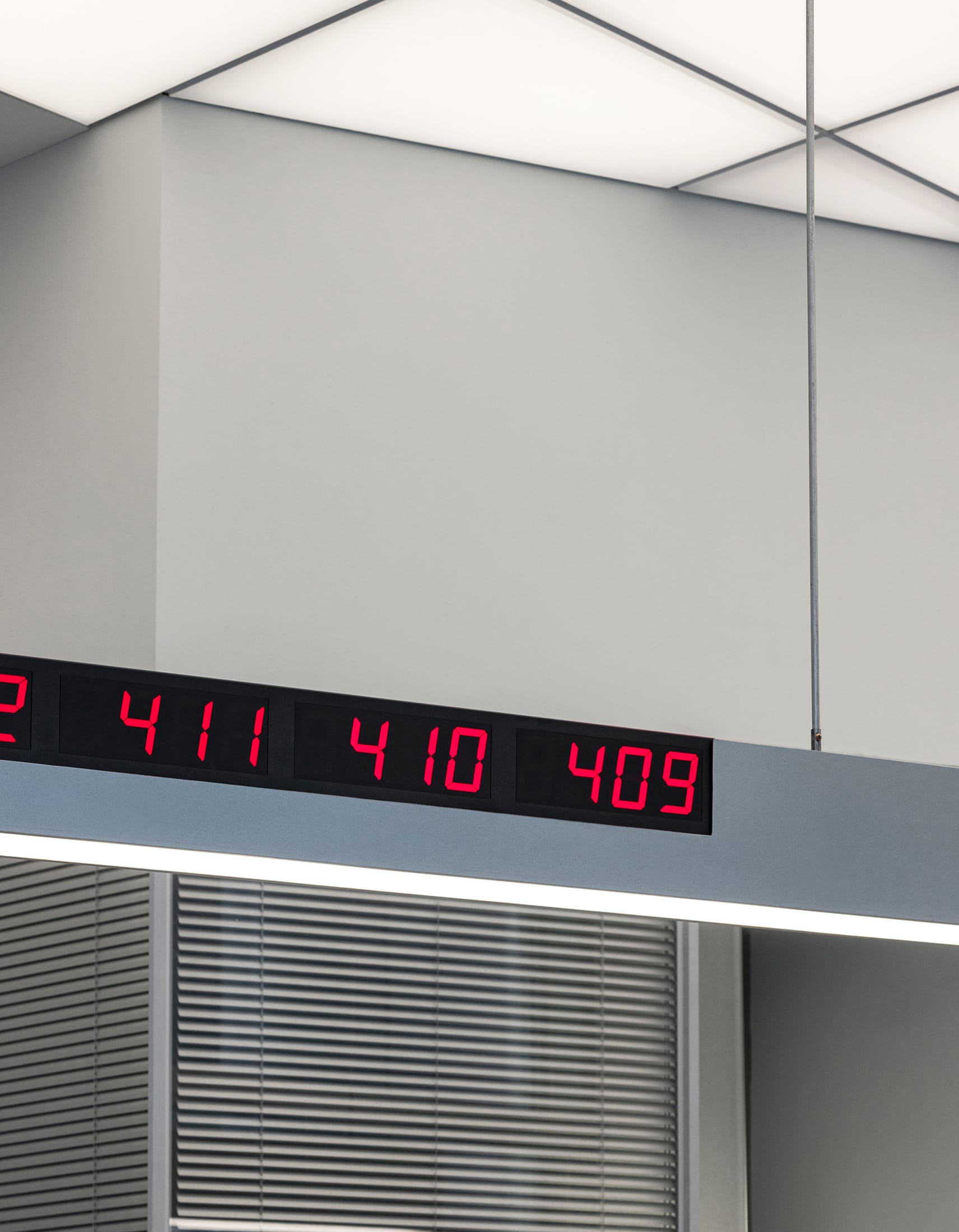
To amplify this sense of depth, QDC utilizes mirrored interior walls. This isn't just a vanity choice; the mirrors reflect light and the custom aluminum frames, effectively doubling the visual boundaries of the space. In modern workspace design, the goal is often to "dissolve" the walls, making even the smallest footprint feel boundless.
| Feature | Design Strategy | Benefit |
|---|---|---|
| Footprint | 31 Square Meters | Optimized for high-density urban flow. |
| Ceiling | 100% Original Height | Maintains industrial character and vertical volume. |
| Walls | Mirrored Surfaces | Amplifies light and creates an illusion of depth. |
| Threshold | Sliding Glass Doors | Merges indoor sanctuary with outdoor takeaway area. |
The Visual Language of Work: Design Details to Steal
What makes QDC truly remarkable is its commitment to the "office" aesthetic, reimagined through a lens of high-end interior styling. It’s an achromatic dream punctuated by the warmth of natural wood.
The Grid Ceiling
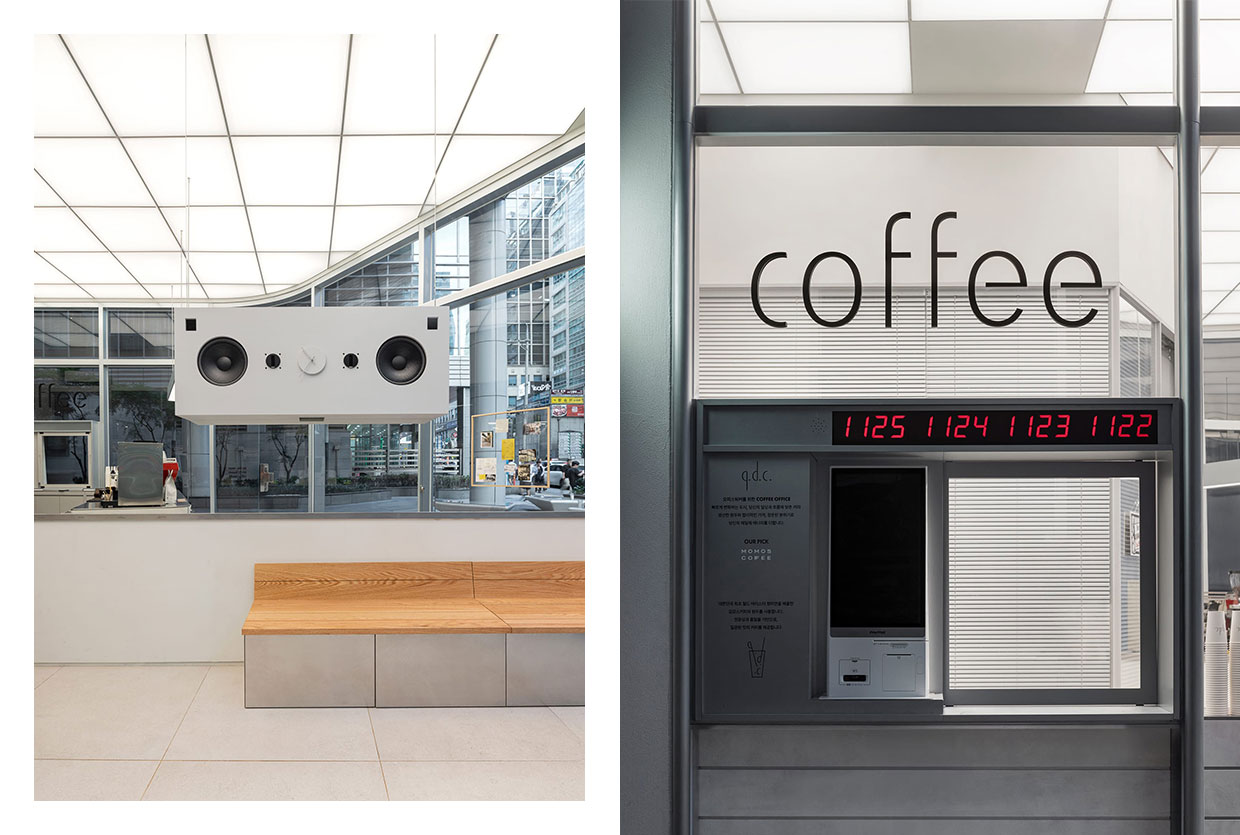
One of the most striking features is the grid ceiling. While traditional offices use drop ceilings to hide HVAC systems, Indiesalon turned this into an art form. The grid houses the lighting and air conditioning while echoing the orderly, rhythmic layout of a professional workspace. It creates a sense of "productive calm" above, leaving the floor space open for movement.
Playful Utility
The genius is in the micro-details. Have you ever noticed the hardware in your favorite cafe? At QDC, the designers used "paper-clip" inspired handles on cabinetry. They also repurposed the visual logic of meeting room blinds to create storage dividers. These playful nods to office supplies transform mundane utility into a cohesive brand identity.
A Balanced Palette
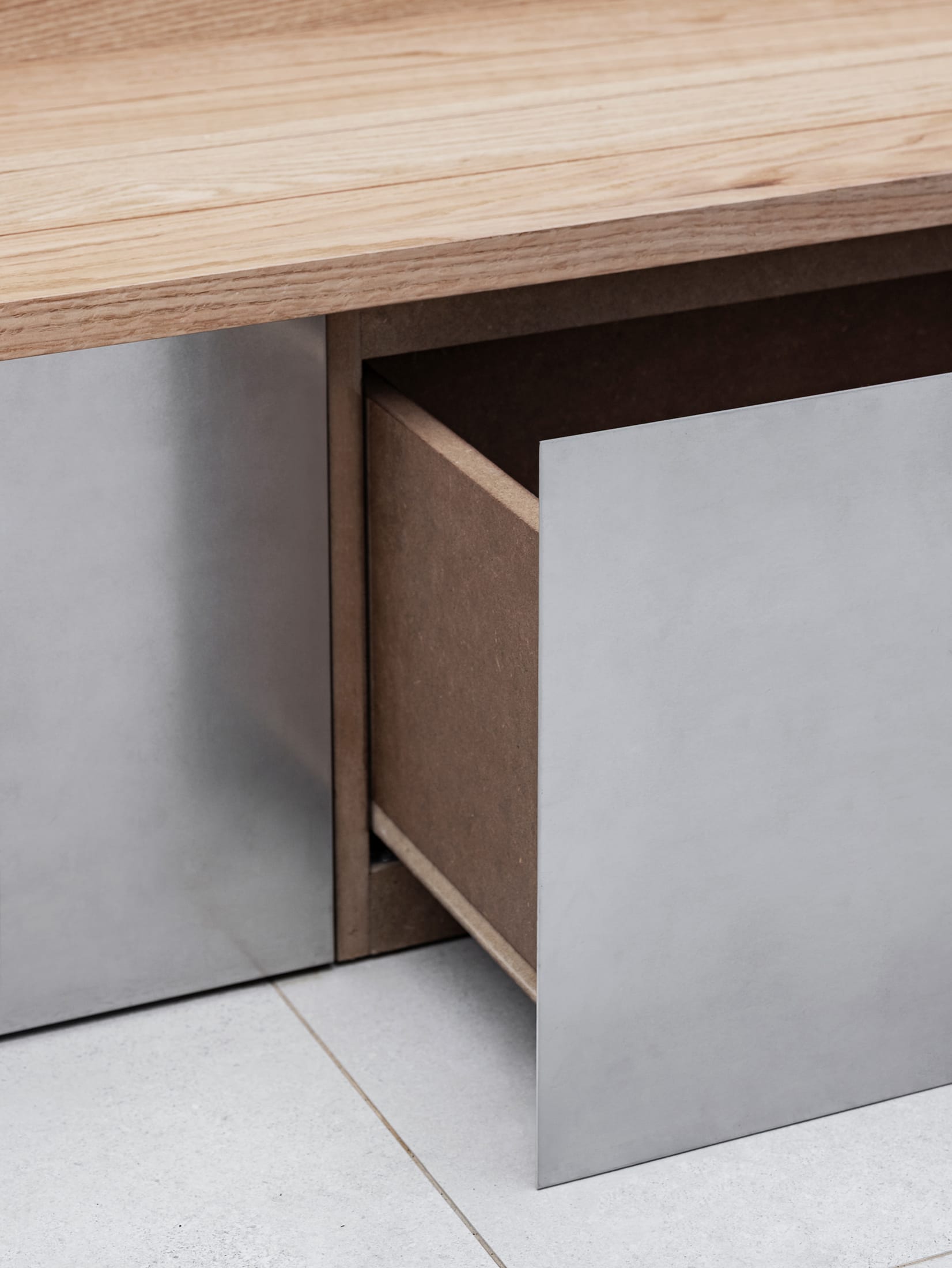
To prevent the space from feeling too "sterile" or industrial, the coldness of stainless steel and aluminum is balanced with the deep, organic tones of red oak. This material contrast is a hallmark of modern Seoul cafe design trends—mixing high-tech precision with high-touch comfort.
Urban Integration: Softening the Gangnam Streetscape
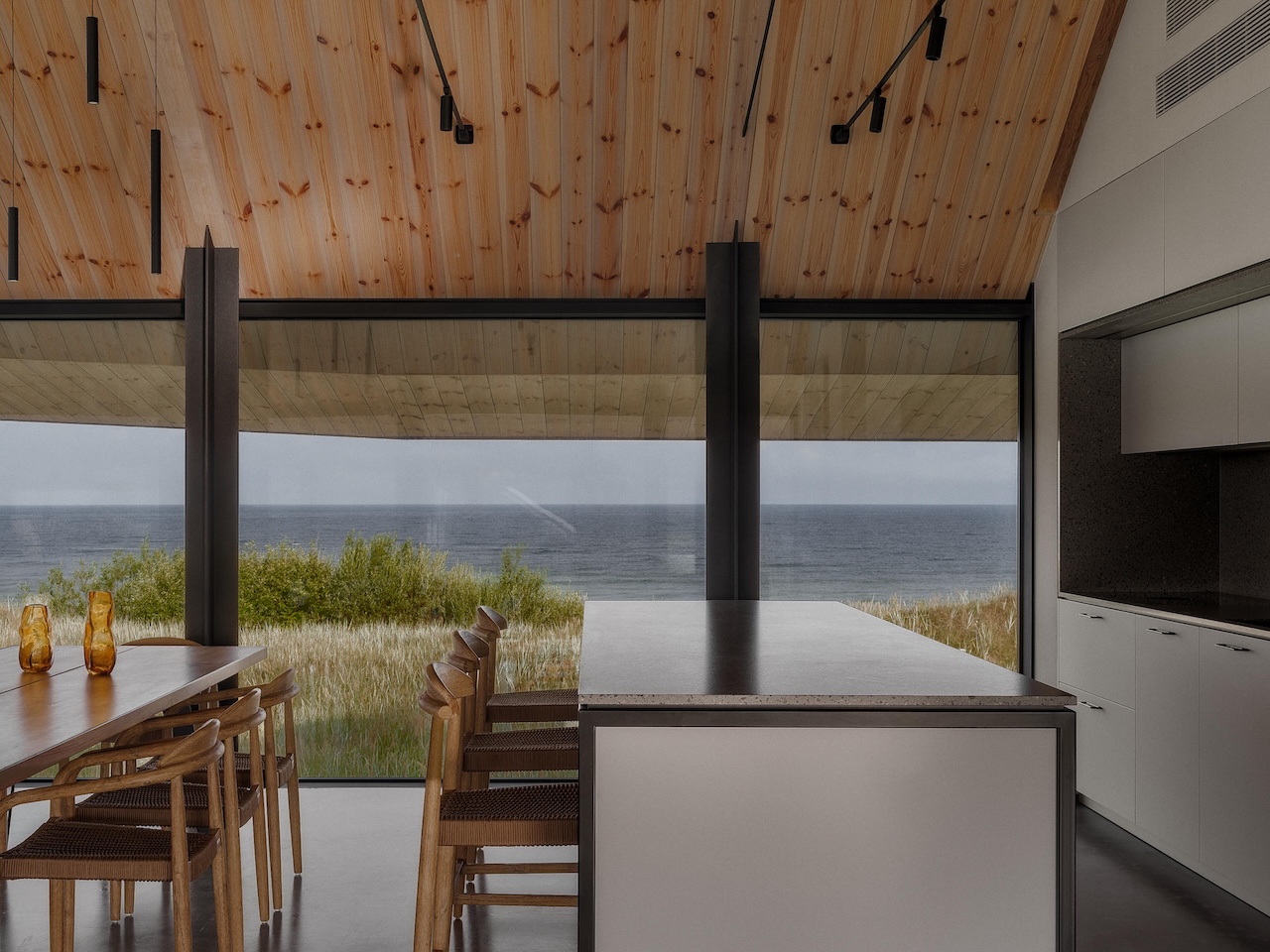
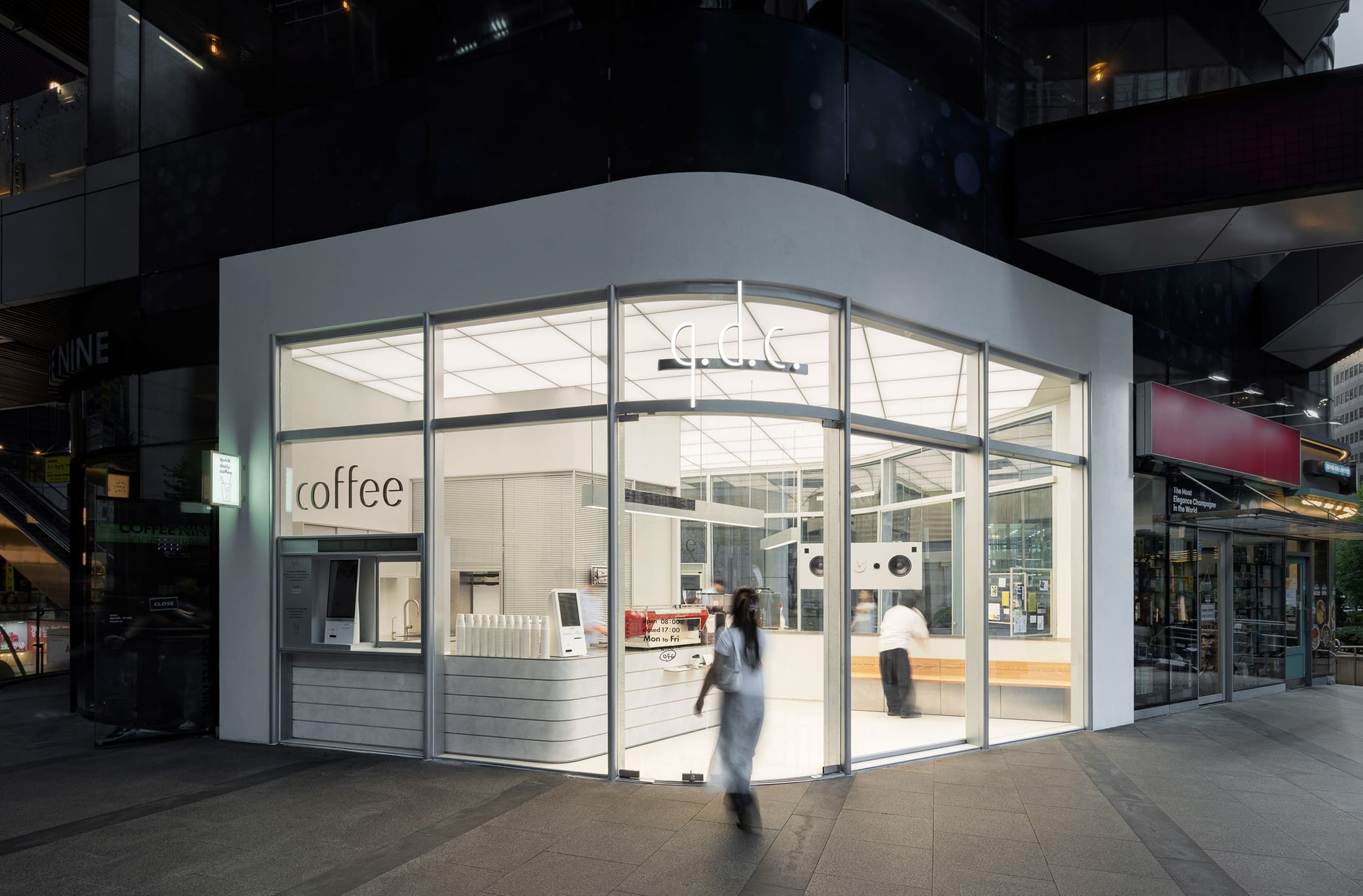
The exterior of QDC serves as a bridge between the chaotic street life of Gangnam and the serene interior. The designers moved away from standard industrial curtain wall profiles, opting instead for custom rounded aluminum frames. These curves soften the building's presence, making it feel more like an invited guest in the neighborhood than a rigid storefront.
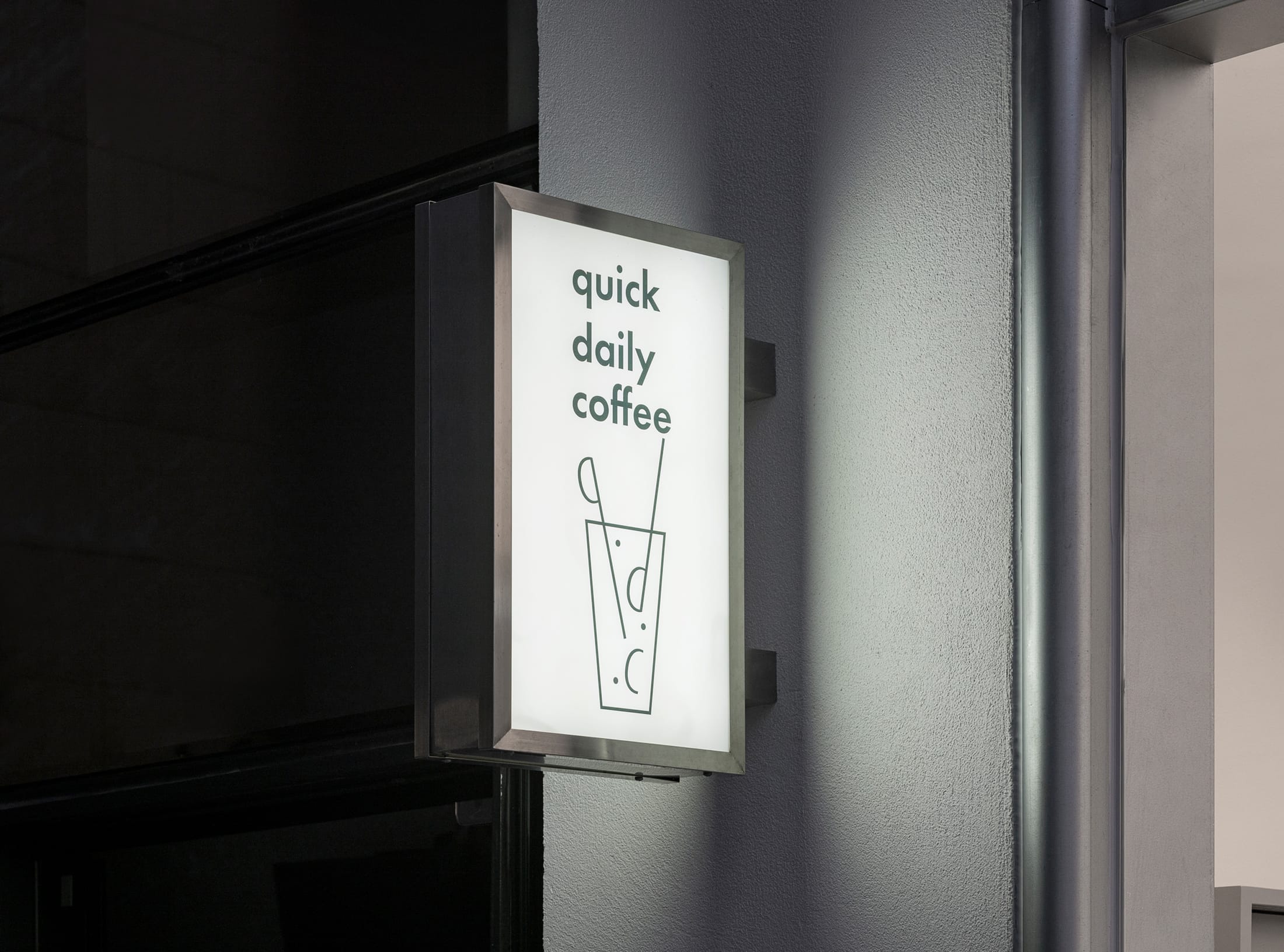
The use of sliding glass doors further dissolves the boundary between the "sanctuary" and the street. It creates a seamless flow for those utilizing the outdoor takeaway gathering space, acknowledging that in a modern city, the sidewalk is as much a part of the cafe as the counter.
Beyond Coffee: The Future of Global Workspace Design
QDC Cafe is a reminder that the future of commercial space optimization lies in "specificity." In a competitive market, a generic aesthetic is a death sentence. By leaning into a specific narrative—the "second office"—Indiesalon created a destination that resonates with the daily lives of its users.
Whether you are a designer looking for inspiration or a professional seeking a better way to work, QDC offers three vital lessons:
- Context is King: Build for the rituals of the neighborhood.
- Details are the Brand: A paper-clip handle can tell a more powerful story than a logo.
- Small can be Spacious: Use mirrors, structural height, and strategic lighting to defy the limitations of square footage.
As we move toward more flexible work cultures globally, we can expect to see more "achromatic" and "Newtro" (New-Retro) influences from Seoul making their way into our home offices and local hubs. QDC isn't just a place for a quick daily coffee; it’s a blueprint for the productive future.
FAQ
How can I apply the 'Second Office' look to my home office? Start with the "Grid Logic." Use modular shelving and achromatic colors (grays, whites, blacks) for your desk area, then soften the space with one organic element, like a red oak chair or a large indoor plant. The key is to keep the technical elements (cables, lighting) organized and visible as part of the "industrial" aesthetic.
What are the key materials in Seoul's modern cafe design? Currently, we see a lot of "material layering"—stainless steel and brushed aluminum for a clean, futuristic look, paired with traditional materials like plywood, red oak, or textured plaster. This creates the "Newtro" vibe that is popular in districts like Seongsu-dong and Seocho-dong.
How do mirrors help in small commercial spaces? Mirrors shouldn't just be hung on a wall; they should be integrated into the architecture. By mirroring a full wall or a ceiling corner, you bounce light into the darkest parts of the room and create "visual corridors" that make a 30-square-meter room feel significantly larger.