We have all been there: you open the linen closet door to grab a fresh pillowcase, only to have a "landslide" of mismatched fitted sheets and bath towels tumble onto your head. It is one of those hidden corners of the home that starts the week looking organized but quickly devolves into a chaotic mountain of fabric. The frustration of fumbling for a King-sized flat sheet in the dark, only to realize you’ve pulled out a Twin-sized duvet cover, is a universal household pain point.
Creating a functional linen closet isn't just about making it look "Pinterest-perfect." It is about engineering a system that works for your life. According to internal organization audits, implementing simple tools like vertical shelf dividers can actually increase your usable linen storage capacity by up to 35%. By stabilizing tall stacks of towels and sheets, you aren't just tidying up—you’re literally gaining space you didn’t know you had.
1. The Pre-Organization Purge: Decluttering 101
Before you buy a single bin or divider, you must confront the "Linen Graveyard." This is the space at the back of the shelf where old, scratchy towels and half-sets of sheets go to die. We often hold onto linens "just in case," but a cluttered closet makes it impossible to find the items you actually love and use.
To begin your purge, remove every single item from the closet. Categorize them into "Keep," "Donate," and "Recycle." If a towel is frayed or stained beyond repair, it’s time to move it to the rag bin or donate it to a local animal shelter.
Pro Tip: Adopt the "One-In, One-Out" rule. For every new set of high-thread-count sheets you purchase, retire an old set. This prevents future overflow and ensures your closet remains a curated space rather than a storage unit for textiles you no longer need.
2. Master the Fitted Sheet Folding Hack
The fitted sheet is the ultimate enemy of the organized linen closet. Its elastic edges make it nearly impossible to stack neatly, leading to lumpy piles that eventually topple over. However, there is a simple method to conquer the chaos.
The most effective method to keep matching sheet sets together is to fold the entire set—the fitted sheet and the flat sheet—into a neat, flat rectangle and then tuck the entire bundle inside one of its matching pillowcases. This "pillowcase bundle" method ensures that all pieces stay together in a compact, stackable unit. No more hunting for a rogue pillowcase at the bottom of a pile.
Quick Fix: The Flat Bundle Method
- Fold the fitted sheet into a rectangle by tucking the corners into each other.
- Fold the flat sheet to the same size as the fitted sheet.
- Stack the sheets and the second pillowcase.
- Slide the whole stack into the first pillowcase and fold the excess fabric over.
3. Maximize Small Closet Verticality
If you are wondering, "How can I maximize space in a small linen closet?" the answer lies in the "dead space" between your shelves. Most builders install shelves with far too much height between them, leading to tall, unstable stacks of towels.
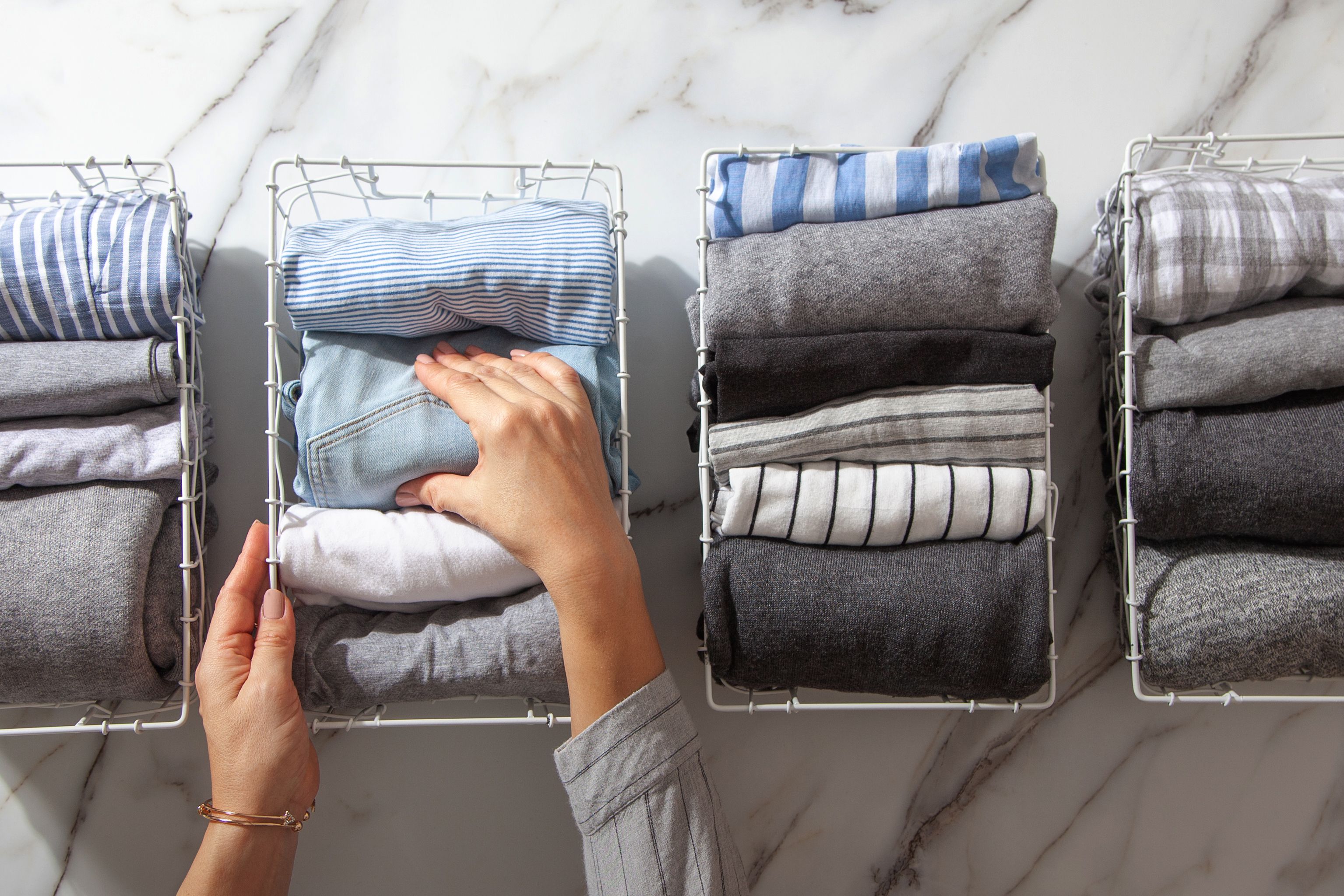
To reclaim this space, look for vertical solutions. Under-shelf baskets are perfect for small, light items like washcloths or extra pillowcases. Vertical shelf dividers are also essential; they act as "bookends" for your linens, preventing tall stacks of towels from leaning and eventually collapsing. For especially cramped quarters, consider installing over-the-door racks. These are ideal for bulky items like bath mats or extra rolls of paper towels that would otherwise eat up valuable shelf real estate.
4. Choose the Right Containers: Clear vs. Opaque
The "Best Linen Closet Storage Bins" depend entirely on your priority: are you looking for ultimate functionality or a cohesive aesthetic? In my experience as an editor, a mix of both often works best.
Clear bins are superior for functionality because they allow for instant content identification. You can see exactly how many rolls of toilet paper or bottles of shampoo you have left without digging. On the other hand, opaque or wicker baskets are preferred for a cohesive, aesthetically pleasing look that hides visual clutter, such as mismatched cleaning supplies or bulky heating pads.
| Feature | Clear Acrylic Bins | Wicker/Opaque Baskets |
|---|---|---|
| Visibility | High - See everything at a glance | Low - Hides clutter |
| Best For | Toiletries, guest soaps, first aid | Extra pillows, bulky blankets, backup sets |
| Aesthetic | Modern, clean, "fridge-style" | Warm, textured, Pinterest-ready |
| Breathability | Low (Better for liquids) | High (Better for textiles) |
5. Implement Shelf Dividers to Stop the Topple
If you only take one piece of advice from this guide, let it be this: buy linen closet shelf dividers. These simple tools are the MVPs of any linen system. Without them, even the most perfectly folded towels will eventually succumb to gravity when someone pulls a towel from the bottom of the stack.
Dividers allow you to create distinct "zones" on a single shelf. You can have a zone for "Master Bath Towels," "Guest Towels," and "Beach Towels," all sitting side-by-side without overlapping. It keeps the boundaries of your organization system firm, making it much harder for clutter to creep back in.
6. Sort and Label by Bed Size
There is nothing more frustrating than unfolding a sheet only to realize it's a Full-size when you needed a Queen. To solve this, you must sort and label your linens by bed size.
Surveys of home organizers indicate that labeling storage bins by bed size (Twin, Queen, King) reduces the average time spent searching for correct linens by approximately 45%. Use clip-on basket labels for your wicker bins or adhesive tags for your shelves. This is especially helpful for guests or family members who might not be as familiar with your system as you are.
7. Utilize 'Invisible' Door Space
The back of the door is often the most underutilized real estate in the home. If your shelves are overflowing, it’s time to move the "odd" items to the door.
Multi-pocket over-door organizers are fantastic for holding small toiletries, washcloths, or even cleaning supplies. If you have a larger door, you can install sturdy hooks to hang items that are notoriously difficult to fold, such as bulky hooded bathrobes or plush bath mats. By moving these items to the door, you free up a significant amount of shelf space for your primary sheet sets and towels.
8. Color Coding for Visual Harmony
While it might seem purely decorative, color-coding your linens has a functional benefit. When your towels and sheets are sorted by hue, it becomes much easier to identify which pieces belong to which set.
Beyond the practical, there is a psychological benefit to a color-coordinated closet. It creates a "boutique hotel" feel every time you open the door. Start with your whites, then transition through creams, greys, and finally your deeper tones. This visual harmony turns a chore-heavy space into a source of calm.
9. The Seasonal Rotation Strategy
You don’t need heavy flannel sheets in July, and you certainly don't need lightweight linen coverlets in the dead of winter. Keeping your off-season items on your prime "eye-level" shelves is a waste of space.
Move seasonal duvets and extra blankets to the very top shelf or into under-bed storage bins. I highly recommend using vacuum storage bags for these items. They can reduce the volume of bulky comforters by up to 75%, protecting them from dust and moisture while they wait for their season to return.
10. Lighting the 'Dark Abyss'
Most linen closets are tucked into hallways with poor lighting, making the back corners a "dark abyss" where items get lost for years. If you can’t see what you have, you can’t keep it organized.
Install motion-sensor LED strips or battery-powered puck lights. These are inexpensive, require no wiring, and provide instant illumination the second you open the door. Being able to see every corner of your closet at 6 AM makes a world of difference in maintaining your system.
11. Protecting Your Investment: Pests and Freshness
Linens are an investment, and they should be treated as such. To keep your sheets smelling fresh and to protect them from moths, avoid using harsh chemical scents. Instead, opt for natural repellents like cedar blocks or lavender sachets.
Sophie’s Pro Tip: Every few months, take the time to rotate your stacks. Pull the towels from the bottom and move them to the top. This ensures even wear and prevents the items at the bottom from developing that "stale" closet smell.
12. Create a 'Shared Space' Logic
Finally, remember that the linen closet often acts as a catch-all for household items that don't have a home elsewhere. If your bathroom doesn't have enough storage, your linen closet can house a "First Aid" station or a "Back-up Toiletries" zone.
Use stackable drawers for these items so they don't get mixed in with your fabric. By creating a logic where the most-used items (towels) are at eye level and the least-used items (extra medicine, seasonal blankets) are at the top or bottom, you create a system that flows with your daily routine.
FAQ
How many towel sets should I actually own?
A good rule of thumb is three sets per person: one in use, one in the laundry, and one in the closet. For guests, two sets are usually sufficient. Any more than this generally leads to unnecessary clutter in a standard linen closet.
Can I store my vacuum cleaner in the linen closet?
If space allows, yes! However, ensure it is stored on the floor level to avoid heavy lifting. If you store cleaning appliances with linens, ensure they are clean to avoid transferring dust or debris to your fresh sheets.
What is the best way to store bulky comforters?
Vacuum-sealed bags are the gold standard for bulky items. If you prefer not to use plastic, large breathable fabric bins on the highest shelf are the next best option to keep them dust-free and contained.
Conclusion
Organizing your linen closet isn't a one-time event; it’s about setting up a system that resists the natural entropy of a busy household. By implementing these 12 pro tips—from the pillowcase folding hack to the 35% capacity-boosting power of shelf dividers—you can transform a source of daily stress into a functional, beautiful space. Start with the purge, invest in the right tools, and enjoy the calm that comes with a perfectly ordered home.