Stepping into The Mart in Chicago this year felt less like entering a commercial trade show and more like walking into a living, breathing manifesto for the future of human connection. NeoCon 2025, sprawling across 1 million square feet and eight floors with over 400 exhibitors, has officially signaled the end of the "clinical office." As I navigated the labyrinth of showrooms, the air was thick with a new kind of energy—one that favors the amygdala as much as the bottom line.
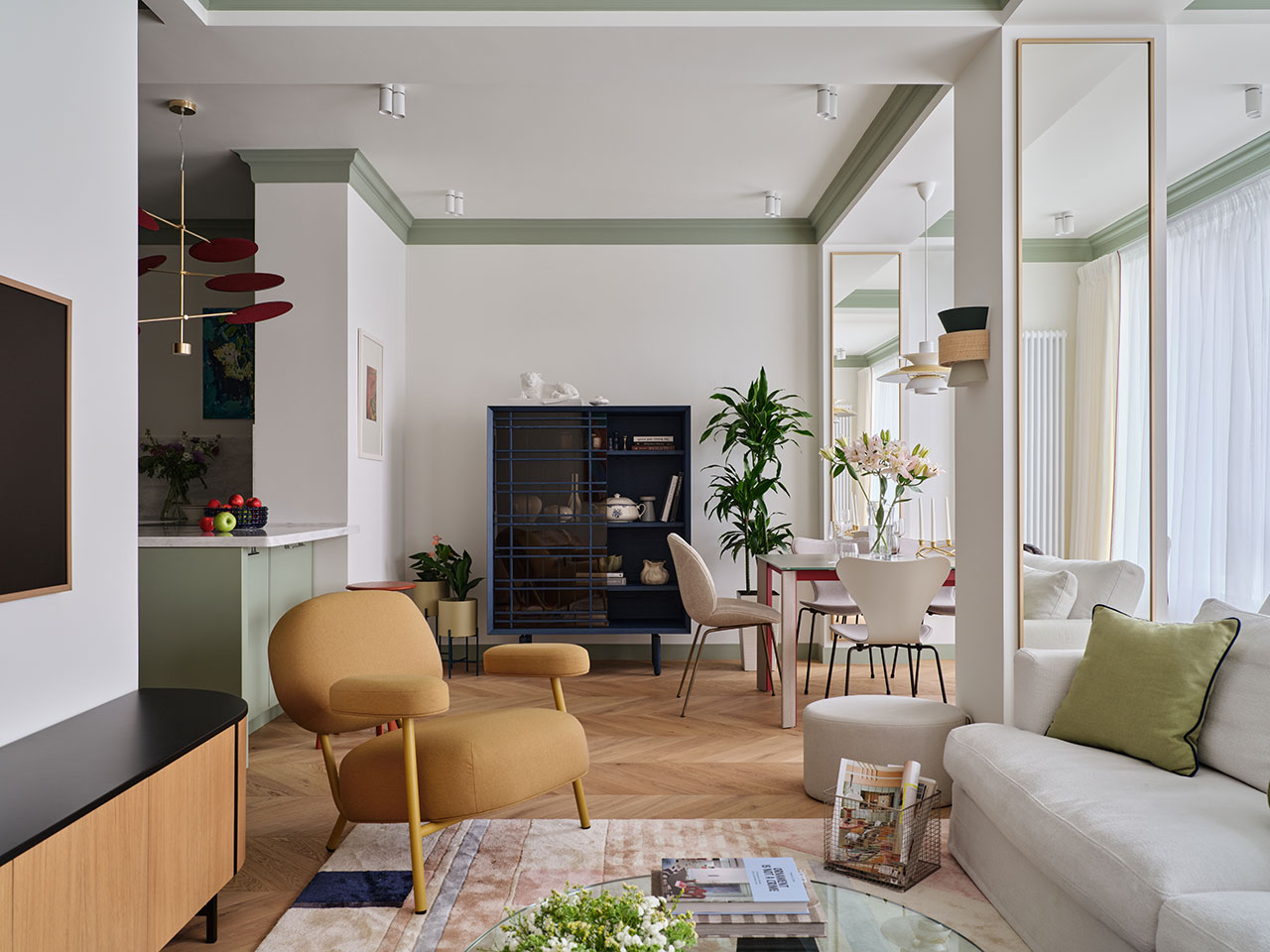
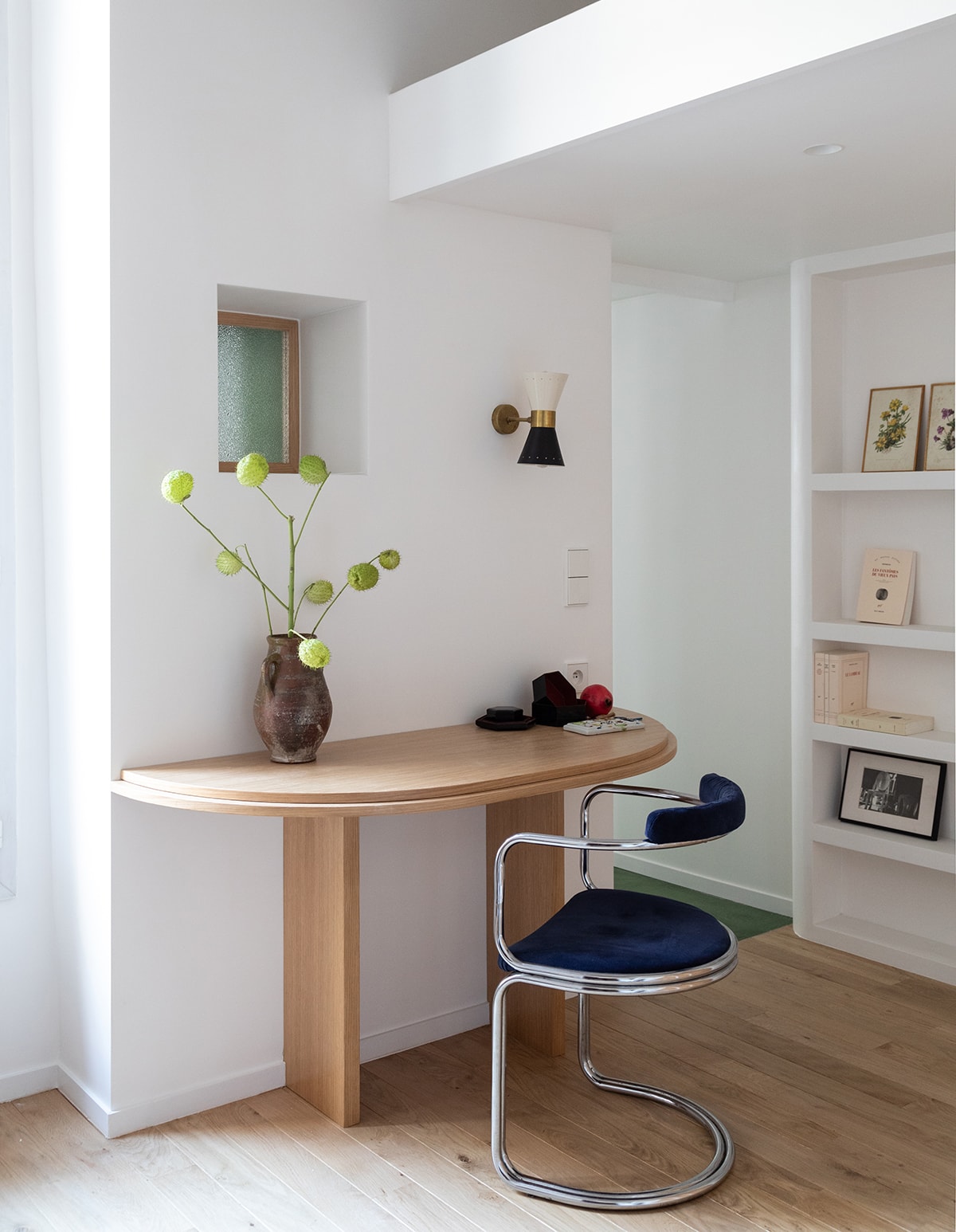
The primary design trends at NeoCon 2025 represent a radical shift toward circular design, sustainability, and neuroaesthetics. We are seeing a definitive departure from sharp-edged corporate minimalism in favor of "residential warmth," characterized by light hardwoods, soft pastels, and tactile textures that feel more like a curated living room than a high-traffic lobby.
Theme 1: The ‘Room Within a Room’ & Hyper-Flexibility
The most significant architectural shift this year is the death of the fixed wall. Today’s modular workspace solutions are defined by "room within a room" systems that allow an office to expand, contract, and breathe alongside the team’s needs.
1. Architectural Modular Systems
Leading the charge are systems like Haworth’s 4Space and Enclose. These aren't just partitions; they are sophisticated architectural frameworks that provide instant privacy without the permanence of drywall. They allow designers to carve out focused enclaves or collaborative hubs within a vast open plan, addressing the modern employee's need for both social connection and deep, uninterrupted work.
2. The Sculptural Sofa as a Hub
We are seeing a move toward the "rotund elegance" of contract-grade lounge furniture. Frovi’s Bae Modular System stood out as a masterclass in this. It functions as a sculptural anchor for the office—a soft, inviting island that hides a rigorous internal structure. It suggests that work can happen anywhere: on a curved velvet sofa just as easily as at a standing desk.
3. Agile Learning Layouts
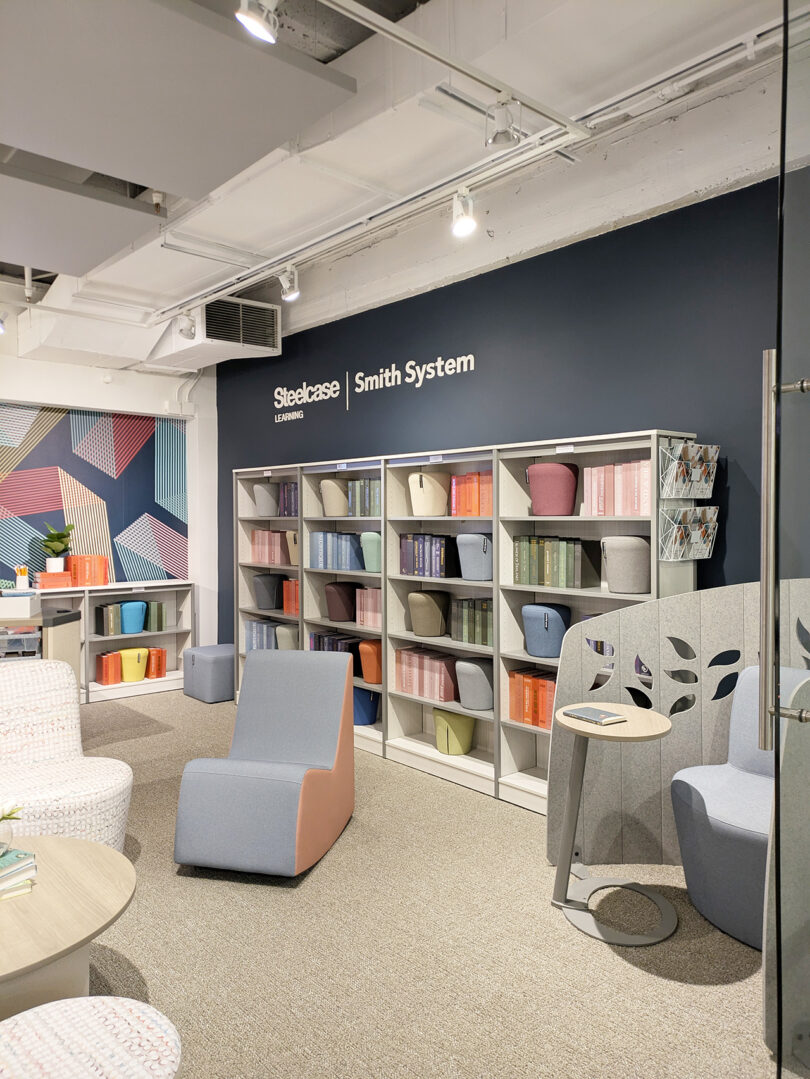
Flexibility isn’t just for corporate headquarters; it’s vital for education. Steelcase’s Smith System redefined agile learning this year. By utilizing locking casters and integrated backpack hooks, these layouts allow for rapid transitions from lecture-style rows to collaborative pods in seconds. It’s about empowering the user to control their environment, rather than being a prisoner to the furniture’s layout.
4. On-Demand Privacy Pods
For those high-traffic zones where focus is impossible, the new generation of pods—like Silen’s Zen add-ons and Dauphin’s Bosselino Uno—offer a sanctuary. These are no longer just "phone booths"; they are acoustically perfected micro-environments equipped with bio-adaptive lighting and silent ventilation.
Pro-Tip for Designers: When implementing modular systems, prioritize "visual porosity." Use glass or slatted timber in your pods and room-within-a-room systems to ensure that while acoustic privacy is achieved, the user doesn't feel isolated from the office's natural light and communal energy.
Comparison: Traditional Office vs. NeoCon 2025 Trends
| Feature | The Traditional Office (2015-2022) | The NeoCon 2025 Workspace |
|---|---|---|
| Primary Material | Laminate, Chrome, Plastic | Light Hardwoods, Recycled PET, Felted Wool |
| Layout | Fixed Cubicles or Open Rows | "Room Within a Room" Modular Systems |
| Atmosphere | High-Contrast, Productive-Clinical | Low-Contrast, "Resimercial" Warmth |
| Acoustics | Ceiling Tiles & White Noise | Sculptural Acoustic Pleating & PET Panels |
| Sustainability | Carbon Offsets (Afterthought) | Circularity & Additive Manufacturing |
Theme 2: Radical Circularity & Material Science
Sustainability in 2025 has matured. It is no longer about doing "less harm"; it is about restorative, circular design. The innovations I witnessed at The Mart show a sophisticated mastery of waste-to-resource pipelines.
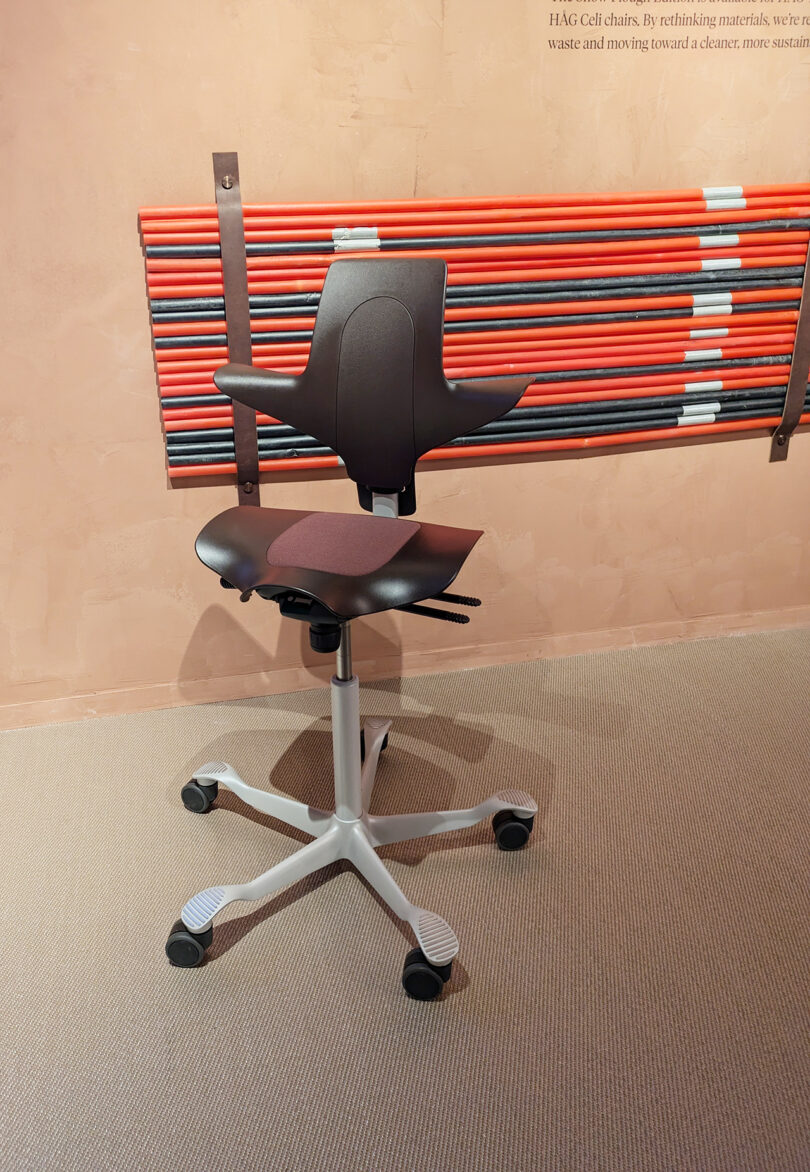
5. The Closed-Loop Chair
Haworth’s Fern chair remains a titan in the industry, but its 2025 iteration is a marvel of material science. By utilizing post-production and recycled plastics in its core components, Haworth is demonstrating how high-performance ergonomics can coexist with a closed-loop philosophy. The chair is designed for disassembly, ensuring that at the end of its life, its parts return to the manufacturing cycle rather than the landfill.
6. PET to Acoustic Art
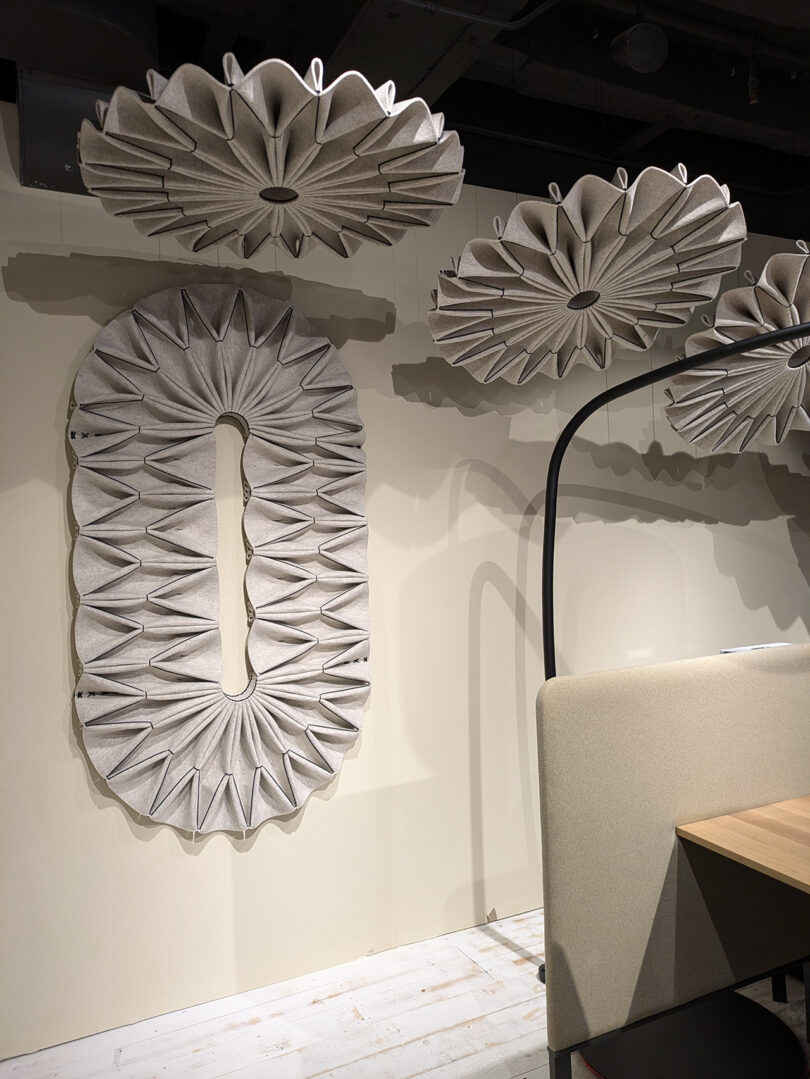
Perhaps the most impressive statistic from the show involves Impact Acoustic. They are currently transforming thousands of PET bottles daily into high-performance acoustic materials. Their process uses a patented UV-light purification system to ensure the resulting felt is both hygienic and structurally sound. These aren't just gray panels; they are vibrant, 3D-sculpted installations that manage sound while serving as the room's visual centerpiece.
7. Additive Manufacturing (3D Printing)
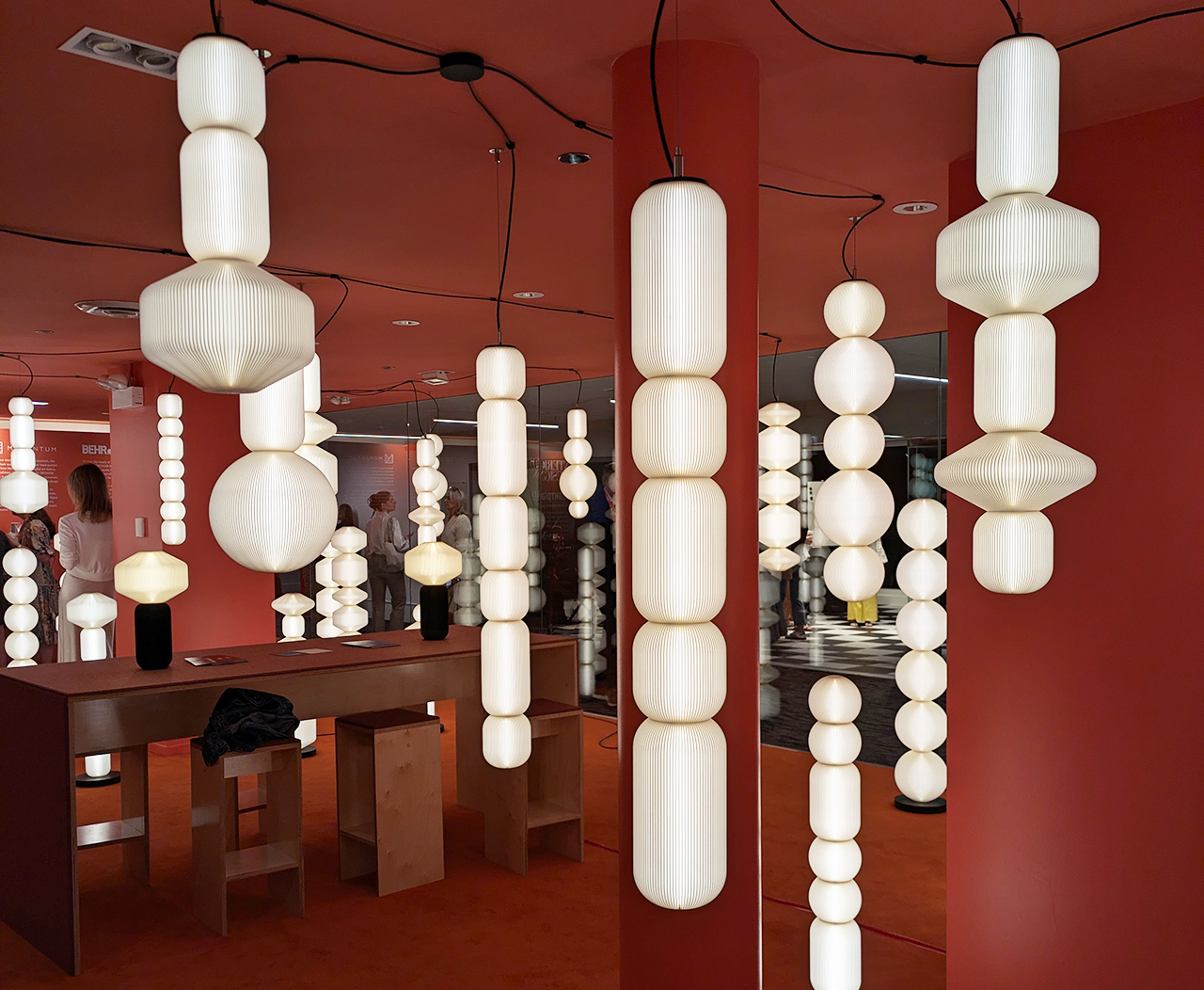
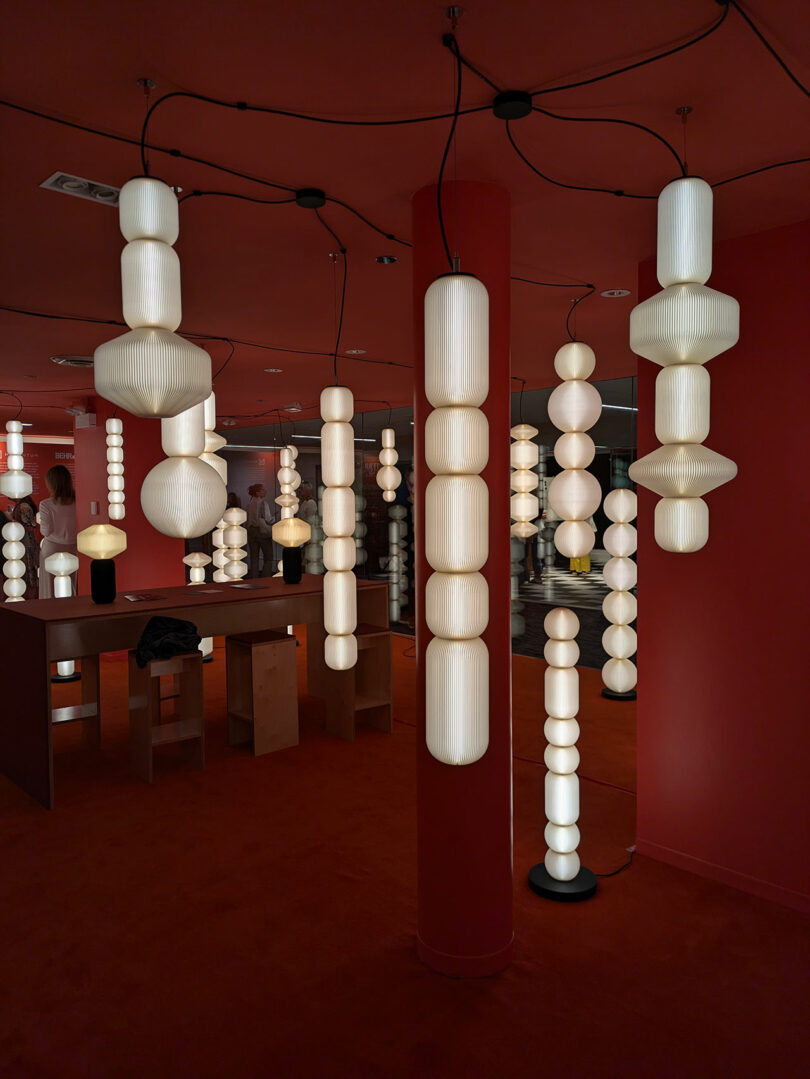
The LightPlay collection by Ryan Smith was a standout example of additive manufacturing in office design. By 3D-printing lighting shades, manufacturers can eliminate the waste inherent in traditional molding and allow for infinite customization. This "print-on-demand" model reduces the carbon footprint of shipping and inventory significantly.
8. Forest Regeneration Furniture
Brands like Mantra Inspired Furniture are taking a stand for American hardwoods. Their mission centers on managed sourcing and forest regeneration. By using solid wood rather than veneers or composites, they create "heirloom" office furniture designed to last 50 years rather than five, fundamentally challenging the "fast furniture" culture.
Theme 3: Neuro-Inclusive & Sensory-Rich Environments
The most "Ivy Chen" trend of the year—and the one closest to my heart—is the focus on neuroaesthetics. Designers are finally acknowledging that our environments directly impact our nervous systems.
9. Neuroaesthetic Lighting
The show featured several immersive installations designed to soothe the amygdala. These lighting systems don't just dim; they shift color temperature and intensity based on circadian rhythms and the specific sensory needs of the user. In high-stress environments, saturated hues of soft amber or deep forest green are used to define zones of calm without the need for physical barriers.
10. Acoustic Pleating
BuzziSpace’s BuzziPleat series continues to evolve, combining ancient folding and smocking techniques with high-tech acoustic felt. These large-scale hanging elements trap sound waves in their folds, softening the harsh echoes of modern glass-and-steel architecture while adding a much-needed layer of soft, textile warmth.
11. The ‘Resimercial’ Palette
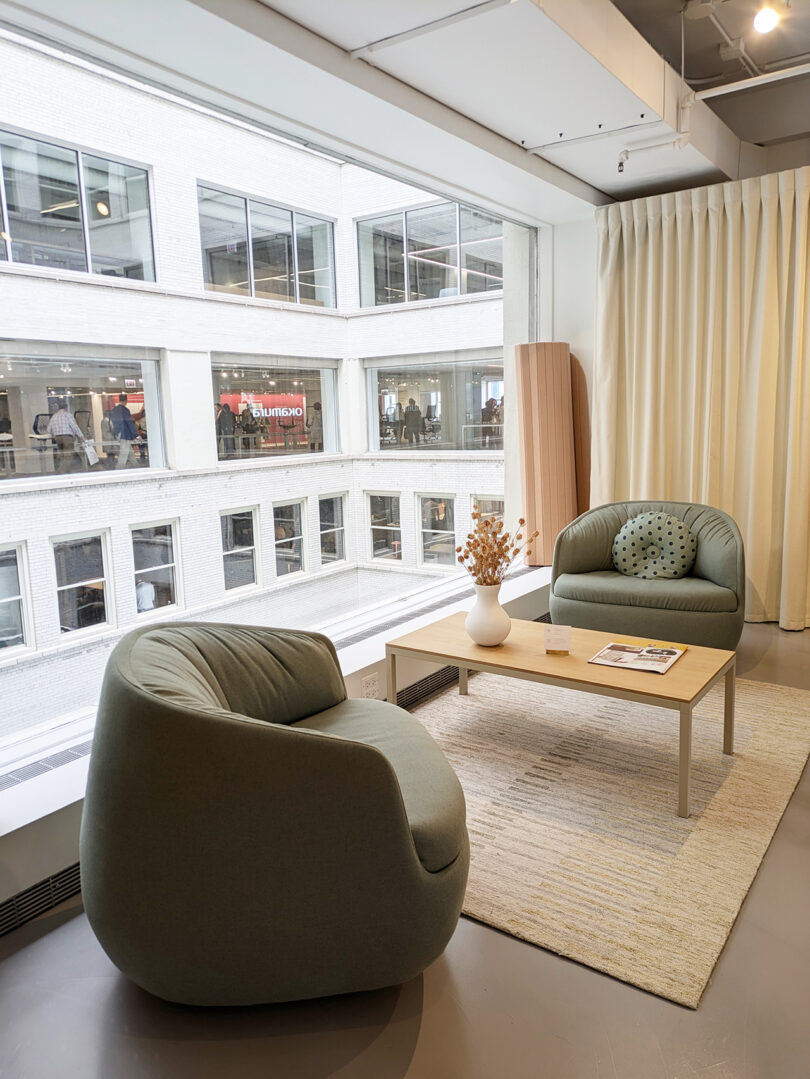
The color stories of 2025 are a far cry from the stark grays of the last decade. We are seeing a move toward a "Resimercial" (residential + commercial) palette. Think soft sage, terracotta, dusty rose, and plenty of natural, light-toned wood. This aesthetic choice is rooted in psychology—curves over corners and soft colors over high contrast help to reduce cortisol levels and increase comfort.
12. Sensory Diversity Zones
Recognizing that no two employees have the same sensory threshold, the 2025 workspace incorporates "Sensory Diversity Zones." This involves using a variety of tactile finishes—from nubby bouclés and felted wools to smooth stone and warm timber. It allows neurodiverse staff to choose an environment that best suits their sensory processing needs at any given moment.
Expert Guide Note: When choosing furniture for a "sensory zone," look for "contract-grade" fabrics that mimic residential aesthetics. You want the softness of a home throw pillow but the durability to withstand 100,000 double rubs in a busy office lobby.
The Technical Backbone: Invisible Tech
While the aesthetics have softened, the technology has become more powerful—and more invisible. The goal for 2025 is to reduce "visual clutter." We saw this with Clarus’ Lynk digital glass boards, which look like high-end decor but function as collaborative digital hubs.
AI is also moving into the walls and ceilings. New environmental controls use AI to monitor occupancy and adjust lighting and temperature in real-time. This not only saves energy but ensures that the physical environment is always optimized for the people actually using the space, rather than following a static schedule.
Conclusion: Designing for Resilience
As I left The Mart, one thing was clear: the workspace of 2025 is no longer just a place to sit; it is a tool for well-being. The shift toward circularity and neuroaesthetics isn't just a trend—it's a necessary evolution in how we treat the planet and the people who inhabit it.
We are moving toward a standard of durability and longevity. When brands like Ghent offer 50-year warranties on products like their Flyte collection, they aren't just making a sales pitch; they are defining a new era of "Resilient Design." The future of work is soft, sustainable, and, most importantly, human.
FAQ
Q: What is "neuroaesthetics" in office design? A: Neuroaesthetics is the study of how environmental elements—like light, color, and texture—impact the brain and nervous system. In 2025, this translates to using soft lighting, natural materials, and curved shapes to reduce stress and improve cognitive function in the workplace.
Q: Is "circular design" the same as recycling? A: Not exactly. While recycling is part of it, circular design is a holistic approach where products are designed from the ground up to be disassembled and reused. The goal is to eliminate waste entirely by ensuring every component can return to the manufacturing loop.
Q: How can I apply these "resimercial" trends to a small home office? A: You can apply these principles by swapping out stark metal desks for light-toned wood, incorporating acoustic felt panels to manage sound during calls, and choosing a color palette of soft pastels or earth tones to create a calming, focused environment.