Quick Facts
- Space Benchmark: Some university policies, such as those discussed by the Williams Record, state that dormitory rooms reaching a minimum of 230 square feet are designated as large enough to accommodate three students in high-occupancy scenarios.
- Zoning Secret: Use color-coded concrete and light oak to define rooms without physical walls, creating psychological boundaries that make the space feel larger.
- Storage Multiplier: Floor-to-ceiling custom cabinetry eliminates the need for bulky dressers, reclaiming essential floor area for movement.
- Vertical Win: A loft bed configuration can reclaim up to 40 square feet of floor space, providing enough room for a shared double desk or a lounge area.
- Legal Context: While 300 square feet is often the standard legal minimum in cities like NYC, modern micro-apartments are frequently permitted in the 150-250 range.
- Key Materials: Light oak, dark-stained wood, and green concrete provide visual depth and sophistication without cluttering the eye.
Living in a 200 square feet apartment with a roommate requires clever multi-functional zoning and space-saving furniture. Effective 200 sq ft studio apartment layout ideas prioritize custom built-ins like lofted sleeping areas and integrated desks to allow for individual privacy while maximizing shared floor space. Utilizing curved architectural lines and light oak partitions can soften the footprint and create a sense of fluid movement within the compact layout.
The Architecture of Shared Space: Designing for Two
When you shift your perspective from decorating a room to designing an architectural volume, the limitations of a 200 square feet apartment begin to fade. In professional design circles, we often look toward the Parisian studio renovation projects for inspiration, particularly those that treat furniture as architecture. Instead of buying a sofa, a bed, and a desk—which would quickly eat up every inch of floor space—we look at creating integrated volumes.
The concept of shared accommodation design for students relies on the idea that every object must serve at least two purposes. In a project like the Rue de la Bûcherie by Studio Pauline Borgia, the architecture itself becomes the storage. By using curved architectural lines, the design avoids sharp corners that visually and physically interrupt the flow of a micro apartment layout for two students. These curves allow two people to move past each other in a tight corridor without the "knee-knocking" frustration that usually accompanies living in 200 sq ft apartment with roommate life.
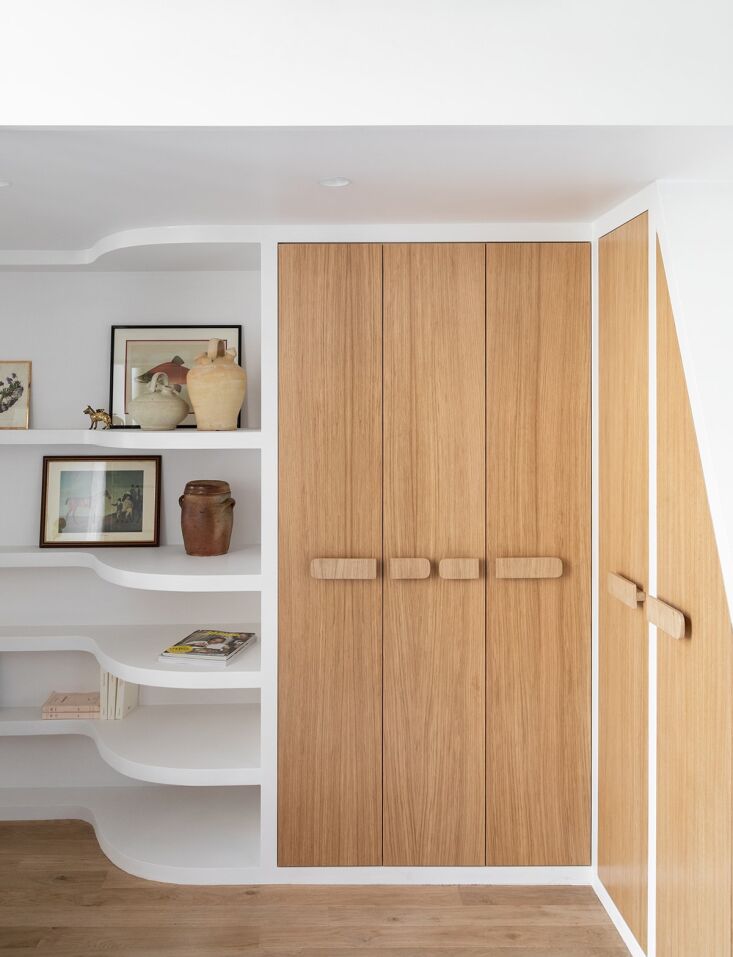
When designing for two, privacy is the greatest luxury. This is achieved through clever material transitions rather than heavy doors. For example, a custom cabinetry unit can act as both a wardrobe for one student and a privacy screen for the other student’s study nook. By integrating these pieces into the walls, you maintain a cohesive aesthetic that doesn't feel like a cluttered dorm room.
Zoned for Success: Defining 200 Sq Ft Without Walls
One of the biggest mistakes I see in 200 sq ft studio apartment layout ideas is the attempt to use room dividers or curtains to separate spaces. In such a small footprint, physical barriers often create dark, claustrophobic pockets. Instead, we advocate for multi-functional zoning through material identity.
Think of your floor as a map. By utilizing different textures—such as green-colored concrete for the high-traffic kitchen area and warm oak planks for the sleeping zone—you create a psychological doorway. Your brain registers that you have moved from the "kitchen" to the "living room," even though there is no wall between them. This approach is superior to studio floor plans 300 sq ft or larger that rely on traditional layouts because it keeps the sightlines open, allowing the eye to travel the full length of the studio.
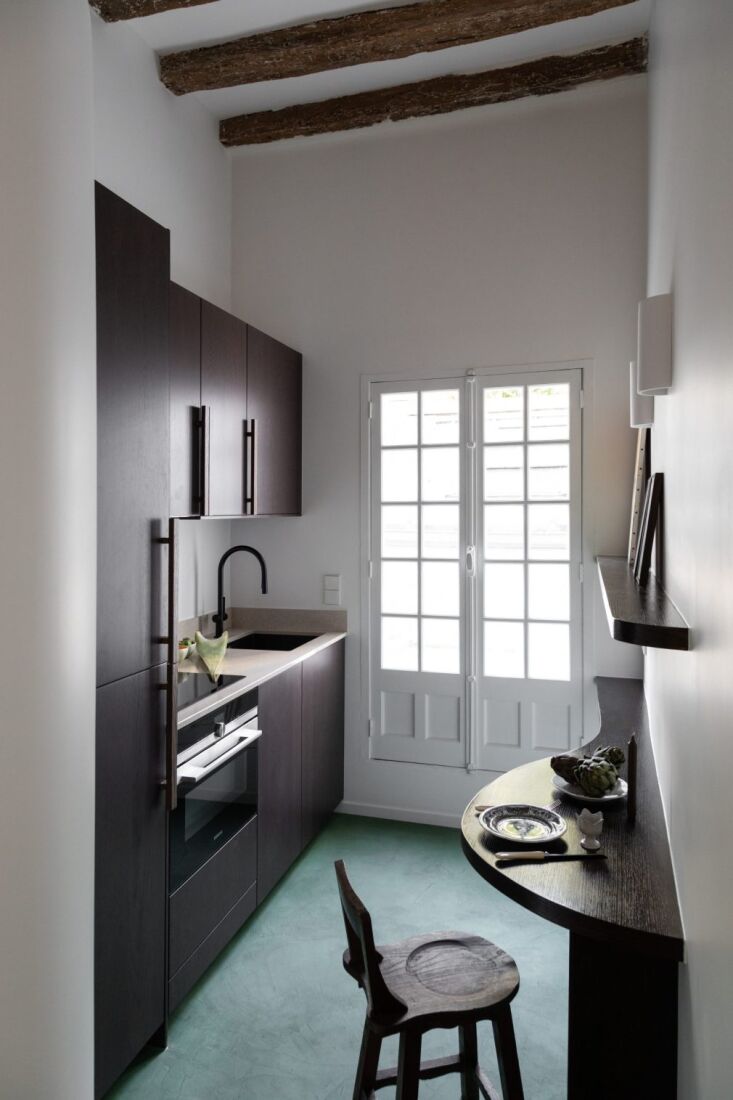
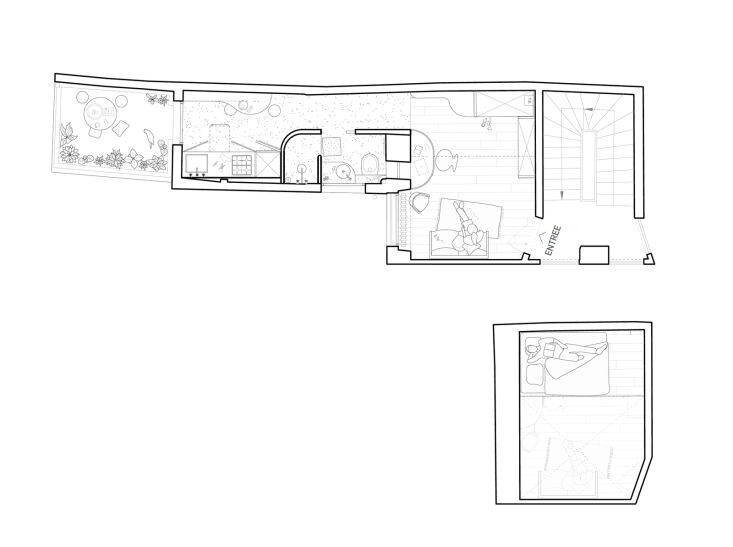
For a 200 sq ft apartment zoning with furniture, the L-shaped layout is the gold standard. By tucking the kitchen and bathroom into one corner (the "wet zone"), you free up the largest possible continuous rectangular area for living and sleeping. This maximizes corner utility, which is often wasted in standard builds. Using light oak partitions that feature horizontal slats can provide a sense of enclosure for a bed without blocking light or air circulation.
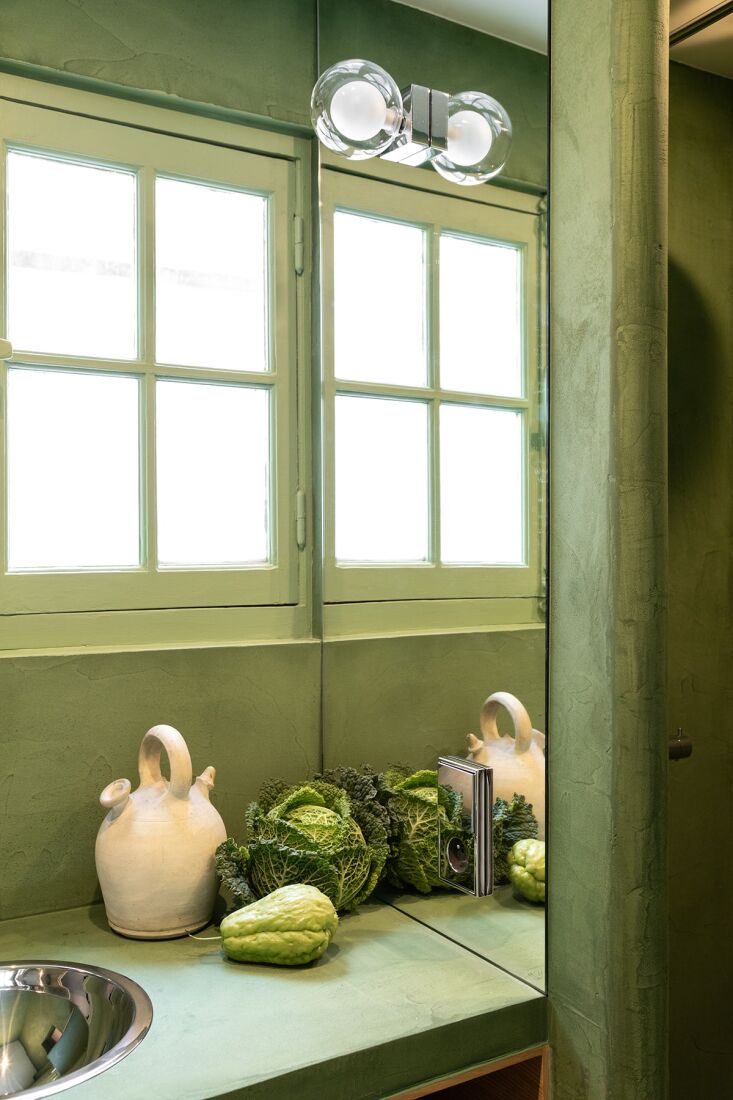
Color choice also plays a role in this zoning. Using a bold, saturated color like deep forest green or terracotta for the bathroom interior helps it feel like a distinct "identity" compared to the neutral, airy tones of the main living space. This helps break the monotony and makes the apartment feel like a collection of rooms rather than a single box.
The Vertical Secret: Lofts and High-Density Storage
If you aren't looking up, you're missing half of your apartment's potential. Verticality is the secret weapon of micro-living solutions. In a 200 sq ft bedroom layout, a standard queen bed takes up nearly 35 square feet—that is 17% of your entire floor! By switching to a 200 sq ft studio with loft bed layout, you reclaim that territory.
A custom-built loft bed should be seen as a micro-volume. Beneath the sleeping platform, you can install a full-width shared desk or a compact shelving systems arrangement. This "drop zone" becomes the engine room of the apartment, where students can study together or separately. To prevent the loft from feeling heavy, we often use floor-to-ceiling glass or thin metal rods as safety barriers, which maintain the visual volume of the room.
High-density storage is equally critical. In a space-saving built-ins configuration, every riser in a set of stairs leading to a loft should be a drawer. Every inch above the window frame should be a shelf. This "architectural storage" approach ensures that personal belongings—textbooks, seasonal clothing, and kitchen gadgets—have a dedicated home that isn't on the floor.
When you use the same material, like light oak, for the stairs, the desk, and the cupboards, the storage becomes invisible. It blends into the walls, preventing the visual clutter that makes small spaces feel stressful.
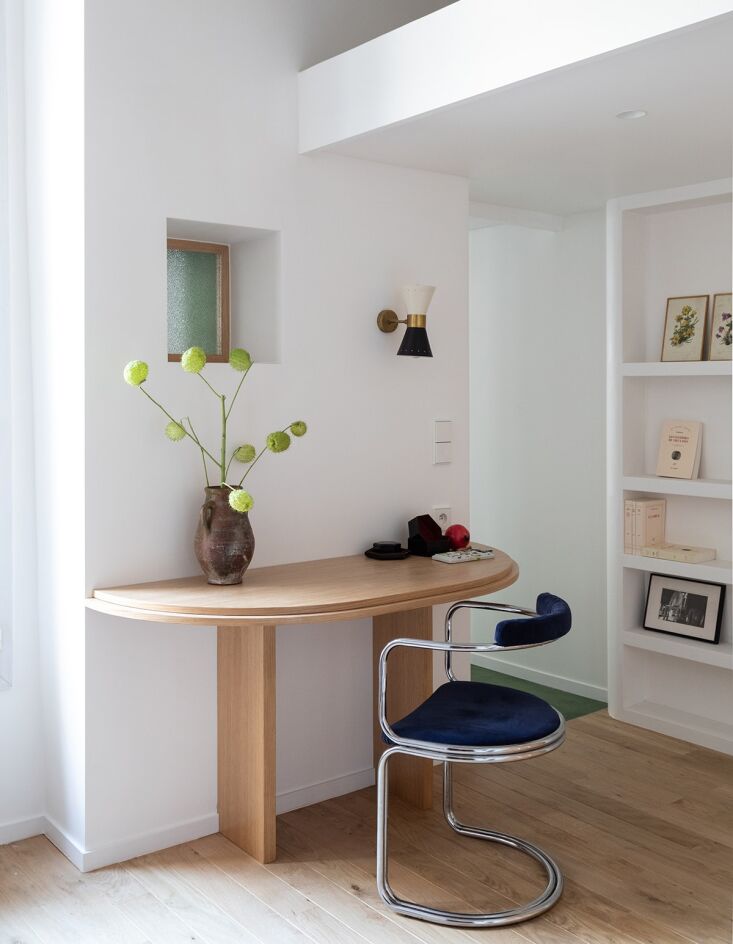
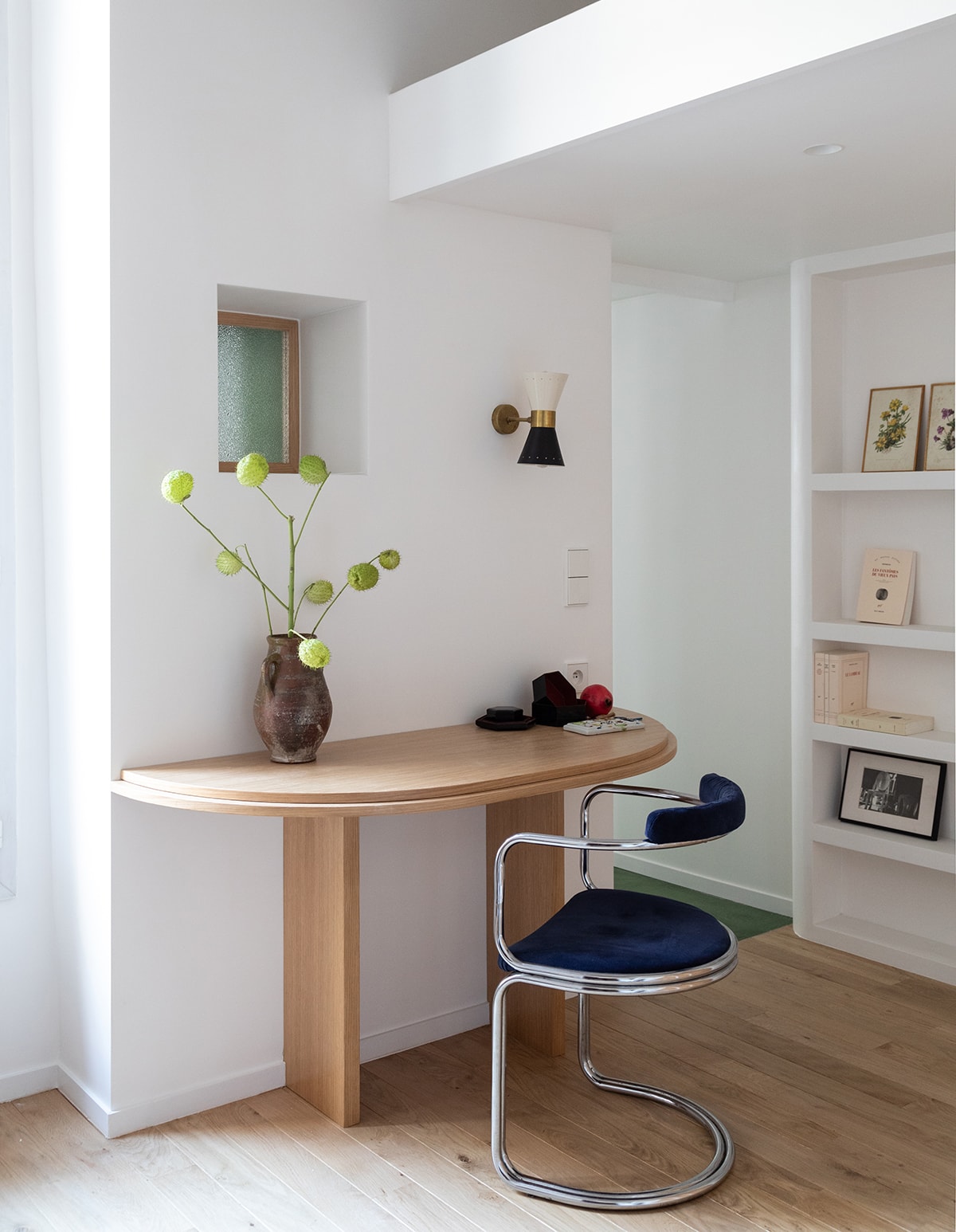
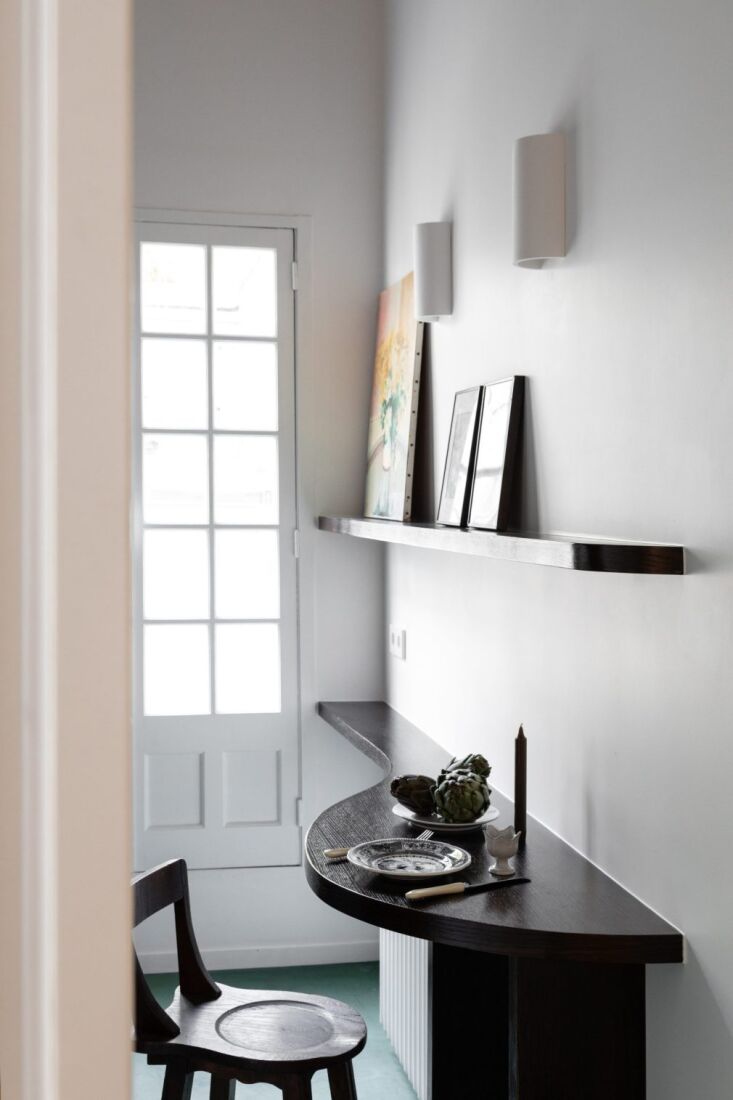
Even for minor tasks, like having a coffee or a quick snack, wall-mounted furniture is a game-changer. A small, half-circle oak table that folds down or sits flush against a curved wall provides a dedicated work surface without requiring legs that take up floor space.
Renter-Friendly Micro-Living Hacks
Not every student has the budget or permission for a full Parisian studio renovation. However, the principles of built-in storage ideas for 200 sq ft studio living can still be applied through clever, non-permanent hacks.
The primary goal for renters is to keep the floor clear. Any furniture with "legs" should be swapped for items that can be wall-mounted or have a very small footprint. Here are my top renter-friendly micro-living solutions:
- Floating Shelves: Use these instead of a traditional bookcase. Mount them all the way to the ceiling to draw the eye upward.
- Under-Bed Storage: If you can't have a loft, use 22-gallon vacuum-sealed bags to store out-of-season clothes under a platform bed.
- The One-In, One-Out Rule: In a 200 square feet apartment, you cannot afford to accumulate "stuff." For every new book or piece of clothing brought in, one must be donated.
- Multi-Functional Lighting: Use wall-mounted swing-arm lamps instead of floor lamps to save space on side tables and the floor.
FAQ
How big is a 200 square feet studio apartment?
Visualizing 200 square feet is easiest if you imagine a standard one-car garage, which is typically around 240 square feet. A 200-square-foot studio is slightly smaller than that, roughly the size of two large parking spaces side-by-side. It usually measures about 10 feet by 20 feet or 14 feet by 14 feet.
Is 200 sq ft enough for one person?
Yes, 200 square feet is quite manageable for one person, provided the layout is optimized. It requires a minimalist lifestyle and a commitment to organization. For two people, it is a significant challenge that necessitates vertical living, such as loft beds, and highly disciplined shared living habits.
What is the best layout for a studio apartment?
The best layout for a studio is often an L-shaped configuration where the kitchen and bathroom are tucked into the "short" side of the L, leaving a large, open rectangular space for living and sleeping. This prevents the "hallway effect" where furniture is lined up against one long wall, making the space feel narrow and cramped.
What does a 200 sq ft room look like?
A 200 sq ft room generally feels like a large master bedroom. Once you add a kitchen unit and a bathroom, the remaining "living" space is modest. It often looks like a hotel suite where the bed is the primary piece of furniture, unless you use a lofted bed or a Murphy bed to hide the sleeping quarters during the day.
While the idea of two students sharing a 200 square feet apartment sounds like a recipe for disaster, it is actually an incredible design opportunity. By embracing the "furniture as architecture" mindset and utilizing verticality, you can create a home that is not just functional, but truly beautiful. Whether you are building custom oak volumes or just installing high-level shelving, the secret to micro-living is seeing the potential in every cubic inch.