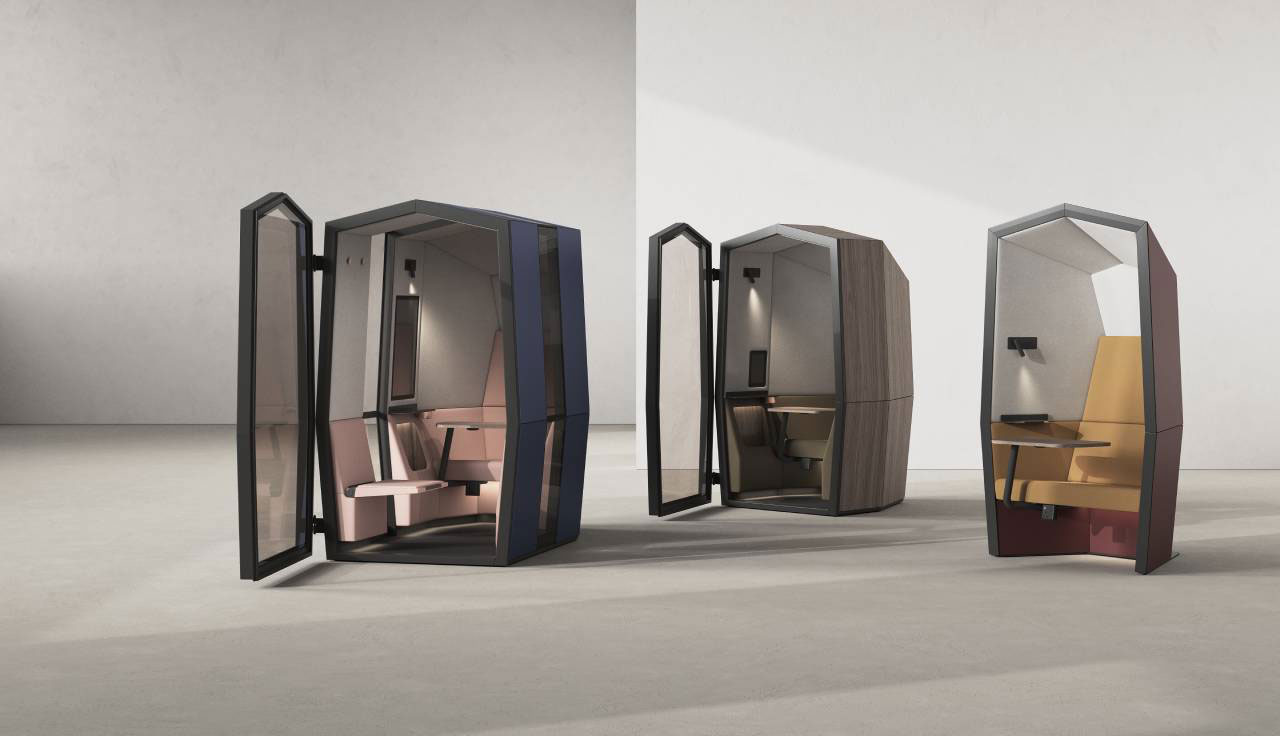
For anyone who has ever tried to find their flow in a bustling open-plan office, the "privacy crisis" is more than just a buzzword—it is a daily hurdle. Research consistently shows that once interrupted, it takes an average of 20 minutes for a professional to regain deep focus. In modern workspaces, where ambient noise and visual distractions are constant, this leads to a documented 15% drop in overall efficiency. As an editor focusing on interior styling, I’ve watched the office pod market evolve from clunky glass boxes to sophisticated, design-forward sanctuaries that prioritize both acoustic science and aesthetic harmony.
In the 2026 landscape, the most effective privacy solutions are those that blend seamlessly into a room’s architecture while providing high-end digital environments. If you are looking for the gold standard this year, the top 3 new entries are the Kabin 1 (for solo focus), the Kabin 2 (for duo collaboration), and the Kubby (for quick-reset alcoves). These units lead the market by offering advanced 30dB soundproofing, IoT-integrated climate controls, and modular mobility kits that allow for easy relocation as your team scales.

The 2026 Market Shift: Smart Pods vs. Basic Booths
The days of choosing between a "budget box" and an "overpriced luxury booth" are behind us. In 2026, we have reached what I call a "price-performance equilibrium." High-quality soundproof pods now typically fall within the $5,000 to $9,000 range, offering premium acoustic materials that were previously reserved for $11,000+ custom builds.
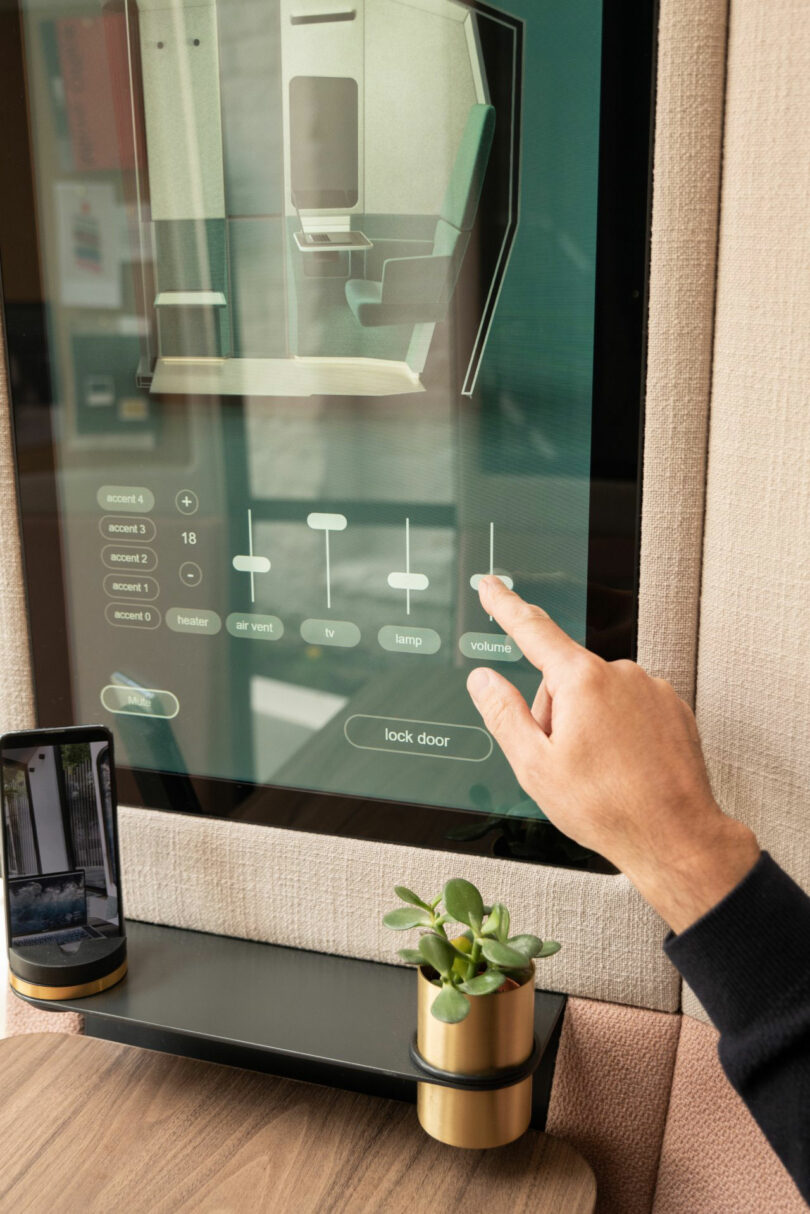
Furthermore, we are seeing a massive shift toward intelligence. Over 80% of leading manufacturers, including pioneers like Kabin and Breeze, now include integrated IoT or digital control interfaces as a standard feature. These aren't just for show; they allow users to personalize lighting temperature (vital for video calls), airflow intensity, and even "occupied" status indicators that sync with office calendars.
Spotlight: The Three Newest Contenders from Kabin
When I evaluate furniture for a modern living or working space, I look for the "Human Factor"—how the piece makes the user feel, not just what it does. The new 2026 lineup from Kabin masters this by utilizing sensory-driven design.
1. Kabin 1: The Solo Focus Sanctuary
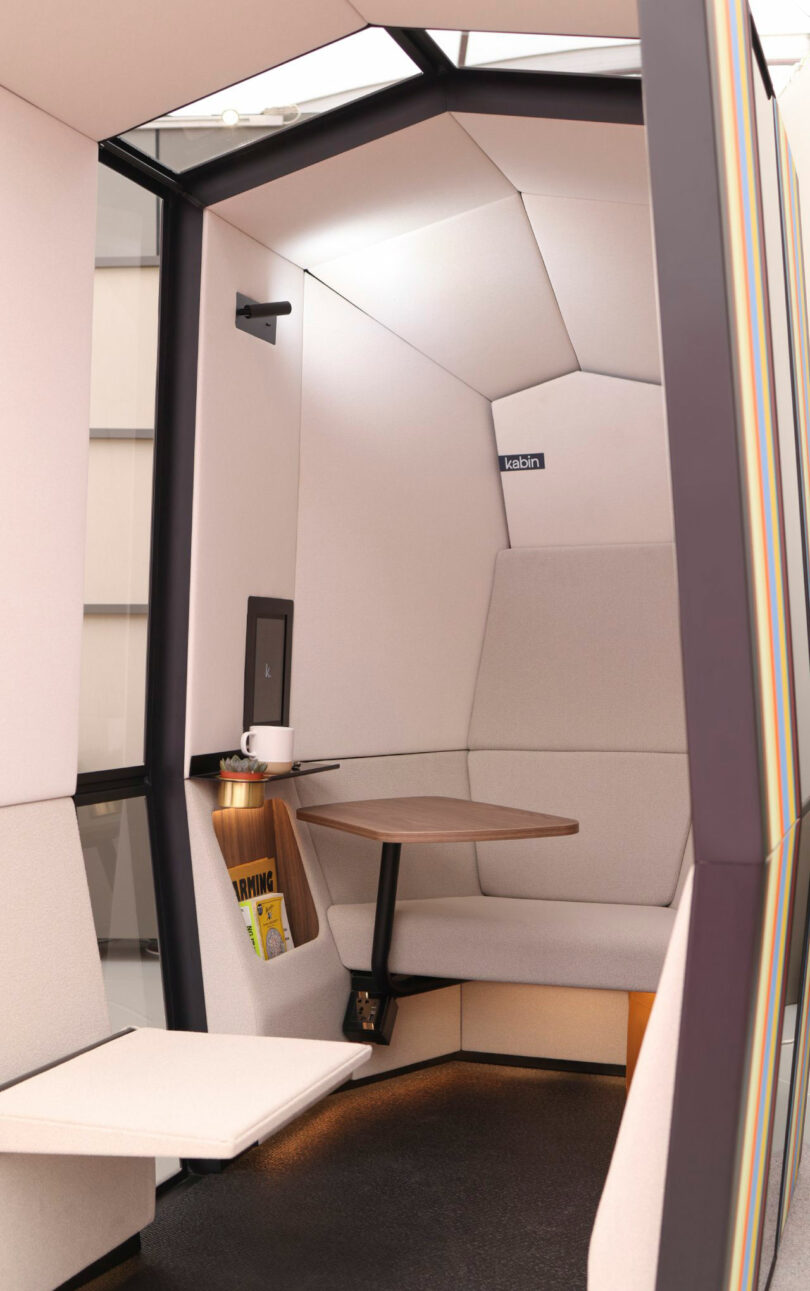
The Kabin 1 is a masterclass in individual ergonomics. Drawing inspiration from high-end airline first-class suites, it provides an enclosed environment that feels expansive rather than claustrophobic. The interior features an articulating work surface that adapts to your posture, whether you’re deep-diving into a spreadsheet or leaning back for a creative brainstorming session.
From a design perspective, the customization options are where this pod shines. You can specify finishes ranging from a sleek Onyx for a corporate executive feel to a warm Cashmere felt that softens the visual landscape of a tech startup.
- Best For: Deep work, private video calls, and focused coding sessions.
- Key Tech: The "Kabin Control" digital interface managing 4-way ventilation.
- Acoustics: Multi-layered felt and dual-pane tempered glass for a near-silent interior.
2. Kabin 2: The Collaboration Cocoon
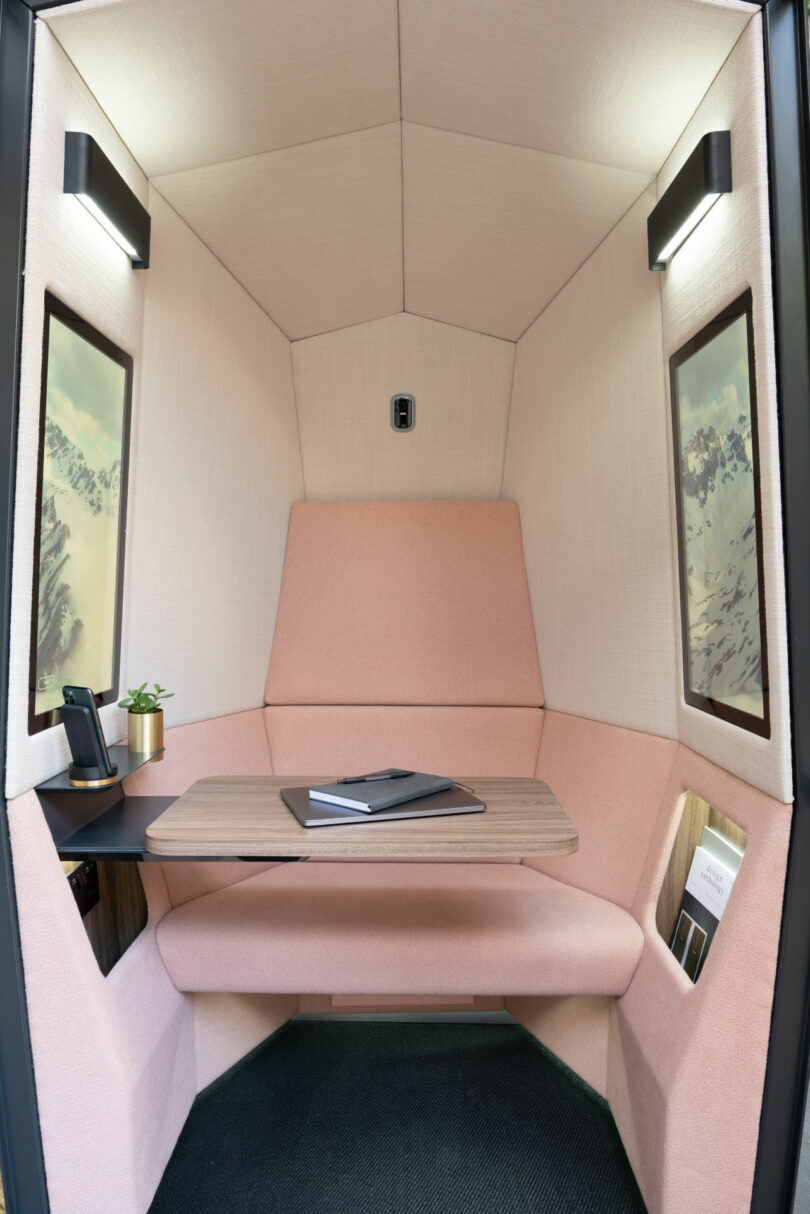
For 2026, the Kabin 2 addresses the critical need for "confidential collaboration." It’s designed for two people to sit across from one another in a layout that fosters eye contact and trust—essential for HR meetings or high-stakes 1:1s. Unlike larger conference rooms that feel cavernous for two people, the Kabin 2 provides an intimate "cocoon" that keeps sensitive conversations within the pod.
The interior is lined with warm acoustic panels that not only dampen sound but also provide a tactile, residential feel that reduces the "clinical" vibe often found in modern offices.
- Best For: 1:1 mentorship, private interviews, and confidential strategy sessions.
- Design Note: Features a built-in media bracket for shared screen viewing during meetings.
3. Kubby: The Quick-Reset Alcove
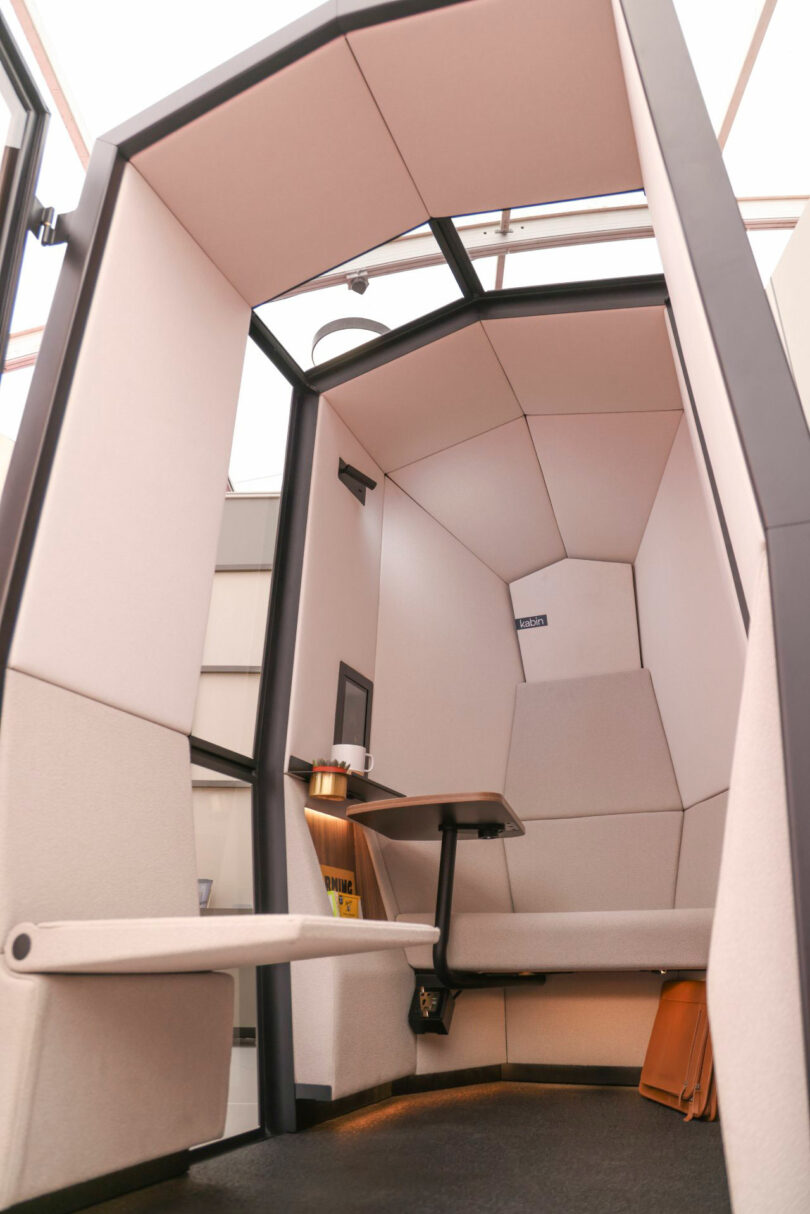
The Kubby represents a new category: the "Soft Reset" station. Not every task requires a fully sealed door. The Kubby features a slim footprint and an open-front (or semi-shielded) design. It’s perfect for the "transition moments" of the day—checking a quick email between meetings or taking five minutes to breathe in a busy lobby. It features integrated power and plush seating, providing a psychological boundary of privacy without the structural weight of a full pod.
Technical Performance Comparison
Choosing the right pod requires looking past the beautiful upholstery to the technical specifications. The current industry standard for high-end performance is a 30dB sound reduction. To put that in perspective, it can turn the roar of a busy office into a faint, undetectable hum.
The following table compares our top 2026 picks against the broader market standards.
| Feature | Kabin 1 (Solo) | Kabin 2 (Duo) | Kubby (Alcove) | Market Standard (Budget) |
|---|---|---|---|---|
| Est. Price | $5,900 - $7,500 | $8,500 - $9,500 | $4,200 - $5,000 | $4,995 (Thinktanks) |
| Acoustics | 30dB+ Reduction | 32dB Reduction | Visual/Partial Sound | 25dB Reduction |
| IoT Control | Integrated Tablet | Integrated Tablet | Basic Power | Manual Switches |
| Mobility | Mobility Kit Ready | Modular Base | Lightweight | Fixed / No wheels |
| Best Use | Deep Work | 1:1 Meetings | Soft Resets | Occasional Calls |
Modern pods are no longer stationary architectural elements. One of the most significant advancements in the 2026 models is the "Mobility Kit." These modular components allow a single facility manager to relocate a unit across the floor in minutes without needing a construction crew.
Buyer’s Guide: Choosing the Right Pod for Your Office Layout
When I consult with clients on office makeovers, I always emphasize that the "best" pod is the one that solves your specific spatial friction. Before you invest, walk through this checklist to ensure the pod enhances your floor plan rather than cluttering it.
Assessing Capacity and Purpose
Don't just buy solo pods because they are cheaper. Analyze how your team actually works:
- The 60/40 Rule: Ideally, 60% of your pods should be solo (Kabin 1) for focus, while 40% should be duo or team-sized (Kabin 2) for collaborative privacy.
- The 'Lobby' Strategy: Use open-front units like the Kubby in high-traffic transition zones (lobbies, hallways) where people naturally pause.
Material Selection and Aesthetics
Your pod should feel like a piece of high-end furniture, not a temporary fix.
- Acoustic Felt: Look for high-density recycled PET felt. It’s sustainable, easy to clean, and offers the best mid-to-high frequency dampening.
- Dual-Glazed Glass: If privacy is the goal, ensure the glass is dual-glazed. It provides better sound insulation than single-pane and feels much more substantial.
- The Palette: Choose colors that complement your existing branding but lean toward "biophilic" or neutral tones (greens, greys, beiges) to promote a sense of calm inside the pod.
Relocation and Scalability
Ask yourself: "Where will this pod be in 24 months?"
- Modular vs. Structural: Always opt for modular units. If you move offices, you want to take your $7,000 investment with you.
- Power Access: Check if the pod requires a specialized electrical hookup. The best 2026 models use a standard "plug-and-play" 110v/220v cord that can be routed through the floor or ceiling.
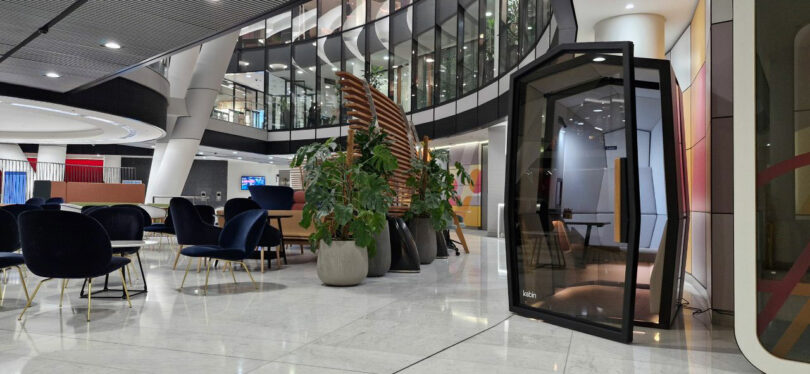
Ivy's Design Tip: "When placing pods, don't shove them into dark corners. Place them near natural light sources. Even though the pod has its own lighting, being near a window prevents that 'elevator' feeling and makes long sessions much more comfortable."
Frequently Asked Questions (FAQ)
How much do professional office pods cost in 2026? High-quality, tech-integrated office pods typically range from $5,000 for compact starter models (like Thinktanks) to over $11,000 for premium, large-format units like the Framery One. The Kabin series hits the "sweet spot" of $5,900 to $9,000, offering premium tech at a competitive mid-range price.
Can office pods be relocated easily? Yes. Modern privacy pods like the Kabin series now feature 'Mobility Kits' and modular components. Unlike traditional construction, these units can be disassembled or wheeled to new locations without structural changes or permits.
Is the air quality inside a closed pod safe? Absolutely. Any reputable 2026 pod manufacturer includes high-cycle ventilation systems. For example, Kabin units replace the air inside the pod every 60 to 90 seconds, ensuring it stays fresh even during hour-long meetings.
Conclusion & Consultation Strategy
The modern office is no longer just a place to sit; it is a tool for productivity. By integrating solutions like the Kabin 1, Kabin 2, or Kubby, you aren't just buying furniture—you are buying back the focus and mental well-being of your team. The shift toward $5,000–$9,000 smart pods means that high-end privacy is more accessible than ever before.
If you’re planning a workspace refresh, I recommend starting with a "Privacy Audit." Track how often your conference rooms are occupied by just one or two people. If that number is high, it’s a clear sign that your office is starving for pods.