Quick Facts
- Critical Thresholds: Vegetable plant growth slows significantly at 90°F (32°C). Ambient temperatures exceeding 104°F (40°C) place most garden crops under critical physiological heat stress.
- Thermal Mirrors: Unlike traditional turfgrass which reflects heat onto nearby crops, native plant buffers absorb and deflect heat to lower localized temperatures.
- The Survival Mechanism: Leaf rolling in tomatoes and corn is a natural defense to reduce leaf surface area and minimize moisture loss—not necessarily a sign of permanent damage.
- Post-Heat Protocol: Never fertilize for at least 7 days after a heatwave. Feeding plants in "survival mode" triggers growth that the plant cannot physically support, leading to systemic collapse.
We have entered a new era of home horticulture. In my years of editing sustainable living guides, I’ve seen the "traditional" gardening calendar shift from a predictable cycle of seasons into a series of climate management challenges. By the time we reach the mid-2020s, the 100°F (38°C) summer afternoon will no longer be an anomaly; it will be a standard operational reality for gardeners from the Pacific Northwest to the Atlantic coast.
When you step out onto your porch and see your prize-winning heirloom tomatoes slumped over and your lettuce "bolting" toward the sky, the impulse is to panic-water or hack away the wilted bits. Don’t. Gardening in 2026 requires a "climate-forward" mindset—one that prioritizes plant physiology over aesthetics. To save your garden from extreme heat, you must understand that your plants aren't just thirsty; they are in a state of biological lockdown.
Step 1: Immediate Rescue for High-Vulnerability Plants
The most immediate casualties of a heatwave are usually the ones we love most: the container plants on the deck and the delicate window boxes. Because these plants have limited soil volume, their "thermal mass" is low, meaning the soil temperature can skyrocket to 110°F+ within hours, effectively cooking the root system.
The Immersion Method for Containers If you find a potted plant that is bone-dry and wilting despite your watering efforts, the soil has likely become hydrophobic—it is repelling water rather than absorbing it.
Pro Tip: To revive container plants after heat stress, slowly immerse the pots in a bucket of cold water until the soil is fully saturated and bubbles stop rising to the surface. Once the root ball is rehydrated, relocate the pot to a deeply shaded area until the plant shows signs of turgidity (stiffness) again.
Deploying Temporary Shade For plants in the ground that look like they are reaching their breaking point, immediate UV protection is a must. You don't need professional gear for an emergency. Old bedsheets, umbrellas, or even cardboard boxes propped up on the southwest side of the plant can drop the localized temperature by 10-15 degrees.
Toolbox Recommendation:
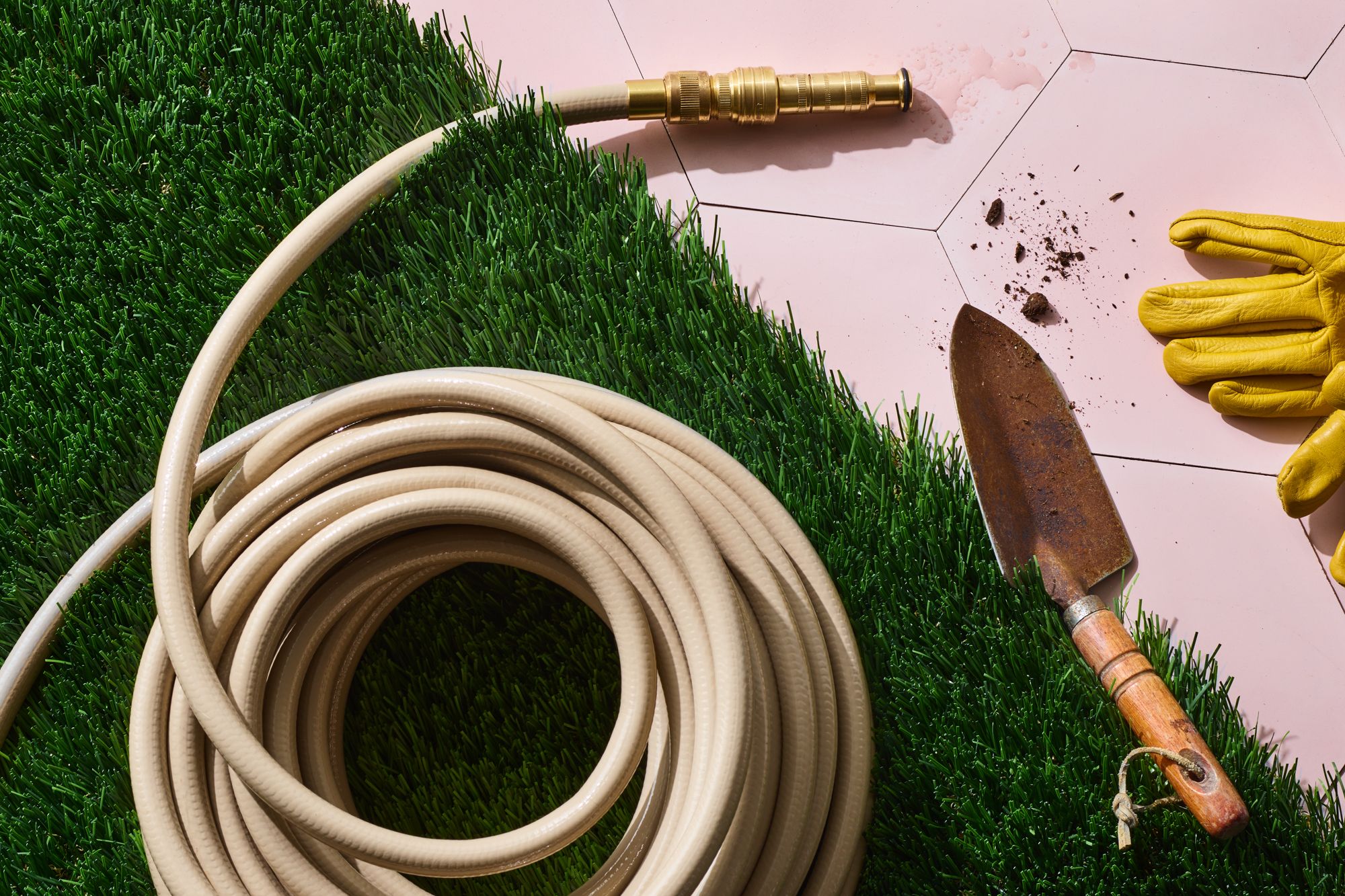
- Flexzilla Garden Hose: When moving plants or reaching distant shade spots, you need a hose that won't kink or fight you in the heat. The Flexzilla stays flexible even in high temps, making emergency watering less of a chore.
- Alion Home Sun Shade: For a more permanent emergency solution, keep a roll of 40% UV-blocking fabric ready to drape over temporary stakes.
Step 2: Strategic Deep Watering and Soil Protection
A common mistake during a heatwave is "frequent, shallow watering." This encourages roots to stay near the surface, where they are most vulnerable to the sun’s reach. Instead, we want to focus on deep saturation that reaches the core of the root zone.
Decoding Plant Language: Wilting vs. Dying Before you drown your garden, look closely at the leaves. In crops like tomatoes and corn, you will often see leaves curling inward or rolling into tight "straws."
Critical Guideline: Avoid pruning wilted or rolled leaves on crops like tomatoes and corn during a heatwave. These are natural protective mechanisms that reduce leaf surface area to minimize moisture loss. If the plant perks up once the sun goes down, it is successfully managing its stress. Pruning these leaves removes the plant’s primary defense and creates open wounds that invite disease.
The Power of Thermal Mass To keep that moisture in the ground, you need a barrier. Applying 2 to 4 inches of organic mulch—think straw, shredded bark, or even dried grass clippings—can reduce soil evaporation by up to 70%. It acts as an insulator, keeping the roots cool while the foliage battles the sun.
Toolbox Recommendation:
- Dramm One-Touch Nozzle: Precise water delivery is key. This nozzle allows you to dial in a gentle "soaker" flow that saturates the base of the plant without wasting water on the leaves (which can lead to fungal issues).
- Hooyman Digging Shovel: When applying thick layers of mulch or digging "watering wells" around high-value trees, this shovel’s ergonomic design prevents fatigue in the grueling heat.
Step 3: Salvaging the Harvest (Sunscald & Bolting)
Extreme heat doesn't just hurt the plant; it ruins the fruit. "Sunscald" looks like a bleached, papery patch on the side of a tomato or pepper. It's essentially a third-degree burn.
- Sunscald Rescue: If you see sunscald, harvest the fruit immediately. The damaged area is a gateway for bacteria and fruit flies. While the damaged part isn't great to eat, the rest of the fruit is often perfectly fine if used quickly.
- The "Bolting" Crisis: Leafy greens like lettuce, cilantro, and spinach react to heat by "bolting"—shooting up a flower stalk and turning bitter.
- The Salvage Strategy: Once a plant bolts, the flavor profile changes chemically. You can't reverse it. Harvest the leaves and use a strong acidic dressing (vinegar or lemon) to mask the bitterness, or simply compost them and prepare for a fall planting.
Toolbox Recommendation:
- Felco 2 Pruning Shears: When harvesting sunscalded fruit or clearing out bolted greens, use these for clean, surgical cuts. Tearing at the stems of a heat-stressed plant can cause unnecessary trauma to the main stalk.
Step 4: The Recovery Phase (What NOT to Do)
What you do after the temperature drops is just as important as what you do during the peak. A garden in recovery is like a patient in the ICU; it needs rest, not a five-course meal.
The Fertilizer Moratorium The most dangerous thing you can do for a heat-stressed plant is to give it a "boost" with high-nitrogen fertilizer.
Direct Answer: Do not fertilize your garden for at least one week following a heatwave. Feeding plants while they are in "survival mode" triggers new growth that adds additional stress to the plant's recovery process. The plant needs to focus its energy on repairing existing cellular structures, not building new ones.
Avoid Chemical Sprays Even organic treatments like Neem oil or insecticidal soaps can be "phytotoxic" when temperatures exceed 80°F (27°C). The oil can trap heat against the leaf or react with the sun to cause severe chemical burns. If you have a pest outbreak during a heatwave, stick to a strong blast of water from the hose to knock insects off.
Step 5: Designing for 2026 Heat Resilience
If 2024 and 2025 taught us anything, it’s that we can’t keep planting the same varieties our grandparents did. As we look toward the 2026 season, your garden design needs to shift from "maintenance-heavy" to "energy-efficient."
The Shade Cloth Strategy Professional growers use 40% to 50% woven shade cloths to create a "micro-climate." For home gardeners in desert or high-heat regions, I recommend brands like Be Cool Solutions. These aluminized cloths reflect infrared radiation (heat) rather than absorbing it, which is significantly more effective than standard black mesh.
Heat-Tolerant Varieties for 2026 Stop fighting the climate and start working with it. Here is a comparison of what to phase out and what to phase in for a high-heat future:
| Traditional Variety (Vulnerable) | 2026 Resilient Alternative | Why It Works |
|---|---|---|
| Beefsteak Tomato | 'Heatmaster' or 'Solar Fire' | Specifically bred to set fruit at 95°F+ |
| Traditional Spinach | Perpetual Spinach (Chard) | Does not bolt in high heat; keeps its flavor |
| English Cucumbers | 'Armenian' Cucumber | Actually a melon variety that thrives in 100°F+ |
| Standard Pole Beans | 'Rattlesnake' Pole Beans | Extremely drought-tolerant and heat-hardy |
Native Buffers vs. Thermal Mirrors One of the most sustainable changes you can make is replacing turfgrass with native plant buffers. Traditional lawns act as a "thermal mirror," reflecting heat upward and outward, often cooking the plants near the edge of the lawn. Native plants, with their deep root systems and textured foliage, absorb that energy and create "evapotranspiration cooling" for your entire yard.
Toolbox Recommendation:
- StoneBreaker Gloves: When transitioning your garden to native buffers or handling heavy-duty shade cloth installations, these gloves offer the protection needed for serious landscaping work without sacrificing the dexterity required for seed-starting.
FAQ
When should I start planning my 2026 resilient garden? The best time is actually late autumn of the previous year. This allows you to observe where the "heat sinks" are in your yard and plan for native buffers or permanent shade structures before the spring rush.
What is 'tabletop veg' and how does it help with heat? "Tabletop veg" refers to dwarf or container-specific varieties. These are advantageous because they can be easily moved into the shade or even indoors during an extreme "Heat Dome" event, unlike traditional ground-planted crops.
Is it safe to eat vegetables with sunscald? Yes, as long as the area hasn't started to rot or mold. Simply cut away the damaged, leathery section. The flavor might be slightly less sweet due to the plant's stress, but it is perfectly safe for consumption.
The heartbreak of seeing a garden you've nurtured succumb to the sun is real. But remember: plants are remarkably resilient. By shifting your perspective from "controlling" nature to "supporting" its survival mechanisms, you can ensure your 2026 garden doesn't just survive the heat—it thrives in spite of it.
Stay cool, stay hydrated, and let your plants rest. They know what to do; they just need you to give them the space to do it.