In the high-velocity world of digital design, where pixels are cheap and algorithms often dictate aesthetic choices, Rich Tu is an anomaly. As the Executive Creative Director at Sunday Afternoon and the visionary behind the 2026 FIFA World Cup poster for New York and New Jersey, Tu’s work is everywhere—from the soaring heights of the MTV VMAs to the intimate, grief-stricken typography of a Soho gallery. Yet, if you want to understand the engine behind his multidisciplinary output, you shouldn't look at his screen. You should look at his shelves.
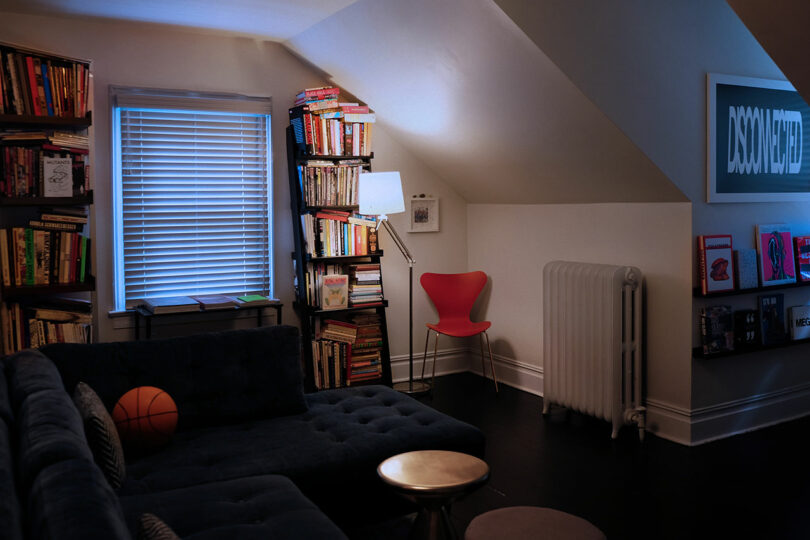
Rich Tu’s creative process is anchored in what he calls a "collector’s mentality." His reading room isn't just a library; it’s a physical media oasis, a tactile sanctuary designed to provide the friction and depth that a Pinterest board simply cannot replicate.
The Philosophy of the Physical Media Oasis
For Tu, the act of "centering" is an essential part of the design process. In an era where creative professionals are often overwhelmed by "content," the physical media oasis offers a curated alternative. This space is built on the principle of intentionality—choosing what to surround oneself with so that the environment itself becomes a prompt for new ideas.
"Designers often get trapped in the echo chamber of digital trends," Tu notes. His solution is a return to the tactile. By surrounding himself with physical objects—zines, vintage toys, and hardbound catalogues—he creates a space where the eye can wander without being led by a search bar. The "Collector’s Mentality" isn't about hoarding; it's about curation. It’s about finding the "weird and obscure" and giving it a permanent home where it can cross-pollinate with other ideas.
Why Physical Media Matters in 2026
As we look toward the design trends of 2026, there is a clear "tactile return." After years of sleek, minimalist digital-first aesthetics, both interior designers and creative directors are craving soul. Tu’s reading room exemplifies this shift. It’s about:
- Friction as a Feature: The time it takes to flip a page or pull a book from a shelf creates a mental pause that aids deep thinking.
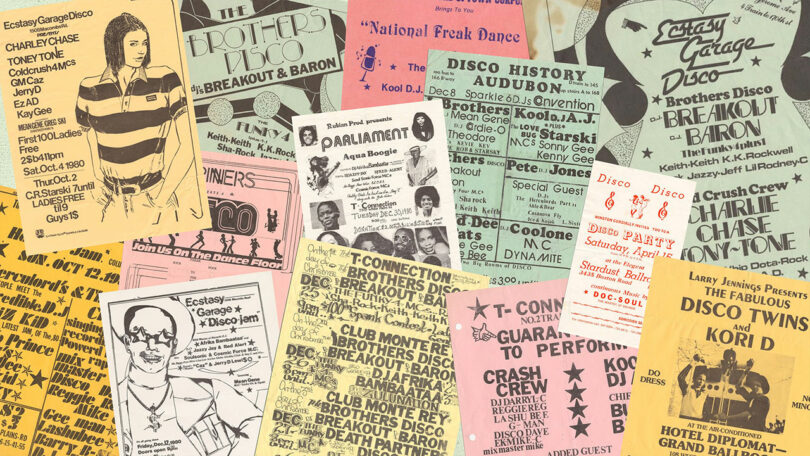
- Archival Depth: Using historical references—like those found in NYC nightlife histories—to ensure modern designs have a foundation in reality.
- Spatial Centering: A dedicated room or nook that signals to the brain that it is time to move from "production mode" to "inspiration mode."
Sources of Tactile Inspiration
Tu doesn’t just look at design books; he looks at the ephemera of culture. His library is a mix of high-brow archival material and underground subculture artifacts. To build a creative sanctuary like Tu’s, one must look beyond the bestseller list.
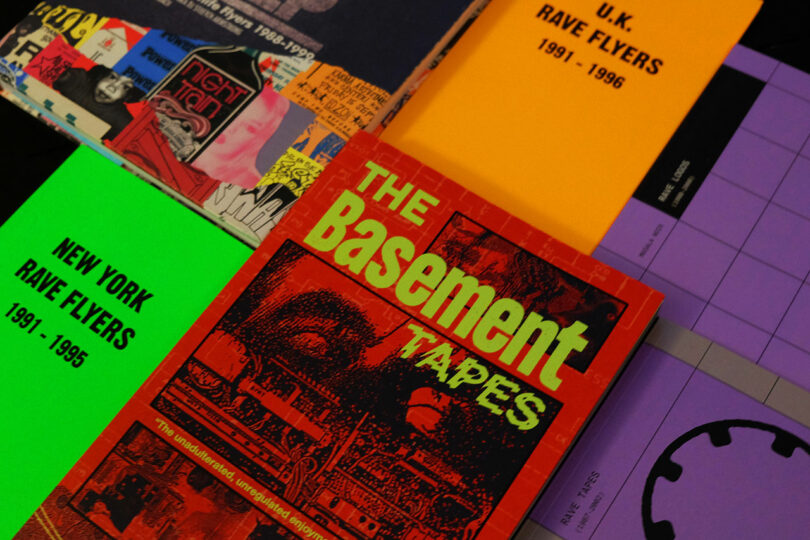
- Underground Catalogues: Tu frequently cites Masala Noir and VS Press as essential sources. These publishers focus on niche subcultures, from vintage rave flyers to obscure graphic ephemera, offering a raw energy that polished monographs often lack.
- The History of the Night: Books like No Sleep, which chronicles the history of NYC nightlife through flyers and posters, serve as a reminder of how design functions in the "wild"—on the streets and in the clubs.
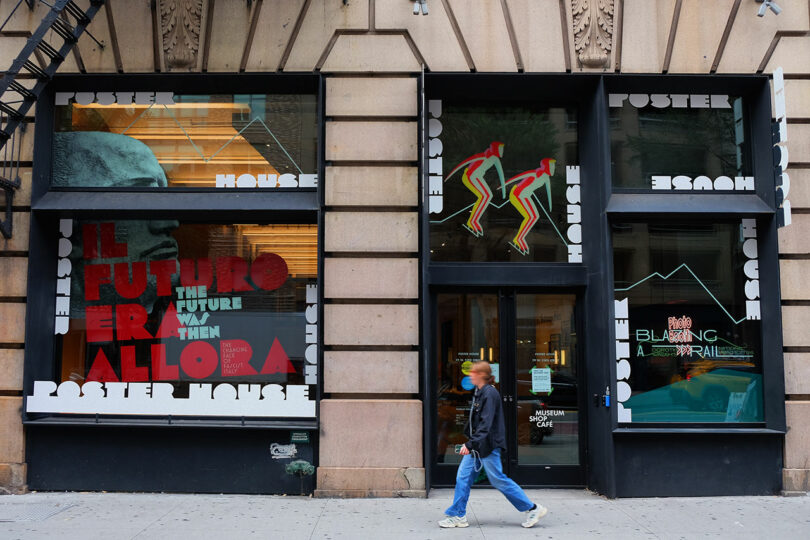
- The Museum as a Workspace: Tu is a frequent visitor to New York’s Poster House Museum. For him, a museum isn't just a place to visit; it's a place to study the mechanics of visual communication across decades.
Beyond books, the room is punctuated by what many would call "toys," but what Tu sees as masterclasses in color and character. Toy Tokyo in the East Village is a frequent haunt, providing him with vintage Japanese figures and obscure collectibles that act as vibrant sparks for his color palettes.
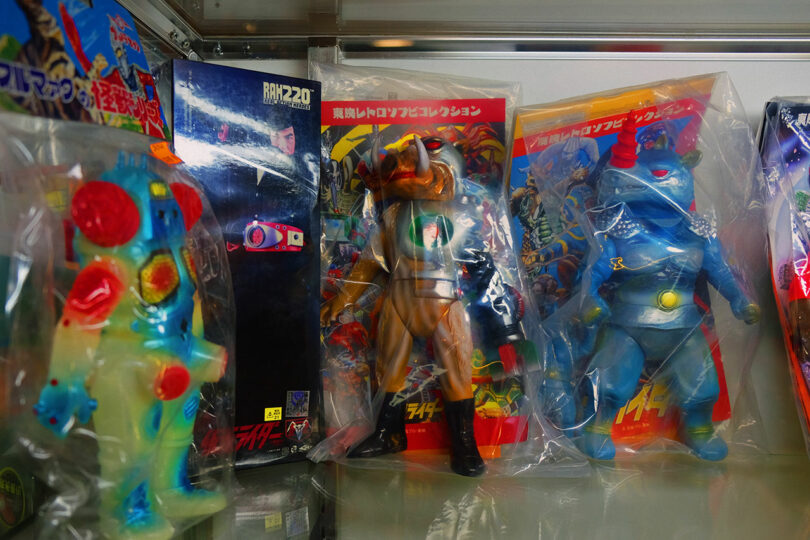
"There is a specific kind of magic in an object that wasn't made to be 'content.' A vintage toy or a 30-year-old club flyer has a soul because it was made for a moment, not for an algorithm." — Rich Tu
From the Library to the World Stage: High-Impact Projects
The influence of this physical oasis is evident in Tu’s most ambitious projects. Whether he is designing for a global sporting event or a personal gallery exhibit, the "Human Response" is always at the forefront.
The 2026 FIFA World Cup Poster
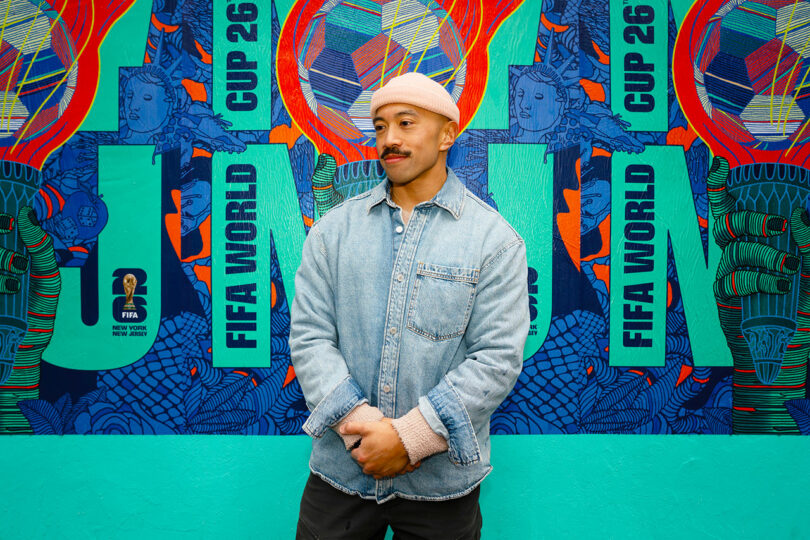
Tasked with representing the New York and New Jersey host cities, Tu’s design for the 2026 FIFA World Cup is a masterclass in integrating global community with local iconography. The poster doesn't just feature a ball and a stadium; it captures the kinetic energy of the region. The typography and movement in the piece reflect a "designer’s eye" that has been trained by years of studying poster history at places like the Poster House.
Scaling Design: The MTV VMAs
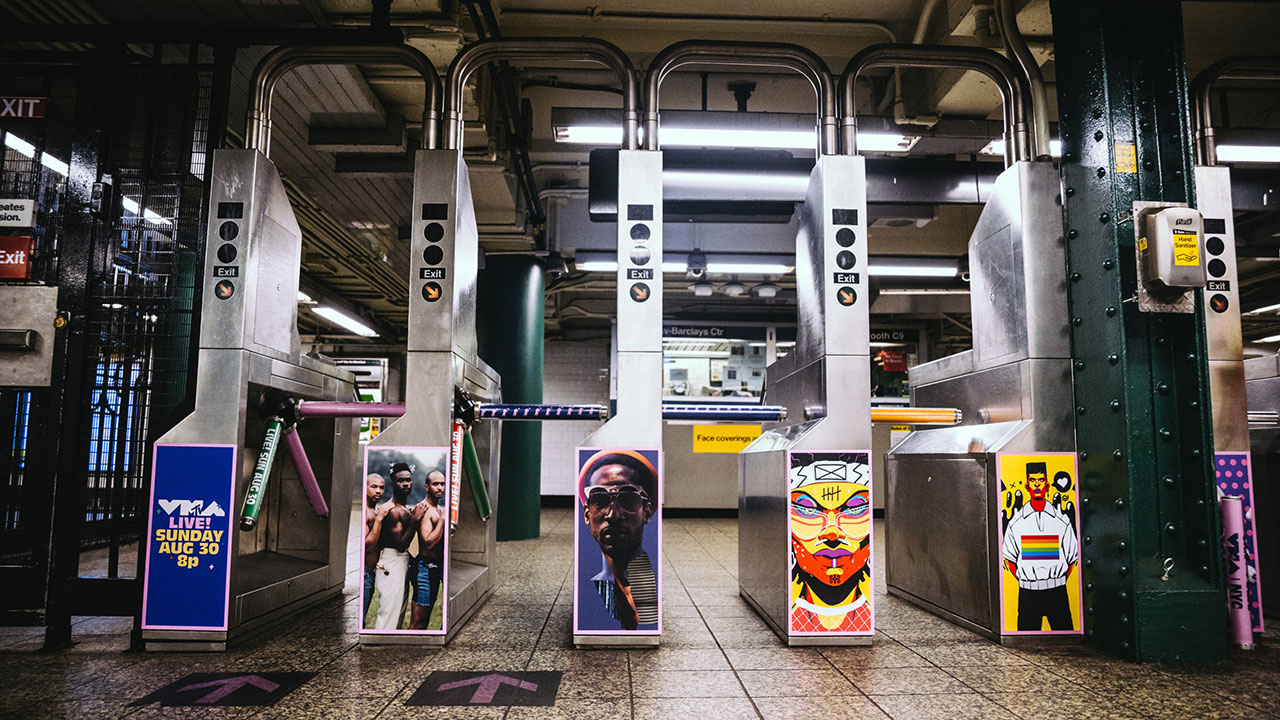
In 2020, Tu took his vision to a massive scale. His installation for the MTV VMAs transformed public spaces across New York. This wasn't just a digital campaign; it was a physical takeover of the city.
Fast Facts: Rich Tu’s Scale of Impact
- MTV VMAs (2020): The installation covered over 500,000 square feet of public space.
- Art Placements: Featured more than 100 individual art placements throughout NYC.
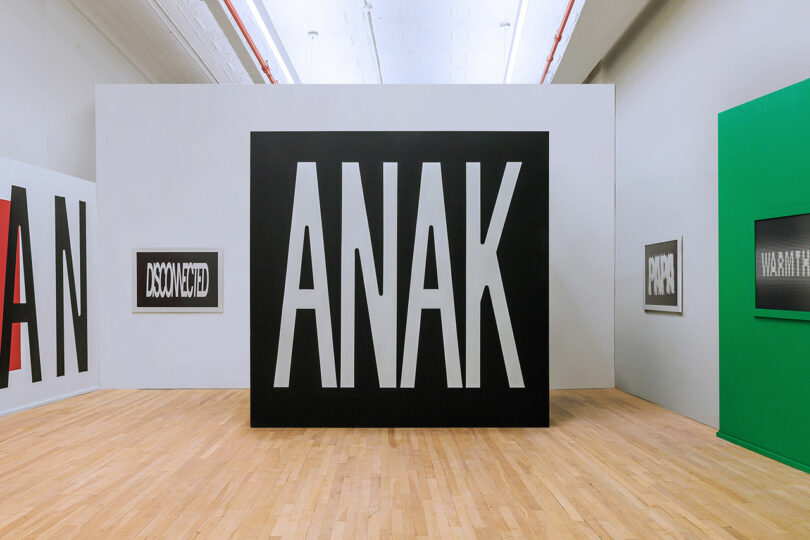
- Human Response (2023): The gallery exhibit ran for 35 consecutive days in Soho, NYC.
- Compositions: The exhibit featured over 170 original human-generated typographic compositions.
Processing Grief: The ‘Human Response’ Exhibit
In 2023, Tu launched one of his most personal projects to date. "Human Response" was an interactive exhibit that used AI platforms and his father’s obituary to process the complexities of grief. While AI was used as a tool, the heart of the project was the 170+ unique typographic compositions that were undeniably "human." This project showcased his ability to balance cutting-edge technology (AI) with raw, analog roots (personal history and physical typography).
Designing for 2026: Creating Your Own Creative Sanctuary
As an editor, I’m seeing a massive pivot away from the "gray-scale minimalism" that dominated the early 2020s. For 2026, the home—and specifically the workspace—is becoming a place of color drenching and acoustic intimacy. Rich Tu’s reading room is a blueprint for this new direction.
Get the Look: The 2026 Creative Nook
- The Foundation: Replace cold tile or laminate with warm hardwood flooring. It provides a natural grounding for the room.
- Acoustic Comfort: Use heavy-gauge rugs. Not only do they add a splash of "2026 trend colors" (think deep ochre, cobalt, and terracotta), but they also provide the acoustic intimacy needed for deep focus.
- Intentional Shelving: Move away from hidden storage. Display your "tactile archives"—your books, your toys, your vinyl—as part of the room’s architecture.
- Color Drenching: Don't be afraid of bold hues. Use a singular, saturated color for both walls and trim to create a "cocoon" effect that allows the physical media to pop.
The goal for 2026 isn't to have a "perfect" room; it's to have an intentional one. Whether you are a creative director at a major agency or a home decor enthusiast, the lesson from Rich Tu is the same: Your environment dictates your output. By creating a physical media oasis, you aren't just decorating; you are building a reservoir of inspiration that will sustain you when the digital world feels hollow.
FAQ
Who is Rich Tu? Rich Tu is a multidisciplinary designer and the Executive Creative Director at Sunday Afternoon. He is globally recognized for high-profile projects like the 2026 FIFA World Cup poster for New York and New Jersey and his massive scale installations for the MTV VMAs.
What is the 'Collector’s Mentality' in design? It is a philosophy centered on curating physical objects—such as books, toys, and posters—to serve as a permanent, tactile source of inspiration. It encourages designers to look beyond digital algorithms and find "friction" and "depth" in analog media.
How can I apply 2026 design trends to my home office? Focus on "intentionality" and "warmth." This includes using color drenching to create a focused atmosphere, adding hardwood floors and rugs for acoustic intimacy, and creating open displays for physical media like books and collectibles.
Are you ready to redefine your creative space? Whether you're building a massive public installation or just a quiet corner for reading, the key is to surround yourself with things that provoke a "human response." Start your collection today.