There is a specific, quiet gravity to the 7th Arrondissement. Unlike the bustling fashion hubs of the 1st or the experimental energy of the Canal Saint-Martin, the Rive Gauche—specifically the area surrounding the Champ de Mars and the Invalides—exudes a sense of permanence. This is the heart of the haute bourgeoisie, where the architecture is as much a character as the residents. For those of us who live and breathe interior design, a 7th Arrondissement apartment isn't just a home; it’s a masterclass in the "art of living."
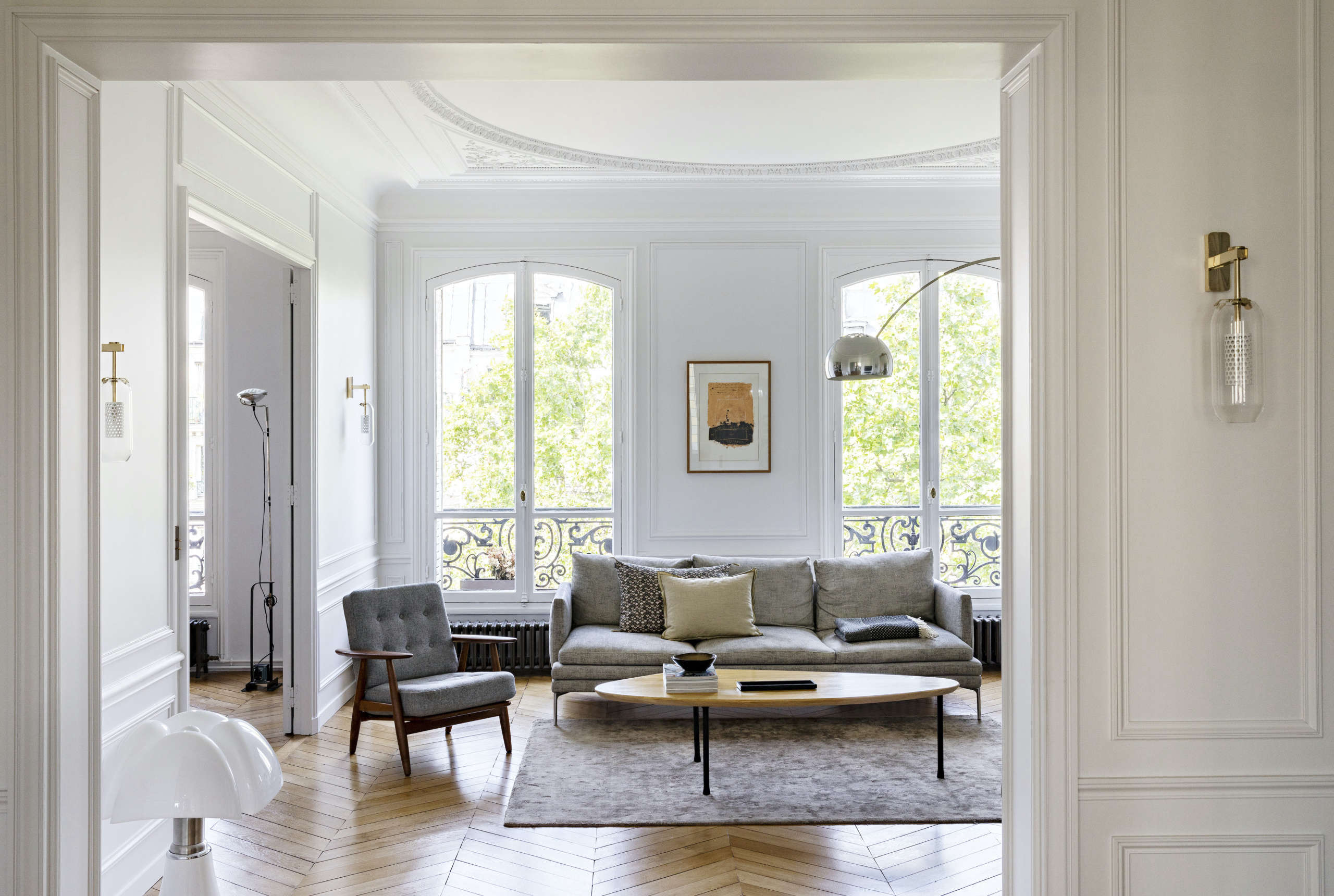
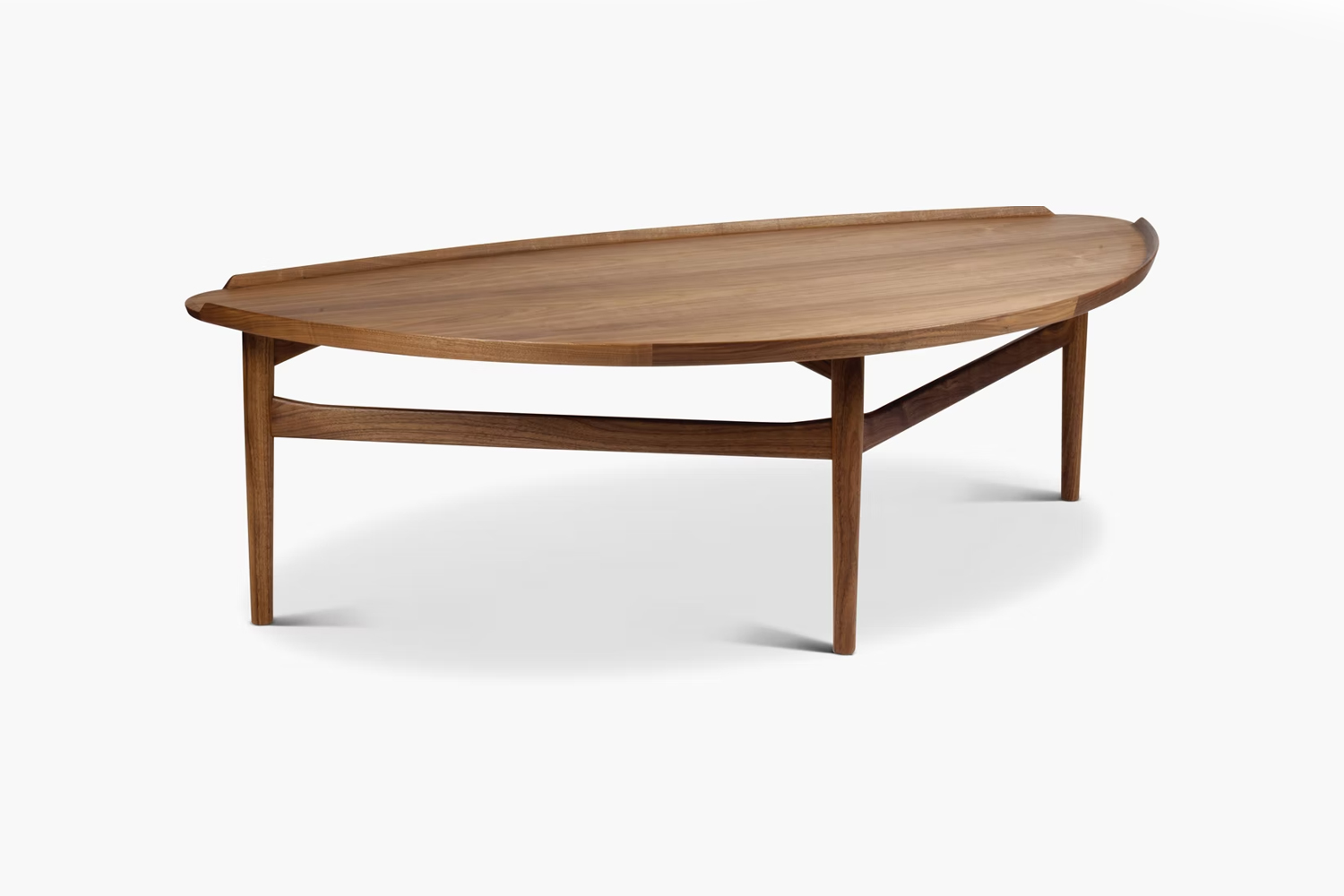
To achieve that quintessential Parisian living room look, one must master the tension between historic preservation and contemporary curation. It begins with a strict adherence to the Haussmannian skeleton—high ceilings, intricate cornices, and oak parquet—balanced by a neutral, light-reflective palette. However, the true "soul" of these spaces lies in the furniture: iconic midcentury pieces like the Flos Arco Floor Lamp or Finn Juhl cocktail tables act as modern sculptures against the 19th-century backdrop.
The DNA of a Haussmannian Masterpiece
When we walk into a classic 7th Arrondissement apartment, the first thing that strikes us is the verticality. Haussmannian buildings, constructed primarily between 1853 and 1870, were designed with a rigorous hierarchy. In the "noble" floors, ceiling heights typically range from 2.8 to 3.5 meters, creating a sense of volume that demands a specific approach to decor.
The architectural markers are non-negotiable. You’ll find original plaster cornices (the more intricate, the better), floor-to-ceiling French windows that "invite the street in," and the omnipresent marble fireplace, usually in Carré d'Or or Nero Marquina. These elements provide a rhythmic, classical frame that allows for bolder interior choices.
The Floor Factor: Chevron vs. Versailles
Underneath it all lies the most critical element: the flooring. In the 7th, you will rarely see a simple plank. Instead, the focus is on:
- Point de Hongrie (Hungarian Point/Chevron): The gold standard for Parisian elegance, where the planks are cut at an angle to create a continuous "V" pattern.
- Parquet de Versailles: Large square panels with an intricate interlaced pattern, usually reserved for the most formal reception rooms.
- The Finish: In 2026, the trend has moved away from high-gloss yellows toward "matte-invisible" oils that preserve the raw, pale honey tone of old French oak.
Design Guide: Stealing the Look of Paris’s Elite
The 7th Arrondissement style, often epitomized by designers like Olivia Massimi, isn't about matching sets; it’s about a "collected" aesthetic. It’s the confidence to place a sleek, Italian sofa next to a weathered Louis XV bergère.
Lighting as Sculpture
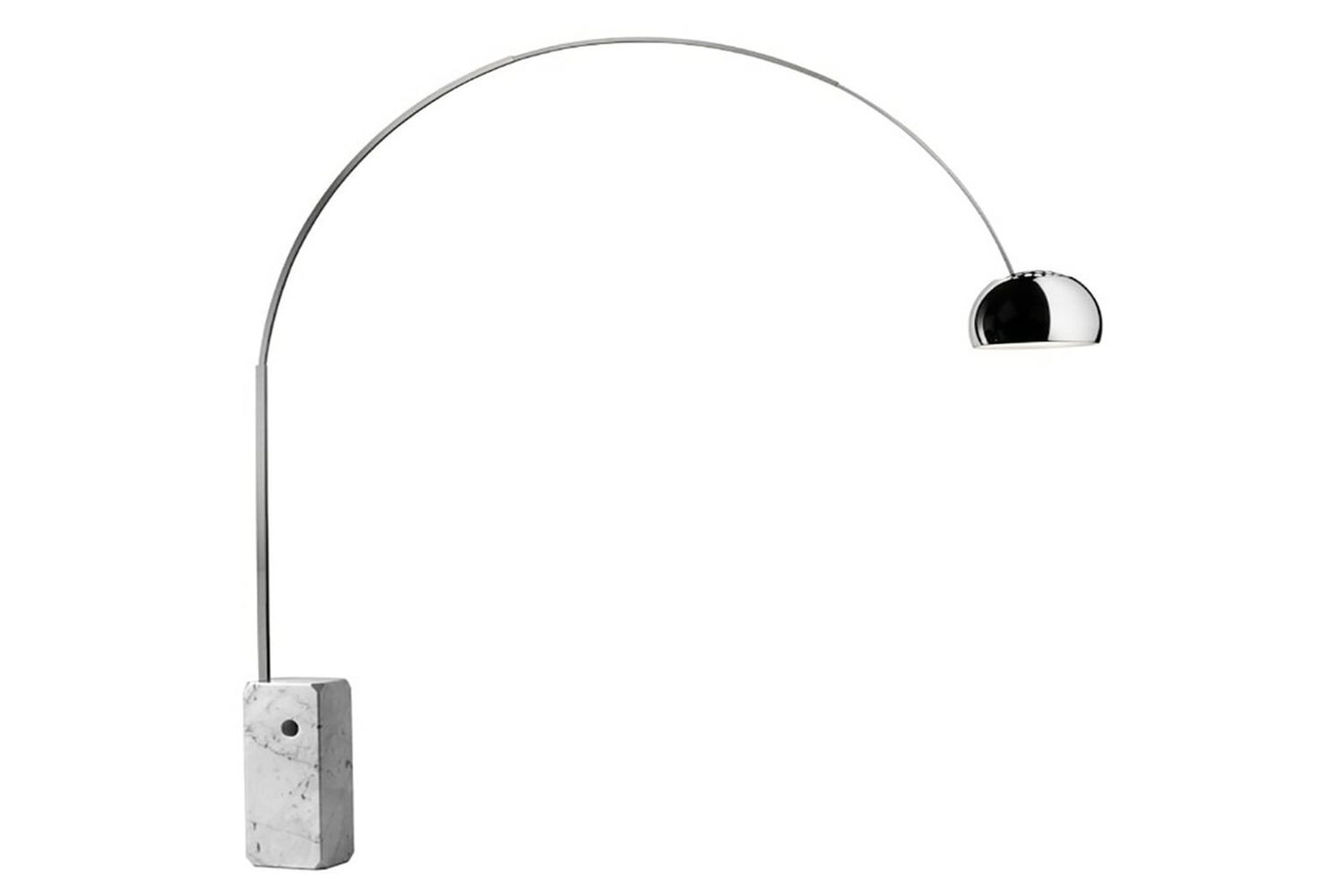
In a room with three-meter ceilings, your lighting must do more than illuminate; it must command the air. We recommend focusing on silhouettes that contrast with the ornate moldings. The Flos Arco Floor Lamp, with its dramatic Carrara marble base and sweeping stainless steel arc, is a favorite for a reason—it bridges the gap between the floor and the high ceiling without cluttering the visual field.
Another staple is the Martinelli Luce Pipistrello, whose bat-wing silhouette adds a touch of 1960s whimsy to a formal mantlepiece.
Furniture Curation
The goal is to create a dialogue between eras. We often suggest:
- Midcentury Icons: A Finn Juhl cocktail table brings organic warmth and Danish craftsmanship to the room, softening the hard edges of the marble fireplace.
- Modern Silhouettes: Low-profile sofas, such as those from Fritz Hansen or B&B Italia, prevent the room from feeling like a museum.
- The 'East Meets West' Influence: One of the hallmarks of the Parisian elite is the incorporation of Asian artifacts. A Ming Dynasty bench used as a media console or a Khmer stone head placed on a minimalist pedestal creates a "world traveler" narrative that is very 7th Arrondissement.
The Palette: Whites and Whispers
While the "all-white" gallery look is a safe bet, the most sophisticated 7th Arrondissement homes use "complex neutrals."
- Walls: Benjamin Moore Super White remains the industry standard for catching the low Parisian sun.
- Accents: For depth, use Farrow & Ball 'Down Pipe' or 'Railings' on metalwork, such as original cast-iron radiators or window frames. This creates a crisp, graphic frame for the softer furniture.

Pro Tip: The 80/20 Rule Keep 80% of the room classical (architecture, flooring, large rugs) and 20% unapologetically modern (lighting, art, coffee tables). This ratio ensures the space feels current without losing its heritage.
Buying into the 7th: 2026 Real Estate Outlook
If you are looking to acquire a piece of this heritage, be prepared for a competitive market. As of 2026, the 7th Arrondissement remains one of the most expensive and stable districts in the world.
While the 8th Arrondissement (near the Champs-Élysées) commands between 11,500 and 14,500 EUR/sqm, the 7th Arrondissement—particularly the Gros-Caillou and Saint-Thomas-d'Aquin neighborhoods—commands a significant premium. Current market prices typically range between 13,000 and 16,000 EUR/sqm. This premium is driven by the district's reputation as a quiet enclave for the "upper bourgeoisie," offering a residential peace that the more commercial 8th lacks.
The Cost of Perfection: 2026 Renovation Tiers
Renovating a Haussmann apartment requires a delicate touch and a specialized workforce. In 2026, costs have stabilized but remain high due to the scarcity of skilled artisans capable of working with lime plaster and antique oak.
| Renovation Level | Estimated Cost (EUR/sqm) | Scope of Work |
|---|---|---|
| Level 1: The Refresh | 500 – 800 | Professional painting, sanding and oiling parquet, upgrading light fixtures, minor kitchen styling. |
| Level 2: The Intermediate | 1,200 – 1,800 | Full electrical rewiring, plumbing updates, new kitchen and bath, acoustic insulation under floors. |
| Level 3: The High-End | 2,000 – 3,500+ | Structural wall removal, bespoke cabinetry (oak/walnut), heritage cornice restoration, smart home integration. |
For a standard 80 sqm apartment, an intermediate renovation in 2026 is estimated to cost between 96,000 and 144,000 euros, excluding major structural changes or high-end designer furniture.
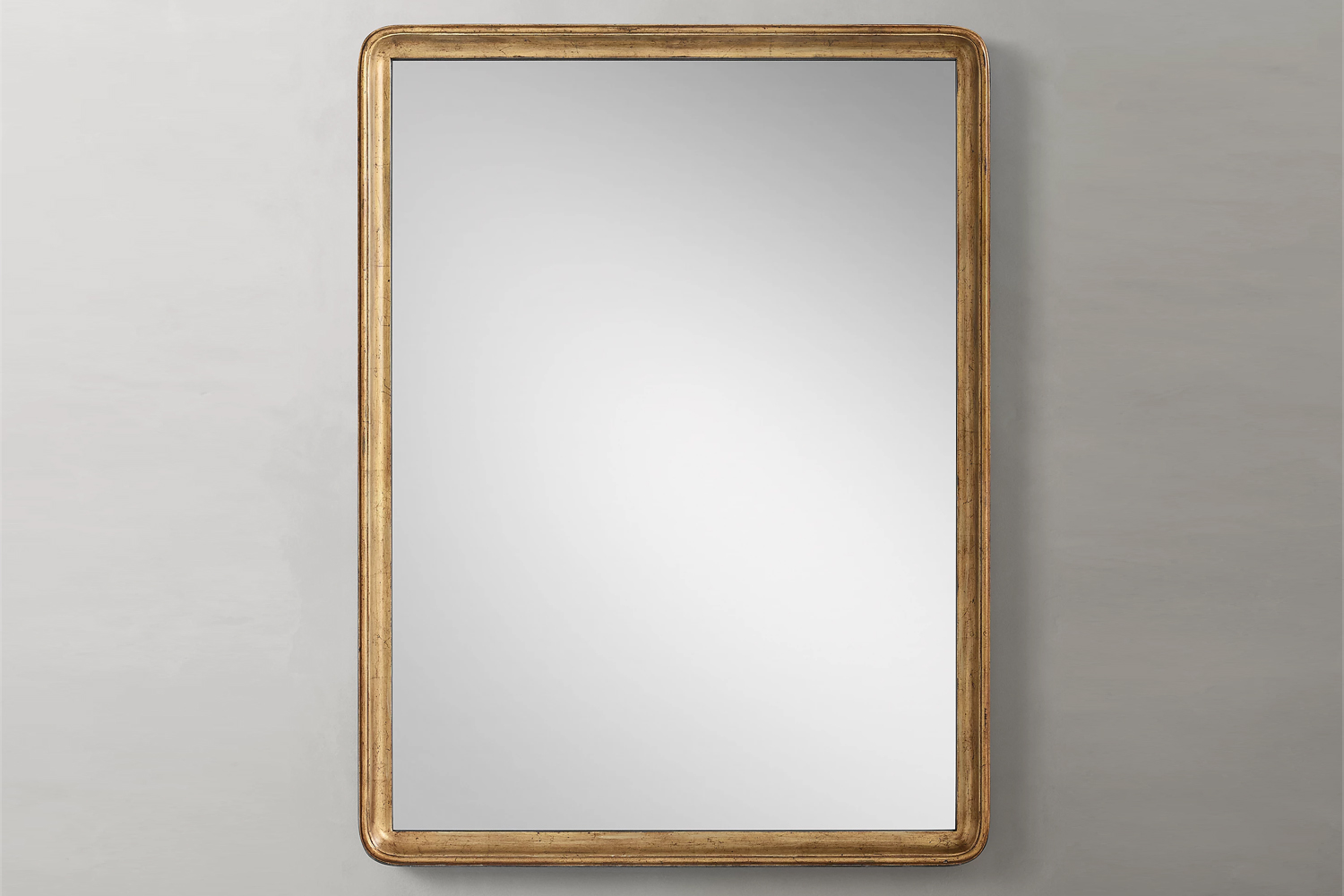
High-end projects often involve the restoration of heritage elements like gilt mirrors and marble mantels. Sourcing a period-accurate Louis Philippe mirror to replace a lost original can alone cost upwards of 5,000 euros, but the value it adds to the room's proportions is immeasurable.
Navigating Technical Pitfalls in Historic Buildings
Owning a piece of history comes with modern responsibilities. In 2026, French regulations regarding energy efficiency and building safety have become significantly more stringent.
Energy Performance (DPE)
The Diagnostic de Performance Énergétique (DPE) is the hurdle for 2026. Many Haussmann apartments are considered "thermal sieves" with F or G ratings. Improving these ratings in a heritage building is tricky because you cannot easily insulate the exterior facade. Interior insulation can "eat" into your precious square meters and hide beautiful cornices.
Warning: Be sure to budget for high-performance wooden double-glazing that mimics the original 19th-century profiles to satisfy both the DPE requirements and the Architectes des Bâtiments de France.
Lead and Asbestos
In any building pre-dating 1949, lead paint is a reality. During a Level 2 or 3 renovation, professional decontamination is often mandatory, adding roughly 5-10% to your demolition budget. Similarly, asbestos in old flue pipes or floor adhesives must be handled by certified professionals.
Facade and Common Areas
When buying into the 7th, check the procès-verbaux (minutes) of the co-ownership meetings. Every ten years, the city of Paris can mandate a ravalement (facade cleaning). If this is due, expect a significant "special assessment" fee that can range from 10,000 to 30,000 euros per apartment, depending on the building's size.
Conclusion: Investing in Living Heritage
Creating an elegant living space in the 7th Arrondissement is an exercise in restraint and respect. By investing in high-quality architectural restoration and layering it with iconic midcentury furniture, you create a home that transcends trends.
While the 2026 renovation costs and real estate premiums are substantial, they represent an investment in one of the world's most stable asset classes: Parisian history. There is a profound ROI in waking up to the filtered light of the Rive Gauche, surrounded by the craftsmanship of two centuries.
FAQ
1. Can I install modern air conditioning in a 7th Arrondissement Haussmann apartment? Yes, but it is complicated. You generally cannot place an external condenser unit on the facade or balcony if it is visible from the street. Most owners opt for "water-cooled" systems that sit inside a closet or hidden "invisible" units that require permission from the co-ownership board.
2. Is the 7th Arrondissement better for investment than the 6th or 8th? The 7th offers a unique "residential prestige" that attracts long-term wealthy families and diplomatic staff, making it more stable and less prone to the "tourist bubbles" seen in the 4th or 6th. It consistently commands higher rents for long-term leases.
3. How do I maintain antique Hungarian Point parquet? Avoid water at all costs. In 2026, the preferred method is a hard-wax oil (like Osmo). It allows the wood to breathe and can be "spot-repaired" without sanding the entire room, which is crucial for preserving the thickness of old oak planks.