Project Fact Sheet
| Category | Details |
|---|---|
| Project Name | Tegeta Marketing Department Headquarters |
| Location | Tbilisi, Georgia |
| Lead Designer | Teona Kokhodze |
| Furniture Partners | Steelcase (supplied by Workspace) |
| Design Philosophy | Human-centric, Hybrid, and Biophilic |
| Key Features | Modular 'LEGO' furniture, height-adjustable desks, acoustic zoning |
| Materials | FSC-certified wood, recycled textiles, low-VOC finishes |
Imagine walking into a space where every surface tells a story of movement, light, and modern efficiency. In the heart of Tbilisi, the new Tegeta marketing office isn't just a place to work; it is a meticulously crafted ecosystem designed for the high-performance demands of 2026. As an editor specializing in interior styling, I’ve seen countless offices attempt the "cool" factor, but Tegeta has achieved something far more elusive: the perfect intersection of ergonomic science and aesthetic soul.
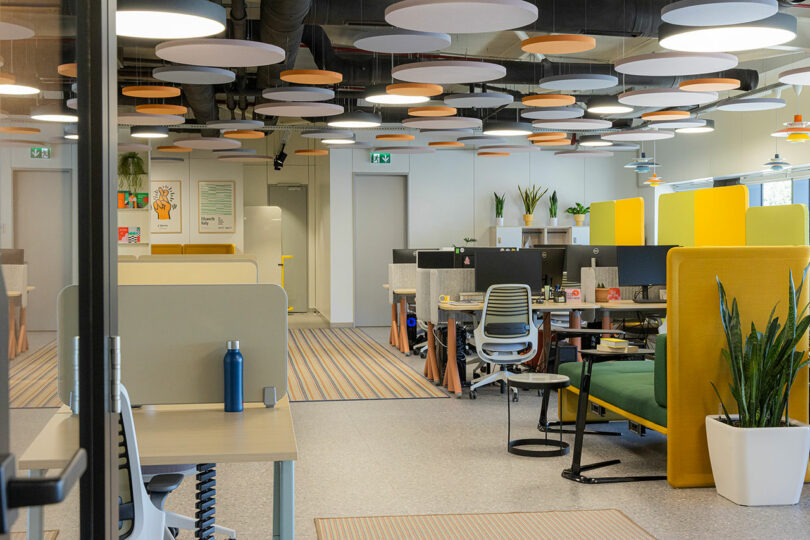
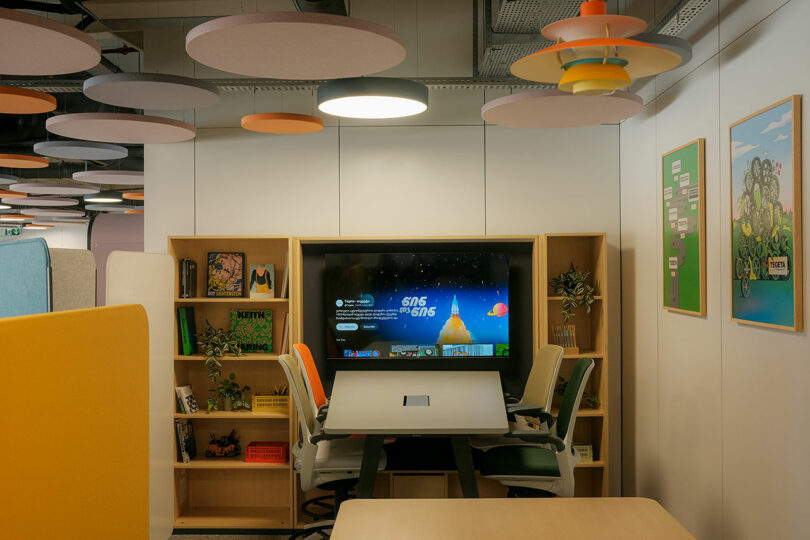
Tegeta’s new Tbilisi office features a hybrid workspace concept that utilizes modular Steelcase furniture and ergonomic height-adjustable desks to balance collaborative teamwork with focused individual tasks. To manage noise in its expansive open-plan layout, the design incorporates sound-absorbing acoustic panels, dedicated phone booths, and strategically placed partitions to create quiet zones. Sustainability is woven into the very fabric of the space through the use of eco-friendly materials, energy-efficient lighting, and extensive biophilic design elements like indoor greenery and maximized natural light.
Data-Driven Design: Why the Hybrid Model Wins
Design today is no longer just about intuition; it’s about understanding human behavior through data. Before a single blueprint was finalized, internal research by Tegeta’s design team revealed a critical insight: 85% of employees preferred a workspace that offered a seamless transition between dynamic collaborative zones and static focus areas. This statistic became the North Star for the project.
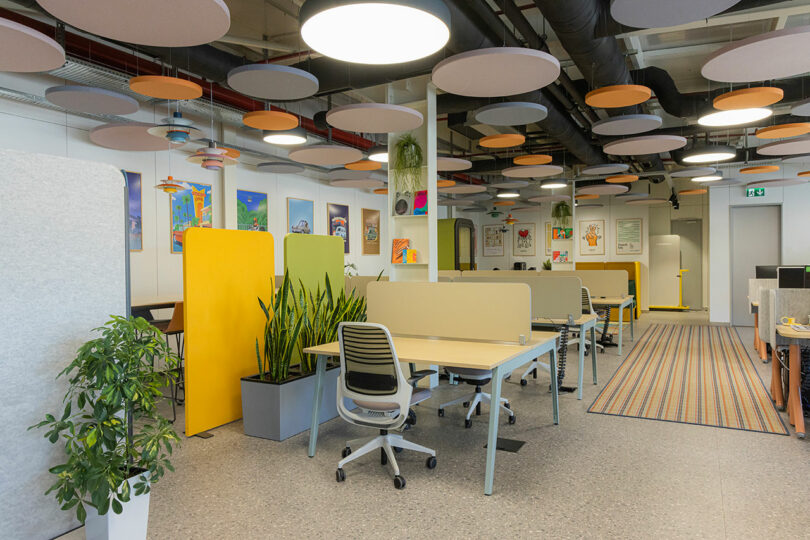
In partnership with Steelcase, Tegeta moved away from the rigid, "assigned desk" mentality of the past decade. The layout now prioritizes spatial fluidity. By utilizing modular furniture, the marketing team can pivot from a morning brainstorming session to deep-focus copywriting in minutes.
The challenge of the open-plan layout—the perennial "noise problem"—was addressed not with walls, but with intelligent zoning. The design team utilized "neighborhoods" where high-energy collaborative areas are buffered by acoustic partitions from the silent "library" zones. This ensures that while communication flows freely, productivity remains undisturbed.
Ergonomics and Wellness: Beyond the Height-Adjustable Desk
Beyond aesthetics, functionality takes center stage in Tegeta’s commitment to employee health. We often talk about ergonomics as a checklist of chairs and desks, but in this office, it is an atmosphere. The role of height-adjustable stations and flexible mesh chairs is central to maintaining employee posture throughout long creative sprints.
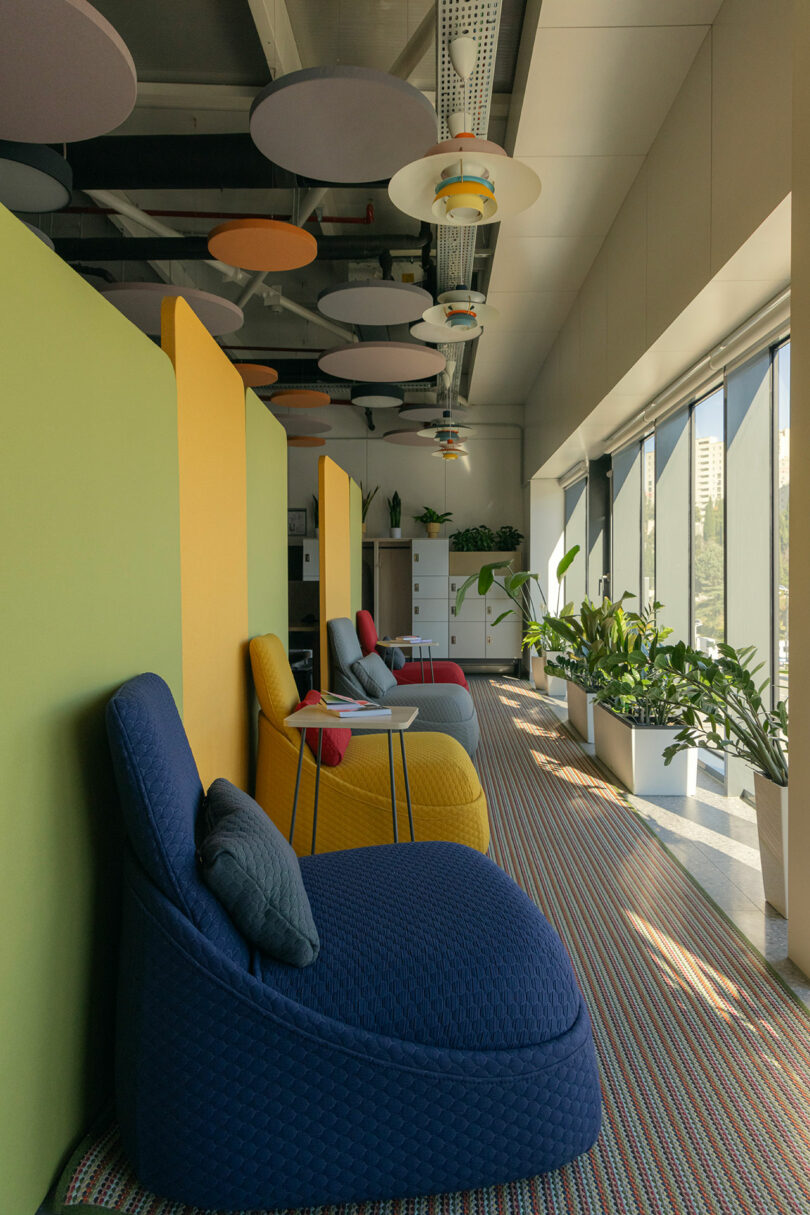
However, the wellness strategy extends to the sensory level. The lighting strategy was designed to maximize natural light, which is proven to boost mood and circadian health, while specialized anti-glare filters on windows protect the eyes of digital creators.
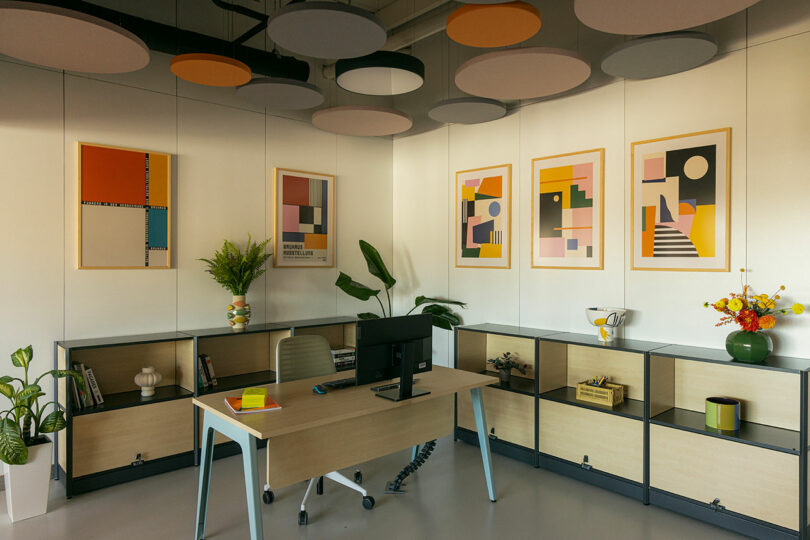
Ivy’s Style Tip: True ergonomic design shouldn't look clinical. Tegeta proves this by pairing high-performance Steelcase task chairs with a warm, residential-inspired backdrop, making the office feel like a premium lounge rather than a corporate station.
The 'LEGO' Office: Modularity for a Fast-Paced Future
Perhaps the most innovative aspect of the Tbilisi office is what the team calls the "LEGO-like" modular configuration. In a fast-paced marketing environment, the needs of a team can change weekly. Tegeta’s implementation of mobile whiteboards, rolling storage units, and reconfigurable panels has reduced the average time required for team-led workspace reconfiguration by an estimated 40%.
To handle the acoustic demands of such a flexible space, Teona Kokhodze integrated several layers of sound management:
- Acoustic Ceiling Clouds: Suspended panels that catch rising sound waves in collaborative pits.
- Fabric-Wrapped Partitions: These double as tack boards for mood boards while dampening ambient noise.
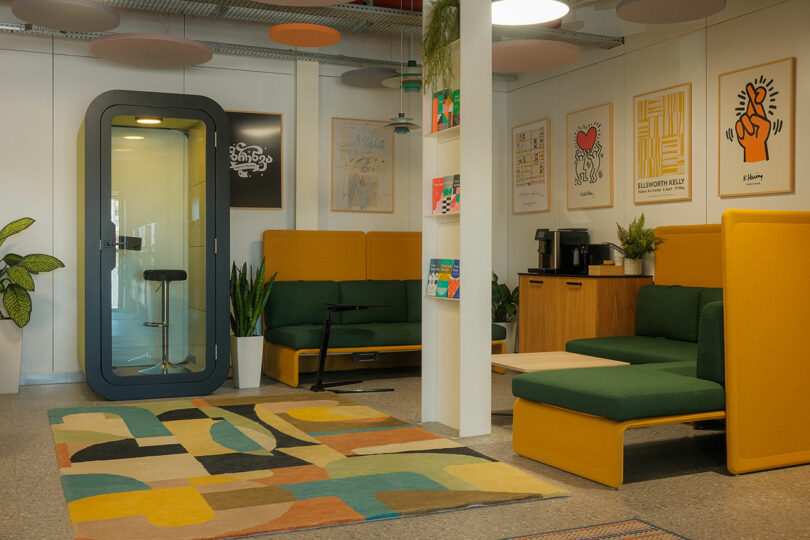
- Private Phone Booths: Sleek, soundproof capsules for confidential calls or high-concentration tasks.
This modularity ensures that the office remains a tool for the team, rather than a constraint. It is a workspace that evolves in real-time.
The Psychology of Color: Teona Kokhodze’s Artistic Vision
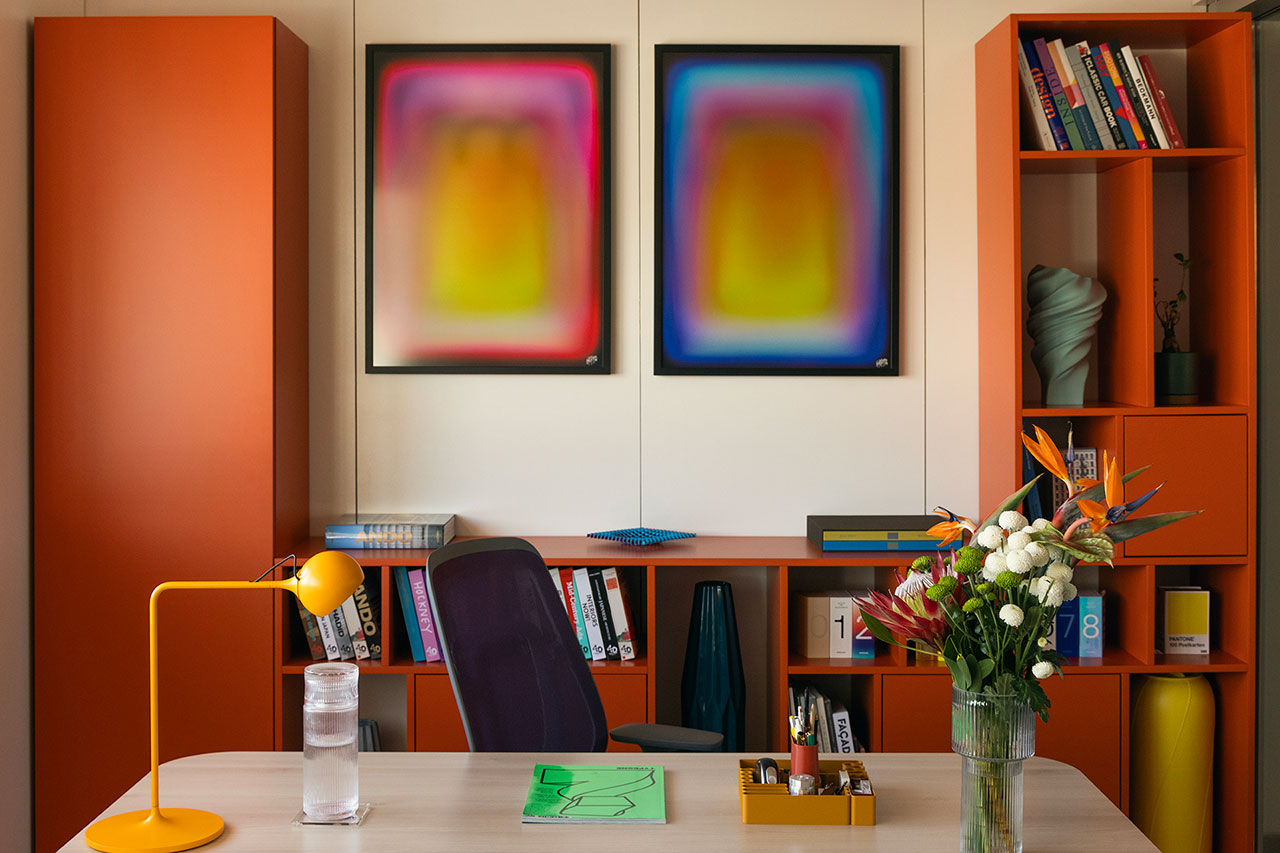
While the furniture provides the structure, the color palette provides the heartbeat. Moving away from the uninspiring "Corporate Gray," designer Teona Kokhodze looked to nature and the Bauhaus movement for inspiration. The palette is a sophisticated blend of bio-inspired hues: Moss green, Terracotta, and Peach.
These colors aren't just decorative; they are functional. Color-coding is used subtly to distinguish between different zones:
- Moss Green & Earth Tones: Used in lounge and biophilic zones to signal relaxation and decompression.
- Terracotta & Warm Peach: Applied to creative hubs to stimulate energy and collaborative dialogue.
- Neutral Sands & Whites: Reserved for deep-focus pods to minimize visual distraction.
The integration of Wassily-style seating and artistic personal touches throughout the office reflects a "Human-Centric" approach, making the employees feel seen and inspired by their surroundings.
Workspace Trends for 2026: Lessons from Tegeta
Looking toward 2026, the Tegeta office serves as a blueprint for the future of commercial design. We are seeing a massive shift toward "tactile science"—the idea that the materials we touch daily impact our cognitive performance.
Tegeta has embraced this by selecting FSC-certified wood and post-consumer recycled textiles. These materials aren't just sustainable; they offer a tactile warmth that plastic and metal cannot replicate. Furthermore, the office integrates "invisible technology"—smart sensors that adjust lighting and climate based on occupancy, ensuring the environment is always responsive to the people within it.
Comparison: Traditional Office vs. Tegeta’s 2026 Model
| Feature | The Old Standard (Pre-2020) | The Tegeta Standard (2026) |
|---|---|---|
| Desk Philosophy | Static, assigned seating | Dynamic, activity-based 'LEGO' pods |
| Sound Management | Minimal (Open-plan echo) | Multilayered acoustics & phone booths |
| Sustainability | Surface-level (Recycling bins) | Integrated (FSC-wood, Low-VOC, Biophilia) |
| Technology | Visible wires & fixed stations | Invisible tech & wireless modularity |
| Wellness | Generic "Ergonomic" chairs | Personalized height-adjustment & natural light |
The Future of the Office as a Destination
In a world where remote work is always an option, the physical office must become a "destination"—a place people want to be, not where they have to be. By blending Teona Kokhodze’s artistic vision with Steelcase’s engineering and a deep commitment to sustainability, Tegeta has created a workspace that feels like a community.
It is a masterclass in how design can empower a team. As we look at the evolution of Tbilisi’s design landscape, Tegeta’s headquarters stands as a bold statement: the future of work is flexible, it is green, and above all, it is human.
FAQ
1. What makes Tegeta's office design "biophilic"? Biophilic design at Tegeta goes beyond just adding plants. It involves maximizing natural light through strategic layout, using organic color palettes (like moss green and terracotta), and incorporating natural textures like FSC-certified wood. These elements help reduce stress and connect employees to the natural world, even while indoors.
2. How does the "LEGO" modularity actually work in a daily setting? The furniture, including whiteboards and acoustic panels, is on high-quality casters or features modular locking systems. This allows teams to physically rearrange their "neighborhood" in minutes—turning a group of four desks into a large conference table or creating a semi-private screening area for a presentation without needing a construction crew.
3. Is the hybrid office model suitable for small companies? Absolutely. While Tegeta is a large organization, the principles of modularity and zoning are even more effective in small spaces. Using versatile, ergonomic furniture like the Steelcase solutions mentioned can maximize the utility of every square foot, making a small office feel much more expansive and functional.
Are you ready to redefine your workspace for 2026? Whether you are looking for a complete overhaul or simple ergonomic upgrades, Tegeta’s Tbilisi office proves that when we design for people first, productivity and beauty naturally follow.