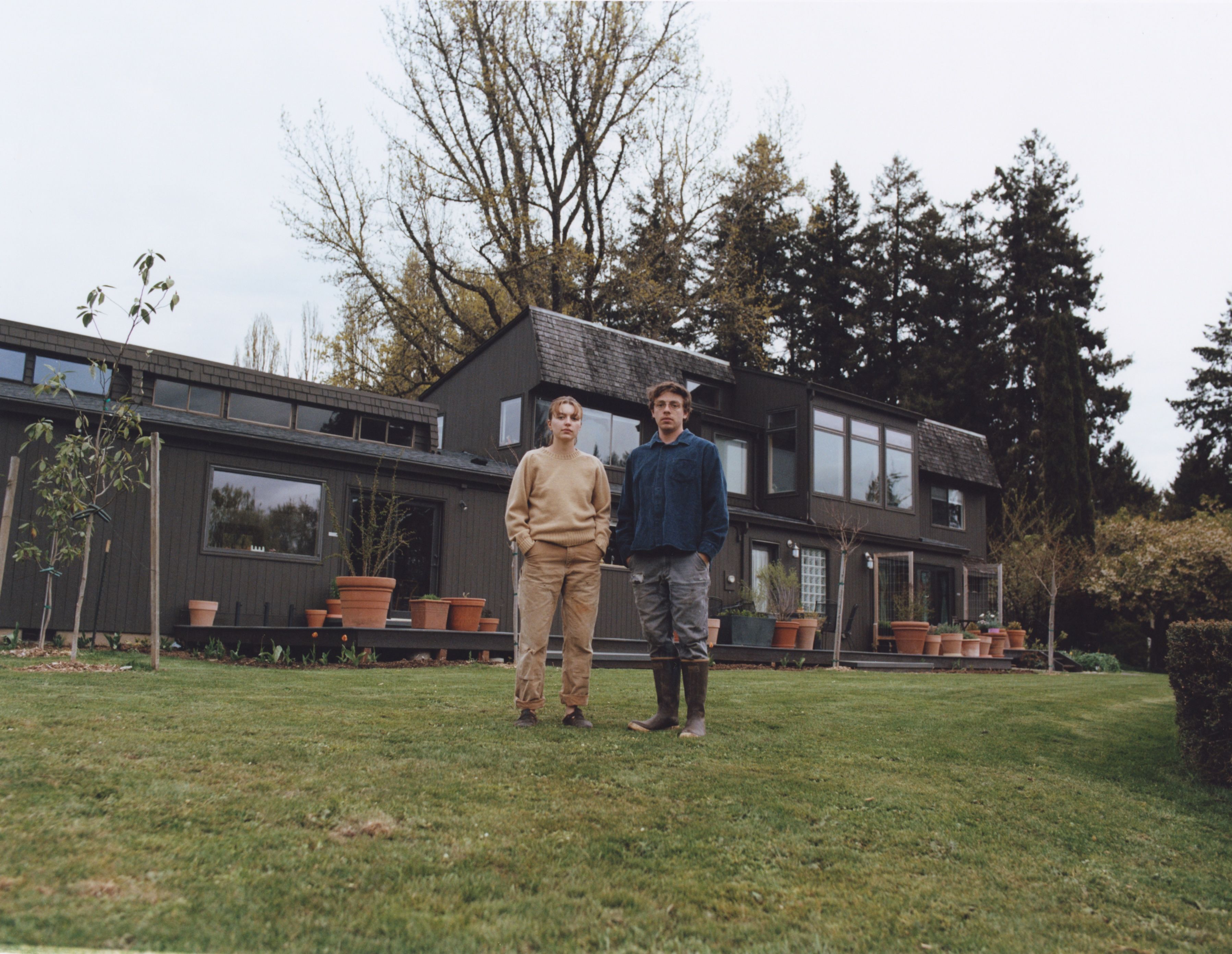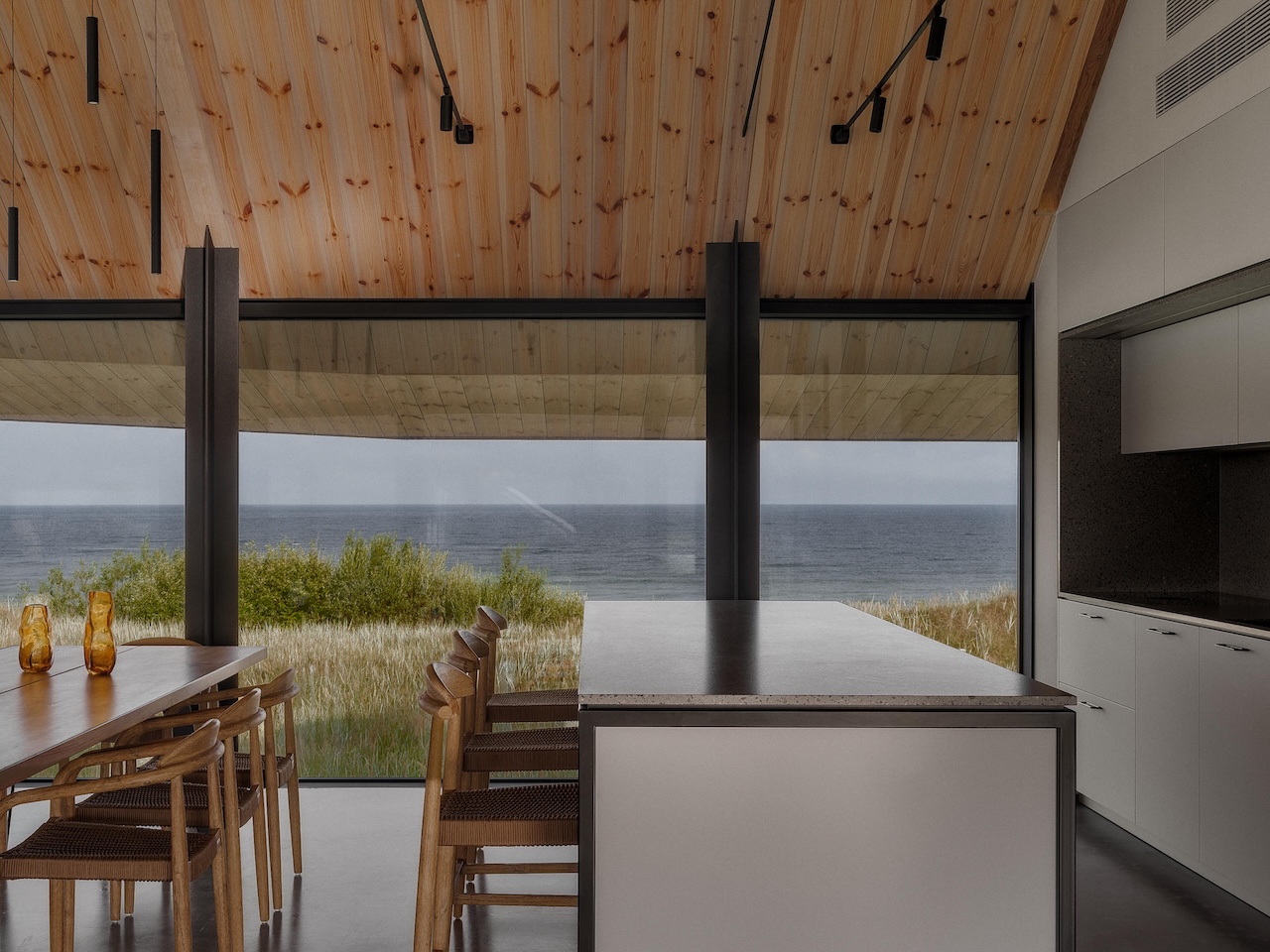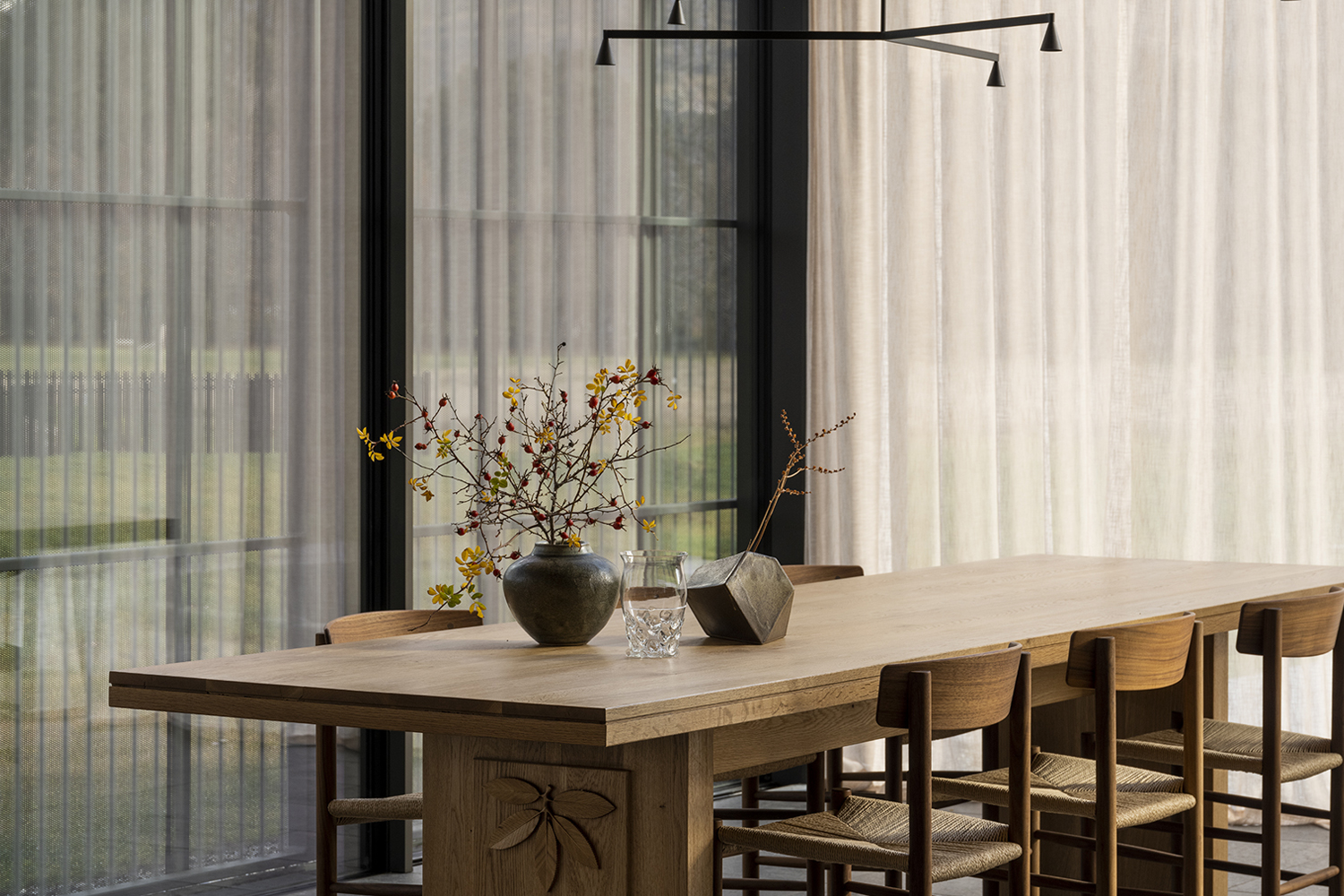
For years, the "white box"—that pristine, gallery-like expanse of bright walls and bleached floors—was the ultimate symbol of modern sophistication. It promised a clean slate and an airy escape from the clutter of life. But as we look toward the design horizon of 2026, the silence of the white room is being replaced by a deeper, more resonant conversation. We are witnessing the rise of "Moody Modernism," a refined evolution of Mid-Century principles that trades sterile surfaces for the soulful weight of shadow and the tactile honesty of raw materials.
This shift isn't merely an aesthetic whim; it is a response to how we live now. The white box, while beautiful in a photograph, can often feel restless and high-glare in the midday sun. Moody Modernism, by contrast, uses a palette of deep, grounded tones—think fumed oak, charcoal limestone, and dark, veined marbles—to create environments that feel sensual and restful. It’s about creating a sanctuary that doesn’t just look modern, but feels profoundly permanent.
The Psychology of Shadow: Why Darker Tones Work
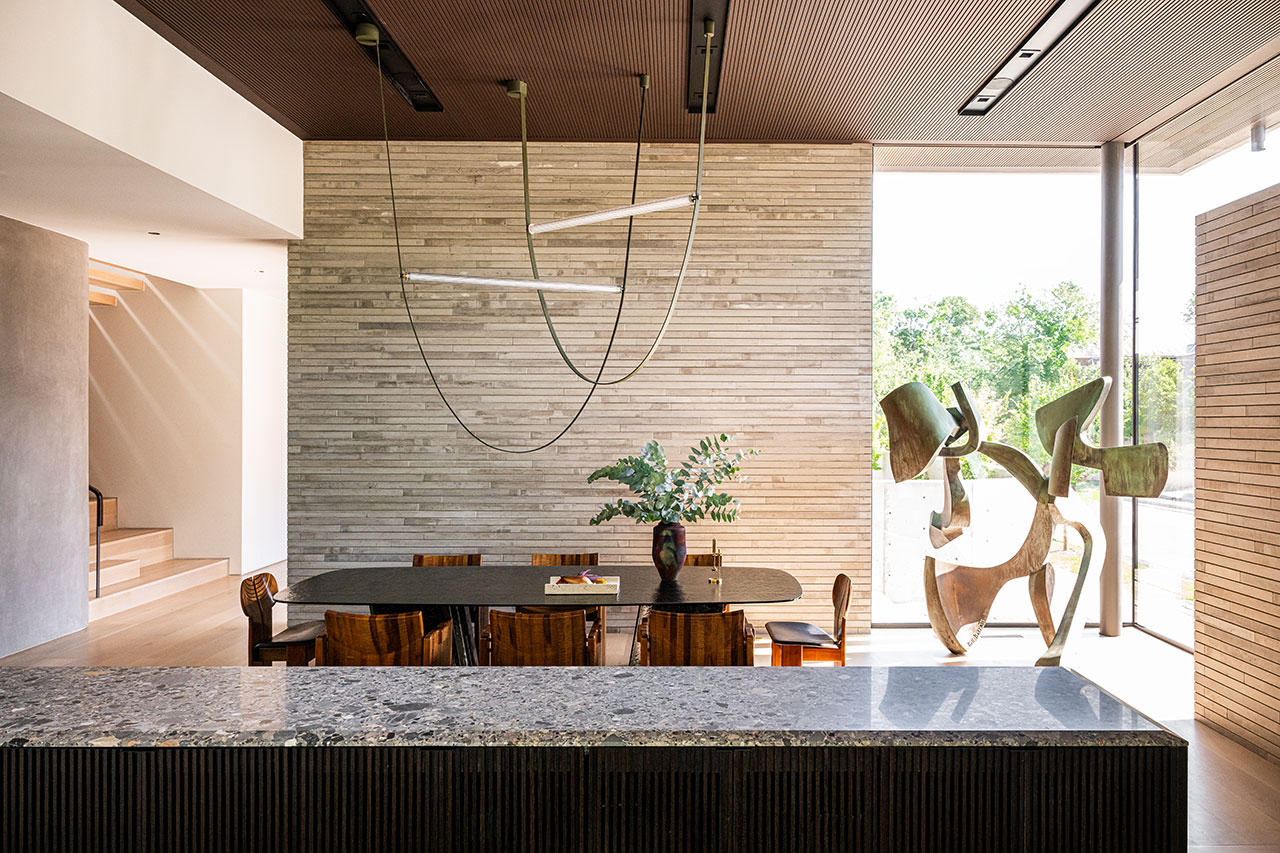
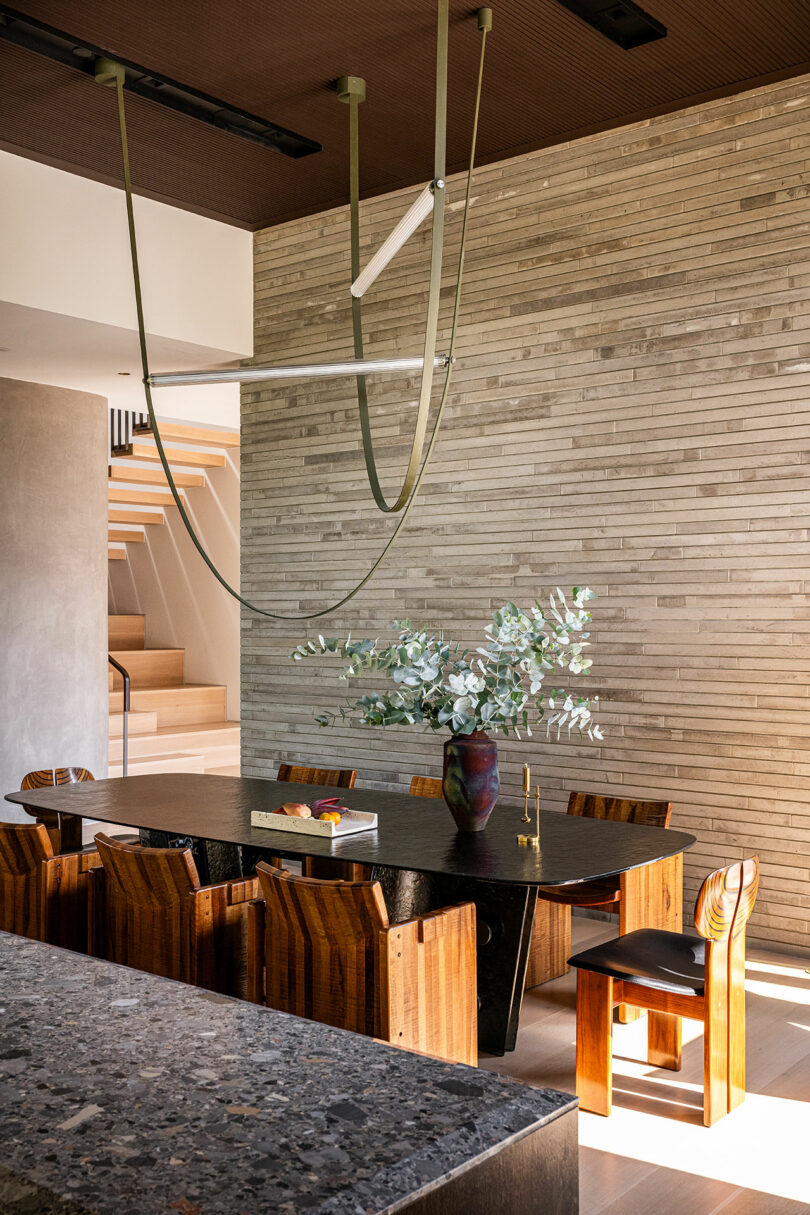
In the world of high-end residential design, the "moody" palette is performing a vital architectural function. In regions with heavy natural light, dark materials serve as a sponge, absorbing and diffusing glare to create a sense of serenity. This is what we call "structural color"—where the palette of a home is derived not from a bucket of paint, but from the inherent hues of the stone and timber used in its construction.
Recent data confirms this pivot toward material authenticity. In 2025-2026 luxury residential projects, there has been a 40% increase in the specification of "natural-pigment materials" like Ceppo marble and charred timber over traditional white drywall finishes. Designers are moving away from the "decorated" look and toward "material honesty," where the beauty of a room lies in the grain of the wood and the fossils embedded in the stone. When you walk into a room wrapped in dark, raked wood panels, your blood pressure seems to drop. The shadows offer a quietude that a white wall simply cannot provide.
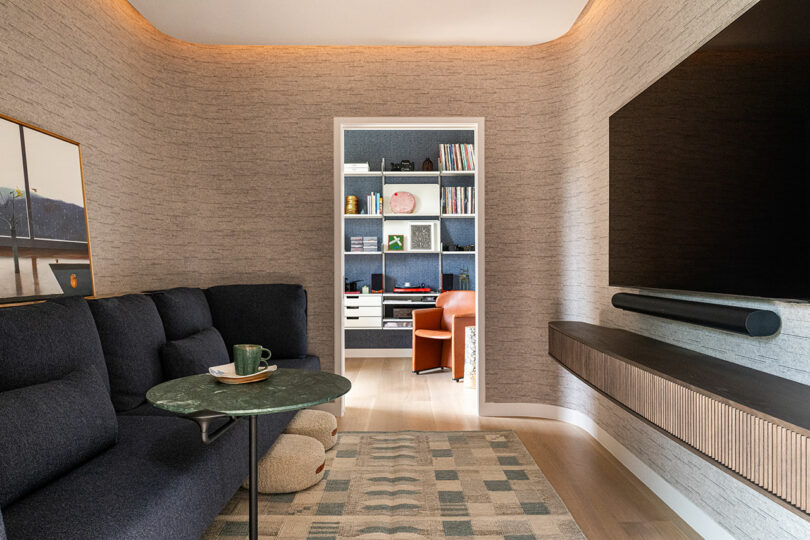
Core Pillars of the Moody Mid-Century Aesthetic
The 2026 iteration of Mid-Century Modern isn't a carbon copy of the 1950s; it is a more "grown-up" version that prioritizes texture and communal flow.
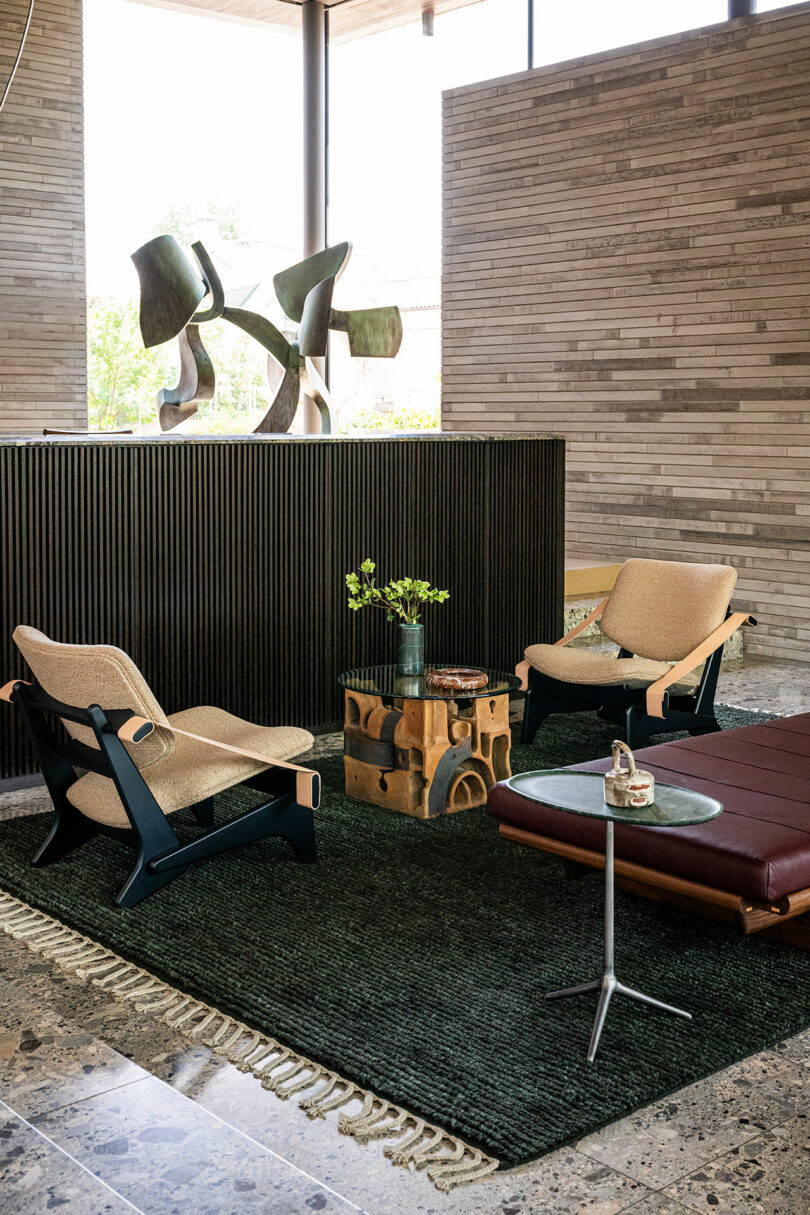
- Clean Lines Meet Organic Forms: The geometric rigor of the mid-century era remains, but it is being softened. We are seeing a major resurgence of curved furniture—sofas with "racetrack" silhouettes and kidney-shaped coffee tables—that act as a counterpoint to the sharp angles of contemporary architecture.
- Materiality over Ornamentation: The focus has shifted to high-tactility surfaces. Designers are layering Japanese glazed tiles against matte fumed oak and polished chrome. The goal is to create depth through contrast rather than through "stuff."
- Integrated Communal Zones: The way we use our homes has fundamentally changed. Analysis of contemporary builds shows that 65% of modern floor plans now prioritize "integrated communal zones." This means the kitchen, the scullery, and the outdoor living areas blend into one seamless experience, accommodating the fluid dynamics of 21st-century family life where the "host" is no longer tucked away in a separate room.
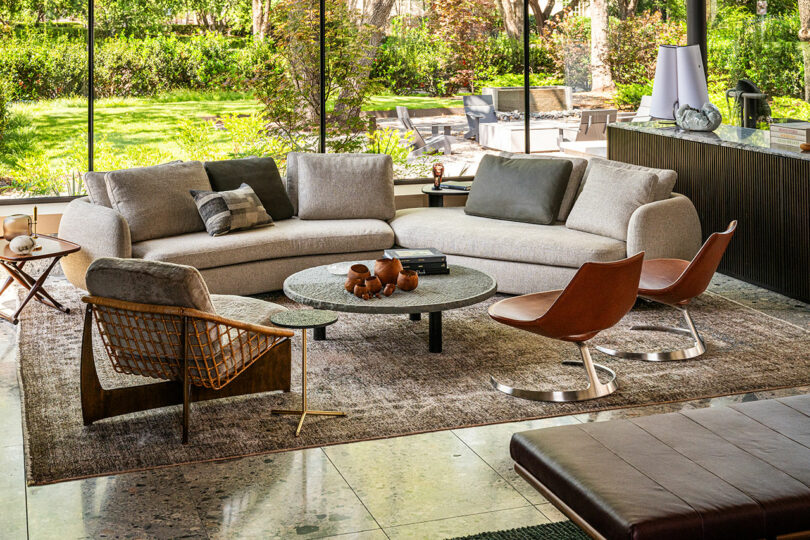
Trend Comparison: The Evolution of Modernism
| Feature | 2024 White Minimalism | 2026 Moody Modernism |
|---|---|---|
| Primary Palette | Cool White, Light Gray, Pale Oak | Fumed Oak, Umber, Moss Green, Charcoal |
| Key Materials | Painted Drywall, White Quartz | Ceppo Marble, Dark Limestone, Raked Timber |
| Lighting Goal | Maximum Brightness & Reflection | Diffused Serenity & Play of Shadow |
| Furniture Form | Rigidly Geometric & Sharp | Organic Curves & Textural Depth |
| Atmosphere | Energetic, Clean, "Gallery" | Restful, Sensual, "Sanctuary" |
2026 Trend Forecast: What to Watch
As we move deeper into this moody era, keep an eye on these specific elements that will define the luxury interiors of 2026:
Rich & Edible Brown Tones The "greige" era is officially over. In its place, we are seeing a flood of "edible" browns—chocolate, espresso, rust, and merlot. These colors provide a warmth that cool grays lack, making large modern spaces feel intimate rather than cavernous.
Statement Stones White Carrara is taking a backseat to stones with personality. Look for "Viola" marble with its deep purple veining, emerald quartzite, and the pebbled texture of Ceppo di Grè. These stones are being used in large, monolithic slabs for kitchen islands and fireplace hearths, acting as the "anchor" of the room.
Mixed-Material Hardware The all-black hardware trend is maturing. We are seeing a resurgence of polished chrome and brushed nickel, often paired against dark wood cabinetry. The "cool" of the metal against the "warm" of the timber creates a sophisticated, machine-for-living aesthetic that feels both nostalgic and futuristic.
Room-by-Room Guide: Implementing the Moody Look
Transitioning to a moody aesthetic doesn't require a total overhaul. It’s about strategic choices that introduce depth and shadow.
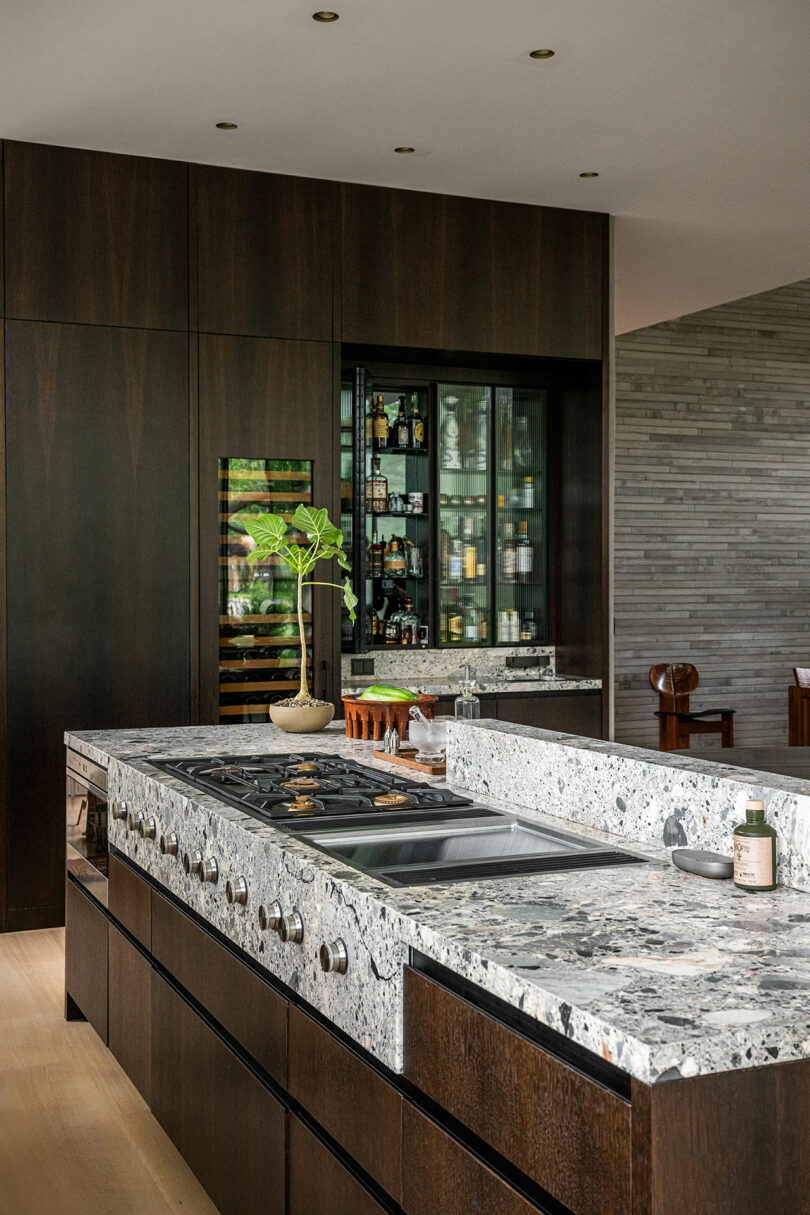
The Kitchen: The Rise of the "Soft Kitchen"
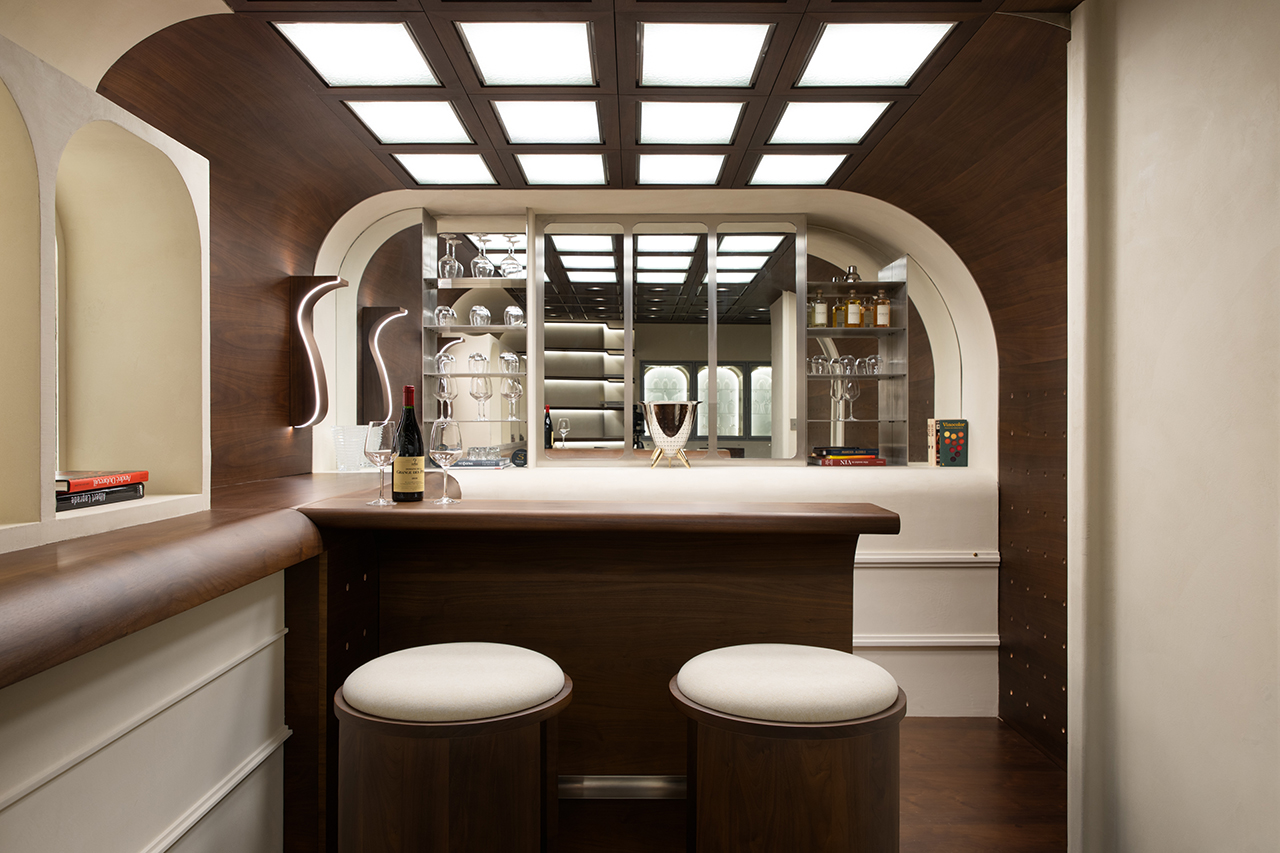
The kitchen is no longer a laboratory; it’s a living room where you happen to cook. In 2026, we are seeing "Soft Kitchens" characterized by timber cabinetry that reaches the ceiling, integrated appliances that disappear behind wood panels, and layered lighting. Instead of one bright overhead light, use task lighting under cabinets and decorative wall sconces to create a "mood" for evening entertaining.
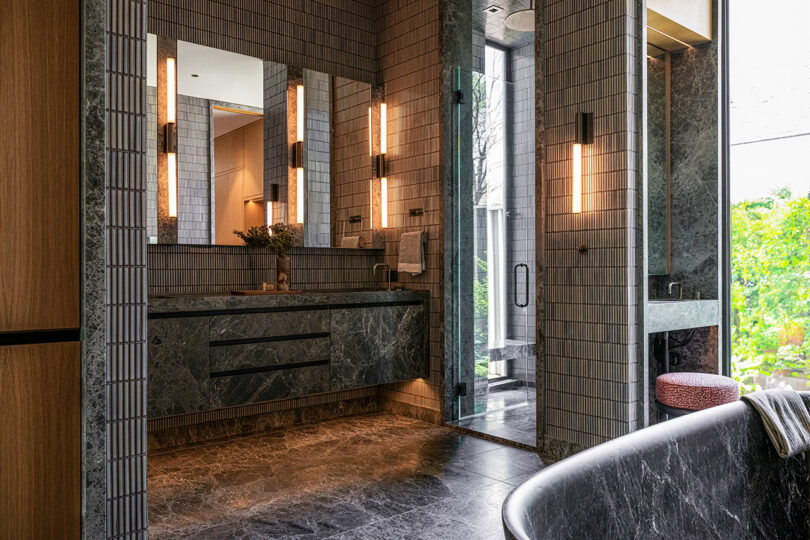
The Primary Suite: The Ultimate Confidence Zone
The bedroom and bath are becoming shadow-heavy sanctuaries. Pair natural white oak flooring with deep blue or charcoal tiles in the bathroom. Use heavy, textured linens on the bed in shades of clay or moss. The goal is to create a space that feels like a cocoon—a place where the world outside falls away.
The "Confidence Zone": Powder Rooms and Pantries
If you are hesitant to go dark in your main living area, start with a "Confidence Zone." Small, enclosed spaces like powder rooms or butler's pantries are perfect for high-contrast, bold creative statements. Floor-to-ceiling dark tile or a moody, textured wallpaper can turn a functional room into a jewel box of design.
Designing for Sustainability and Longevity
In my years as an editor, I’ve seen trends come and go, but the most sustainable way to design is to invest in "material honesty." Moody Modernism leans heavily into natural materials—stone, solid wood, leather, and wool—that age with character.
"True luxury isn't about what is new; it's about what ages beautifully. A fumed oak table or a limestone floor will gain a patina over decades that a synthetic laminate never can."
By choosing pieces that function as "functional art"—think an Eames lounge chair or a Noguchi lamp—you are opting out of the cycle of disposable "fast furniture." These items are designed to be repaired and passed down, not replaced. As we move toward 2026, the focus is firmly on quality over quantity, and on the emotional impact of a space that feels grounded in the natural world.
Conclusion: Finding Silence in the Shadows
The end of the "white box" era isn't a rejection of modernism; it's a deepening of it. It’s an acknowledgment that our homes should be more than just visually bright—they should be emotionally resonant. By embracing the moody, mid-century aesthetic, we are choosing to live in spaces that celebrate the grain of the wood, the weight of the stone, and the quiet beauty of a well-placed shadow.
As you look at your own space, don't be afraid to lean into the dark. It is in those deeper tones that we often find the most profound sense of home.
FAQ
Q: Won't a moody palette make my small room look even smaller? A: Actually, it’s a common misconception. While light colors can make a room feel "airy," dark colors make the corners of a room disappear, creating an illusion of infinite depth. In a small space, a moody palette creates a "jewel box" effect that feels intentional and cozy rather than cramped.
Q: How do I balance dark walls without the room feeling "gloomy"? A: The key is texture and lighting. Use materials with inherent variation, like wood grain or stone veining, so the surface isn't a flat "void." Pair dark walls with "warm" metals (like brass or polished chrome) and layered lighting—mix floor lamps, sconces, and natural light to create highlights and lowlights.
Q: Is Mid-Century Modern going out of style? A: Mid-Century Modern is no longer a "trend"—it’s a foundational design language. What we are seeing for 2026 is an evolution of that language. We’re moving away from the kitschy, bright colors of the 50s and toward the sophisticated, organic, and moody materiality of the era's late-stage architecture.