There is a specific kind of silence found only in the Cyclades. It’s a quietness that isn't empty, but rather filled with the hum of the Aegean wind, the scent of wild thyme, and the visual rest of whitewashed volumes stepping down a rugged hillside. This aesthetic, often referred to as "Elemental Minimalism," has moved far beyond the shores of Mykonos and Santorini to become a global movement in interior design. In fact, current market analysis shows that 68% of interior designers are now prioritizing Elemental Minimalism—a style deeply rooted in Greek island architecture—to enhance home wellness and serenity. As we look toward the 2026 design season, the craving for spaces that feel "unplugged" and spiritually resonant is stronger than ever.
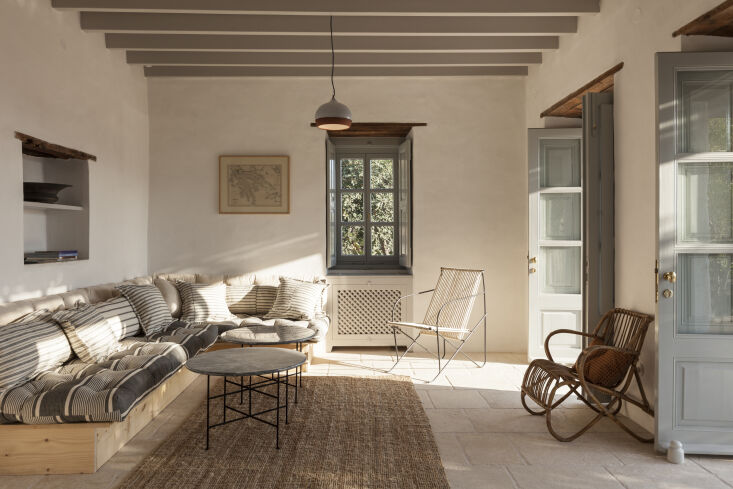
To achieve a serene Greek island style living room, the secret lies in a careful balance of subtraction and soul. It begins with a whitewashed living room aesthetic—specifically using warm-toned whites like Farrow & Ball’s Dimity—complemented by raw, natural materials like pine wood, jute, and hand-thrown terracotta. By layering these with navy and off-white striped textiles, you evoke a classic coastal feel that is both sophisticated and grounded.
1. Start with a Chalky, Whitewashed Base
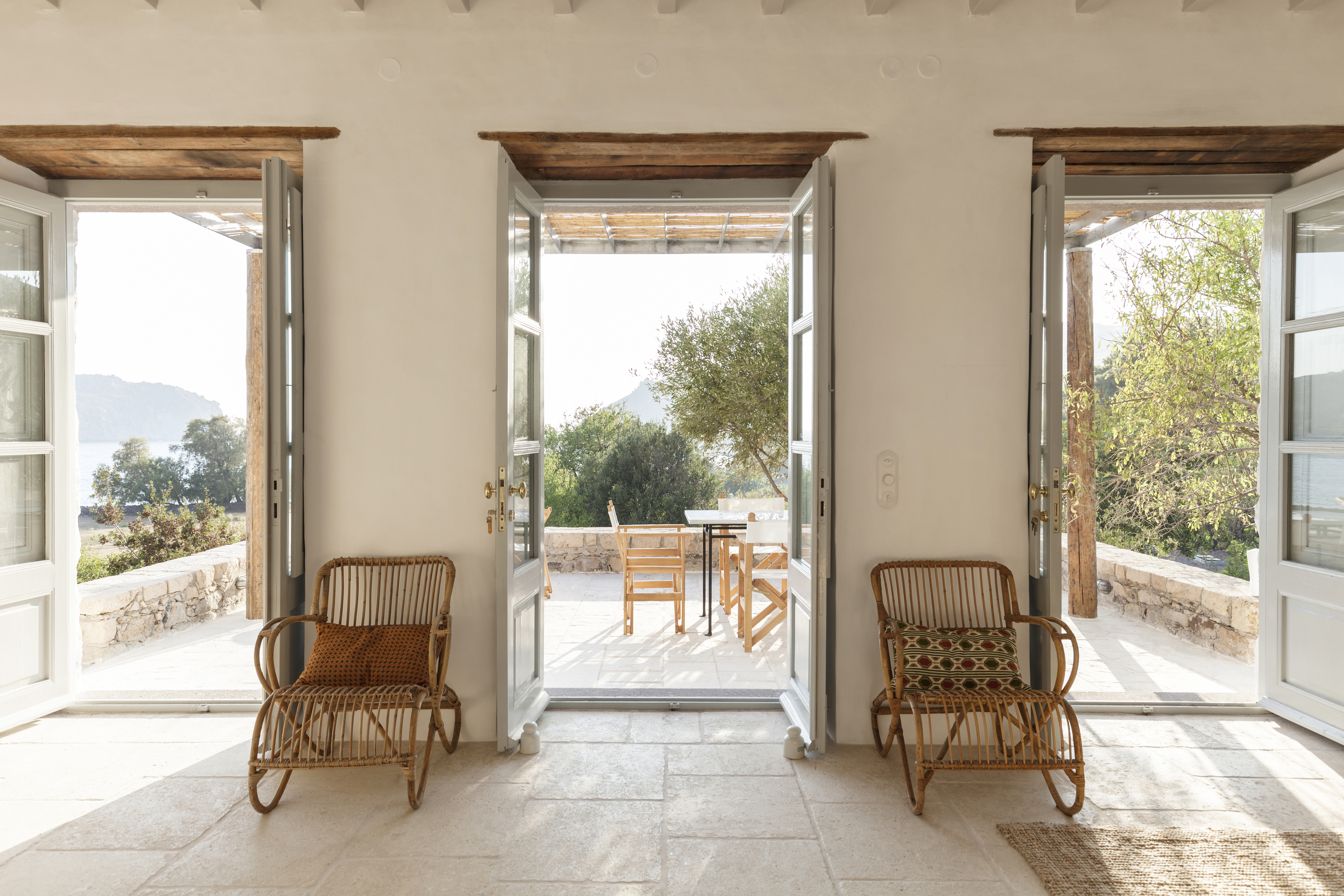
The foundation of any Cycladic interior design is the wall treatment. In the Greek islands, lime-washing was traditionally used for its cooling and disinfectant properties, but today it serves as the ultimate canvas for light. To replicate this, avoid "hospital whites" which can feel cold and clinical. Instead, look for "chalky" whites that possess a subtle depth.
A designer favorite for achieving this look is Farrow & Ball’s Dimity. It is a warm-toned white-taupe that mimics the way Greek sunlight hits a plastered wall—soft, glowing, and slightly aged. This tone-on-tone approach creates an airy atmosphere that reflects the Mediterranean sun without the harsh glare.
Pro Tip: The Texture of Light When painting, consider using a lime-wash paint or a Roman clay finish rather than standard flat latex. The slight variation in pigment and the visible brushstrokes create a "living" wall that mimics the hand-plastered surfaces of a traditional Greek oikos.

2. Incorporate Natural, Raw Materials
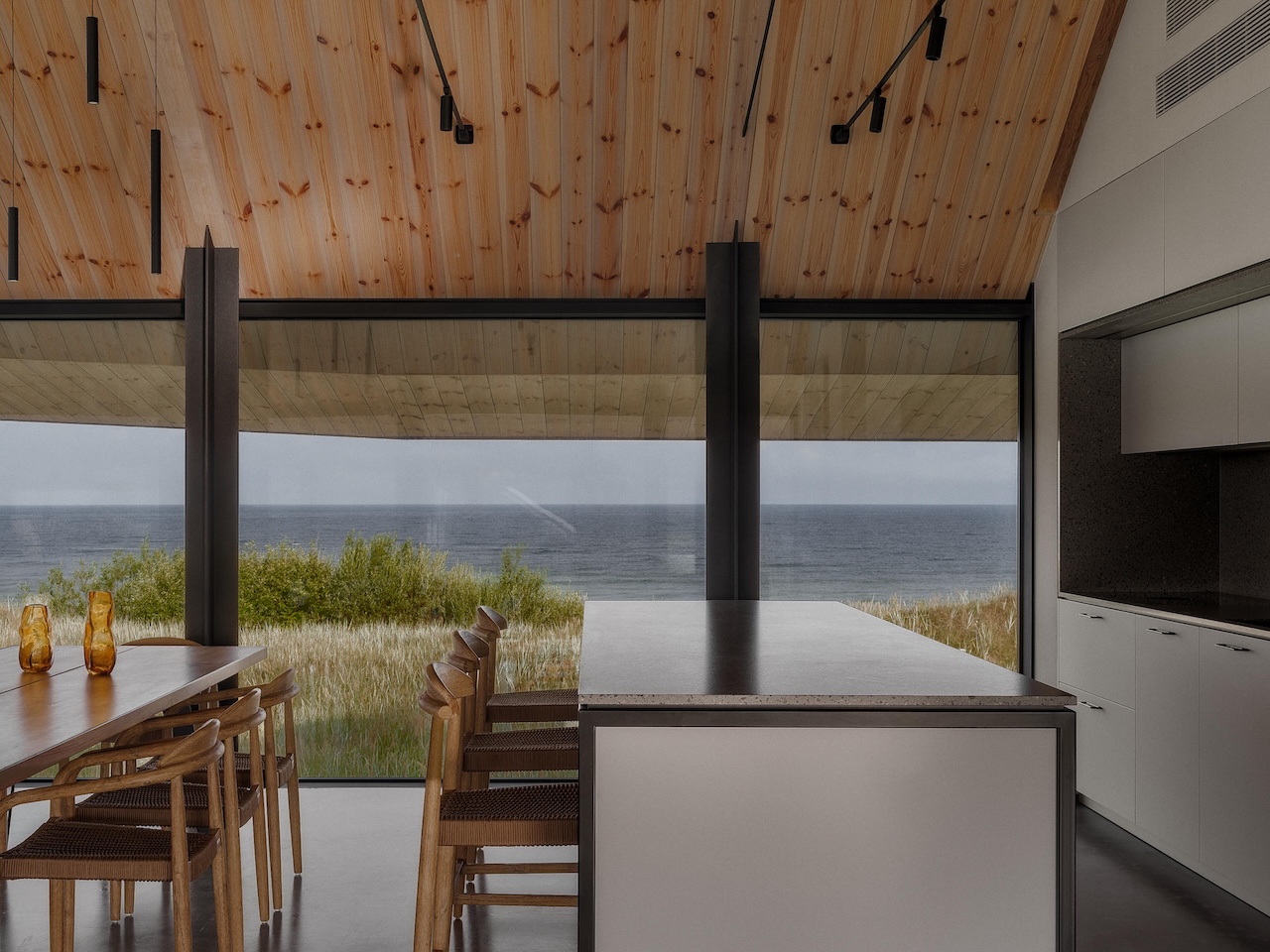
Once your canvas is set, the "elemental" part of minimalism comes through your material choices. The goal is to bring the rugged landscape of the islands indoors. Think of the craftsmanship of Tinos—renowned for its marble and stone—and incorporate those textures through furniture and decor.
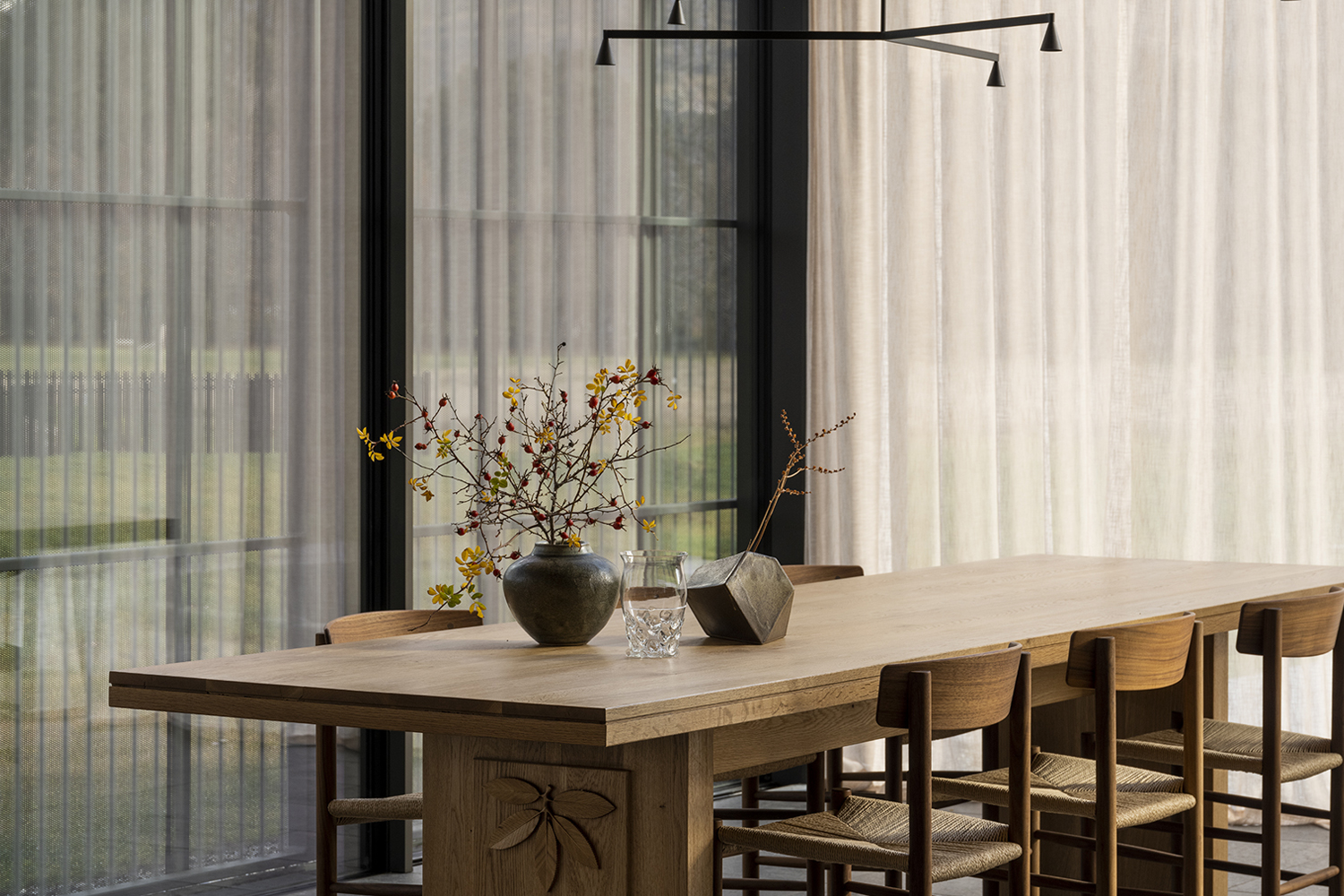
Combine natural pine wood with stony greys and local marble accents. For the floor, a jute rug (such as West Elm’s Flax Boucle) provides a coarse, tactile foundation that feels wonderful underfoot and grounds the ethereal white walls. Pair this with natural oak cabinetry or a reclaimed wood coffee table to add a sense of history and warmth.
- Flooring: Jute or sisal rugs, reclaimed stone flags, or wide-plank light oak.
- Accents: Tumbled marble coasters, unpolished stone sculptures, and driftwood branches.
- Hardware: Forged iron or darkened bronze to contrast the light wood.
3. The Aegean Palette: Beyond Just Blue and White
While blue and white are the hallmarks of the Greek island style living room, the modern interpretation is far more nuanced. We are seeing a shift toward a more "mineral-toned" palette. A sophisticated Cycladic space uses a chalky white base accented by sea-glass blue, deep cobalt, and local stony greys.
Using "local grey" color-matching is a brilliant way to add depth. Consider Farrow & Ball’s Blue Gray, which sits somewhere between a stormy sky and a sun-bleached pebble. It’s a far more sophisticated finish than a primary blue, providing a bridge between the white walls and the natural wood elements.
| Color Element | Recommended Shade | Effect |
|---|---|---|
| The Base | Chalky White (e.g., Dimity) | Expands the space, reflects light |
| The Accent | Sea-glass or Mineral Blue | Evokes the Aegean Sea at dusk |
| The Ground | Stony Grey (e.g., Blue Gray) | Connects the interior to the rocky landscape |
| The Warmth | Terracotta or Sand | Adds an earthy, sun-drenched feel |

4. Prioritize Architectural, Low-Profile Furniture
In a serene Mediterranean home, furniture should never compete with the architecture. Instead, it should feel like an extension of it. This is why we see a 45% increase in consumer demand for 'Cycladic-inspired' organic textures in living room furniture for the upcoming seasons.
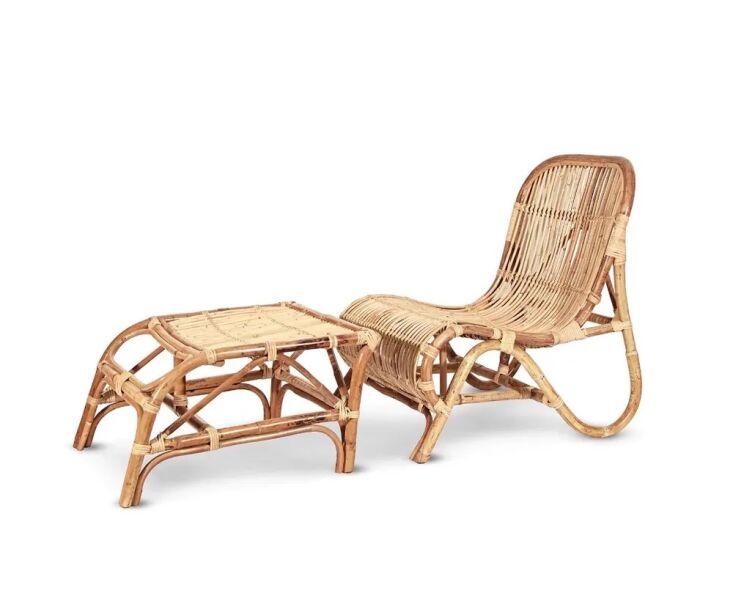
The most authentic Greek interiors often feature built-in plaster seating—sofas that emerge directly from the walls. You can mimic this look with low-profile custom sofas upholstered in heavy linen. To break up the linearity, introduce organic shapes through rattan lounge chairs (like the Kim Lounge Chair) or woven bistro-style seating. These pieces add "visual air," allowing the eye to travel through the room without being blocked by heavy, dark silhouettes.
5. Layer with Tactile, Coastal Textiles
A minimalist room can easily feel "cold" if it lacks soft goods. The Greek approach to comfort is tactile and unpretentious. The key is to layer natural fibers—linen, cotton, and wool—in a way that feels effortless.
Start with your larger surfaces: long, breezy linen curtains that puddle slightly on the floor. Then, layer the seating with striped textiles in navy and off-white. Tensira’s striped bedrolls and cushions are world-class examples of this, offering a hand-crafted quality that feels both traditional and modern. Don't forget kapok pillows; they offer a firm, supportive comfort that is synonymous with Mediterranean lounging.
- Stripes: Keep them irregular or hand-loomed for an artisanal feel.
- Rug Layers: Try layering a smaller, hand-knotted wool rug over a larger jute base for extra softness in the "conversation zone."
- Throws: Light cotton peshtemals (Turkish towels) work beautifully as lightweight throws for summer evenings.

6. Use Terracotta and Artisanal Lighting
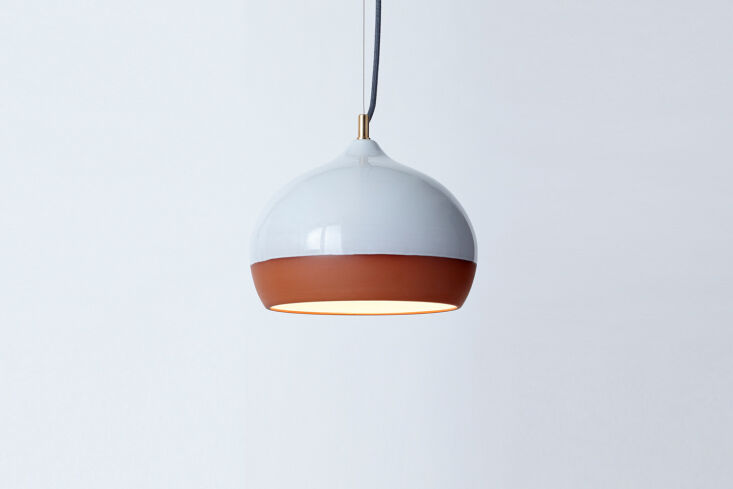
Lighting in a Greek-inspired home should be as much a sculpture as it is a light source. To counteract the "coolness" of the white and blue palette, integrate terracotta lighting. The earthy orange-red of baked clay adds a necessary warmth and a sense of "grounding" to the room.
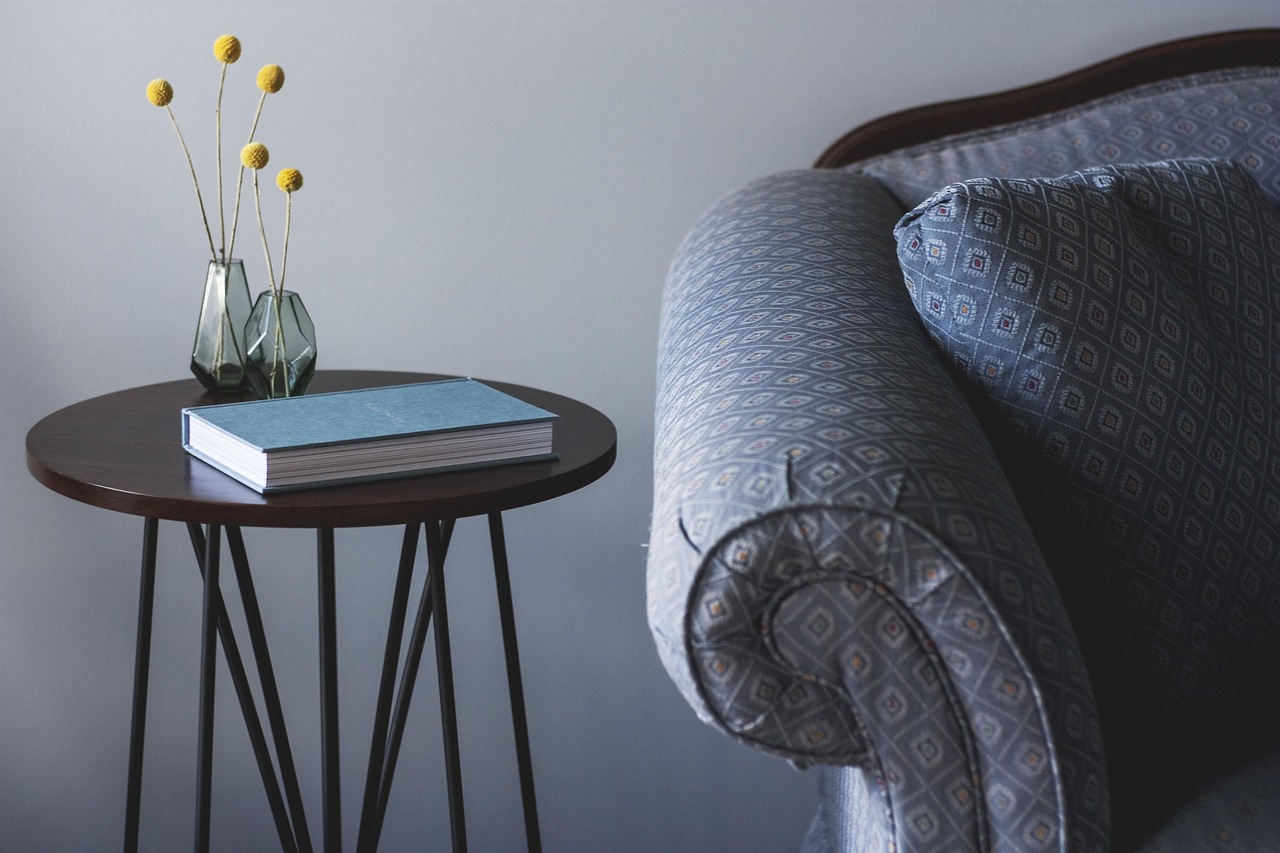
Look for sculptural pendants, such as those from Hand and Eye Studio, which use kiln-fired ceramic to create soft, ambient glows. On side tables, choose ceramic lamps with botanical motifs or simple, rounded shapes that mimic ancient amphorae. The goal is to avoid anything too shiny or industrial; stick to matte, mineral finishes.
Ivy's Style Note: "The beauty of terracotta is its imperfection. Look for pieces where the glaze is slightly uneven or the clay has natural variations. It’s these 'flaws' that bring the human touch to a minimalist room."
7. Create a Seamless Indoor-Outdoor Flow
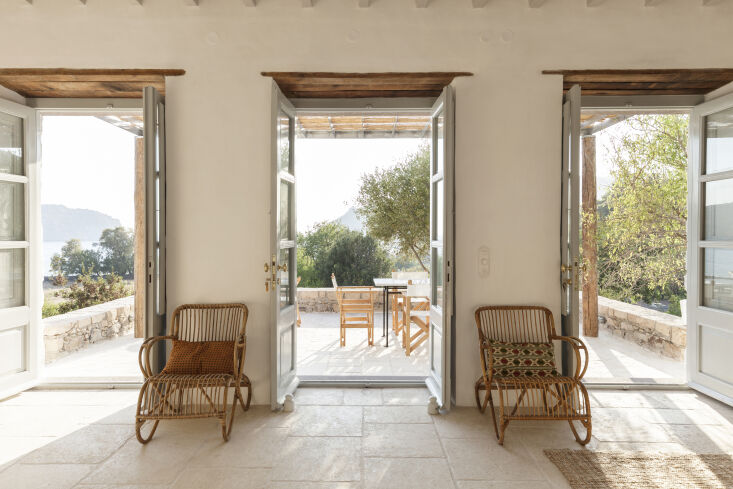
Finally, the modern Greek coastal lifestyle is defined by the blurring of boundaries. A living room shouldn't end at the glass door; it should flow naturally into the terrace or balcony.
Orient your furniture to frame the views outside. If you don't have a sea view, create a "green view" using native Mediterranean greenery. Faux Olive Trees have become a staple in this style, providing the silvery-green foliage characteristic of the region without the maintenance. Use "drystone" textures on accent walls or fireplace surrounds to pull the exterior architectural language inside, creating a cohesive, peaceful environment.
FAQ
Q: Can I achieve Greek island style in a small apartment? A: Absolutely. In fact, the Cycladic style was born from small, efficient spaces. The key is the whitewashed walls, which make small rooms feel significantly larger. Focus on low-profile furniture and use mirrors to bounce light, mimicking the bright, open feel of a coastal villa.
Q: How do I keep a white-on-white room from feeling "flat"? A: Texture is your best friend. Mix different "shades" of white—ivory, bone, and alabaster—and vary the materials. A linen sofa against a lime-washed wall with a wool rug and a marble table creates enough visual friction to keep the room interesting without needing bold colors.
Q: Is the Greek island style practical for families with pets or children? A: Surprisingly, yes. The "elemental" nature of the style favors durable, natural materials like stone and jute, which hide wear and tear well. Choose slipcovered sofas in "performance linen" that can be easily washed, and embrace the "wabi-sabi" nature of the style—a few scuffs on a wood table only add to its charm.