For decades, the standard outdoor sleeping experience was defined by "roughing it"—a badge of honor earned through stiff necks, damp sleeping bags, and the inevitable deflation of a cheap air mattress by 3:00 AM. But as our understanding of wellness and environmental stewardship evolves, so too does our gear. We are witnessing a paradigm shift where the comfort of a high-end home mattress is no longer sacrificed for the portability of the trail.
However, a new problem has emerged. The very tools we use to enjoy nature—synthetic foams, chemical glues, and non-recyclable plastics—are often the same materials causing its long-term degradation. If you are looking to upgrade your sleep system, the question is no longer just "Is it comfortable?" but "Is it conscious?" This is where the MAZZU foam-free mattress enters the conversation, not just as another piece of gear, but as a fundamental reimagining of what it means to sleep under the stars. Unlike traditional PU foam pads, the MAZZU mattress utilizes a glue-free, modular spring system that eliminates toxic VOCs (Volatile Organic Compounds) and allows for seamless repair and recycling, setting a new benchmark for the eco-conscious adventurer.
The Hidden Cost of Comfort: Why Traditional Foam is Failing Us
To understand why a "foam-free" mattress is a breakthrough, we must first look at the industry standard. Most high-end camping pads rely on Polyurethane (PU) foam or memory foam to provide insulation and cushioning. While effective at providing a soft surface, these materials come with a heavy environmental and health-related price tag.
PU foam is derived from petroleum and is notoriously difficult to recycle. Because most camping mattresses fuse this foam with airtight TPU (Thermoplastic Polyurethane) or PVC (Polyvinyl Chloride) shells using permanent adhesives, the components cannot be separated at the end of their life cycle. This results in a staggering global waste problem.
Eco-Fact: Approximately 60 million metric tons of mattresses are discarded worldwide annually. Over 90% of these components end up in landfills because their fused construction makes material recovery impossible.
Beyond the landfill, there is the issue of "off-gassing." If you’ve ever unrolled a new camping pad and noticed a sharp, chemical smell, you are inhaling Volatile Organic Compounds (VOCs). In the confined space of a tent, these chemicals can lead to respiratory irritation or headaches. For the modern outdoor enthusiast, sleeping on a cocktail of chemicals while trying to "reconnect with nature" is a profound irony.
Introducing MAZZU: The Paradigm Shift in Outdoor Sleep Tech
Enter MAZZU. Developed in collaboration with the renowned industrial design agency LAYER, led by Benjamin Hubert, the MAZZU camping mattress represents a departure from the "disposable" gear mentality. The design philosophy here is "Sustainability by Specification"—ensuring every part of the product can be tracked, repaired, and eventually recycled.
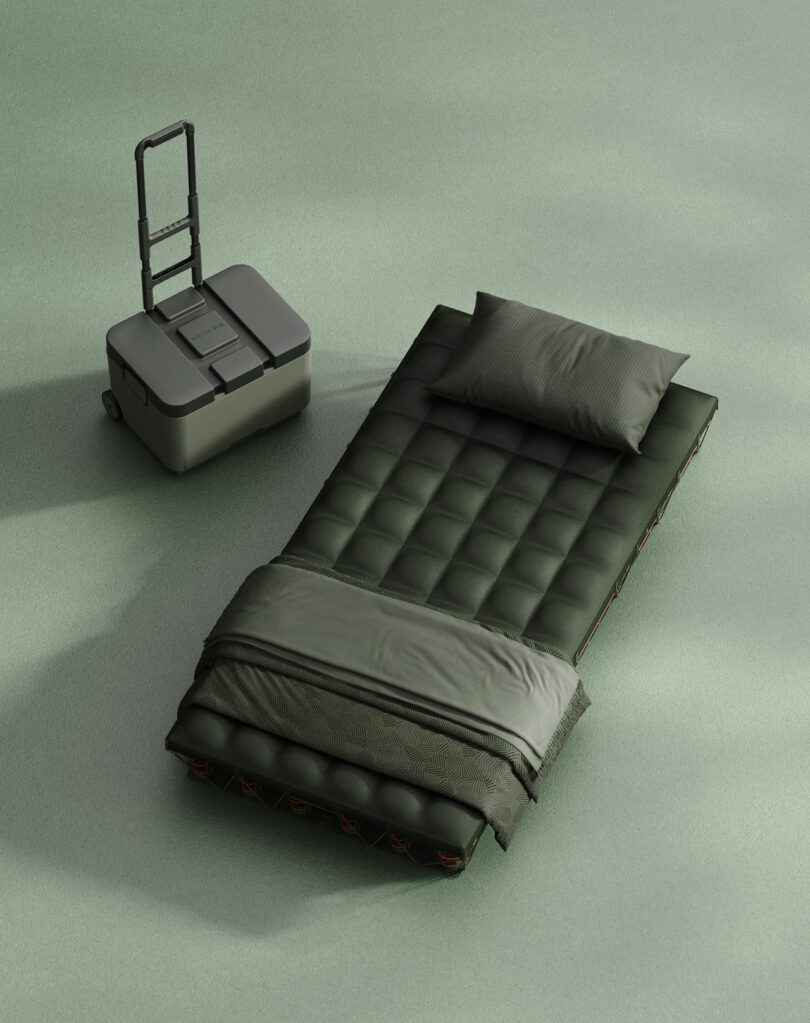
What makes this system a paradigm shift is the complete removal of glues and foams. By utilizing mechanical fixings and high-tech fabrics, MAZZU has created a mattress that is breathable, hypoallergenic, and entirely modular. It’s an engineering feat that addresses the two biggest complaints in the outdoor market: the lack of true ergonomic support and the short lifespan of inflatable gear.
Engineering the Perfect Night: The 72-Module Spring System
Traditional air mattresses act like a giant balloon; when you press down on one side, the air displaces, often leaving your hips or shoulders touching the cold ground. Foam mattresses are better, but they eventually "bottom out" as the cells compress over time.
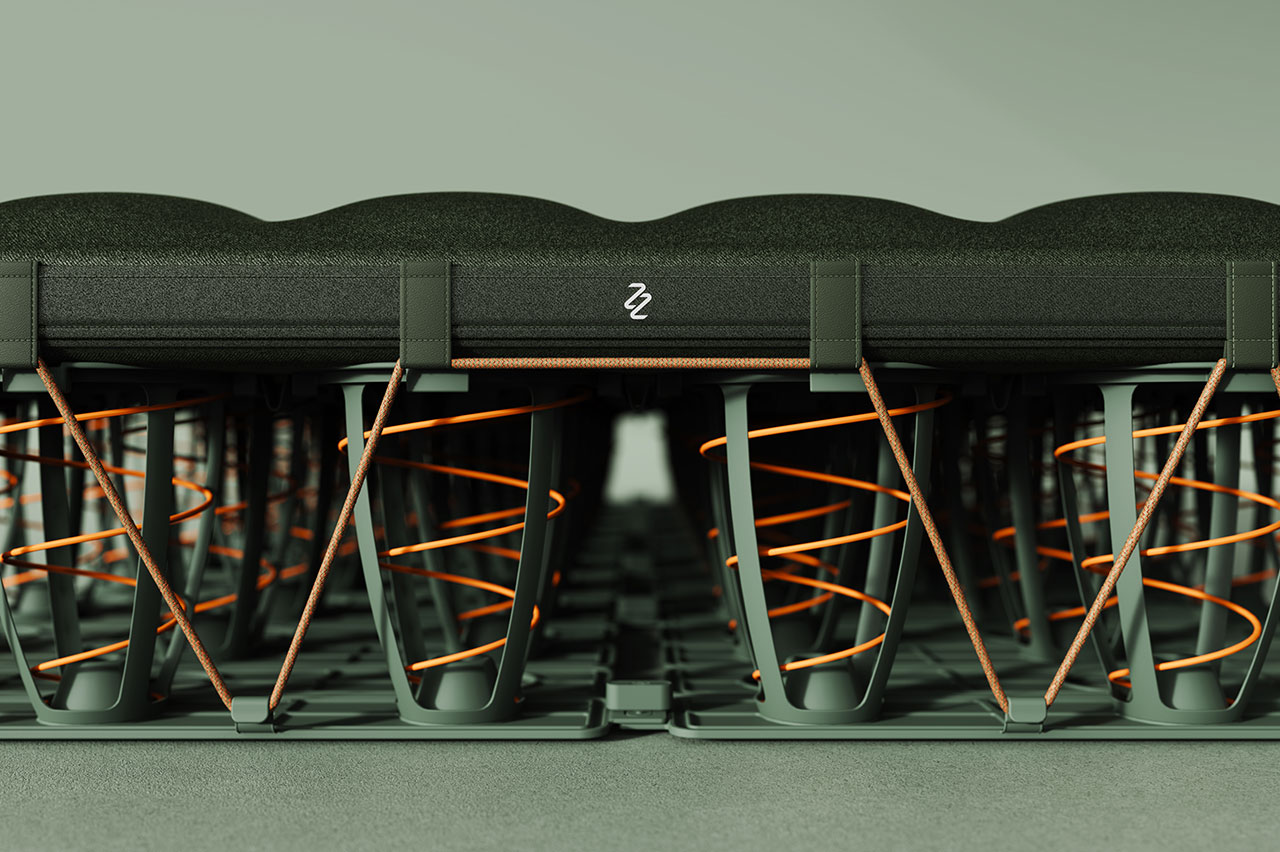
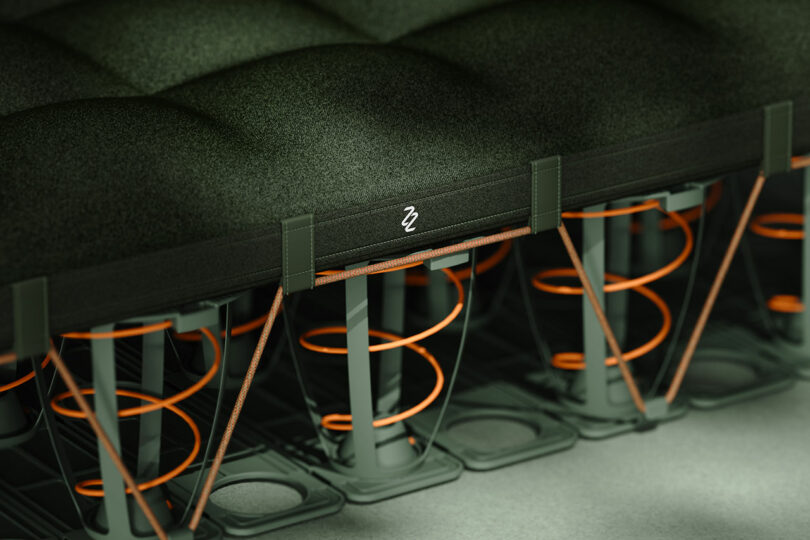
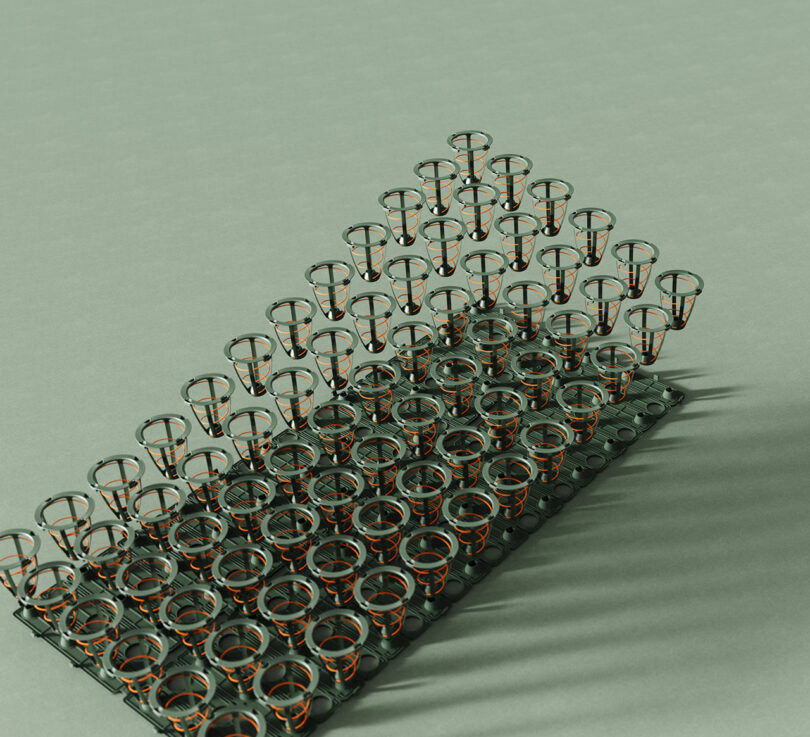
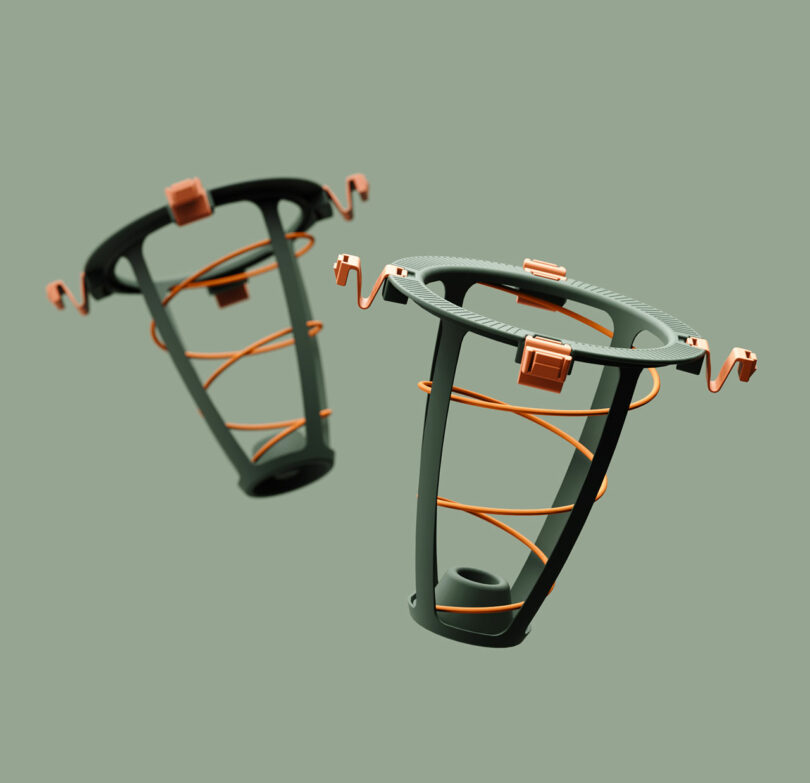
The MAZZU system solves this through a configuration of 72 individual, precision-engineered spring modules. Each module is a pre-compressed coil wrapped in a technical textile, functioning independently of its neighbors. This modularity allows the mattress to contour to your body’s unique ergonomics in a way that air or solid foam simply cannot.
- Independent Suspension: Much like a premium pocket-sprung mattress at home, the 72-module layout ensures that pressure is distributed evenly. If you roll over, you don't create a "wave" of air that disturbs your partner.
- Thermal Regulation: Because the system is foam-free, there is a significant amount of open air space within the mattress structure. This allows for superior moisture wicking and airflow, preventing the "sweaty" feeling often associated with synthetic foam pads.
- Variable Firmness: By adjusting the tension or the number of modules, the system can theoretically be tuned to different firmness levels, though the standard 72-module setup is optimized for a medium-firm feel that suits most side and back sleepers.
Sustainability by Design: Easy Repair, Easy Recycle
As an editor focused on sustainable living, I find the "modular advantage" to be the most compelling feature of this gear. Most outdoor equipment follows a linear lifecycle: buy, use, break, and discard. If an air mattress develops a puncture that you can’t find, or if the internal foam of a self-inflating pad begins to mold, the entire unit is trash.
MAZZU turns this into a circular lifecycle. Because the mattress is held together by paracord lashings and snap-fit modules rather than glue, it is fully repairable.
- Individual Replacement: If a single spring module loses its tension or the fabric sleeve is damaged, you replace that specific module—not the whole mattress.
- Recyclability: At the end of its decades-long life, the mattress can be disassembled in minutes. The metal springs, technical fabrics, and plastic housings can be sorted into their respective recycling streams.
- Zero Glue: By eliminating adhesives, MAZZU ensures that materials remain "pure," which is the golden rule of efficient recycling.
MAZZU vs. The Field: How It Compares to Industry Giants
For serious campers, the decision to switch gear often comes down to the numbers. How does this modular spring system stack up against established favorites like the Exped MegaMat or the HEST Foamy?
| Feature | MAZZU Modular System | Exped MegaMat 10 | HEST Foamy |
|---|---|---|---|
| Core Material | 72 Individual Springs | Open-cell PU Foam | Enhanced Memory Foam |
| Eco-Rating | Excellent (Glue-free, recyclable) | Moderate (Durable but fused) | Low (Bulk, non-recyclable) |
| Repairability | High (Individual module swap) | Low (Patch kits only) | Very Low |
| Comfort Type | Pocket-sprung support | Air-cushioned foam | Pressure-relieving foam |
| VOC Levels | Zero | Low to Moderate | Moderate |
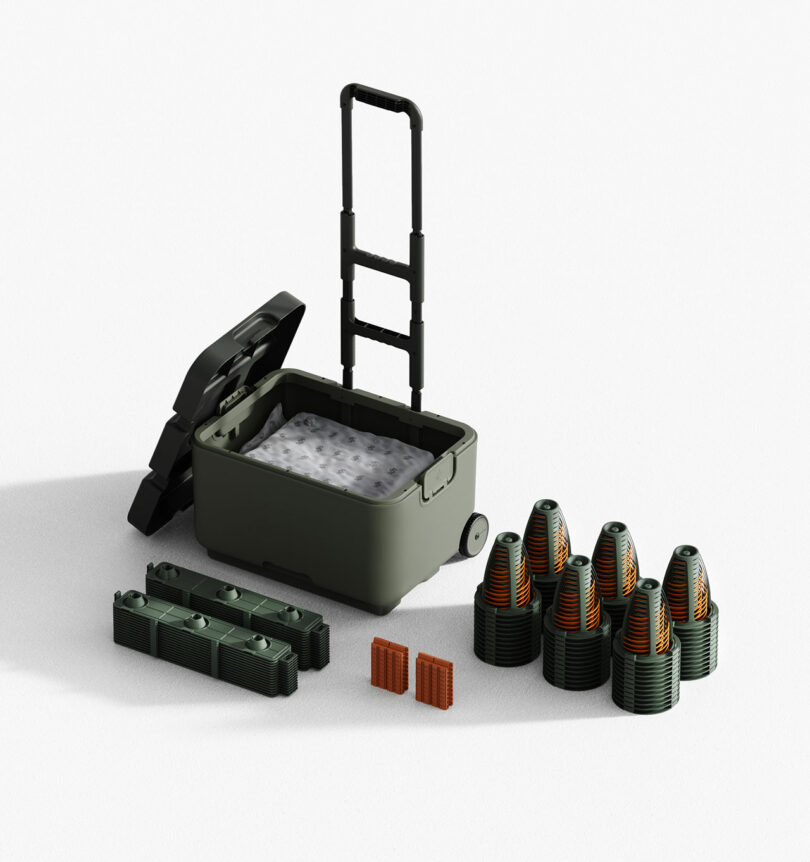
While the Exped MegaMat remains a gold standard for R-value (insulation), the MAZZU system offers a level of structural support and longevity that foam-based competitors struggle to match. Furthermore, the portability of the MAZZU system is surprisingly efficient. While foam mattresses like the HEST are notoriously bulky and difficult to compress, the modular nature of MAZZU allows it to be broken down into smaller components or rolled with the springs compressed, saving valuable space in your vehicle.
Final Verdict: Is the Upgrade Worth It for Your Next Trip?
Investing in a MAZZU foam-free mattress is a commitment to a different kind of outdoor lifestyle. It is for the camper who is tired of the "disposable gear" cycle and wants a sleep system that mirrors the quality of their home bedroom while respecting the environment.
From a cost-per-use perspective, the MAZZU system is highly competitive. While the initial investment may be higher than a standard big-box air mattress, its ability to be repaired piece-by-piece means it could easily be the last camping mattress you ever buy. For the eco-conscious adventurer, the peace of mind that comes from a non-toxic, VOC-free, and fully recyclable product is the ultimate luxury.
If your goal is to transition toward a more sustainable, high-performance outdoor setup, the MAZZU system isn't just an upgrade—it's the new standard.
FAQ
Q: Is the MAZZU mattress warm enough for winter camping? A: The spring-based system provides excellent airflow, which is great for summer. However, for extreme sub-zero temperatures, we recommend using a thin reflective thermal barrier or a high-R-value closed-cell foam pad underneath the MAZZU to ensure maximum heat retention.
Q: How long does it take to assemble or pack away? A: Once you are familiar with the snap-fit and paracord system, assembly takes roughly 5–8 minutes. Packing it away is often faster than traditional self-inflating pads because you aren't fighting to squeeze air out of stubborn foam.
Q: Can I customize the size of the mattress? A: Yes. One of the primary benefits of the 72-module system is that you can add or remove modules to fit specific dimensions, making it an excellent choice for custom van builds or non-standard tent footprints.