Inside Sarah Espeute’s Marseille Studio: The Unique World of Œuvres Sensibles
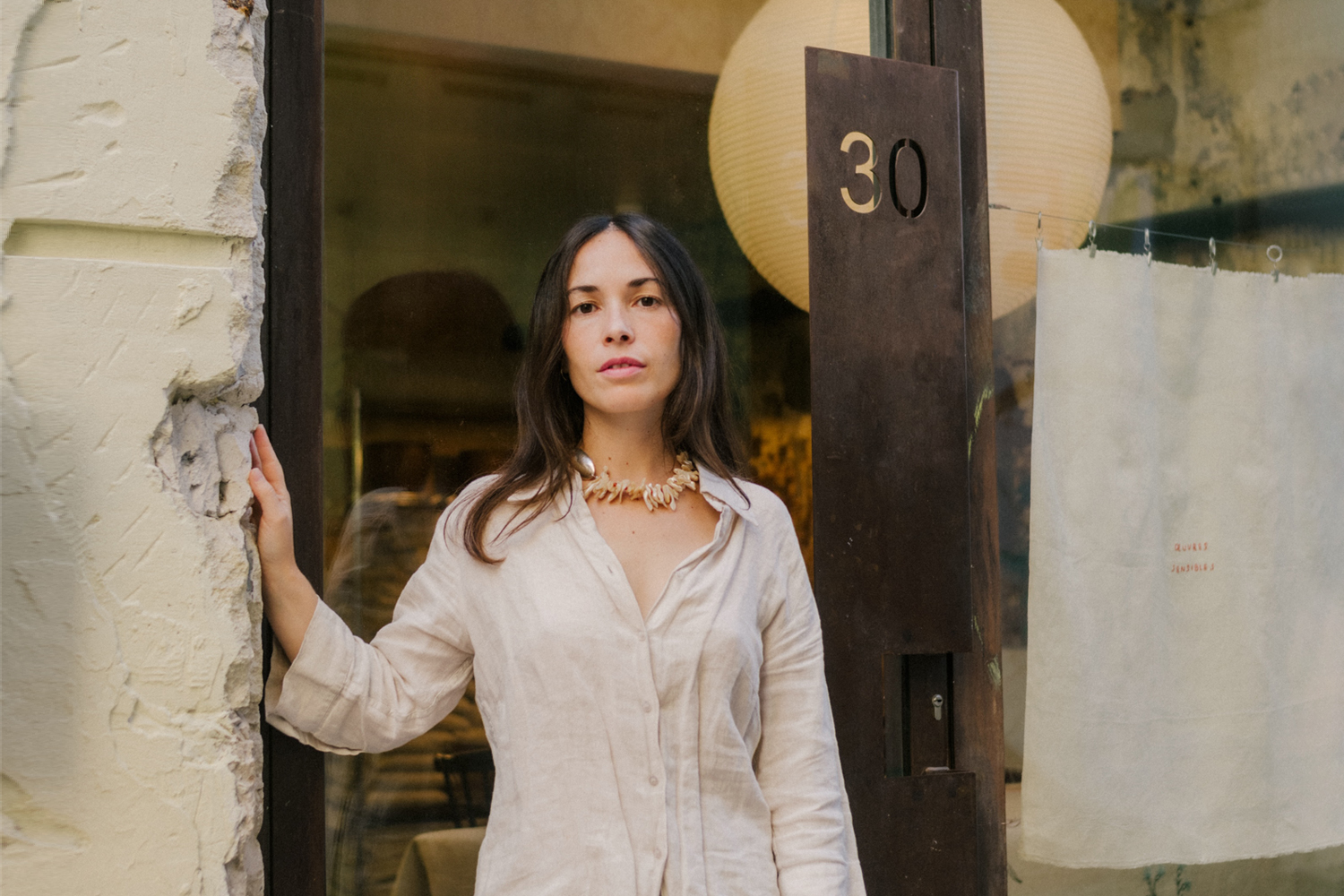
Imagine walking through the sun-drenched, rugged streets of Marseille, where the salty Mediterranean air mingles with the scent of roasted coffee. At 7 Rue Villeneuve, a discreet facade opens into a world where time seems to slow down—a place where everyday objects are immortalized in thread. This is the Sarah Espeute Marseille studio, the creative heart of her brand, Œuvres Sensibles.
Operating as a 300-square-meter hybrid atelier and public showroom, this space is much more than a retail destination; it is a manifesto of "sensitive" design. Sarah Espeute, a former graphic designer who returned to her childhood love of embroidery, has transformed a former industrial site into a sanctuary of textile art. The studio is celebrated globally for its signature trompe-l’œil embroidery—hand-stitched "illustrations" of wine glasses, spilled crumbs, and flickering candles that turn a simple linen tablecloth into a poetic blueprint for a life well-lived.
The Architecture of Contrast: 300 Square Meters of Raw Elegance
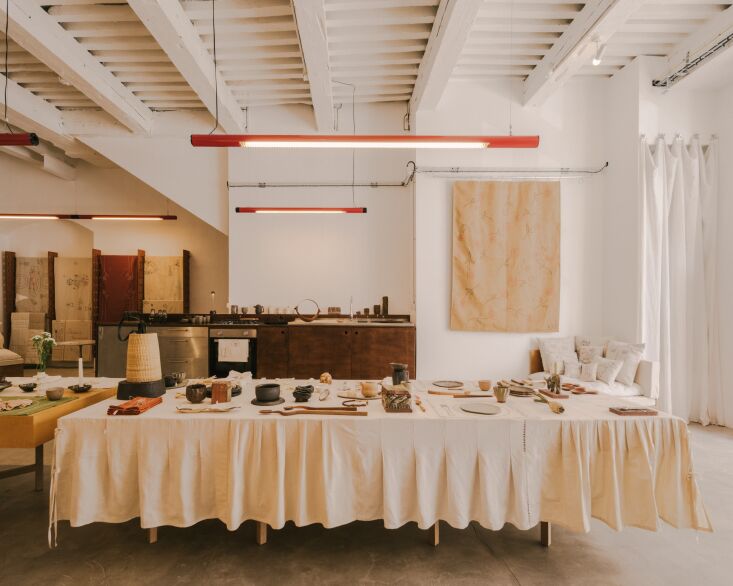
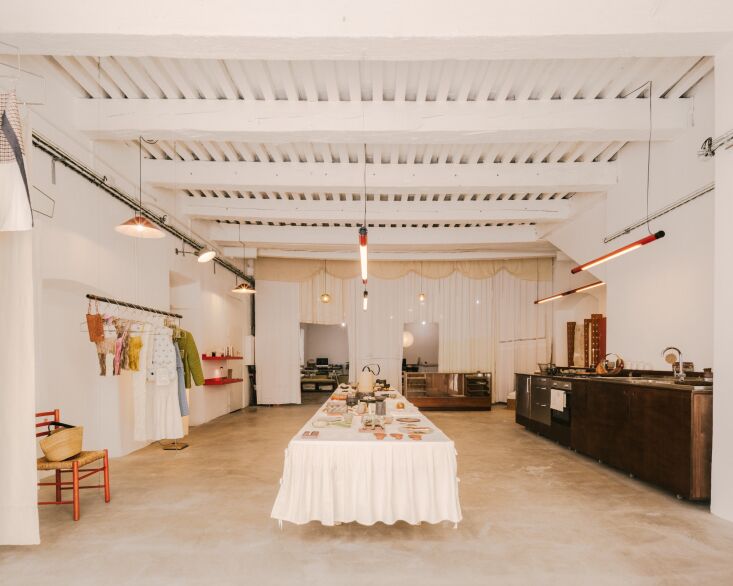
When I first stepped into the studio, I was immediately struck by the "Material Dialogue." It is a hallmark of Sarah’s aesthetic: the cold, industrial brutality of polished concrete floors meeting the fragile, tactile warmth of antique linens. This 300-square-meter floor plan is masterfully divided to accommodate both the high-energy flow of a public showroom and the quiet, meditative focus of an embroidery workshop.
The layout is intentionally open, allowing visitors to glimpse the process behind the products. However, Sarah has introduced clever, modular dividers to maintain a sense of intimacy. Instead of rigid walls, she uses what she calls "clothing-curtains"—vast expanses of fabric that can be drawn or retracted to redefine the space. This fluidity reflects the brand’s ethos: design should never be static; it should breathe and move with the people who inhabit it.
- The Materials: Raw concrete, hand-painted lime-wash walls, and vibrant red lacquered shelving.
- The Flow: An immersive retail front that leads naturally into the light-filled atelier where the magic happens.
- The Palette: A neutral foundation of grey and cream, punctuated by "Espeute Red"—the signature thread color that ties the collection together.
The Art of Trompe-l’œil: Beyond Simple Embroidery
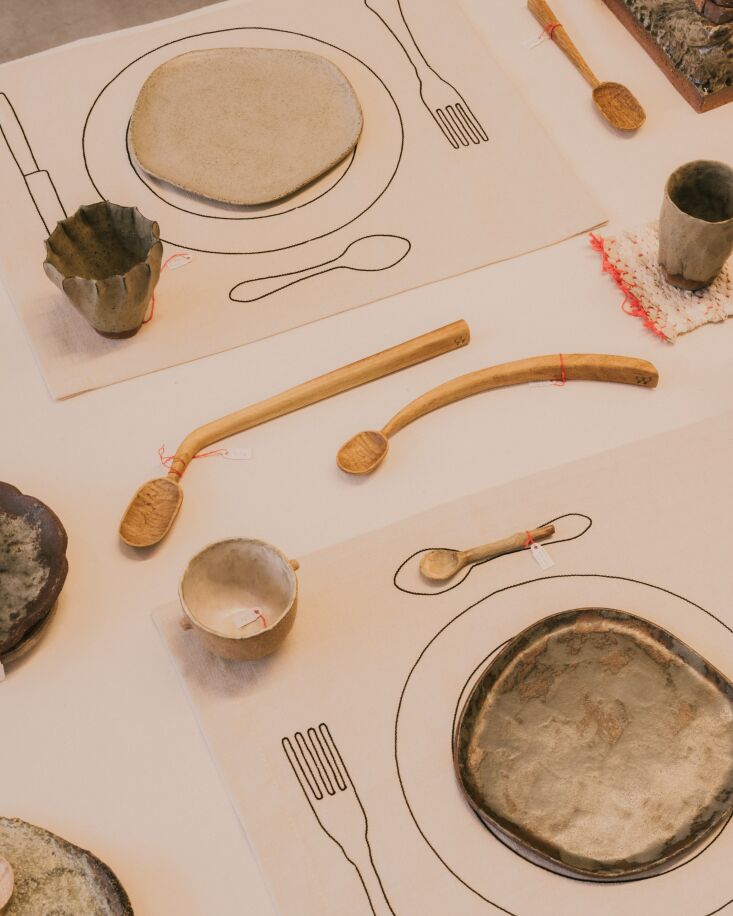
At the core of the Oeuvres Sensibles embroidery philosophy is the concept of trompe-l’œil—French for "deceive the eye." But Sarah’s work isn't meant to trick you into thinking a stitched plate is real; rather, it’s meant to evoke the feeling of a shared meal. Her trompe-l’œil tablecloths handmade in the studio feature minimalist, almost child-like outlines of candlesticks, fruit bowls, and cutlery.
These aren't just decorative items; they are storytellers. By embroidering the "ghosts" of objects onto linens, Sarah restores value to the textile itself. In an age of impersonal industrial design and fast homeware, her work resists the rush. Each piece of Sarah Espeute textile art invites the user to slow down, to notice the texture of the linen, and to appreciate the "golden hands" that spent hours perfecting a single stitch.
"I wanted to bring poetry to the everyday. A tablecloth shouldn't just be a functional layer; it should be the guest of honor at the dinner party." — Sarah Espeute
The 6-Meter DIY Kitchen and Interior Details
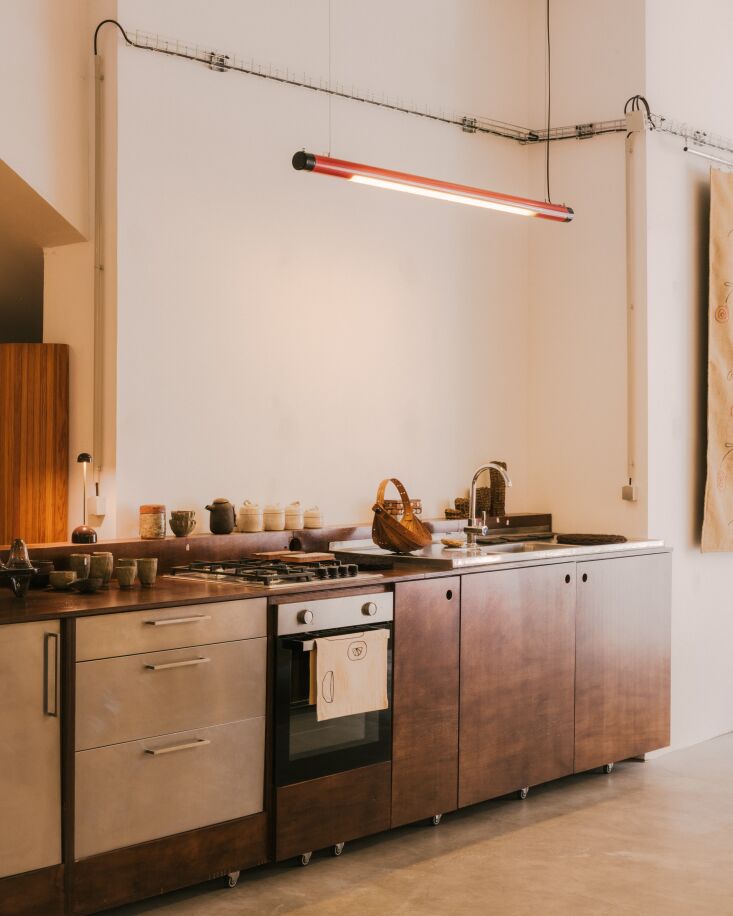
As an editor who loves a good high-low mix, I was particularly captivated by the studio's kitchen. It is a masterclass in DIY sophistication. Spanning 6 meters, this modular kitchen was custom-built using humble plywood, yet it looks incredibly high-end thanks to the integration of recycled 1960s stainless steel components.
Sarah’s approach to sourcing is a lesson for us all. Instead of buying everything new, she scours platforms like Leboncoin (the French equivalent of Craigslist) and local garage sales. This commitment to "storied" objects gives the studio a soul that a showroom filled with brand-new furniture could never replicate.
Studio Specification & Sourcing Highlights:
- The Kitchen: 6 meters long, constructed from structural plywood and vintage industrial steel.
- Refrigeration: Secondhand IKEA fridges sourced from Leboncoin, seamlessly integrated into the plywood cabinetry.
- Seating: Simple wooden stools that echo the raw, honest nature of the workspace.
- Versatility: The modular nature of the furniture allows the studio to transform from a workshop into a long-table dinner venue in minutes.
Lighting and the "Marseille Glow"
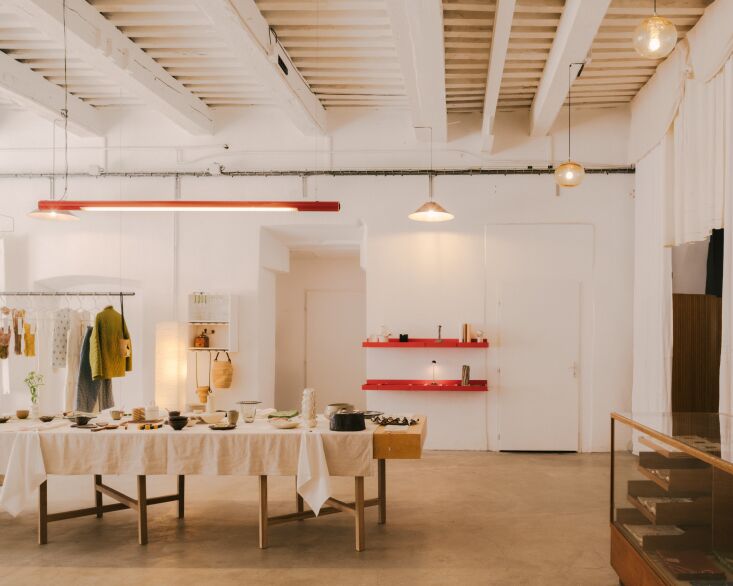
Lighting plays a crucial role in making a 300-square-meter concrete space feel inviting rather than clinical. Sarah has curated a collection of vintage lighting that adds a layer of 20th-century nostalgia to the studio. Most notable are the 1970s Parscot glass globes, which she discovered in a garage in Cannes.
These globes cast a soft, diffused light that mimics the hazy afternoon sun of the French Riviera. To contrast this softness, she has installed red metal neon pendants that hang above the workstations. These pendants aren't just functional; their color perfectly echoes the red embroidery thread used in her designs, creating a visual thread that runs through the entire interior.
Behind the Scenes: The Artisanal Process
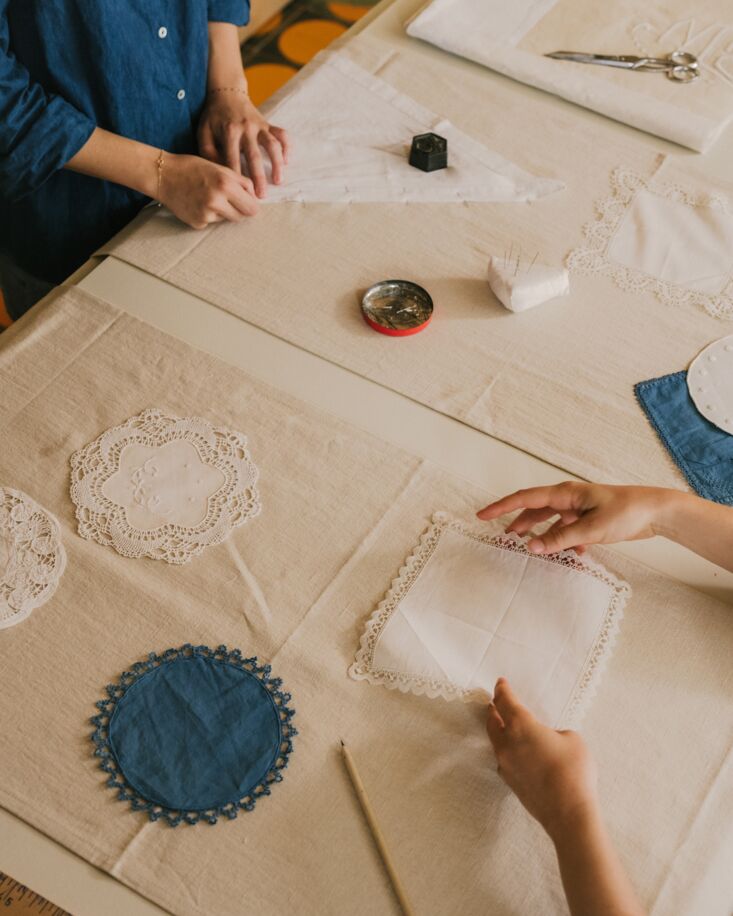
The Marseille artisan design showroom is not just a place to buy; it’s a place to witness. At any given time, a team of skilled embroiderers is at work at 7 Rue Villeneuve. Watching them is a lesson in patience. Each piece is pinned, marked, and sewn by hand, ensuring that no two items are exactly alike.
Sarah has managed to scale her artisanal craftsmanship without losing the "handmade feel" that makes her brand so special. She refers to her team as having "Golden Hands," a nod to the traditional French appreciation for manual skill. This behind-the-scenes transparency is what builds the deep connection between the brand and its community. The studio also serves as a collaborative hub, showcasing ceramic vases and tableware from fellow artisans and friends, making it a true cornerstone of the Marseille creative scene.
Design Tips Inspired by the Studio
If you're looking to bring a touch of Sarah Espeute's Marseille magic into your own home, consider these principles:
- Embrace the Unfinished: Don't be afraid of raw materials. A plywood shelf or a concrete floor can be incredibly elegant when paired with soft, high-quality textiles.
- The Power of a Single Color: Choose one signature accent color (like Sarah’s red) and use it sparingly but consistently—in your thread, your lighting, and your shelving.
- Illustrate Your Life: Look for decor that tells a story. Whether it’s an embroidered tablecloth or a vintage glass globe, choose pieces that provoke conversation and evoke memories.
FAQ
Can I visit the Sarah Espeute studio in Marseille? Yes, the studio at 7 Rue Villeneuve in Marseille operates as a public showroom. However, as it is also a working atelier, it is always best to check their official website or Instagram for current opening hours or to book an appointment for a personalized viewing.
Are all Œuvres Sensibles pieces handmade? Absolutely. Every item, from the large curtains to the small cushions, features hand-stitched embroidery completed by artisans in the Marseille studio. This dedication to manual craftsmanship is what makes each piece a unique work of art.
How do I care for hand-embroidered linens? While these pieces are works of art, they are designed for daily use. Sarah recommends gentle hand-washing or a very delicate machine cycle with mild detergent. Always air dry and iron while slightly damp to maintain the crispness of the linen and the integrity of the embroidery.
Whether you are a design professional or someone looking to add a bit of "soul" to your dining room, the Sarah Espeute Marseille studio stands as a beacon of modern artisanal excellence. It reminds us that our homes are canvases, and with a bit of thread and a lot of heart, we can turn even the most ordinary moments into something extraordinary.